
As the aroma of sautéed onions fills the kitchen, memories of family gatherings come rushing back. Sauerkraut Pierogi are not just a dish; they are a tradition, a delicious blend of savory flavors wrapped in tender dough, bringing a taste of comfort and nostalgia to your table.
Why You’ll Love This Recipe
This recipe is a delightful twist on a classic dish and is sure to become a family favorite.
- Rich, tangy flavor from the sauerkraut.
- Soft, pillowy pierogi that are satisfying to eat.
- Perfect for freezing and enjoying later.
- Customizable with various fillings.
- A great way to use leftover sauerkraut.
My Experience Making This Recipe
When I first made these Sauerkraut Pierogi, I was amazed at how simple yet fulfilling they turned out. The first bite revealed a perfect balance of flavors that had my family asking for seconds.
As I rolled the dough and filled each pierogi, I felt a sense of connection to my heritage, like I was passing down a culinary tradition. Watching my loved ones enjoy them was the cherry on top.
Recipe Overview
- Recipe Name: Sauerkraut Pierogi
- Servings: 4
- Prep Time: 30 minutes
- Cook Time: 20 minutes
- Total Time: 50 minutes
- Course: Main Dish
- Cuisine: Eastern European
- Calories per Serving: 300
Equipment You Will Need
- Large mixing bowl
- Rolling pin
- Cookie cutter or glass
- Skillet
- Pot for boiling
- Slotted spoon
Ingredients for Sauerkraut Pierogi
- 2 cups all-purpose flour
- 1/2 cup water
- 1 large egg
- 1/2 teaspoon salt
- 1 cup sauerkraut, drained and chopped
- 1 small onion, finely chopped
- 2 tablespoons butter
- Salt and pepper to taste
Ingredient Notes and Substitutions
- All-purpose flour: This forms the base of the pierogi dough, giving it structure. You can substitute with gluten-free flour for a gluten-free option.
- Sauerkraut: This gives the pierogi a tangy flavor. If you want a milder taste, use cooked cabbage instead.
- Butter: It adds richness to the filling. Olive oil works as a substitute for a dairy-free option.
How to Make Sauerkraut Pierogi
Step 1: Prepare the Dough
In a large mixing bowl, combine the flour and salt. This forms the base of your pierogi, ensuring they have the right texture.
Step 2: Add Egg and Water
Make a well in the center and add the egg and water. This helps to bind the ingredients together, creating a soft and pliable dough.
Step 3: Knead the Dough
Knead the dough on a floured surface for about 5 minutes until smooth. This process develops the gluten, giving your pierogi the right chewiness.
Step 4: Prepare the Filling
In a skillet, melt the butter and sauté the onions until translucent. This step enhances the flavor, making the filling more aromatic.
Step 5: Add Sauerkraut
Add the chopped sauerkraut to the onions and cook for another 5 minutes. This allows the flavors to meld together beautifully.
Step 6: Season the Filling
Season the mixture with salt and pepper to taste. This ensures the filling is flavorful and balanced.
Step 7: Roll Out the Dough
Roll the dough out to about 1/8-inch thick on a floured surface. This thickness is ideal for holding the filling without breaking.
Step 8: Cut and Fill the Pierogi
Using a cookie cutter or glass, cut out circles from the dough. Place a spoonful of filling in the center of each circle, then fold and seal the edges.
Pro Tip: Make sure to pinch the edges tightly to prevent filling from leaking during cooking.
Tips for the Best Sauerkraut Pierogi
- Use freshly drained sauerkraut for the best flavor.
- Do not overfill the pierogi; a little goes a long way.
- Let the dough rest for 15 minutes before rolling to improve elasticity.
- Cook in batches to avoid overcrowding your pot.
- Experiment with different fillings for variety.
Common Mistakes to Avoid
- Not sealing the pierogi properly: This can lead to the filling spilling out while cooking.
- Rolling the dough too thin: It may break during boiling or frying.
- Using too much flour on the surface: It can make the dough tough and dry.
- Skipping the resting time for the dough: This can result in tough pierogi.
Serving Suggestions
These pierogi are delicious on their own but pair beautifully with various toppings.
- Sour cream
- Chopped chives
- Caramelized onions
- Crumbled bacon
- Fresh herbs
Variations to Try
- Cheese and potato filling for a creamier texture.
- Meat filling for a heartier option.
- Mushroom and onion for an earthy flavor.
- Sweet fillings like fruit for a dessert twist.
Dietary Adaptations
- Gluten-free: Use gluten-free flour for the dough.
- Dairy-free: Substitute butter with olive oil or a dairy-free butter.
- Vegetarian: Ensure any additional fillings are meat-free.
- Low-carb/keto: Consider using almond flour or cauliflower for a low-carb dough.
Storage and Reheating
Refrigerator
Store leftover pierogi in an airtight container for up to 3 days.
- Reheat in a skillet over medium heat.
- Add a little butter for extra flavor.
Freezer
Freeze uncooked pierogi in a single layer on a baking sheet, then transfer to a bag. They can last up to 3 months.
- Cook directly from frozen, adding a few extra minutes to the cooking time.
Reheating
To reheat, boil or pan-fry until heated through. This keeps them tender and delicious.
- Microwaving is an option, but may make them chewy.
Nutrition Information
| Nutrient | Amount |
|---|---|
| Calories | 300 |
| Total Fat | 12g |
| Saturated Fat | 5g |
| Carbohydrates | 40g |
| Fiber | 3g |
| Sugar | 1g |
| Protein | 6g |
| Sodium | 500mg |
| Cholesterol | 50mg |
Nutrition values are estimates and can vary based on specific ingredients and preparation methods.
Frequently Asked Questions
Can I make the dough ahead of time?
Yes, you can prepare the dough and refrigerate it for up to 24 hours. Just let it come to room temperature before rolling.
Can I use store-bought pierogi?
Absolutely! Store-bought pierogi can save time, but homemade offers a unique taste.
How do I prevent the pierogi from sticking together?
Dust both the pierogi and your work surface with flour to prevent sticking. Separate layers with parchment paper if storing.
What’s the best way to cook frozen pierogi?
Boil them directly from frozen, then pan-fry for crispiness. This gives them a nice texture.
Can I use sauerkraut from a can?
Yes, just make sure to drain and rinse it to reduce excess saltiness. Fresh or homemade sauerkraut is preferred for flavor.
Final Thoughts
Making Sauerkraut Pierogi is a rewarding experience that can bring warmth to any meal. Whether you’re enjoying them fresh or freezing for later, each bite is a little taste of home.
So, roll up your sleeves and give this recipe a try. You won’t regret it, and your loved ones will thank you!
For more delicious recipes, check out my Sauerkraut Pierogi Recipe and explore a tasty Sausage and Cabbage Recipe.
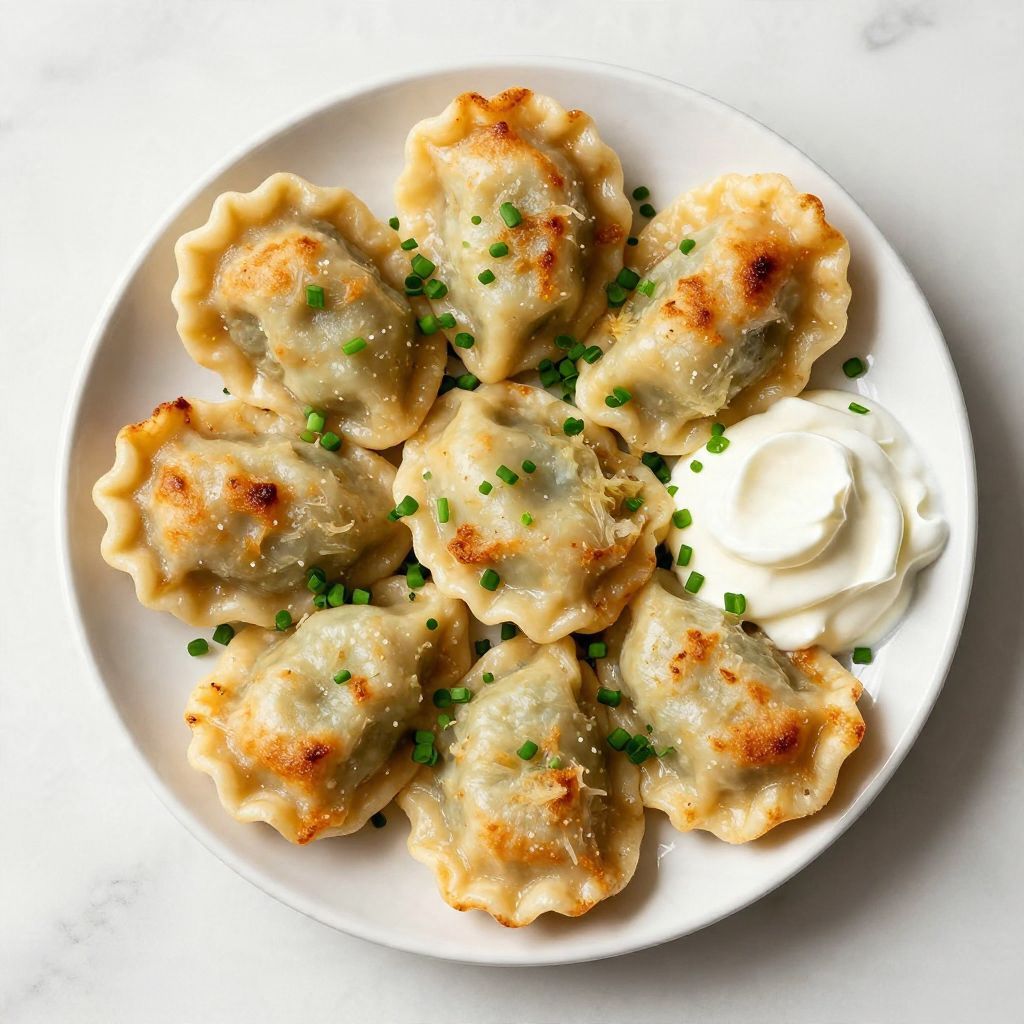
Sauerkraut Pierogi
Ingredients
Equipment
Method
- In a large mixing bowl, combine the flour and salt.
- Make a well in the center and add the egg and water.
- Knead the dough on a floured surface for about 5 minutes until smooth.
- In a skillet, melt the butter and sauté the onions until translucent.
- Add the chopped sauerkraut to the onions and cook for another 5 minutes.
- Season the mixture with salt and pepper to taste.
- Roll the dough out to about 1/8-inch thick on a floured surface.
- Using a cookie cutter or glass, cut out circles from the dough.
- Place a spoonful of filling in the center of each circle, then fold and seal the edges.
- Cook the pierogi in boiling water until they float, about 5-7 minutes.