
Picture this: a warm summer evening, the sun setting while you roll your very own sushi at home. Sushi is more than just a meal; it’s an experience that brings people together, and making it yourself allows you to customize flavors and textures to your heart’s content.
This recipe is special because it combines fresh ingredients with a hands-on approach, making it perfect for gatherings or a quiet night in. The delightful contrast of the vinegared rice, fresh fish, and crunchy vegetables will make your taste buds sing, and you’ll feel like a sushi master in no time.
Why You’ll Love This Recipe
This sushi recipe is a hit for many reasons.
- Customizable to your taste preferences.
- Perfect for gatherings or special occasions.
- Fun and interactive cooking experience.
- Fresh ingredients make it a healthier option.
- Impressive dish to showcase your culinary skills.
My Experience Making This Recipe
When I first attempted making sushi, I was a bit intimidated by the process. However, once I got rolling, I found it incredibly satisfying to create my own sushi rolls, and I couldn’t stop inviting friends over for sushi nights.
The best part was watching their faces light up as they took that first bite; the combination of flavors and textures made it all worthwhile. Plus, the laughter and chatter while we rolled sushi together turned an ordinary night into a memorable one.
Recipe Overview
- Recipe Name: Sushi
- Servings: 4
- Prep Time: 30 minutes
- Cook Time: 10 minutes
- Total Time: 40 minutes
- Course: Main
- Cuisine: Japanese
- Calories per Serving: 350
Equipment You Will Need
- Sushi mat
- Sharp knife
- Rice cooker or pot
- Mixing bowl
- Plastic wrap
Ingredients for Sushi
- 2 cups sushi rice
- 2 1/2 cups water
- 1/2 cup rice vinegar
- 2 tablespoons sugar
- 1 teaspoon salt
- 4 sheets nori (seaweed)
- 1/2 pound fresh sushi-grade fish (like tuna or salmon)
- 1 cucumber, julienned
- 1 avocado, sliced
- Soy sauce for serving
- Wasabi for serving (optional)
- Pickled ginger for serving (optional)
Ingredient Notes and Substitutions
- Sushi rice: This short-grain rice has the perfect texture for sushi. You can substitute with short-grain brown rice, though the flavor and texture will differ.
- Rice vinegar: It adds the necessary tang to the rice. If unavailable, you can use apple cider vinegar mixed with a bit of sugar.
- Fresh fish: Sushi-grade fish is crucial for safety and taste. You can substitute with cooked shrimp or crab for a safer option.
- Nori: Essential for rolling. If you prefer a gluten-free option, look for nori labeled as gluten-free.
How to Make Sushi
Step 1: Rinse the Rice
Start by rinsing the sushi rice under cold water until the water runs clear. This removes excess starch and ensures a non-sticky texture.
Step 2: Cook the Rice
Combine the rinsed rice and water in a rice cooker or pot. Cook according to the rice cooker’s instructions or bring to a boil and simmer covered for about 20 minutes.
Step 3: Prepare the Sushi Vinegar
While the rice is cooking, mix the rice vinegar, sugar, and salt in a small saucepan over low heat until dissolved. This mixture will season the rice.
Step 4: Fluff the Rice
Once the rice is done, fluff it with a fork and let it cool slightly. This helps keep the grains separate and prevents mushiness.
Step 5: Season the Rice
Gently fold the vinegar mixture into the warm rice with a wooden spatula. Be careful not to mash the rice; you want it to stay fluffy.
Step 6: Assemble Your Sushi
Lay a sheet of nori shiny side down on a sushi mat. Wet your hands and spread a thin layer of rice over the nori, leaving about an inch at the top edge.
Step 7: Add Fillings
Place your desired fillings—slices of fish, cucumber, and avocado—across the rice. Don’t overfill; less is more when it comes to rolling.
Step 8: Roll and Slice
Using the mat, roll the sushi tightly away from you, applying gentle pressure. Once rolled, use a sharp knife to slice into bite-sized pieces.
Pro Tip: Make sure to wet your knife before slicing to prevent the rice from sticking.
Tips for the Best Sushi
- Use a sharp knife for clean cuts, ensuring a beautiful presentation.
- Don’t overfill your rolls; it makes rolling difficult and messy.
- Experiment with different fillings to find your favorite combinations.
- Keep your hands wet to prevent rice from sticking.
- Let the rice cool to room temperature before adding the vinegar.
Common Mistakes to Avoid
- Not rinsing the rice; this leads to gummy sushi. Rinsing is key.
- Using warm rice; it should be slightly cooled for rolling.
- Rolling too tightly; this can cause the filling to spill out.
- Skip the vinegar; it adds essential flavor and prevents sticking.
Serving Suggestions
Pair your sushi with a refreshing drink for the best experience.
- Green tea for a light, traditional touch.
- Sake for a more authentic pairing.
- Edamame as a healthy side dish.
- Seaweed salad for a crunchy contrast.
Variations to Try
- California rolls with imitation crab and avocado for a classic twist.
- Tempura rolls with fried shrimp for a crunchy texture.
- Vegetable rolls with assorted veggies for a fresh option.
- Spicy tuna rolls with spicy mayo for a kick of heat.
Dietary Adaptations
- Gluten-free: Ensure nori and soy sauce are certified gluten-free.
- Dairy-free: This recipe is naturally dairy-free, making it suitable for various diets.
- Vegan/vegetarian: Substitute fish with avocado or tofu for a plant-based option.
- Low-carb/keto: Use cauliflower rice instead of sushi rice for a lower-carb dish.
Storage and Reheating
Refrigerator
Store leftover sushi in an airtight container in the refrigerator.
- Best consumed within 24 hours for freshness.
Freezer
Freezing sushi is not recommended, as it affects the texture of the rice and fish.
- Fresh sushi is best enjoyed the same day.
Reheating
Reheating sushi is not ideal, as it can compromise quality.
- Enjoy sushi cold or at room temperature for the best experience.
Nutrition Information
| Nutrient | Amount |
|---|---|
| Calories | 350 |
| Total Fat | 6g |
| Saturated Fat | 1g |
| Carbohydrates | 66g |
| Fiber | 3g |
| Sugar | 2g |
| Protein | 10g |
| Sodium | 600mg |
| Cholesterol | 30mg |
This information is approximate and can vary based on ingredient choices.
Frequently Asked Questions
Can I make sushi ahead of time?
Yes, you can prepare the rice and fillings ahead of time, but rolling should be done shortly before serving for the best flavor and texture.
What if my sushi rice is too sticky?
If your rice is sticky, make sure you rinsed it properly before cooking. Also, avoid overcooking it, as this can lead to excess stickiness.
Can I use regular rice instead of sushi rice?
Regular rice won’t give you the same texture or flavor. Sushi rice is specially suited for rolling and sticking together.
What can I substitute for fish in sushi?
You can use cooked shrimp, crab, tofu, or even just vegetables for a delicious vegetarian option.
How can I make sushi without a sushi mat?
You can use plastic wrap to help you roll the sushi tightly if you don’t have a mat. Just be careful to roll evenly.
Final Thoughts
Making sushi at home is not only fun but also rewarding. Once you try rolling your own, you’ll never want to go back to store-bought.
So gather your ingredients, invite some friends over, and enjoy a delicious sushi night. For more tasty seafood ideas, check out my lox recipe or try my seared ahi tuna recipe for more culinary inspiration.
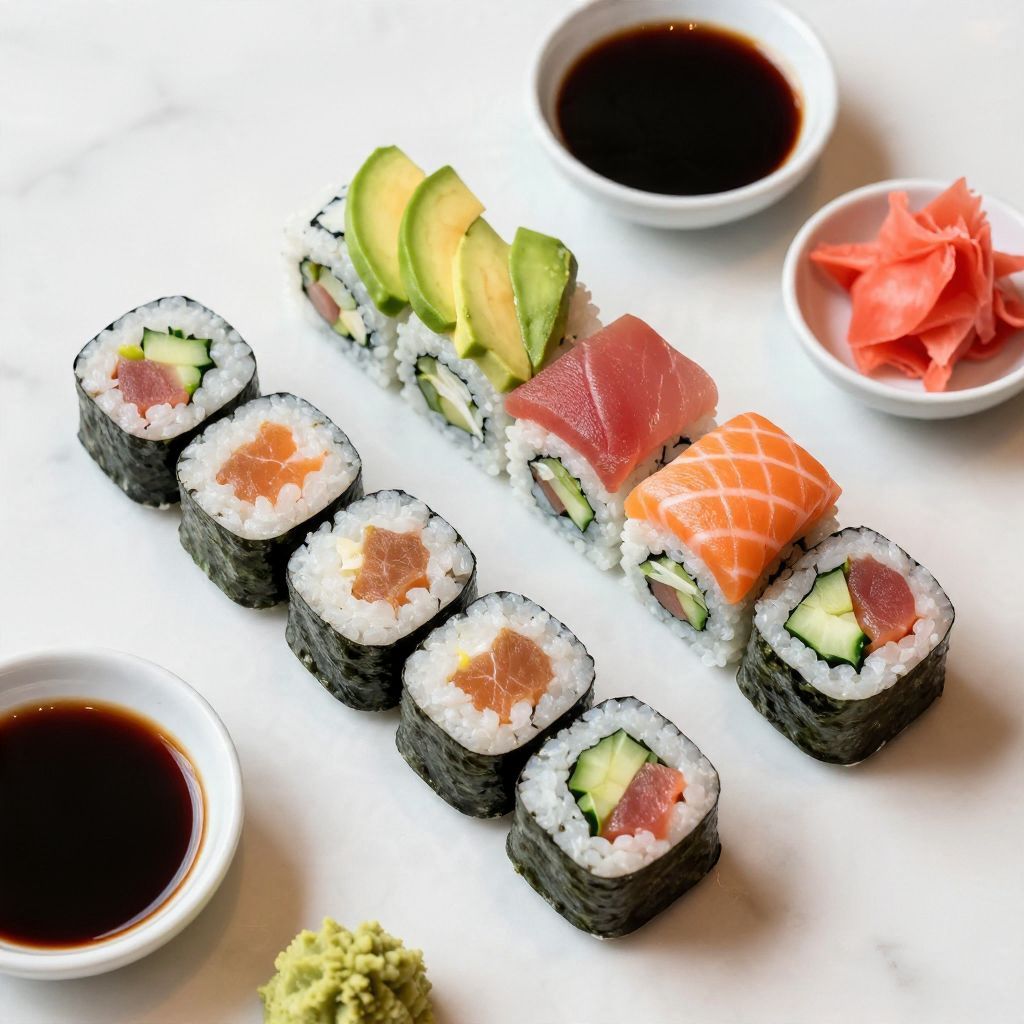
Sushi
Ingredients
Equipment
Method
- Rinse the sushi rice under cold water until the water runs clear.
- Combine the rinsed rice and water in a rice cooker or pot. Cook according to the rice cooker's instructions or bring to a boil and simmer covered for about 20 minutes.
- While the rice is cooking, mix the rice vinegar, sugar, and salt in a small saucepan over low heat until dissolved.
- Once the rice is done, fluff it with a fork and let it cool slightly.
- Gently fold the vinegar mixture into the warm rice with a wooden spatula.
- Lay a sheet of nori shiny side down on a sushi mat. Wet your hands and spread a thin layer of rice over the nori, leaving about an inch at the top edge.
- Place your desired fillings—slices of fish, cucumber, and avocado—across the rice.
- Using the mat, roll the sushi tightly away from you, applying gentle pressure. Once rolled, use a sharp knife to slice into bite-sized pieces.