
There’s something wonderfully nostalgic about a salmon loaf baking in the oven, filling your kitchen with the scent of fresh fish and herbs. This retro comfort food deserves a comeback because it delivers moist, flaky salmon bound together with just enough binder to hold it perfectly, without tasting heavy or dense.
What makes this dish special is how it transforms canned or fresh salmon into something elegant enough for dinner guests yet simple enough for a weeknight meal. The texture is tender, the flavor is subtle and refined, and it pairs beautifully with everything from roasted vegetables to a crisp salad.
Why You’ll Love This Recipe
This salmon loaf hits multiple marks at once: it’s budget-friendly, protein-packed, and genuinely delicious. You’ll find it’s forgiving to make and delivers restaurant-quality results with minimal fuss.
- Tender, moist interior with a gentle herb flavor that doesn’t overpower the salmon
- Works with canned or fresh salmon, making it flexible and accessible year-round
- Bakes hands-off for 35 to 40 minutes, freeing you up for other kitchen tasks
- Leftovers make outstanding cold salmon salad or sandwich filling the next day
- Impressive enough to serve guests, casual enough for family dinner
My Experience Making This Recipe
The first time I made a salmon loaf, I was skeptical about whether canned salmon could taste refined. Within ten minutes of the loaf coming out of the oven, my doubts vanished completely.
The aroma that filled my kitchen was bright and herbaceous, not fishy at all. When I sliced into it, the interior was creamy and held together beautifully, with flecks of pink salmon visible throughout.
My family ate it warm with lemon butter and roasted asparagus, and everyone went back for seconds. The leftovers were even better, crumbled cold into a salad the next day with fresh dill and a squeeze of lemon.
Recipe Overview
- Recipe Name: Salmon Loaf
- Servings: 6 servings
- Prep Time: 15 minutes
- Cook Time: 38 minutes
- Total Time: 53 minutes
- Course: Main Course
- Cuisine: American
- Calories per Serving: 285 calories
Equipment You Will Need
- 8 by 4 inch loaf pan or standard loaf pan
- Mixing bowl (medium size)
- Whisk or fork for beating eggs
- Rubber spatula for folding ingredients
- Measuring cups and spoons
- Can opener (if using canned salmon)
- Paper towels for draining
- Oven thermometer (optional but helpful)
Ingredients for Salmon Loaf
- Salmon: 2 cans (14.75 ounces each) salmon, drained and flaked, or 1.5 pounds fresh salmon, cooked and flaked
- Panko breadcrumbs: 1 cup
- Eggs: 2 large eggs, lightly beaten
- Whole milk: 1/4 cup
- Diced onion: 1/4 cup, finely diced
- Fresh dill: 2 tablespoons, chopped
- Lemon zest: 1 teaspoon
- Dijon mustard: 1 tablespoon
- Salt: 3/4 teaspoon
- Black pepper: 1/4 teaspoon
- Butter or oil: 1 tablespoon, for the pan
Ingredient Notes and Substitutions
- Salmon: Canned wild salmon is affordable and fully cooked, saving you time and effort. Swap fresh salmon if you prefer a more delicate flavor, though you’ll need to poach or bake it first and cool it completely before flaking.
- Panko breadcrumbs: Panko creates a lighter crumb than regular breadcrumbs and helps the loaf stay moist. Use regular breadcrumbs in equal measure if needed, though the texture will be slightly denser.
- Eggs: Eggs bind the loaf together and help it hold its shape during baking. If you’re avoiding eggs, try 1/4 cup aquafaba (liquid from canned chickpeas) mixed with 1 tablespoon cornstarch as a binder.
- Fresh dill: Dill has a bright, slightly anise-like flavor that pairs perfectly with salmon. Substitute 1 tablespoon fresh parsley plus 1/2 teaspoon dried dill if fresh dill isn’t available.
- Dijon mustard: Mustard adds a subtle tang that enhances the salmon without overpowering it. Yellow mustard works too, though it’s milder and less complex in flavor.
How to Make Salmon Loaf
Step 1: Prepare the Loaf Pan
Preheat your oven to 350 degrees Fahrenheit. Lightly butter or oil an 8 by 4 inch loaf pan, coating the bottom and all four sides evenly.
Step 2: Drain and Flake the Salmon
If using canned salmon, open the cans and drain them thoroughly, pressing gently with the back of a spoon to remove excess liquid. Place the drained salmon in a medium mixing bowl and use a fork to break it into small, evenly flaked pieces.
Step 3: Combine the Dry Ingredients
Add 1 cup panko breadcrumbs to the bowl with the salmon. Stir gently to coat the salmon evenly with the breadcrumbs, which will help distribute moisture throughout the loaf.
Step 4: Mix the Wet Ingredients
In a small bowl, whisk together 2 beaten eggs, 1/4 cup milk, 1/4 cup finely diced onion, 2 tablespoons fresh dill, 1 teaspoon lemon zest, and 1 tablespoon Dijon mustard. Whisking these together first ensures the flavors blend smoothly before they hit the salmon.
Step 5: Combine All Ingredients
Pour the wet mixture into the bowl with the salmon and breadcrumbs. Use a rubber spatula to fold everything together gently until just combined, being careful not to overmix, which can make the loaf dense and tough.
Step 6: Season the Mixture
Sprinkle 3/4 teaspoon salt and 1/4 teaspoon black pepper over the mixture and fold it in gently. Taste a tiny spoonful by microwaving it for 10 seconds if you want to check the seasoning before baking.
Step 7: Form and Press into the Pan
Transfer the salmon mixture into your prepared loaf pan, pressing it down firmly but gently with the back of a spoon so it holds together without compacting too much. Smooth the top so it bakes evenly.
Step 8: Bake Until Set
Bake the loaf in the preheated 350 degree oven for 35 to 40 minutes, until the top is lightly golden and a toothpick inserted into the center comes out with just a few moist crumbs. The internal temperature should reach 165 degrees Fahrenheit at the center.
Step 9: Cool Briefly Before Serving
Remove the loaf from the oven and let it rest in the pan for 5 minutes before running a thin knife around the edges and turning it out onto a serving plate. This brief rest allows the interior to set so it slices cleanly without crumbling.
Pro Tip: Don’t skip draining the canned salmon thoroughly; excess liquid is the number one reason loaves turn out mushy instead of moist and tender.
Tips for the Best Salmon Loaf
- Use wild-caught salmon when possible, as it has deeper flavor and a slightly firmer texture than farmed salmon. The color and taste difference is noticeable in the finished loaf.
- Dice your onion very finely so it releases its flavor and distributes evenly throughout the loaf rather than creating chewy pockets. A microplane or fine grater works beautifully for this.
- Don’t skip the lemon zest; it brightens the entire dish with citrus notes that make the salmon taste fresher and more refined. You need just one teaspoon, so there’s no risk of overdoing it.
- Let the loaf rest for 5 minutes after baking before slicing, which allows the proteins to set and makes it far easier to cut clean slices. Slicing too early results in crumbling.
- For extra moisture, brush the top of the loaf with a glaze made from 2 tablespoons melted butter mixed with 1 tablespoon fresh lemon juice and 1/2 teaspoon dill right after it comes out of the oven.
- If you’re making this ahead, assemble it in the pan, cover with plastic wrap, and refrigerate for up to 8 hours before baking. Add 5 to 10 minutes to the bake time since it starts cold.
Common Mistakes to Avoid
- Skipping the draining step with canned salmon creates a watery, mushy loaf that falls apart. The liquid in the can needs to be pressed out thoroughly before mixing.
- Overmixing the batter makes the loaf dense and tough rather than tender and flaky. Fold gently just until the ingredients are combined, leaving some small clumps visible.
- Using room temperature eggs instead of beating them first results in uneven distribution and a loaf with separated layers. Beat the eggs lightly so they incorporate smoothly into the mixture.
- Baking at too high a temperature causes the outside to brown too quickly while the inside stays underdone. Stick to 350 degrees for even, gentle cooking.
- Skipping the rest period after baking and trying to slice immediately causes the loaf to crumble and fall apart. Five minutes at room temperature makes all the difference.
Serving Suggestions
Serve your salmon loaf warm with a bright sauce or cool with a fresh topping. It pairs beautifully with light, fresh flavors that don’t compete with the delicate salmon.
- Lemon butter sauce drizzled over warm slices, alongside roasted asparagus or green beans
- Fresh dill-yogurt sauce or sour cream mixed with fresh herbs and lemon juice
- Crisp arugula salad with a lemon vinaigrette and shaved Parmesan cheese
- Roasted fingerling potatoes and steamed broccoli with garlic and olive oil
- Cold slices on a bed of mixed greens with cucumber, tomato, and a light vinaigrette
Variations to Try
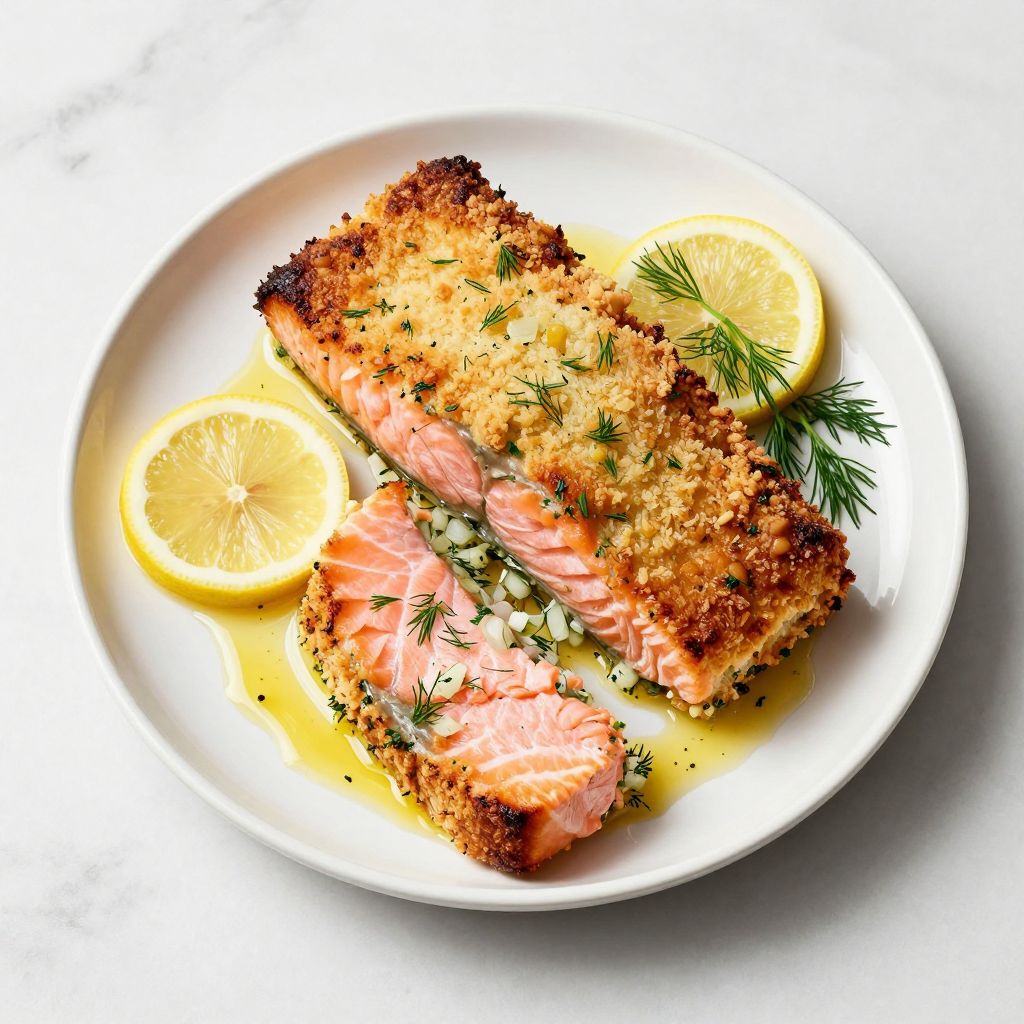
- Herb-Crusted Version: Mix 1/2 cup panko with 2 tablespoons melted butter and 1 tablespoon fresh parsley, then press this mixture onto the top of the loaf before baking for a golden, crispy crust that stays crunchy.
- Cheesy Salmon Loaf: Fold 1/2 cup grated sharp cheddar or smoked gouda into the mixture and sprinkle another 1/4 cup on top before baking, which adds richness and depth without overpowering the salmon.
- Mediterranean Style: Replace the dill with 1 tablespoon fresh oregano, add 1/4 cup sun-dried tomatoes finely chopped, and include 1/4 teaspoon red pepper flakes for a warmer, slightly spicy flavor profile.
- Salmon and Vegetable Loaf: Fold in 1/2 cup finely diced bell peppers, 1/4 cup grated zucchini, and 1/4 cup corn kernels to boost the vegetable content and add subtle sweetness that balances the salmon.
- Dill and Capers Version: Increase fresh dill to 3 tablespoons and fold in 2 tablespoons chopped capers plus 1 teaspoon caper juice for a briny, complex flavor that feels restaurant-worthy.
Dietary Adaptations
- Gluten-Free: Swap panko for certified gluten-free panko or use crushed gluten-free crackers in the same amount; the loaf will bake identically with no loss of texture or flavor.
- Dairy-Free: Replace milk with unsweetened oat milk or almond milk in equal measure; eggs are already dairy-free, so no other changes are needed.
- Vegan: Use 1/4 cup aquafaba (liquid from canned chickpeas) whisked with 1 tablespoon cornstarch instead of eggs, and swap milk for plant-based milk; the texture will be slightly softer but still hold together well.
- Low-Carb and Keto: Replace panko with almond flour or finely crushed pork rinds; use the same amount, though almond flour absorbs more liquid so you may need an extra tablespoon of milk to achieve the right consistency.
Storage and Reheating
Refrigerator
Store leftover salmon loaf in an airtight container on the coldest shelf of your refrigerator for up to 4 days. The texture stays moist and the flavors deepen slightly as it sits.
- Slice cold and eat straight from the fridge with a squeeze of fresh lemon
- Crumble into a salad with fresh greens, cucumber, and dill vinaigrette
- Mix into mayonnaise and mustard for a cold salmon salad sandwich
Freezer
Wrap the cooled loaf tightly in plastic wrap, then in aluminum foil, and freeze for up to 3 months. Thaw overnight in the refrigerator before reheating.
- Freeze individual slices in an airtight container for quick grab-and-reheat meals
- Label with the date so you remember when you made it
Reheating
Reheat gently to preserve the moist, tender texture of the salmon. Oven reheating works best and prevents drying out.
- Oven method: Wrap the loaf in foil and bake at 325 degrees for 15 to 20 minutes until warmed through
- Microwave method: Place a slice on a plate, cover loosely with a damp paper towel, and heat for 60 to 90 seconds on 50 percent power
- Stovetop method: Warm slices gently in a buttered skillet over low heat for 2 to 3 minutes per side
Nutrition Information
| Nutrient | Amount |
|---|---|
| Calories | 285 |
| Total Fat | 14 grams |
| Saturated Fat | 3 grams |
| Carbohydrates | 12 grams |
| Fiber | 0 grams |
| Sugar | 1 gram |
| Protein | 32 grams |
| Sodium | 520 milligrams |
| Cholesterol | 95 milligrams |
These values are approximate and based on USDA nutritional data for the ingredients listed. Variations occur depending on exact brands used and preparation methods. This salmon loaf provides excellent protein and omega-3 fatty acids while remaining relatively lean and balanced in fat content.
Frequently Asked Questions
Can I use fresh salmon instead of canned?
Absolutely, and many home cooks prefer the taste. Poach 1.5 pounds fresh salmon fillet in simmering water for 10 to 12 minutes, cool completely, and flake it before mixing.
How do I know when the salmon loaf is fully cooked?
A meat thermometer inserted into the center should register 165 degrees Fahrenheit, or a toothpick should come out with just a few moist crumbs clinging to it. If it looks too wet, bake it another 5 minutes and check again.
Can I make this ahead and bake it later?
Yes, fully assemble the loaf in the pan, cover it with plastic wrap, and refrigerate for up to 8 hours. Bake it straight from the fridge, adding 5 to 10 minutes to the bake time.
Why did my salmon loaf come out dense and heavy?
Overmixing the batter is the most common cause, as it overdevelops the structure and squeezes out air pockets. Fold gently just until combined, and avoid pressing down too hard when forming it in the pan.
What’s the best way to slice it without it falling apart?
Let it rest in the pan for 5 minutes after baking, then run a thin knife around the edges, invert it onto a plate, and slice with a serrated knife using gentle sawing motions rather
Salmon Loaf
Ingredients
Equipment
Method
- Preheat your oven to 350 degrees Fahrenheit. Lightly butter or oil an 8 by 4 inch loaf pan, coating the bottom and all four sides evenly.
- If using canned salmon, open the cans and drain them thoroughly, pressing gently with the back of a spoon to remove excess liquid. Place the drained salmon in a medium mixing bowl and use a fork to break it into small, evenly flaked pieces.
- Add 1 cup panko breadcrumbs to the bowl with the salmon. Stir gently to coat the salmon evenly with the breadcrumbs, which will help distribute moisture throughout the loaf.
- In a small bowl, whisk together 2 beaten eggs, 1/4 cup milk, 1/4 cup finely diced onion, 2 tablespoons fresh dill, 1 teaspoon lemon zest, and 1 tablespoon Dijon mustard.
- Pour the wet mixture into the bowl with the salmon and breadcrumbs. Use a rubber spatula to fold everything together gently until just combined, being careful not to overmix.
- Sprinkle 3/4 teaspoon salt and 1/4 teaspoon black pepper over the mixture and fold it in gently.
- Transfer the salmon mixture into your prepared loaf pan, pressing it down firmly but gently with the back of a spoon so it holds together without compacting too much. Smooth the top so it bakes evenly.
- Bake the loaf in the preheated 350 degree oven for 35 to 40 minutes, until the top is lightly golden and a toothpick inserted into the center comes out with just a few moist crumbs. The internal temperature should reach 165 degrees Fahrenheit at the center.
- Remove the loaf from the oven and let it rest in the pan for 5 minutes before running a thin knife around the edges and turning it out onto a serving plate.