
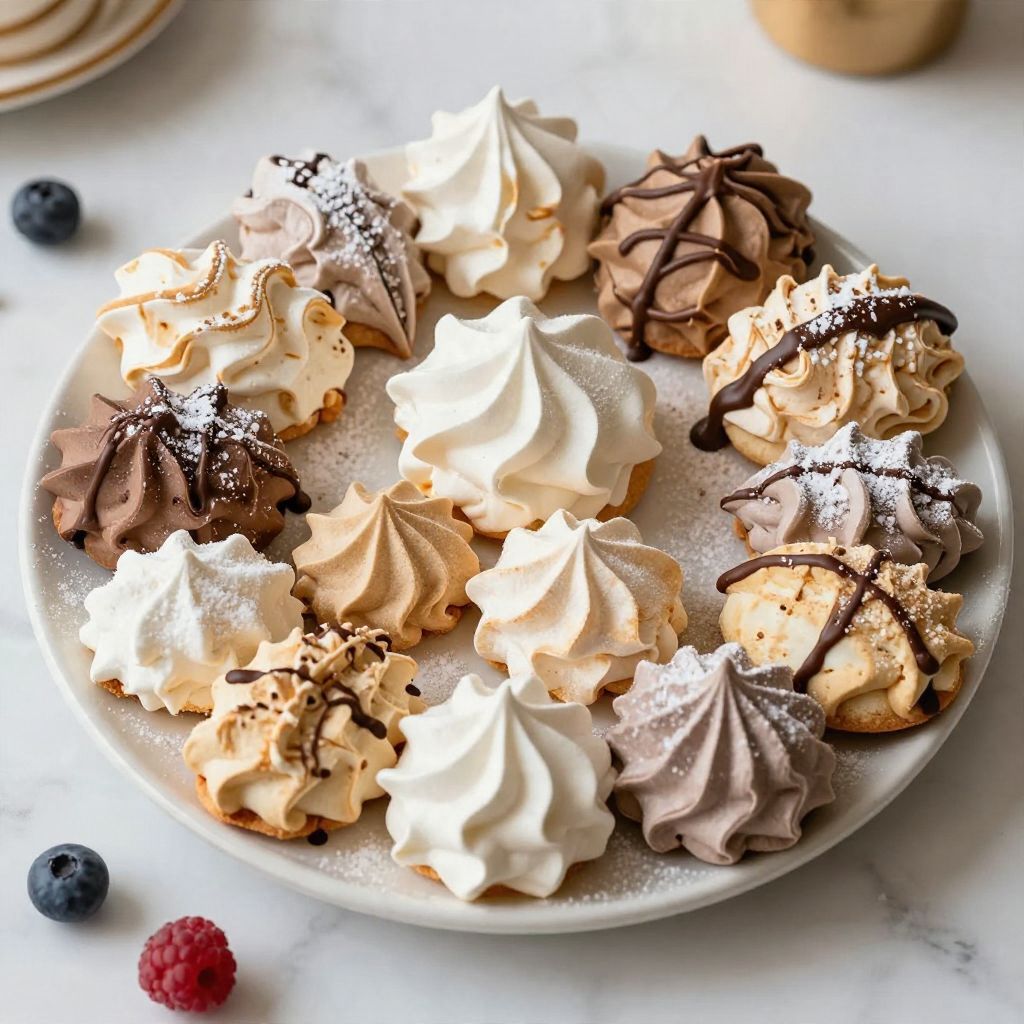
There’s something magical about the light, airy texture of Meringue Cookies that transports me back to my grandmother’s kitchen. These delightful little morsels are not just a treat for the taste buds; they melt in your mouth and can be flavored or decorated in countless ways, making them a versatile addition to any dessert table.
Whether you’re looking to impress at a gathering or simply satisfy a sweet craving, these cookies are worth every effort. With their crisp exterior and soft, chewy center, they are a testament to the beauty of simple ingredients coming together in perfect harmony.
Why You’ll Love This Recipe
With just a few ingredients, you can create something truly special.
- Light and airy texture that melts in your mouth.
- Versatile for different flavors and toppings.
- Perfect for special occasions or just a sweet treat.
- Easy to make with minimal equipment.
- Great for using up leftover egg whites.
My Experience Making This Recipe
Making meringue cookies always feels like a little bit of magic. As I whip the egg whites, watching them transform into fluffy clouds, I can’t help but smile at how simple it is to create something so elegant.
Every time I share these cookies, they disappear in a flash. Friends and family can’t resist their delicate sweetness and perfect crunch. It’s a joy to see people enjoy something I’ve made with love.
Recipe Overview
- Recipe Name: Meringue Cookies
- Servings: 24 cookies
- Prep Time: 15 minutes
- Cook Time: 1 hour
- Total Time: 1 hour 15 minutes
- Course: Dessert
- Cuisine: French
- Calories per Serving: 25
Equipment You Will Need
- Electric mixer or whisk
- Mixing bowl
- Baking sheet
- Parchment paper
- Spatula
- Measuring cups and spoons
Ingredients for Meringue Cookies
- 3 egg whites
- 1/2 teaspoon cream of tartar
- 1 cup granulated sugar
- 1 teaspoon vanilla extract
- Pinch of salt
Ingredient Notes and Substitutions
- Egg whites: Used for structure and texture; you can substitute with aquafaba for a vegan version.
- Cream of tartar: Helps stabilize the egg whites; lemon juice can be used as an alternative.
- Granulated sugar: Provides sweetness and structure; powdered sugar can be an option but will alter texture slightly.
- Vanilla extract: Adds flavor; almond extract offers a different but delightful taste.
- Salt: Enhances flavor; can be omitted but recommended for balance.
How to Make Meringue Cookies
Step 1: Preheat the Oven
Start by preheating your oven to 225°F (110°C). This low temperature is crucial for drying out the meringues without browning them.
Step 2: Prepare the Baking Sheet
Line a baking sheet with parchment paper. This prevents sticking and makes cleanup a breeze.
Step 3: Whip the Egg Whites
In a clean, dry mixing bowl, whip the egg whites on medium speed until they become frothy. This initial stage is important for incorporating air into the egg whites.
Step 4: Add Cream of Tartar
Add the cream of tartar and continue to whip until soft peaks form. This stabilizes the egg whites and helps them hold their shape.
Step 5: Gradually Add Sugar
Slowly add the granulated sugar, one tablespoon at a time, while continuing to whip on high speed. This gradual addition allows the sugar to dissolve completely, ensuring a smooth meringue.
Step 6: Check for Stiff Peaks
Once all the sugar is added, whip until stiff peaks form. The meringue should be glossy and hold its shape well, indicating it’s ready.
Step 7: Fold in Vanilla and Salt
Gently fold in the vanilla extract and a pinch of salt using a spatula. This step adds flavor without deflating the meringue.
Step 8: Pipe or Spoon the Meringue
Spoon or pipe the meringue onto the prepared baking sheet, making small rounds. This is where you can get creative with shapes!
Pro Tip: Make sure your mixing bowl and beaters are completely clean and dry to achieve the best volume in your meringue.
Tips for the Best Meringue Cookies
- Use room temperature egg whites for better volume.
- Ensure no yolk gets into the egg whites, as fat can prevent them from whipping properly.
- Let the meringues cool completely in the oven after baking for a crisp texture.
- Add food coloring or cocoa powder for a fun twist on flavor and appearance.
- Experiment with different extracts for unique flavors.
Common Mistakes to Avoid
- Not using a clean bowl: Residual fat can ruin your meringue.
- Adding sugar too quickly: It can lead to gritty meringue.
- Over-whipping: This can turn meringue grainy instead of smooth.
- Baking at too high a temperature: This will cause them to brown instead of dry out.
- Not letting them cool: They need to dry out completely for the perfect texture.
Serving Suggestions
These meringue cookies can be enjoyed on their own or as part of a dessert spread. They pair beautifully with coffee or tea.
- Serve with fresh berries for a delightful contrast.
- Use as a topping for ice cream or pavlova.
- Pair with chocolate sauce for a decadent treat.
- Crush them up and sprinkle over yogurt or desserts.
- Enjoy them as a light snack with a glass of dessert wine.
Variations to Try
- Add cocoa powder for chocolate meringues, creating a rich flavor.
- Incorporate crushed nuts for added texture and taste.
- Drizzle with chocolate after baking for an elegant touch.
- Add spices like cinnamon for a warm flavor.
- Make mini meringue nests and fill them with whipped cream and fruit.
Dietary Adaptations
- Gluten-free: Naturally gluten-free, perfect for those with gluten sensitivities.
- Dairy-free: No dairy is used in this recipe, making it suitable for dairy-free diets.
- Vegan: Substitute egg whites with aquafaba for a vegan-friendly option.
- Low-carb/keto: Use a sugar substitute for a low-carb version.
Storage and Reheating
Refrigerator
Store meringue cookies in an airtight container at room temperature. This keeps them crisp and delicious.
- Use parchment paper between layers to prevent sticking.
- Consume within a week for best texture.
Freezer
Meringue cookies can be frozen for longer storage. However, they may lose some texture when thawed.
- Place in a single layer in a freezer-safe container.
- Thaw at room temperature before serving.
Reheating
No reheating is necessary for meringue cookies. Enjoy them as is!
Nutrition Information
| Nutrient | Amount |
|---|---|
| Calories | 25 |
| Total Fat | 0g |
| Saturated Fat | 0g |
| Carbohydrates | 6g |
| Fiber | 0g |
| Sugar | 6g |
| Protein | 0g |
| Sodium | 1mg |
| Cholesterol | 0mg |
This nutrition information is approximate and may vary based on specific ingredients used.
Frequently Asked Questions
Can I use pasteurized egg whites?
Yes, pasteurized egg whites can be used for safety and ease.
How long can I store meringue cookies?
They can be stored for about a week at room temperature in an airtight container.
What if my meringue is too runny?
If your meringue is too runny, it may not have been whipped enough or the egg whites may have been contaminated with fat.
Can I make these cookies in advance?
Yes, meringue cookies can be made ahead of time and stored for later use.
What flavors can I add?
You can add various extracts, spices, or even cocoa powder to customize the flavor.
Final Thoughts
Making Meringue Cookies is not just about baking; it’s about creating something that brings joy and nostalgia. I hope you find as much happiness in making and sharing these delightful treats as I do.
So grab your ingredients and get whisking! For more meringue styles, check out this French meringue recipe or try the Italian meringue recipe for a delicious twist.