
Picture this: a perfectly baked halibut fillet, its delicate flakes melting in your mouth, infused with a hint of lemon and herbs. This recipe for Baked Halibut is a keeper, bringing together effortless cooking with bold flavors that impress without the fuss.
Not only is it quick to prepare, but the flaky texture and zesty notes make it a delightful centerpiece for any meal. Whether you are hosting friends or enjoying a quiet dinner, this dish is sure to shine. Let’s dive into the ingredients and get cooking!
Why You’ll Love This Recipe
This Baked Halibut recipe is a must-try for several reasons.
- Quick and easy to prepare, making it perfect for busy weeknights.
- Light and flaky texture that pairs beautifully with various sides.
- Versatile seasoning options to suit your taste preferences.
- Healthy and packed with nutrients, making it a guilt-free choice.
My Experience Making This Recipe
The first time I made this baked halibut, I was surprised by how simple it was. The aroma wafting through my kitchen had my family gathering around the table in anticipation.
Each bite was a delightful experience, with the fish so tender it practically fell apart. It quickly became a regular in our household, and I often find myself experimenting with different herbs and spices to keep things interesting.
Recipe Overview
- Recipe Name: Baked Halibut
- Servings: 4
- Prep Time: 10 minutes
- Cook Time: 20 minutes
- Total Time: 30 minutes
- Course: Main Course
- Cuisine: American
- Calories per Serving: 230
Equipment You Will Need
- Baking dish
- Mixing bowl
- Measuring spoons
- Cooking brush
- Oven mitts
Ingredients for Baked Halibut
- 4 halibut fillets (about 6 ounces each)
- 2 tablespoons olive oil
- 2 tablespoons fresh lemon juice
- 2 cloves garlic, minced
- 1 teaspoon dried thyme
- 1 teaspoon paprika
- Salt and pepper, to taste
- Fresh parsley, for garnish
Ingredient Notes and Substitutions
- Halibut fillets: This is a mild fish with a firm texture. You can substitute it with cod or haddock if needed.
- Olive oil: It adds richness and helps with browning. Can be replaced with melted butter for a different flavor.
- Fresh lemon juice: Brightens the dish. Bottled lemon juice works in a pinch, but fresh is best.
- Dried thyme: Adds a lovely herbal note. Fresh thyme can be used if you have it on hand.
How to Make Baked Halibut
Step 1: Preheat the Oven
Start by preheating your oven to 400°F (200°C). This ensures that your halibut cooks evenly and gets that lovely golden crust.
Step 2: Prepare the Baking Dish
Lightly grease a baking dish with a bit of olive oil. This prevents the fish from sticking and makes cleanup easier.
Step 3: Make the Marinade
In a mixing bowl, combine the olive oil, lemon juice, minced garlic, thyme, paprika, salt, and pepper. This mixture will infuse flavor into the fish as it bakes.
Step 4: Coat the Halibut
Place the halibut fillets in the baking dish and brush them generously with the marinade. Make sure the fillets are well coated to enhance the flavor.
Step 5: Bake the Fish
Put the baking dish in the preheated oven and bake for about 15-20 minutes. The fish is done when it flakes easily with a fork and is opaque throughout.
Step 6: Garnish
Once baked, remove the dish from the oven and sprinkle with fresh parsley. This adds a pop of color and freshness to the dish.
Step 7: Serve
Serve the baked halibut hot, alongside your favorite sides. It pairs beautifully with vegetables, rice, or a light salad.
Step 8: Enjoy
Take a moment to appreciate your handiwork as you dig into this delicious meal. Each bite is a celebration of flavor!
Pro Tip: Ensure not to overcook the halibut; it should be just opaque in the center for the best texture.
Tips for the Best Baked Halibut
- Choose fresh halibut for the best flavor and texture.
- Let the fish rest for a few minutes after baking to allow juices to redistribute.
- Experiment with different herbs like dill or basil for unique flavors.
- Serve with lemon wedges for extra zing.
- Pair with a light white wine to enhance the dining experience.
Common Mistakes to Avoid
- Overcooking the halibut can lead to a dry texture. Keep an eye on it as it bakes.
- Skipping the marinating step can result in less flavorful fish. Always take the time to marinate.
- Not using a thermometer can lead to undercooked fish. Aim for an internal temperature of 145°F (63°C).
- Forgetting to preheat the oven can affect cooking time. Always preheat for even cooking.
Serving Suggestions
This baked halibut is incredibly versatile and pairs well with a variety of sides.
- Steamed asparagus or broccoli for a healthy touch.
- Fluffy quinoa or rice for a hearty base.
- Crispy roasted potatoes for a comforting side.
- Lightly dressed arugula salad to balance flavors.
Variations to Try
- Swap the spices with a Cajun blend for a spicy kick.
- Add a layer of sliced tomatoes for a Mediterranean twist.
- Top with a crumb topping for added texture and flavor.
- Try a coconut milk marinade for a tropical flavor.
Dietary Adaptations
- Gluten-free: This recipe is naturally gluten-free, making it safe for those with gluten sensitivities.
- Dairy-free: Completely dairy-free, perfect for those avoiding dairy products.
- Vegan/Vegetarian: Not suitable for vegans or vegetarians, but you can substitute with tofu for a similar texture.
- Low-carb/Keto: Fits well into a low-carb diet, making it a smart choice for keto dieters.
Storage and Reheating
Refrigerator
Store any leftovers in an airtight container in the fridge for up to 3 days.
- Reheat gently to avoid drying out the fish.
- You can enjoy it cold in salads or wraps.
Freezer
For longer storage, freeze the cooked halibut in an airtight container for up to 2 months.
- Thaw in the refrigerator overnight before reheating.
- Do not refreeze once thawed.
Reheating
Reheat in the oven at 350°F (175°C) until warmed through. This helps maintain the texture.
- Microwave is an option, but be cautious, as it can dry out the fish.
- Cover with a damp paper towel if using the microwave.
Nutrition Information
| Nutrient | Amount |
|---|---|
| Calories | 230 |
| Total Fat | 10g |
| Saturated Fat | 1.5g |
| Carbohydrates | 0g |
| Fiber | 0g |
| Sugar | 0g |
| Protein | 30g |
| Sodium | 90mg |
| Cholesterol | 70mg |
Nutrition values may vary based on specific ingredients used and preparation methods.
Frequently Asked Questions
Can I substitute halibut with another fish?
Yes, cod or haddock work well as substitutes for halibut in this recipe.
Can I make this dish ahead of time?
You can prep the marinade and coat the fish ahead of time but bake it just before serving for the best results.
How do I store leftovers?
Store leftovers in an airtight container in the refrigerator for up to 3 days.
What if my halibut is frozen?
Thaw the halibut in the refrigerator overnight before cooking it.
How can I tell when the fish is done?
The halibut is ready when it flakes easily with a fork and is opaque in the center.
Final Thoughts
Making Baked Halibut is a delightful way to enjoy a healthy and flavorful meal. With its flaky texture and zesty notes, it’s bound to become a favorite in your home.
So why not give it a try? For more delicious seafood recipes, check out my baked haddock recipe or explore this mahi mahi recipe in the oven!
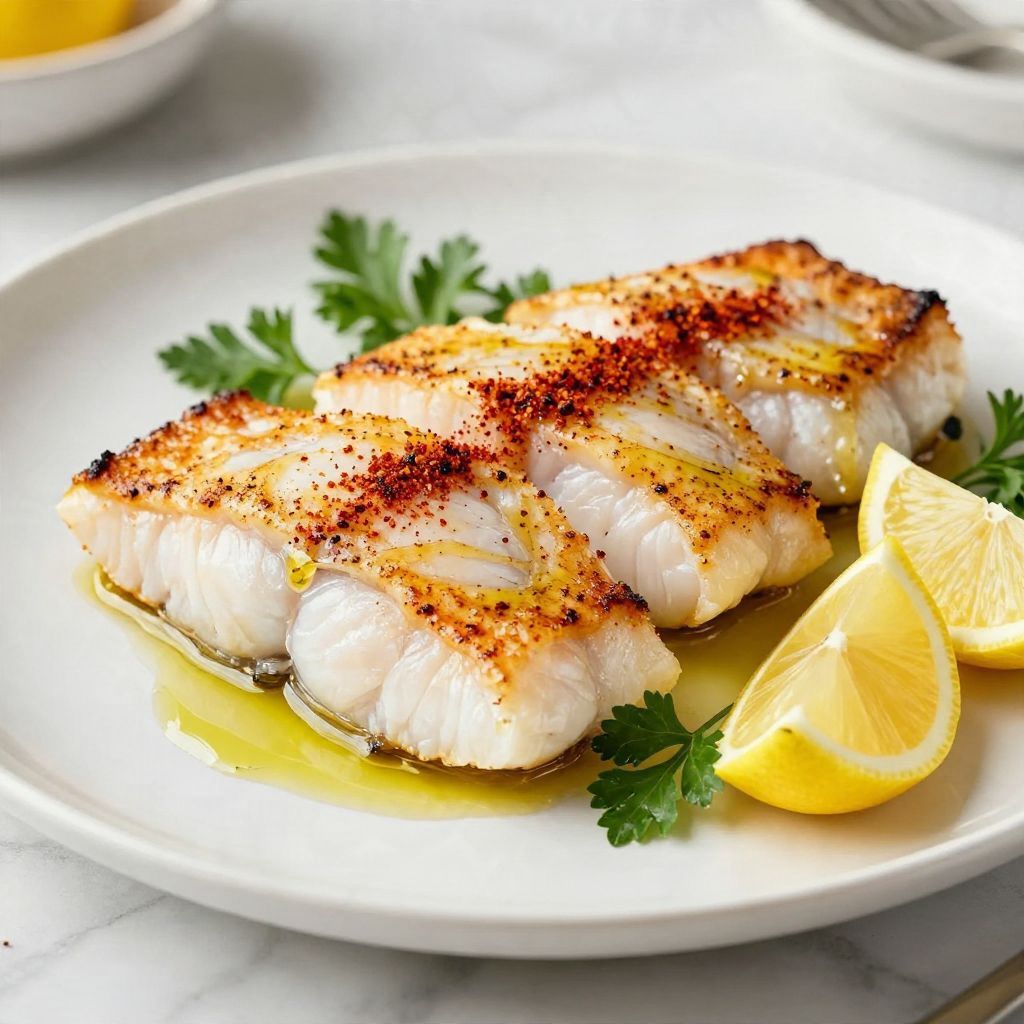
Baked Halibut
Ingredients
Equipment
Method
- Preheat the oven to 400°F (200°C).
- Lightly grease a baking dish with olive oil.
- In a mixing bowl, combine olive oil, lemon juice, minced garlic, thyme, paprika, salt, and pepper.
- Place halibut fillets in the baking dish and brush them generously with the marinade.
- Bake in the preheated oven for about 15-20 minutes until it flakes easily with a fork.
- Remove from oven and sprinkle with fresh parsley.
- Serve hot with your favorite sides.