
There’s something incredibly comforting about a warm bowl of miso soup, especially on a chilly day. This Miso Soup Recipe With Miso Paste is not just quick to whip up but also brims with umami flavor, making it a perfect starter or a light meal.
Why You’ll Love This Recipe
This miso soup is a delightful blend of flavors and textures that warms your soul.
- Quick and easy to make in under 30 minutes.
- Versatile with various ingredients to customize to your taste.
- Rich in probiotics thanks to fermented miso paste.
- Low in calories, making it a healthy choice.
- Perfect as a comforting snack or a side dish.
My Experience Making This Recipe
Every time I make this soup, it takes me back to my favorite sushi restaurant. The aroma of the simmering broth instantly fills my kitchen with warmth and nostalgia.
Friends and family often comment on how authentic it tastes, and they are shocked at how simple it is to make at home. Trust me, once you try it, you’ll find yourself craving it regularly.
Recipe Overview
- Recipe Name: Miso Soup Recipe With Miso Paste
- Servings: 4
- Prep Time: 10 minutes
- Cook Time: 15 minutes
- Total Time: 25 minutes
- Course: Soup
- Cuisine: Japanese
- Calories per Serving: 70
Equipment You Will Need
- Medium saucepan
- Whisk or spoon
- Measuring cups and spoons
- Cutting board
- Knife
Ingredients for Miso Soup Recipe With Miso Paste
- 4 cups vegetable broth or dashi
- 1/4 cup miso paste
- 1 cup tofu, cubed
- 1/2 cup green onions, sliced
- 1 cup seaweed (wakame), rehydrated
- Optional: mushrooms, sliced
Ingredient Notes and Substitutions
- Miso paste: Adds depth and umami flavor; try white, yellow, or red for different profiles.
- Tofu: Provides protein and texture; substitute with edamame or chickpeas for a different twist.
- Seaweed: Adds a unique flavor; if unavailable, skip it or use spinach instead.
- Vegetable broth: Forms the soup base; chicken broth can be used for a non-vegetarian version.
How to Make Miso Soup Recipe With Miso Paste
Step 1: Prepare the Broth
In a medium saucepan, bring the vegetable broth or dashi to a gentle simmer over medium heat. This will ensure a flavorful base for your soup.
Step 2: Rehydrate the Seaweed
If using dried seaweed, soak it in water for about 10 minutes until it becomes tender. This step makes sure your seaweed is soft and pleasant to eat.
Step 3: Combine Miso Paste
In a small bowl, whisk together the miso paste with a bit of hot broth until smooth. This prevents clumps of miso in the soup, ensuring a smooth texture.
Step 4: Add Tofu
Gently add the cubed tofu to the simmering broth. Tofu is delicate, so avoid stirring too vigorously to keep it intact.
Step 5: Stir in Seaweed
Add the rehydrated seaweed to the pot and stir gently. This adds flavor and a nice texture to the soup.
Step 6: Mix in Miso
Pour the miso mixture back into the pot and stir well. Make sure not to boil the soup after adding miso, as high heat can kill its beneficial properties.
Step 7: Add Green Onions
Stir in the sliced green onions and let the soup sit for a couple of minutes. This allows the onions to soften slightly and release their flavor.
Step 8: Serve and Enjoy
Pour the miso soup into bowls and serve hot. Each spoonful should be warming and comforting, perfect for any occasion.
Pro Tip: Always add miso to the soup off the heat to preserve its probiotic benefits.
Tips for the Best Miso Soup Recipe With Miso Paste
- Use high-quality miso paste for the best flavor; it makes a noticeable difference.
- Don’t overcook the tofu; it should be warm and tender, not falling apart.
- Experiment with different toppings like fried garlic or chili flakes for extra flavor.
- Make sure to taste before serving; you can adjust the miso level to your preference.
- For a richer broth, consider adding a splash of soy sauce or sesame oil.
Common Mistakes to Avoid
- Boiling the soup after adding miso can ruin its flavor and health benefits.
- Using too much miso can overpower the soup; start with less and adjust.
- Not rehydrating the seaweed properly can lead to a chewy texture.
- Forgetting to taste before serving can result in an unbalanced flavor.
Serving Suggestions
This miso soup pairs beautifully with various dishes, making it a versatile addition to any meal.
- Serve with sushi or sashimi for a complete Japanese meal.
- Pair it with rice and stir-fried vegetables for a wholesome lunch.
- Enjoy alongside grilled fish for a delightful dinner.
- Add a side of gyoza for a satisfying appetizer.
Variations to Try
- Add sliced mushrooms for an earthy flavor that complements the broth.
- Incorporate a handful of spinach or bok choy for extra greens.
- Mix in corn for a touch of sweetness and texture.
- Use different protein sources like shrimp or chicken for a heartier soup.
Dietary Adaptations
- Gluten-free: Use gluten-free miso paste and broth.
- Dairy-free: This recipe is naturally dairy-free.
- Vegan/Vegetarian: Use vegetable broth and tofu for a plant-based option.
- Low-carb/Keto: Skip the tofu or reduce its amount for a lower-carb version.
Storage and Reheating
Refrigerator
Store leftover miso soup in an airtight container in the refrigerator for up to 3 days.
- Allow the soup to cool completely before sealing.
- Reheat gently on the stove or in the microwave.
Freezer
While it’s best fresh, you can freeze the soup for up to a month without the tofu.
- Freeze in individual portions for easy meal prep.
- Thaw in the refrigerator overnight before reheating.
Reheating
Reheat gently over low heat to preserve the miso’s flavor.
- Add a splash of water or broth if the soup is too thick after freezing.
Nutrition Information
| Nutrient | Amount |
|---|---|
| Calories | 70 |
| Total Fat | 2g |
| Saturated Fat | 0g |
| Carbohydrates | 8g |
| Fiber | 1g |
| Sugar | 1g |
| Protein | 5g |
| Sodium | 800mg |
| Cholesterol | 0mg |
Nutrition values may vary based on specific ingredients used.
Frequently Asked Questions
Can I use any type of miso paste?
Yes, you can use white, yellow, or red miso paste depending on your flavor preference.
Can I make this soup ahead of time?
Yes, you can prepare the broth and add miso just before serving for the best flavor.
How do I store leftovers?
Store leftovers in an airtight container in the refrigerator for up to three days.
What if my soup is too salty?
If the soup is too salty, try adding more water or broth to dilute the flavor.
Can I add other vegetables to the soup?
Absolutely! Feel free to add any vegetables you enjoy, like carrots or zucchini.
Final Thoughts
This Miso Soup Recipe With Miso Paste is a warm hug in a bowl that you can customize to your heart’s desire. So, grab your ingredients and enjoy a comforting bowl of this delicious soup!
If you’re interested in exploring more delightful recipes, check out my delicious oden recipe or try this creamy ramen recipe for a cozy meal experience.
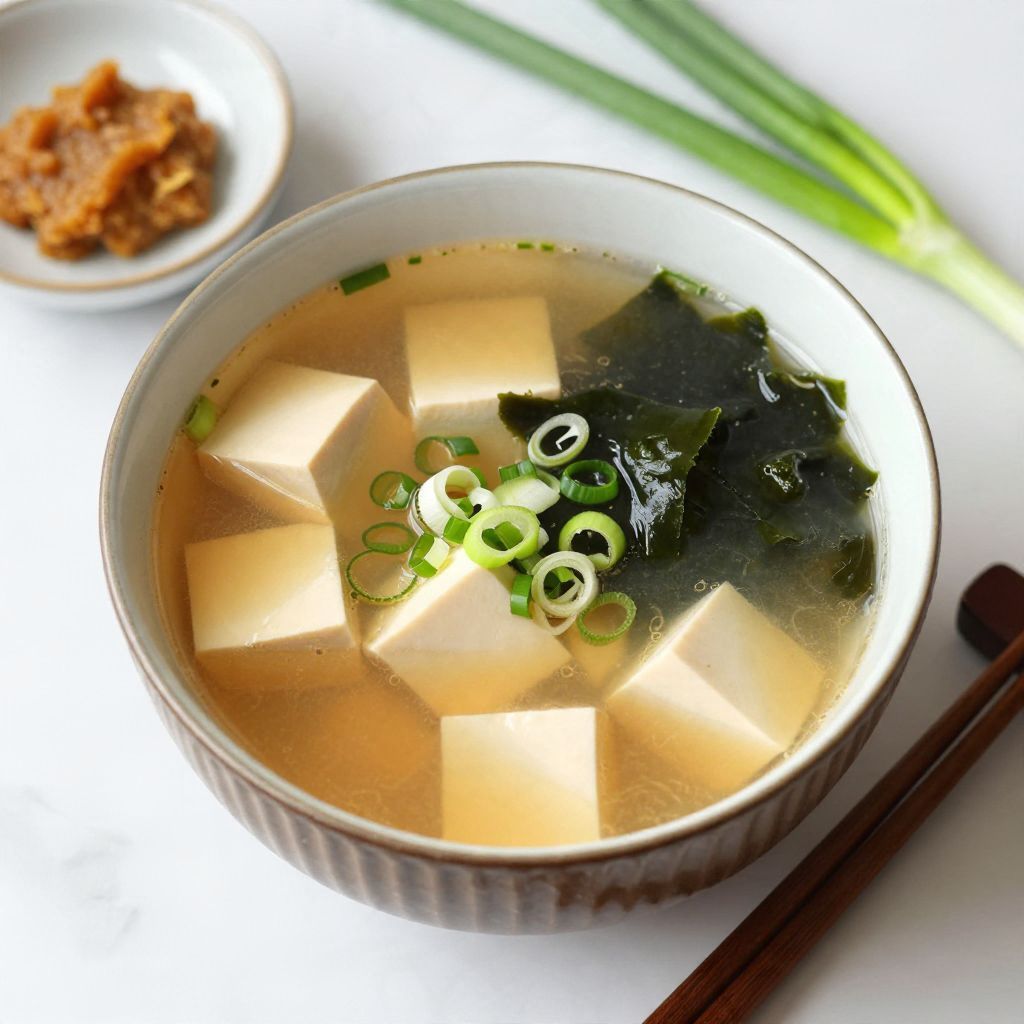
Miso Soup Recipe With Miso Paste
Ingredients
Equipment
Method
- In a medium saucepan, bring the vegetable broth or dashi to a gentle simmer over medium heat.
- If using dried seaweed, soak it in water for about 10 minutes until it becomes tender.
- In a small bowl, whisk together the miso paste with a bit of hot broth until smooth.
- Gently add the cubed tofu to the simmering broth.
- Add the rehydrated seaweed to the pot and stir gently.
- Pour the miso mixture back into the pot and stir well.
- Stir in the sliced green onions and let the soup sit for a couple of minutes.
- Pour the miso soup into bowls and serve hot.