
There’s something heartwarming about a steaming bowl of Sundubu, with its silky tofu and rich, spicy broth. This Korean dish is a delightful blend of flavors and textures, making it a perfect comfort food for any day of the week.
Whether you’re a busy parent or just looking for a nourishing meal, Sundubu is quick to whip up and offers a satisfying experience with every spoonful. Its standout qualities include the silky texture of the tofu and a robust, savory broth that can be customized to your taste.
Why You’ll Love This Recipe
This recipe is a must-try for anyone who enjoys bold flavors and simple cooking.
- Quick to prepare, perfect for weeknight dinners.
- Customizable with your favorite proteins and vegetables.
- Rich in flavor with a gentle kick of spice.
- Healthy and satisfying, packed with nutrients.
- Comforting and warming for any season.
My Experience Making This Recipe
Making Sundubu always brings back memories of cozy meals shared with friends and family. The aroma of the spicy broth bubbling away is irresistible and sets the mood for a satisfying dinner.
When I served it recently, the rich flavors and silky texture had everyone reaching for seconds. It’s a dish that truly brings smiles, and the best part is that it’s so simple to make.
Recipe Overview
- Recipe Name: Sundubu
- Servings: 4
- Prep Time: 10 minutes
- Cook Time: 15 minutes
- Total Time: 25 minutes
- Course: Main
- Cuisine: Korean
- Calories per Serving: 300
Equipment You Will Need
- Large pot or Dutch oven
- Wooden spoon or spatula
- Measuring cups and spoons
- Knife and cutting board
- Serving bowls
Ingredients for Sundubu
- 1 tablespoon vegetable oil
- 1/2 cup onion, chopped
- 2 cloves garlic, minced
- 1 tablespoon gochugaru (Korean red pepper flakes)
- 4 cups vegetable broth
- 1 tablespoon soy sauce
- 1 tablespoon sesame oil
- 1 package (14 oz) silken tofu, cut into cubes
- 1 cup mushrooms, sliced (shiitake or button)
- 2 green onions, chopped (for garnish)
- 1 egg (optional, for serving)
Ingredient Notes and Substitutions
- Vegetable oil: Used for sautéing; can substitute with canola oil.
- Onion: Adds sweetness; shallots can be used as an alternative.
- Gochugaru: Provides heat and flavor; red pepper flakes can be a substitute.
- Vegetable broth: Gives depth; chicken broth can be used for non-vegetarian options.
- Silken tofu: Creates a soft texture; firm tofu can be used for more bite.
How to Make Sundubu
Step 1: Sauté the Aromatics
Heat the vegetable oil in a large pot over medium heat. This will help to release the flavors of the onion and garlic.
Step 2: Add the Onions and Garlic
Stir in the chopped onion and minced garlic, cooking until the onion is translucent. This adds a fragrant base to your broth.
Step 3: Incorporate Gochugaru
Add the gochugaru and stir for about a minute. This step helps to bloom the spices, enhancing their flavor.
Step 4: Pour in the Broth
Pour in the vegetable broth and soy sauce, stirring to combine. This forms the heart of your dish, so make sure it’s well mixed.
Step 5: Add the Tofu and Mushrooms
Gently add the silken tofu and sliced mushrooms to the pot. Be careful not to break the tofu too much; you want those lovely chunks!
Step 6: Simmer the Mixture
Let the soup simmer for about 5-7 minutes. This allows the flavors to meld together beautifully.
Step 7: Drizzle with Sesame Oil
Before serving, add the sesame oil for extra flavor. It brings a nutty richness that pairs perfectly with the broth.
Step 8: Serve and Garnish
Serve the Sundubu hot, garnished with chopped green onions. If you like, crack an egg into each bowl for added richness.
Pro Tip: For extra depth, try adding a splash of fish sauce or a sprinkle of seaweed.
Tips for the Best Sundubu
- Use fresh ingredients for the best flavor, especially your vegetables.
- Adjust the level of gochugaru based on your heat preference.
- Let the broth simmer gently to extract maximum flavor.
- Top with an egg just before serving for a richer texture.
- Feel free to experiment with different vegetables like zucchini or spinach.
Common Mistakes to Avoid
- Skipping the sautéing step; it can dull the flavors.
- Using too much gochugaru; start small and adjust to taste.
- Not simmering long enough; give the broth time to develop.
- Breaking the tofu too much; gentle handling keeps it silky.
Serving Suggestions
Pair Sundubu with a side of steamed rice or kimchi to make a complete meal.
- Steamed white rice
- Spicy kimchi
- Pickled vegetables
- Sesame cucumber salad
Variations to Try
- Add shrimp or clams for a seafood twist.
- Include spinach or bok choy for added greens.
- Use beef or chicken for a heartier option.
- Experiment with different types of mushrooms for varied flavor.
Dietary Adaptations
- Gluten-free: Use tamari instead of soy sauce.
- Dairy-free: This recipe naturally fits a dairy-free diet.
- Vegan/Vegetarian: Stick with vegetable broth and tofu.
- Low-carb/Keto: Omit the rice and focus on proteins and vegetables.
Storage and Reheating
Refrigerator
Store any leftovers in an airtight container in the refrigerator.
- Best consumed within 3 days.
- Reheat gently to avoid breaking the tofu.
Freezer
Sundubu can be frozen, but the texture of the tofu may change.
- Use a freezer-safe container.
- Consume within 2 months for best quality.
Reheating
Reheat on the stove over low heat, stirring gently.
- Add a splash of broth if it seems too thick.
- Do not microwave, as it may break the tofu.
Nutrition Information
| Nutrient | Amount |
|---|---|
| Calories | 300 |
| Total Fat | 15g |
| Saturated Fat | 2g |
| Carbohydrates | 25g |
| Fiber | 4g |
| Sugar | 3g |
| Protein | 18g |
| Sodium | 800mg |
| Cholesterol | 70mg |
Nutrition values may vary based on specific ingredients used.
Frequently Asked Questions
Can I substitute the tofu?
Yes, you can use firm tofu or even tempeh for a different texture.
Can I make Sundubu ahead of time?
Yes, you can prepare the broth and ingredients ahead, then combine and heat when ready.
How do I store leftovers?
Store in an airtight container in the refrigerator for up to 3 days.
What if my Sundubu is too spicy?
You can balance the heat by adding coconut milk or more broth.
Can I use different vegetables?
Absolutely! Feel free to add your favorites like zucchini or bell peppers.
Final Thoughts
Making Sundubu can be a delightful experience that warms not just your belly but your heart too. I encourage you to try this recipe and make it your own with personal touches.
Explore more delicious recipes and tips to enhance your cooking adventures. Check out substitutes for rosemary or try a classic corn pone recipe.
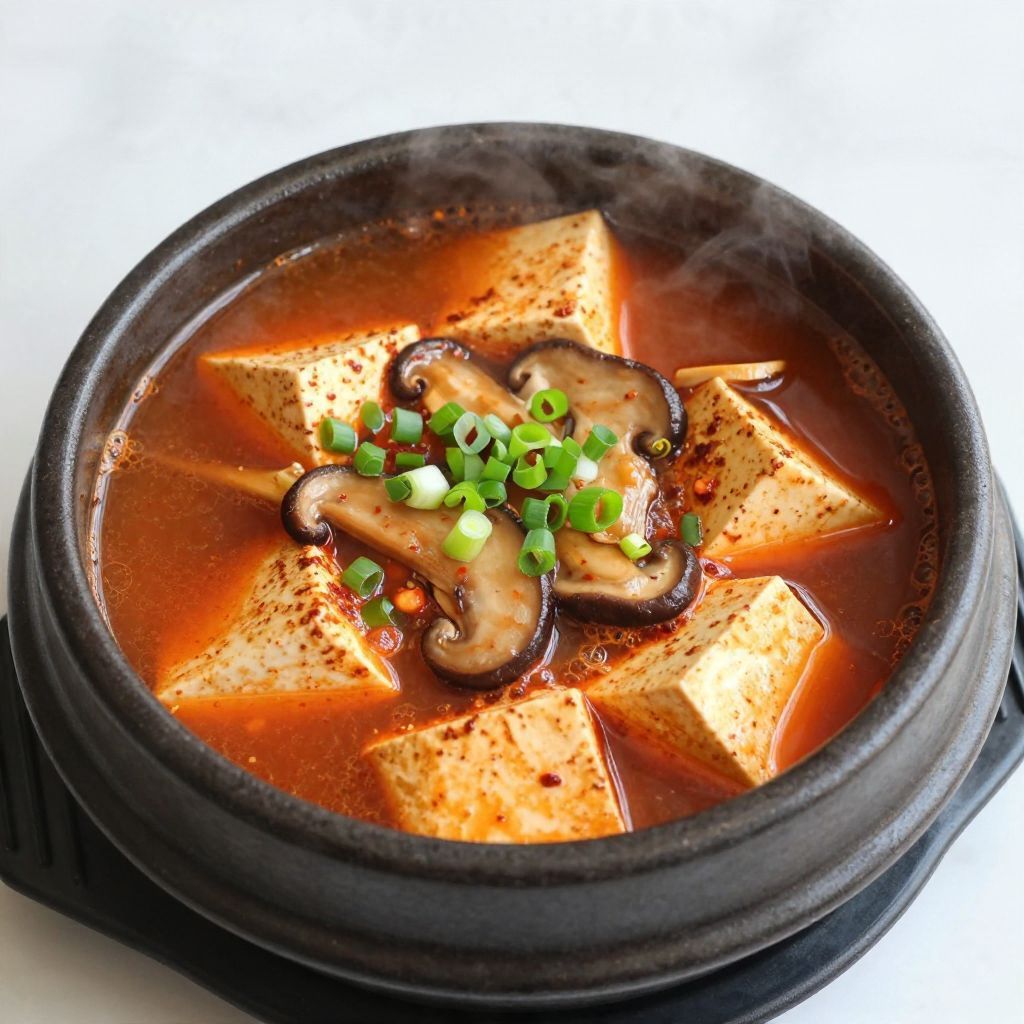
Sundubu
Ingredients
Equipment
Method
- Heat the vegetable oil in a large pot over medium heat.
- Stir in the chopped onion and minced garlic, cooking until the onion is translucent.
- Add the gochugaru and stir for about a minute.
- Pour in the vegetable broth and soy sauce, stirring to combine.
- Gently add the silken tofu and sliced mushrooms to the pot.
- Let the soup simmer for about 5-7 minutes.
- Before serving, add the sesame oil for extra flavor.
- Serve hot, garnished with chopped green onions and optionally an egg.