
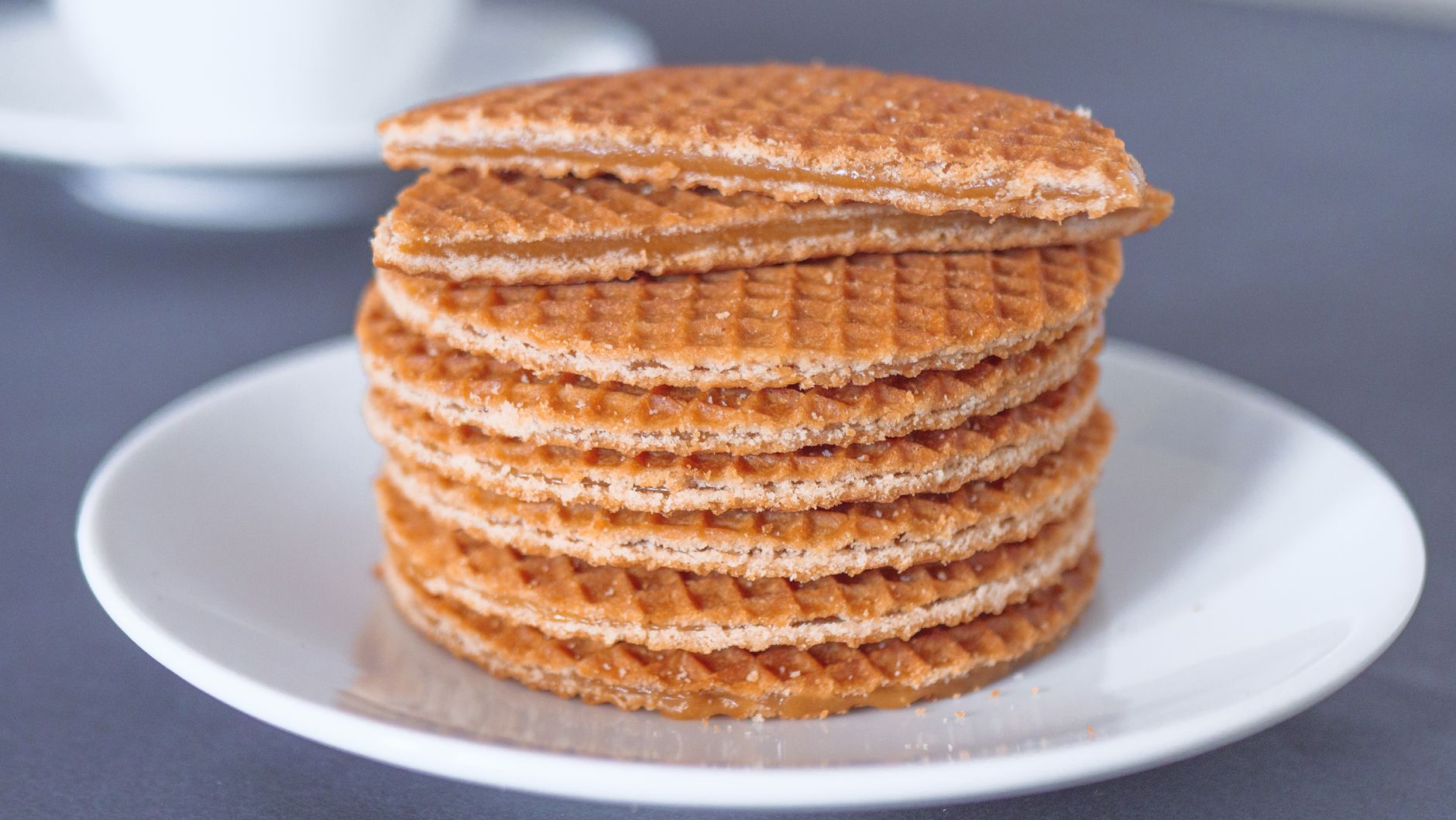
Dutch waffles, also known as stroopwafels, are a delightful treat originating from the Netherlands. Their unique texture, flavor, and versatility make them a popular choice for snacking, breakfast, or dessert.
In this article, find out more about Dutch waffles, including their ingredients, taste profiles, culinary uses, and how to serve them. Dive into the delightful world of these sweet, caramel-filled confections.
What Is a Dutch Waffle?
A Dutch waffle is a thin, crispy waffle traditionally made from two layers of baked dough with a sweet filling of caramel syrup, known as stroop, sandwiched between them. The waffles have a distinctive grid pattern and are often enjoyed with a hot beverage, making them a beloved treat in Dutch culture.
Ingredients for Dutch Waffles
The classic ingredients for Dutch waffles (stroopwafels) can be divided into two categories: the waffle dough and the syrup filling. Here’s a breakdown of what you’ll need:
Waffle Dough
- 500 grams (4 cups) all-purpose flour
- 250 grams (1 cup) unsalted butter, soft at room temperature
- 150 grams (¾ cup) granulated sugar
- 1 teaspoon ground cinnamon
- 1 packet (7 grams) active dry yeast
- 250 ml (1 cup) warm milk
- 2 large eggs
- Pinch of salt
Syrup Filling
- 300 grams (1½ cups) dark brown sugar
- 150 ml (½ cup) water
- 150 ml (⅔ cup) light corn syrup or golden syrup
- 1 teaspoon vanilla extract
- 1 tablespoon ground cinnamon (optional)
Taste and Texture of Dutch Waffles
Dutch waffles have a delightful combination of flavors and textures. The outer layer is thin and crispy, while the inside is soft and gooey due to the caramel filling. The caramel has a sweet and slightly chewy quality, often enhanced with the warmth of cinnamon. When served warm, the waffles become even more aromatic and tantalizing, making them an irresistible snack.
Culinary Uses of Dutch Waffles
Dutch waffles are incredibly versatile and can be used in various ways:
1. Snack Time
Enjoy them as a quick snack, either plain or paired with coffee or tea. The warmth of your beverage can help soften the caramel filling, enhancing the eating experience.
2. Breakfast Delight
Add sliced fruits such as bananas or strawberries to Dutch waffles and drizzle with honey or your favorite syrup for a fulfilling breakfast.
3. Dessert Option
Serve warm Dutch waffles topped with ice cream for a delightful dessert. The contrast of hot and cold, along with the crunchy and chewy textures, makes for an enjoyable treat.
4. Special Occasions
Using Dutch waffles as a base for desserts, such as layered cakes or tarts, can create a unique touch to celebrations.
5. Gift Giving
Package homemade Dutch waffles in decorative boxes to give as gifts. They make charming treats for holidays or special occasions.
How to Make Dutch Waffles
Making Dutch waffles at home requires a waffle maker. Here’s a step-by-step guide to prepare these delicious treats:
Yield
This recipe yields approximately 12-15 Dutch waffles.
Preparation and Cooking Time
- Preparation time: 30 minutes (plus dough resting time)
- Cooking time: 10-15 minutes per batch
Essential Equipment
- Waffle maker or pizzelle maker
- Mixing bowls
- Whisk
- Rolling pin
- Spatula
- Measuring cups and spoons
Step-by-Step Method
- In a small bowl, activate the yeast by dissolving it in warm milk and allowing it to sit for about 5-10 minutes until frothy.
- In a mixing bowl, combine the flour, sugar, ground cinnamon, and salt.
- Add the softened butter and eggs to the flour mixture, then pour in the activated yeast mixture.
- Knead the dough until smooth and elastic, about 5 minutes. Cover and let it rest for about 1 hour or until it doubles in size.
- While the dough is resting, prepare the syrup filling. In a saucepan over medium heat, combine brown sugar, water, and corn syrup.
- Bring the mixture to a boil, stirring continuously until sugar dissolves. Let it simmer for a few minutes until slightly thickened, then remove from heat and let it cool.
- Once the dough has risen, divide it into small balls (about 40 grams each) to form the waffle rounds.
- Preheat your waffle maker and place one ball of dough on the center of each grid. Close the lid and cook until the waffles are golden brown, usually around 3-5 minutes.
- Once cooked, remove the waffle and immediately slice it in half to create a pocket for the syrup filling.
- Fill each waffle with a generous amount of syrup filling before pressing it back together. Allow it to cool slightly, which will help the filling set.
- Repeat the process with the remaining dough and filling.
Common Mistakes to Avoid
When making Dutch waffles, watch out for these common pitfalls:
- Not allowing the dough to rise: Proper rising ensures a fluffy texture, so don’t rush this step.
- Overfilling with syrup: While it might be tempting to add more syrup, too much can result in messiness and overwhelming sweetness.
- Incorrect waffle maker temperature: Ensure your waffle maker is preheated adequately to achieve a crispy exterior.
Storage and Reheating Guidance
Store any leftover Dutch waffles in an airtight container at room temperature for up to three days. If you wish to keep them longer, consider freezing them. To freeze, place them in a freezer-safe container or bag, separating layers with parchment paper to prevent sticking. They can be stored in the freezer for up to three months.
To reheat, place the waffles in a preheated oven at 350°F (175°C) for about 5-8 minutes or until warmed through. You can also pop them in a toaster for a quick heating option.
Variations and Substitutions
Here are a few variations and popular substitutions you could consider when making Dutch waffles:
Flavors
- Add a zest of lemon or orange peel to the dough for an aromatic twist.
- Use flavored syrups such as maple, caramel, or chocolate instead of the traditional stroop.
Utensils Alternatives
- If you don’t own a traditional waffle maker, a pizzelle maker or even a skillet can be used, though the texture may differ slightly.
Dietary Preferences
- To make a gluten-free version, substitute regular flour with a gluten-free all-purpose flour mix.
- For a vegan adaptation, replace butter with a plant-based alternative and use flax eggs instead of regular eggs.
Conclusion
Understanding what a Dutch waffle is opens the door to creating these delicious treats in your kitchen. With a unique sweet filling and crispy texture, they can serve different culinary needs from breakfast to dessert and beyond. Whether you share them with friends or enjoy them solo, they’re bound to bring joy to your palate.
Explore related recipes, cooking tips, or food guides to broaden your culinary repertoire: mochi waffle recipe and gluten-free waffle recipe.