
There is something almost magical about pulling a perfectly golden sourdough baguette from your oven, its crust crackling as it cools. This sourdough baguette recipe transforms simple ingredients into bakery-quality bread that will make your kitchen smell absolutely incredible.
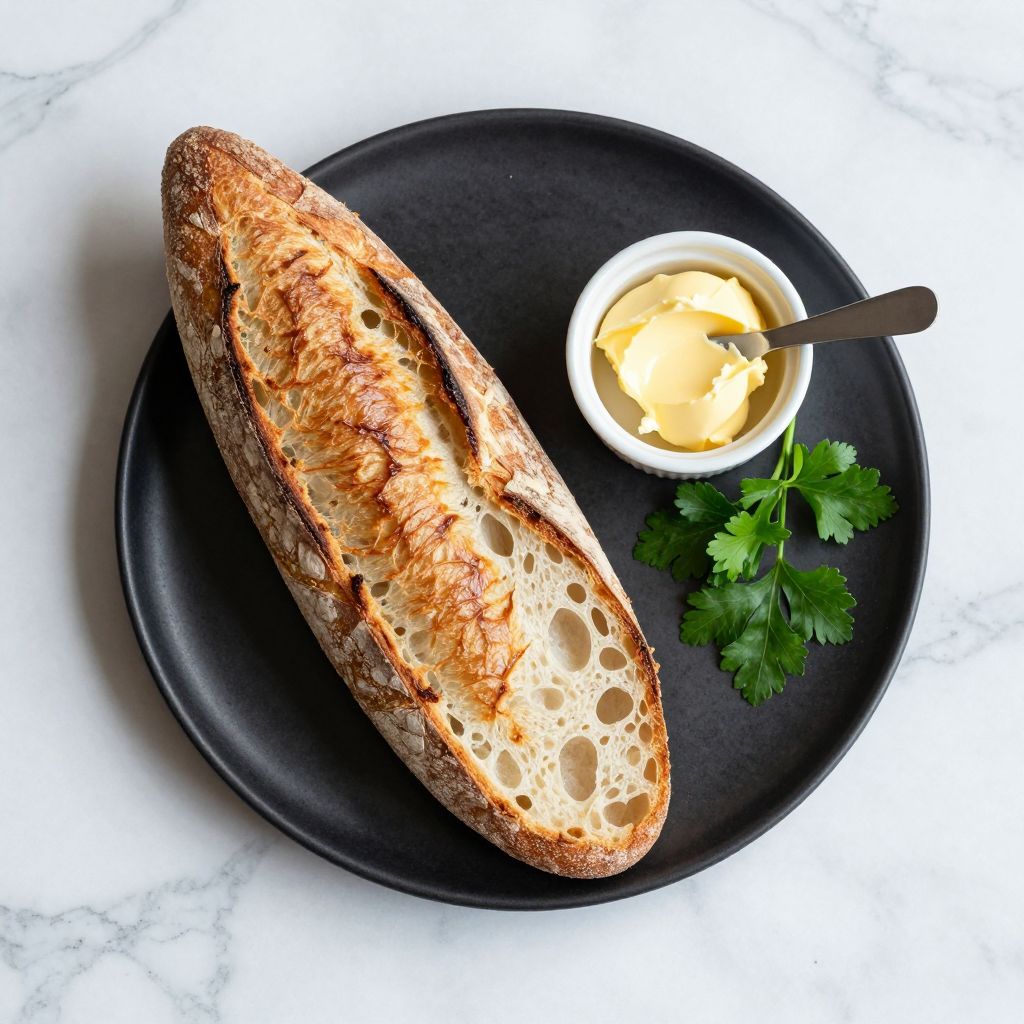
Unlike store-bought baguettes that go stale within hours, homemade sourdough versions develop complex tangy flavors and stay fresh longer. The crispy exterior shatters with each bite, revealing an open, airy crumb with those coveted irregular holes every bread lover dreams about.
I developed this recipe after years of experimenting with hydration levels, fermentation times, and shaping techniques. Whether you spread it with butter, dip it in olive oil, or use it for the most epic sandwiches of your life, this baguette delivers every single time.
Why You’ll Love This Recipe
Making sourdough baguettes at home sounds intimidating, but this recipe breaks down every step into manageable pieces. Once you nail this technique, you will never look at supermarket bread the same way again.
- No commercial yeast needed since your sourdough starter does all the heavy lifting
- Crispy, shattering crust with a soft, chewy interior full of beautiful air pockets
- Complex tangy flavor that develops during the long fermentation process
- Impressive enough to serve at dinner parties but easy enough for weeknight baking
- Stays fresh longer than conventional baguettes thanks to the natural acids in sourdough
My Experience Making This Recipe
The first time I scored my sourdough baguettes and watched them bloom in the oven, I actually cheered out loud. My partner thought something was wrong until the aroma of fresh bread filled our entire apartment.
The crust had that satisfying crackle when I pressed it, and the interior was pillowy soft with glossy, irregular holes throughout. We demolished an entire baguette within minutes, still warm, slathered with salted butter.
Now I bake these baguettes every weekend, and my neighbors have started timing their visits suspiciously well. The process has become meditative, and the results are consistently outstanding.
Recipe Overview
- Recipe Name: Sourdough Baguette
- Servings: 3 baguettes
- Prep Time: 45 minutes active, plus 12 to 18 hours fermentation
- Cook Time: 25 minutes
- Total Time: 13 to 19 hours
- Course: Bread
- Cuisine: French
- Calories per Serving: 180 per quarter baguette
Equipment You Will Need
- Large mixing bowl
- Kitchen scale for precise measurements
- Bench scraper
- Baguette pan or couche linen
- Lame or sharp razor blade for scoring
- Baking stone or steel
- Spray bottle filled with water
- Digital thermometer
- Wire cooling rack
Ingredients for Sourdough Baguette
For the Levain
- 25 grams active sourdough starter
- 50 grams bread flour
- 50 grams water at room temperature
For the Dough
- 500 grams bread flour
- 350 grams water at 78F
- 100 grams levain from above
- 10 grams fine sea salt
Ingredient Notes and Substitutions
- Bread flour: The higher protein content creates better gluten structure and chewier texture. All purpose flour works but produces a softer, less chewy crumb.
- Active sourdough starter: Your starter must double within 4 to 6 hours of feeding to provide enough leavening power. A sluggish starter will result in dense, flat baguettes.
- Fine sea salt: Salt strengthens gluten and controls fermentation timing. Kosher salt works if you increase the amount by 25 percent due to its coarser grind.
- Water temperature: Precise water temperature controls fermentation speed and dough consistency. Use cooler water in summer and warmer water in winter to hit the target dough temperature.
How to Make Sourdough Baguette
Step 1: Build the Levain
Mix 25 grams of active starter with 50 grams each of bread flour and room temperature water in a small jar. Cover loosely and let it ferment at room temperature for 4 to 6 hours until doubled and bubbly.
The levain is ready when it floats in water and smells pleasantly sour. Building a separate levain gives you more control over fermentation timing than adding starter directly.
Step 2: Autolyse the Flour and Water
Combine 500 grams of bread flour with 350 grams of water in a large bowl and mix until no dry flour remains. Cover the bowl and let it rest for 30 to 60 minutes.
This autolyse period allows the flour to fully hydrate and begins gluten development without any kneading. Your final dough will be more extensible and easier to shape as a result.
Step 3: Add the Levain
Spread the levain over the autolysed dough and use your fingers to pinch and fold it in until fully incorporated. The dough will feel shaggy at first but will come together after a few minutes of mixing.
Squeeze the dough through your fingers several times to distribute the levain evenly. Cover and rest for 30 minutes before adding salt.
Step 4: Incorporate the Salt
Sprinkle the salt over the dough along with a splash of water to help it dissolve. Pinch and fold the dough repeatedly for about 3 minutes until the salt is fully mixed in.
Adding salt separately prevents it from interfering with the autolyse and gives you better control over gluten development. The dough should feel noticeably tighter after this step.
Step 5: Perform Stretch and Folds
Over the next 2 to 3 hours, perform 4 sets of stretch and folds spaced 30 to 45 minutes apart. For each set, wet your hand, grab one side of the dough, stretch it up, and fold it over the center.
Rotate the bowl and repeat this motion four times to complete one set. These folds build strength without deflating the precious air bubbles forming in your dough.
Step 6: Bulk Ferment the Dough
After your final fold, cover the bowl and let the dough ferment at room temperature until it increases by 50 to 75 percent in volume. This typically takes 4 to 6 hours depending on your kitchen temperature.
Look for a domed surface, visible bubbles on the sides, and a jiggly, airy texture when you move the bowl. Underproofing here is the most common mistake that leads to dense baguettes.
Step 7: Cold Retard Overnight
Transfer the bowl to your refrigerator and let the dough cold ferment for 8 to 12 hours or overnight. The cold slows fermentation dramatically while allowing flavor compounds to develop.
This overnight rest also relaxes the gluten, making the dough easier to shape in the morning. You can extend the cold retard up to 48 hours for even more tangy flavor.
Step 8: Divide and Preshape
Remove the dough from the refrigerator and gently turn it onto a lightly floured surface. Divide it into three equal pieces of roughly 320 grams each using a bench scraper.
Gently shape each piece into a rough cylinder without degassing too aggressively. Cover with a clean towel and let rest for 20 to 30 minutes to relax the gluten before final shaping.
Step 9: Shape the Baguettes
Working with one piece at a time, flatten the dough gently into a rectangle. Fold the top third down and seal with the heel of your hand, then fold the bottom third up and seal again.
Roll the dough seam side down using gentle pressure from the center outward until you achieve a 14 to 16 inch baguette. Place seam side up in a floured couche or baguette pan.
Step 10: Final Proof
Cover the shaped baguettes and let them proof at room temperature for 1 to 2 hours until they feel puffy and spring back slowly when gently poked. Meanwhile, preheat your oven to 500F with a baking stone inside.
The dough should feel pillowy but not overproofed and slack. If your kitchen is warm, this may happen faster, so watch the dough rather than the clock.
Step 11: Score and Bake
Carefully transfer the baguettes to a floured peel or parchment lined baking sheet. Using a lame held at a 30 degree angle, make 3 to 5 swift overlapping slashes down the length of each baguette.
Slide the baguettes onto the hot baking stone and spray the oven walls generously with water. Bake at 500F for 10 minutes, then reduce heat to 450F and bake 12 to 15 minutes more until deeply golden.
Step 12: Cool Completely
Transfer the baguettes to a wire rack immediately after baking. Let them cool for at least 20 minutes before slicing, no matter how tempting they smell.
Cutting into hot bread releases steam that should remain inside, leaving you with a gummy interior. The crust will continue to crisp as it cools.
Pro Tip: For maximum oven spring and the best crust, place a metal pan on the bottom rack and throw in a handful of ice cubes right after loading the baguettes. The burst of steam helps the crust stay flexible long enough for the bread to fully expand.
Tips for the Best Sourdough Baguette
- Use a kitchen scale rather than measuring cups since baking is chemistry and precision matters enormously.
- Keep your sourdough starter at peak activity by feeding it 4 to 6 hours before building the levain.
- Score with confidence using quick, decisive strokes rather than sawing back and forth which deflates the dough.
- Steam the oven aggressively during the first 10 minutes of baking for a crackly, blistered crust.
- Let the dough tell you when it is ready rather than following times exactly since every kitchen and starter behaves differently.
- Practice shaping on lower hydration dough first if you find the sticky dough difficult to handle.
Common Mistakes to Avoid
- Using an inactive starter: A weak starter cannot leaven the dough properly, resulting in dense, flat baguettes with minimal rise.
- Skipping the cold retard: Room temperature fermentation alone produces less complex flavor and makes the dough harder to score cleanly.
- Overproofing the dough: Baguettes that proof too long will spread flat rather than springing up in the oven and have a gummy texture.
- Scoring too shallowly: Timid scoring prevents the dough from expanding properly and creates tight, closed ears rather than dramatic bloom.
- Opening the oven door too early: Releasing steam during the first 10 minutes ruins crust development and prevents maximum oven spring.
Serving Suggestions
A freshly baked sourdough baguette needs very little embellishment to shine. Slice it at an angle and serve it alongside any of these delicious options.
- High quality salted butter and flaky sea salt
- Extra virgin olive oil with balsamic vinegar for dipping
- Soft ripened cheeses like brie or camembert
- Hearty soups and stews for dunking
- Cured meats and pate for a classic French spread
Variations to Try
- Seeded baguette: Roll shaped baguettes in sesame, poppy, or a mix of seeds before proofing for added crunch and visual appeal.
- Olive and herb: Fold chopped kalamata olives and fresh rosemary into the dough during the stretch and fold phase for a Mediterranean twist.
- Whole wheat blend: Substitute up to 20 percent of the bread flour with whole wheat flour for a nuttier flavor and more fiber.
- Garlic butter baguette: Slice the baked baguette horizontally, spread with garlic herb butter, and toast until golden for the ultimate side dish.
- Everything seasoning: Top the baguettes with everything bagel seasoning before baking for an addictive savory crust.
Dietary Adaptations
- Gluten free: Traditional sourdough baguettes cannot be made gluten free since gluten provides the structure, but dedicated gluten free sourdough recipes exist using alternative flours with added binders.
- Dairy free: This recipe is naturally dairy free since it contains only flour, water, salt, and sourdough starter.
- Vegan: Sourdough baguettes are already vegan as written with no animal products involved whatsoever.
- Low carb: Bread cannot easily be made low carb, though smaller portions or using the baguette as a vessel for protein rich fillings helps manage carbohydrate intake.
Storage and Reheating
Refrigerator
Storing bread in the refrigerator actually accelerates staling and is not recommended.
- Keep baguettes at room temperature in a paper bag or bread box
- Cut side down on a cutting board works for partially eaten baguettes
- Best consumed within 1 to 2 days of baking
Freezer
Sourdough baguettes freeze beautifully for up to 3 months when wrapped properly.
- Cool completely before wrapping tightly in plastic wrap then aluminum foil
- Slice before freezing for easy portion control
- Label with the date so you use older baguettes first
Reheating
Bring frozen baguettes back to life with a quick stint in a hot oven.
- Thaw at room temperature for 30 minutes or bake directly from frozen
- Mist with water and bake at 400F for 5 to 10 minutes until the crust crisps
- Slice stale baguettes and toast for croutons or crostini rather than discarding
Nutrition Information
| Nutrient | Amount |
|---|---|
| Calories | 180 |
| Total Fat | 0.5g |
| Saturated Fat | 0g |
| Carbohydrates | 37g |
| Fiber | 1.5g |
| Sugar | 0g |
| Protein | 6g |
| Sodium | 290mg |
| Cholesterol | 0mg |
Nutritional values are estimates based on standard ingredients and may vary depending on specific products used and serving sizes.
Frequently Asked Questions
Can I use all purpose flour instead of bread flour?
Yes, but the baguettes will have a softer texture and less dramatic oven spring. Bread flour’s higher protein content creates the chewy, open crumb that defines a great baguette.
How do I know when my levain is ready to use?
Drop a small spoonful into a glass of water and if it floats, your levain is active enough. It should also have doubled in size and smell pleasantly yeasty with a slight tang.
Can I make the dough ahead and bake later?
The cold retard step already builds in overnight flexibility. You can extend refrigeration up to 48 hours, but shape the baguettes and complete final proofing on the day you bake.
Why did my baguettes come out flat and dense?
The most common causes are an inactive starter, underproofed dough, or overproofing during the final rise. Check your starter activity first and watch your dough carefully during bulk fermentation.
What if I do not have a baking stone?
An inverted heavy baking sheet preheated in the oven works as an acceptable substitute. Cast iron pizza pans or a baking steel also produce excellent results with superior heat transfer.
Final Thoughts
Making sourdough baguettes at home takes patience and practice, but the rewards are absolutely worth the effort. Few things beat the satisfaction of slicing into a baguette you made yourself, admiring that gorgeous open crumb, and sharing it with friends and family. With this detailed guide, you have everything you need to bake baguettes that rival your favorite artisan bakery. Happy baking!
Sourdough Baguette
Ingredients
Equipment
Method
- Build the Levain: Mix 25 grams of active starter with 50 grams each of bread flour and room temperature water in a small jar. Cover loosely and let it ferment at room temperature for 4 to 6 hours until doubled and bubbly. The levain is ready when it floats in water.
- Autolyse the Flour and Water: Combine 500 grams of bread flour with 350 grams of water in a large bowl and mix until no dry flour remains. Cover the bowl and let it rest for 30 to 60 minutes.
- Add the Levain: Spread the levain over the autolysed dough and use your fingers to pinch and fold it in until fully incorporated. Cover and rest for 30 minutes before adding salt.
- Incorporate the Salt: Sprinkle the salt over the dough along with a splash of water to help it dissolve. Pinch and fold the dough repeatedly for about 3 minutes until the salt is fully mixed in.
- Perform Stretch and Folds: Over the next 2 to 3 hours, perform 4 sets of stretch and folds spaced 30 to 45 minutes apart. For each set, wet your hand, grab one side of the dough, stretch it up, and fold it over the center. Rotate the bowl and repeat four times.
- Bulk Ferment the Dough: After your final fold, cover the bowl and let the dough ferment at room temperature until it increases by 50 to 75 percent in volume, typically 4 to 6 hours.
- Cold Retard Overnight: Transfer the bowl to your refrigerator and let the dough cold ferment for 8 to 12 hours or overnight.
- Divide and Preshape: Remove the dough from the refrigerator and gently turn it onto a lightly floured surface. Divide it into three equal pieces of roughly 320 grams each. Shape each piece into a rough cylinder, cover, and let rest for 20 to 30 minutes.
- Shape the Baguettes: Flatten each piece gently into a rectangle. Fold the top third down and seal with the heel of your hand, then fold the bottom third up and seal again. Roll the dough seam side down until you achieve a 14 to 16 inch baguette. Place seam side up in a floured couche or baguette pan.
- Final Proof: Cover the shaped baguettes and let them proof at room temperature for 1 to 2 hours until they feel puffy. Meanwhile, preheat your oven to 500F with a baking stone inside.
- Score and Bake: Transfer the baguettes to a floured peel or parchment lined baking sheet. Using a lame held at a 30 degree angle, make 3 to 5 swift overlapping slashes down the length of each baguette. Slide onto the hot baking stone and spray the oven walls generously with water. Bake at 500F for 10 minutes, then reduce heat to 450F and bake 12 to 15 minutes more until deeply golden.
- Cool Completely: Transfer the baguettes to a wire rack immediately after baking. Let them cool for at least 20 minutes before slicing.