
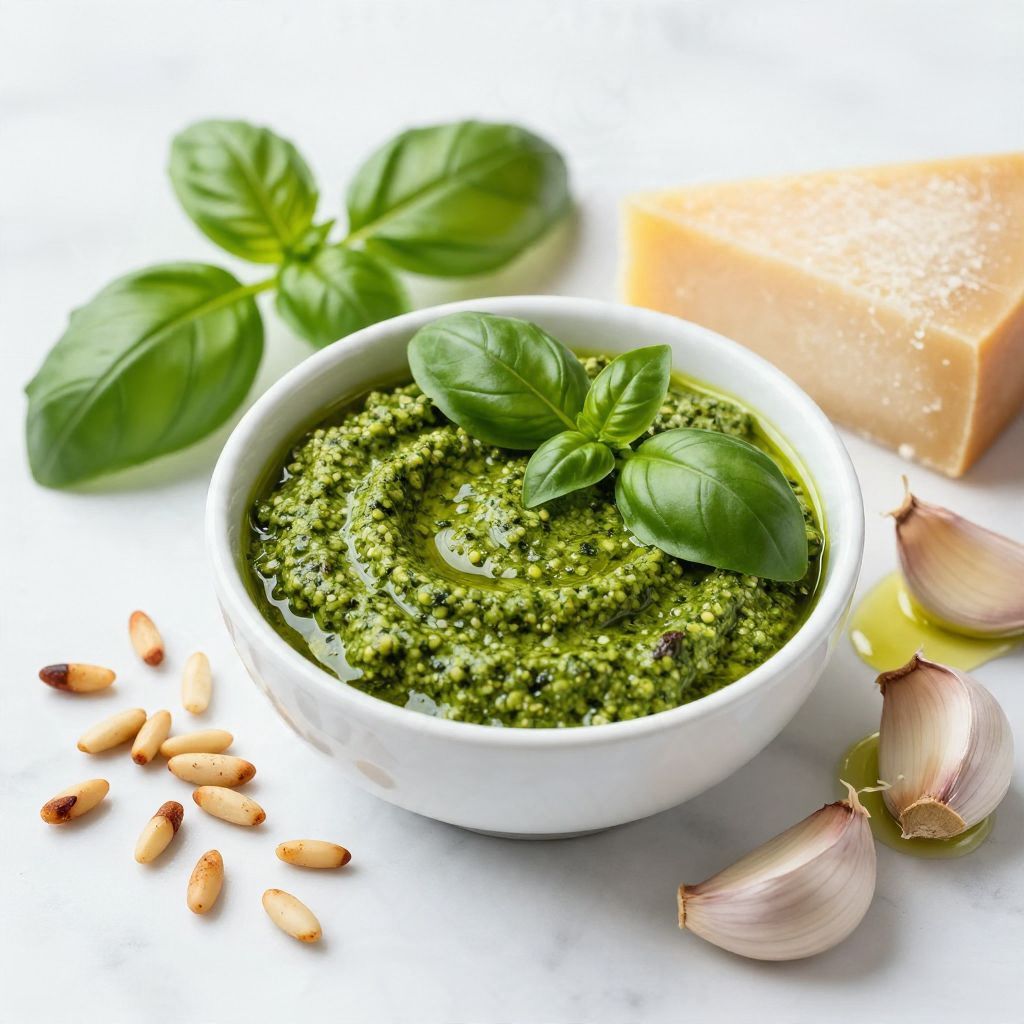
Nothing says fresh like a vibrant, homemade batch of Basil Pesto. The aroma of basil, garlic, and pine nuts wafting through your kitchen is simply unbeatable, turning an ordinary meal into something extraordinary.
This recipe is a staple for busy weeknights or a gourmet touch to your dinner parties. Its rich flavor, creamy texture, and versatility make it a must-have sauce that can elevate pasta, sandwiches, or even grilled vegetables.
Why You’ll Love This Recipe
This Basil Pesto is a true culinary gem that brings a burst of flavor to any dish. You’ll appreciate its simplicity and freshness.
- Quick and easy to make in under 10 minutes.
- Uses fresh ingredients for a bright taste.
- Versatile: perfect for pasta, spreads, and dressings.
- Can be stored for later use, so you can enjoy it anytime.
- Customizable to your taste preferences.
My Experience Making This Recipe
Making Basil Pesto is one of my favorite kitchen activities. The moment I blend the ingredients, I can feel the anticipation building as the vibrant green sauce takes shape.
Each time I prepare it, I am reminded of summer days spent in my grandmother’s garden, where fresh basil grew in abundance. Friends and family always rave about the flavor, and I love sharing it with them.
Recipe Overview
- Recipe Name: Basil Pesto
- Servings: 4
- Prep Time: 10 minutes
- Cook Time: 0 minutes
- Total Time: 10 minutes
- Course: Sauce
- Cuisine: Italian
- Calories per Serving: 200
Equipment You Will Need
- Food processor or blender
- Measuring cups and spoons
- Spatula
- Storage container with a lid
Ingredients for Basil Pesto
- 2 cups fresh basil leaves, packed
- 1/2 cup extra virgin olive oil
- 1/3 cup pine nuts
- 2 garlic cloves, minced
- 1/2 cup grated Parmesan cheese
- Salt and pepper to taste
Ingredient Notes and Substitutions
- Basil: Adds a fresh, herbal flavor. You can substitute with arugula for a peppery twist.
- Olive oil: Provides creaminess and richness. Avocado oil can be a lighter alternative.
- Pine nuts: Contribute a buttery taste. Walnuts or almonds work as budget-friendly substitutes.
- Garlic: Enhances flavor depth. Roasted garlic offers a milder, sweeter taste.
- Parmesan cheese: Adds savory depth. Nutritional yeast provides a vegan option.
How to Make Basil Pesto
Step 1: Prepare the Ingredients
Gather all your ingredients and measure them out. Having everything ready makes blending easier and quicker.
Step 2: Blend the Basil and Nuts
Add the basil leaves and pine nuts to your food processor. This creates a sturdy base for the pesto, allowing the flavors to meld beautifully.
Step 3: Add the Garlic
Incorporate the minced garlic into the food processor. Garlic adds a zesty kick that complements the basil perfectly.
Step 4: Pulse the Mixture
Pulse the mixture a few times until finely chopped. This helps break down the ingredients and brings out their natural oils.
Step 5: Drizzle in the Olive Oil
With the processor running, slowly drizzle in the olive oil. This emulsifies the pesto, creating a smooth and creamy texture.
Step 6: Add the Parmesan
Mix in the grated Parmesan cheese until well combined. This cheese adds depth and a savory note to the pesto.
Step 7: Season to Taste
Season with salt and pepper, blending to combine. Tasting at this stage ensures you achieve the perfect balance of flavors.
Step 8: Store or Serve
Transfer the pesto to a storage container and cover with a thin layer of olive oil. This helps prevent browning and keeps it fresh longer.
Pro Tip: For an even brighter flavor, add a squeeze of lemon juice before serving.
Tips for the Best Basil Pesto
- Use fresh basil for the best flavor; wilted leaves won’t cut it.
- Toast the pine nuts lightly for enhanced nuttiness.
- Adjust the garlic to your liking; you can add more or less depending on your taste.
- Keep the pesto covered in oil to prevent oxidation when storing.
- Experiment with different cheeses like Pecorino for a unique flavor.
Common Mistakes to Avoid
- Using wilted basil can lead to a less vibrant flavor.
- Not enough oil can make the pesto grainy instead of creamy.
- Over-blending can result in a paste rather than a chunky sauce.
- Forgetting to season can leave the pesto tasting flat.
Serving Suggestions
Pair your homemade Basil Pesto with a variety of dishes for a delightful experience. Here are some great ideas:
- Toss it with pasta for a quick weeknight dinner.
- Spread it on sandwiches or wraps for added flavor.
- Use it as a dip for fresh vegetables or bread.
- Drizzle over grilled chicken or fish for a gourmet touch.
Variations to Try
- For a spicy kick, add a pinch of red pepper flakes.
- Swap in spinach or kale for a nutrient boost.
- Add sun-dried tomatoes for a tangy twist.
- Incorporate different nuts like cashews for a creamier texture.
Dietary Adaptations
- Gluten-free: Naturally gluten-free; perfect for everyone.
- Dairy-free: Replace Parmesan with nutritional yeast for a vegan option.
- Vegan: Use plant-based cheese or skip it altogether.
- Low-carb/Keto: This recipe is low in carbs, making it a great choice.
Storage and Reheating
Refrigerator
Store pesto in an airtight container in the fridge for up to a week.
- Top with a thin layer of olive oil before sealing.
- Keep it away from moisture for optimal freshness.
Freezer
Pesto can be frozen for up to three months.
- Consider using ice cube trays for easy portioning.
- Transfer frozen cubes to a sealed bag once solid.
Reheating
To use frozen pesto, simply thaw in the refrigerator or microwave.
- Reheat gently to avoid cooking the sauce.
- Add a bit of olive oil if it seems too thick.
Nutrition Information
| Nutrient | Amount |
|---|---|
| Calories | 200 |
| Total Fat | 20g |
| Saturated Fat | 3g |
| Carbohydrates | 4g |
| Fiber | 1g |
| Sugar | 0g |
| Protein | 5g |
| Sodium | 150mg |
| Cholesterol | 10mg |
This nutritional information is approximate and can vary based on specific ingredients used.
Frequently Asked Questions
Can I make basil pesto ahead of time?
Yes, you can make it a few days in advance and store it in the refrigerator.
What can I use instead of pine nuts?
Walnuts or almonds work well as alternative nuts in pesto.
How should I store leftover pesto?
Keep it in an airtight container with a layer of olive oil on top to prevent browning.
Why is my pesto too thick?
If your pesto is too thick, you can blend in a bit more olive oil until it reaches your desired consistency.
Can I use dried basil instead of fresh?
Fresh basil is best, but if you must, use about one-third the amount of dried basil.
Final Thoughts
Making Basil Pesto at home is a rewarding experience that brings a taste of Italy right to your table. With its fresh ingredients and delightful flavor, you’ll want to keep this recipe in your back pocket.
So go ahead and whip up a batch, then enjoy it on anything you can think of, because once you taste homemade pesto, store-bought will never be the same.
Explore more delicious recipes like pistachio pesto or try a pesto without pine nuts for new twists on this classic dish.
Basil Pesto
Ingredients
Equipment
Method
- Gather all your ingredients and measure them out.
- Add the basil leaves and pine nuts to your food processor.
- Incorporate the minced garlic into the food processor.
- Pulse the mixture a few times until finely chopped.
- With the processor running, slowly drizzle in the olive oil.
- Mix in the grated Parmesan cheese until well combined.
- Season with salt and pepper, blending to combine.
- Transfer the pesto to a storage container and cover with a thin layer of olive oil.