
There’s something so comforting about a warm bowl of Upma on a chilly morning. This South Indian classic is not only a quick breakfast option but also a delightful way to start your day with its cozy texture and savory flavors. Made primarily from sooji or semolina, it’s versatile enough to include your favorite veggies, making it a nutritious choice for busy days. Let’s dive into the ingredients and steps for this simple yet satisfying dish!
Why You’ll Love This Recipe
With its warm flavors and comforting texture, this recipe is sure to become a staple in your kitchen.
- Quick to prepare, perfect for busy mornings.
- Customizable with various vegetables and spices.
- A wholesome dish that’s both filling and nutritious.
- Great for breakfast, brunch, or even a light dinner.
My Experience Making This Recipe
Making Upma always brings me back to my childhood, where the aroma would fill the kitchen and tempt me to sneak a taste before it was ready. The combination of spices and veggies creates a vibrant dish that’s hard to resist.
Every time I make it, I am reminded of how simple ingredients can come together to create something so delicious and satisfying. My family often requests it, and they can’t get enough of the warm, fluffy texture.
Recipe Overview
- Recipe Name: Upma
- Servings: 4
- Prep Time: 10 minutes
- Cook Time: 15 minutes
- Total Time: 25 minutes
- Course: Breakfast
- Cuisine: Indian
- Calories per Serving: 200
Equipment You Will Need
- Pan or skillet
- Spatula
- Measuring cups and spoons
- Knife and cutting board
Ingredients for Upma
- 1 cup of sooji (semolina)
- 2 tablespoons of oil (vegetable or ghee)
- 1 teaspoon of mustard seeds
- 1 teaspoon of urad dal (split black gram)
- 1 teaspoon of chana dal (split chickpeas)
- 1 green chili (finely chopped)
- 1/2 teaspoon of ginger (grated)
- 1/4 cup of onion (finely chopped)
- 1/4 cup of carrot (finely chopped)
- 1/4 cup of peas (fresh or frozen)
- 2 cups of water
- Salt to taste
- Coriander leaves for garnish
Ingredient Notes and Substitutions
- Sooji: It provides a fluffy texture. You can substitute it with coarse semolina or even quinoa for a gluten-free option.
- Oil: Used for cooking and flavor. Ghee can be a delicious alternative for a richer taste.
- Vegetables: They add nutrition and flavor. Feel free to use any seasonal veggies you have on hand.
How to Make Upma
Step 1: Roast the Sooji
Begin by dry roasting the sooji in a pan over low heat until it turns light golden brown. This enhances the flavor and gives the Upma a nutty aroma.
Step 2: Heat the Oil
In the same pan, heat the oil on medium heat. This is where the magic begins, as the oil will help fry the spices and vegetables.
Step 3: Add the Mustard Seeds
Add mustard seeds to the hot oil. Wait for them to splutter, which means they are releasing their flavor.
Step 4: Sauté the Lentils and Veggies
Next, toss in urad dal and chana dal, and sauté until they turn golden brown. Then add the chopped green chili, ginger, onion, carrot, and peas, cooking until the onions become translucent.
Step 5: Add Water and Bring to a Boil
Pour in 2 cups of water and add salt to taste. Bringing it to a boil ensures that the semolina cooks evenly and absorbs all the delicious flavors.
Step 6: Gradually Add the Sooji
Once the water is boiling, gradually add the roasted sooji, stirring continuously. This prevents lumps from forming and ensures a smooth texture.
Step 7: Cook Until Done
Reduce the heat to low and cover the pan. Cook for 5-7 minutes until the Upma thickens and the sooji absorbs the water.
Step 8: Fluff and Serve
Finally, fluff the Upma with a fork and garnish with coriander leaves. This little step adds freshness and brightens the dish.
Pro Tip: Make sure to roast the sooji well; it makes a significant difference in flavor and texture.
Tips for the Best Upma
- Use fresh spices for the best flavor; they lose potency over time.
- Don’t rush the roasting step; it’s key to rich flavor.
- Adjust the spice level by adding more or fewer green chilies.
- Experiment with different vegetables for a personal touch.
- Serve hot for the best taste; Upma tends to thicken as it cools.
Common Mistakes to Avoid
- Skipping the roasting step; it makes the Upma taste raw.
- Adding too much water; this will make it mushy instead of fluffy.
- Not stirring while adding sooji; this can lead to lumps.
- Overcooking; it can result in a dry texture.
Serving Suggestions
Upma is delightful on its own but pairs beautifully with various accompaniments.
- Serve with coconut chutney for a refreshing contrast.
- A dollop of yogurt adds creaminess.
- Pair it with pickles for an extra punch of flavor.
- A hot cup of chai is the perfect beverage match.
Variations to Try
- Add nuts like cashews or peanuts for a crunchy texture.
- Incorporate finely chopped bell peppers for added color and flavor.
- Try adding a pinch of turmeric for a warm golden hue.
- Mix in cooked quinoa instead of sooji for a healthy twist.
Dietary Adaptations
- Gluten-free: Substitute sooji with gluten-free semolina or quinoa.
- Dairy-free: Use vegetable oil instead of ghee for cooking.
- Vegetarian: This recipe is naturally vegetarian-friendly.
- Low-carb/Keto: Replace sooji with cauliflower rice for a low-carb version.
Storage and Reheating
Refrigerator
Store any leftovers in an airtight container in the refrigerator for up to 2 days.
- Make sure to let it cool before sealing.
Freezer
While fresh is best, you can freeze Upma for longer storage.
- Freeze it in portions, but be aware it may alter the texture.
Reheating
Reheat on the stovetop or in the microwave until warmed through.
- Add a splash of water while reheating to prevent it from drying out.
Nutrition Information
| Nutrient | Amount |
|---|---|
| Calories | 200 |
| Total Fat | 6g |
| Saturated Fat | 1g |
| Carbohydrates | 32g |
| Fiber | 3g |
| Sugar | 2g |
| Protein | 6g |
| Sodium | 300mg |
| Cholesterol | 0mg |
This nutrition information is an estimate and may vary based on specific ingredients used.
Frequently Asked Questions
Can I make this dish ahead of time?
Yes, you can prepare Upma ahead of time and store it in the fridge for later. Just reheat it before serving.
What can I use instead of semolina?
Quinoa or coarse cornmeal can be used as alternatives, but the texture will differ slightly. Make sure to adjust cooking times accordingly.
How can I prevent the Upma from becoming mushy?
Ensure you roast the sooji properly and add water gradually while stirring. This prevents lumps and maintains a nice texture.
What vegetables can I add?
Feel free to experiment with any veggies you have on hand, like bell peppers, beans, or spinach. They enhance both flavor and nutrition.
Is Upma suitable for a vegan diet?
Yes, it’s completely plant-based when made with vegetable oil instead of ghee. Enjoy it guilt-free!
Final Thoughts
Making Upma is like wrapping yourself in a warm blanket on a chilly day; it’s comforting and satisfying. I encourage you to give this recipe a try and let it brighten your mornings.
If you’re looking for more delicious Indian recipes, check out my favorite Dhokla Recipe, or try making some tasty Bhel Puri. Enjoy your cooking adventure!
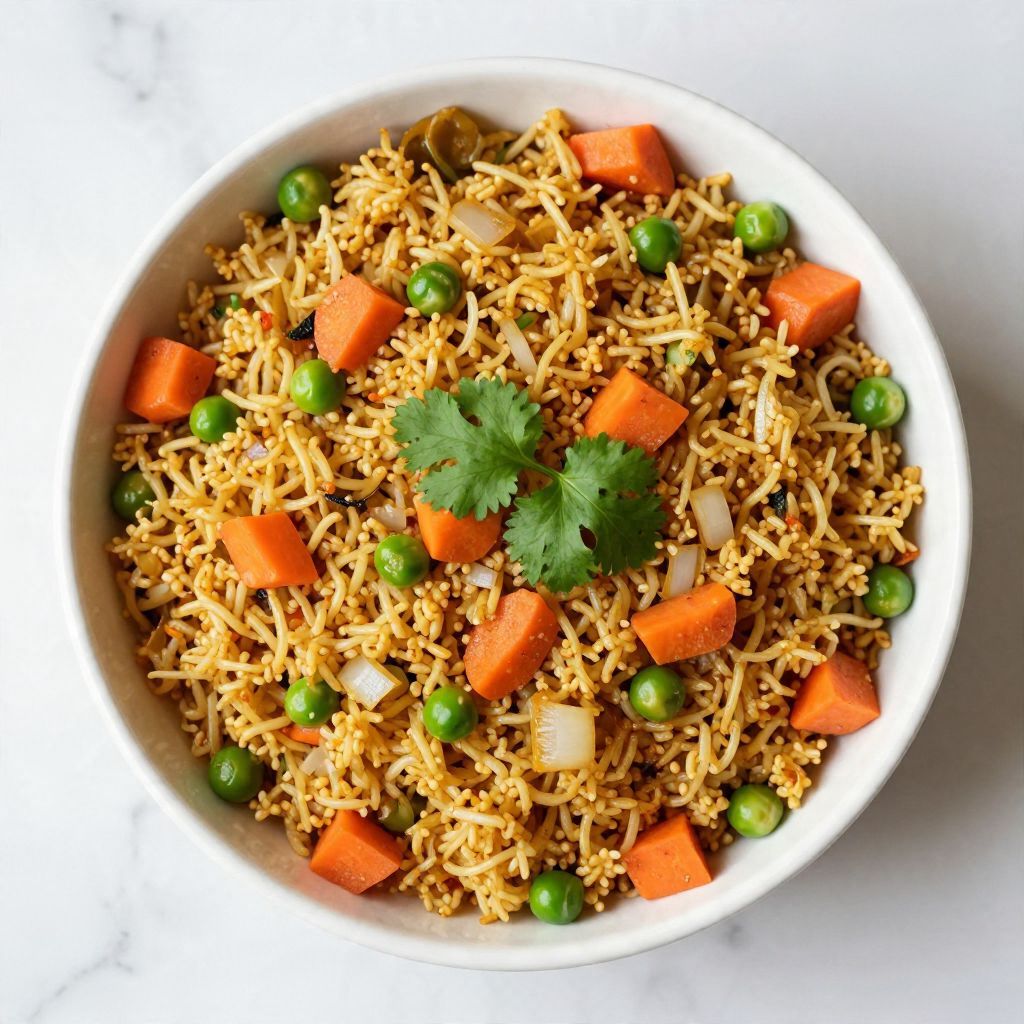
Upma
Ingredients
Equipment
Method
- Begin by dry roasting the sooji in a pan over low heat until it turns light golden brown.
- In the same pan, heat the oil on medium heat.
- Add mustard seeds to the hot oil and wait for them to splutter.
- Toss in urad dal and chana dal, and sauté until they turn golden brown.
- Add the chopped green chili, ginger, onion, carrot, and peas, cooking until the onions become translucent.
- Pour in 2 cups of water and add salt to taste. Bring it to a boil.
- Once the water is boiling, gradually add the roasted sooji, stirring continuously.
- Reduce the heat to low and cover the pan. Cook for 5-7 minutes until the Upma thickens.
- Fluff the Upma with a fork and garnish with coriander leaves.