
There’s something magical about the smell of fresh bread baking, especially when it’s a warm loaf of Traditional Rye Bread. This recipe is a cherished part of my kitchen, evoking cozy memories of gathering around the table with family. Rye bread boasts a rich, slightly tangy flavor and a hearty texture that makes it perfect for sandwiches or simply slathered with butter. With its unique nutty aroma and chewy crust, this bread is not just a sidekick; it’s the star of the show. Let’s roll up our sleeves and get started on this delightful baking adventure.
Why You’ll Love This Recipe
This recipe is a must-try for any bread lover. It offers a unique flavor profile and is satisfying to make.
- Hearty and flavorful crust.
- Perfect for sandwiches or toasting.
- Simple ingredients you likely have at home.
- Great for meal prep or freezing.
- Rich in nutrients and fiber.
My Experience Making This Recipe
When I first tried my hand at baking rye bread, I was a bit intimidated. However, the process was surprisingly straightforward, and the aroma filling my kitchen was absolutely worth it.
The first bite of warm, homemade rye bread was a revelation. I topped it with cream cheese and smoked salmon, and let me tell you, it was a match made in heaven.
Recipe Overview
- Recipe Name: Traditional Rye Bread
- Servings: 12
- Prep Time: 20 minutes
- Cook Time: 35 minutes
- Total Time: 55 minutes
- Course: Bread
- Cuisine: Eastern European
- Calories per Serving: 150
Equipment You Will Need
- Mixing bowl
- Wooden spoon or dough whisk
- Measuring cups and spoons
- Baking sheet or loaf pan
- Kitchen towel
- Oven
Ingredients for Traditional Rye Bread
- 3 cups rye flour
- 1 cup bread flour
- 1 ½ cups warm water (about 110°F)
- 1 tablespoon sugar
- 2 teaspoons salt
- 2 teaspoons instant yeast
- 2 tablespoons caraway seeds (optional)
Ingredient Notes and Substitutions
- Rye flour: Provides the characteristic flavor and texture. You can use whole wheat flour as a substitute but it will change the flavor.
- Bread flour: Gives structure to the bread. All-purpose flour can be used, but the texture may be softer.
- Warm water: Activates the yeast. Use milk for a richer flavor.
- Caraway seeds: Adds a distinct taste. Fennel seeds can be a good alternative.
How to Make Traditional Rye Bread
Step 1: Activate the Yeast
In a small bowl, combine warm water, sugar, and yeast. Let it sit for about 5-10 minutes until it becomes frothy, indicating that the yeast is active.
Step 2: Mix the Dry Ingredients
In a large mixing bowl, whisk together rye flour, bread flour, salt, and caraway seeds. This ensures even distribution of the salt and seeds.
Step 3: Combine Wet and Dry Ingredients
Pour the yeast mixture into the dry ingredients. Stir with a wooden spoon until a shaggy dough forms.
Step 4: Knead the Dough
Turn the dough onto a lightly floured surface and knead for about 10 minutes. Kneading develops gluten, giving the bread structure.
Step 5: First Rise
Place the dough in a greased bowl, cover it with a kitchen towel, and let it rise in a warm place for about 1 hour, or until it doubles in size.
Step 6: Shape the Loaf
Punch down the risen dough to release air bubbles. Shape it into a loaf or place it on a baking sheet for a round loaf.
Step 7: Second Rise
Cover the shaped dough with the towel and let it rise for another 30 minutes. This step helps achieve a better texture.
Step 8: Bake the Bread
Preheat the oven to 375°F. Bake the bread for 30-35 minutes, or until it sounds hollow when tapped on the bottom. This indicates it’s fully cooked.
Pro Tip: For a crustier loaf, place a pan of water in the oven while baking to create steam.
Tips for the Best Traditional Rye Bread
- Use fresh yeast for better rising.
- Let your dough rise in a warm spot; warmth helps yeast work its magic.
- Don’t skip the second rise; it improves texture.
- Experiment with different seeds for added flavor.
- Cool the bread completely before slicing for cleaner cuts.
Common Mistakes to Avoid
- Using cold water: It won’t activate the yeast properly, leading to dense bread.
- Not kneading enough: Insufficient kneading results in flat bread.
- Skipping the second rise: This step is crucial for texture and volume.
- Overbaking: This can lead to a dry loaf; check for doneness early.
Serving Suggestions
This rye bread pairs beautifully with a variety of toppings and dishes.
- Layer with pastrami and mustard for a classic sandwich.
- Serve with cream cheese and smoked salmon.
- Enjoy with a hearty soup or stew.
- Top with avocado and a sprinkle of sea salt.
Variations to Try
- Add seeds like sunflower or pumpkin for extra crunch.
- Incorporate dried fruits like raisins for a sweet twist.
- Mix in herbs like dill or thyme for added flavor.
- Experiment with different flours, such as spelt or whole wheat.
Dietary Adaptations
- Gluten-free: Use a gluten-free flour blend; expect different texture.
- Dairy-free: This recipe is naturally dairy-free.
- Vegan: The recipe is vegan-friendly as well.
- Low-carb/keto: Substitute flour with almond flour; adjust liquid accordingly.
Storage and Reheating
Refrigerator
Store the bread in a sealed bag or container for up to a week.
- Slice before storing for easy access.
- Warm slices in the toaster for freshness.
Freezer
Freeze the bread for up to three months for long-term storage.
- Wrap tightly in plastic wrap, then in foil.
- Slice before freezing for quick defrosting.
Reheating
Reheat slices directly in the toaster or wrap the loaf in foil and warm in the oven.
- For best results, reheat at 350°F for about 10-15 minutes.
Nutrition Information
| Nutrient | Amount |
|---|---|
| Calories | 150 |
| Total Fat | 1.5g |
| Saturated Fat | 0.3g |
| Carbohydrates | 30g |
| Fiber | 4g |
| Sugar | 1g |
| Protein | 5g |
| Sodium | 200mg |
| Cholesterol | 0mg |
This information is approximate and may vary based on specific ingredients.
Frequently Asked Questions
Can I substitute rye flour with all-purpose flour?
Yes, but the bread will lose its characteristic flavor and texture.
How can I make this bread ahead of time?
You can prepare the dough and refrigerate it overnight before baking.
What’s the best way to store rye bread?
Keep it in a sealed bag at room temperature or freeze it for longer storage.
Why is my rye bread dense?
This could be due to not enough kneading or not allowing it to rise properly.
Can I add nuts or seeds to the dough?
Absolutely! They add great texture and flavor; just adjust the flour slightly if needed.
Final Thoughts
Baking Traditional Rye Bread is a fulfilling experience that fills your home with warmth and enticing aromas. I encourage you to try this recipe and savor each delicious slice.
For more bread inspiration, check out my Einkorn Bread Recipe or try making Fry Bread for a delicious twist.
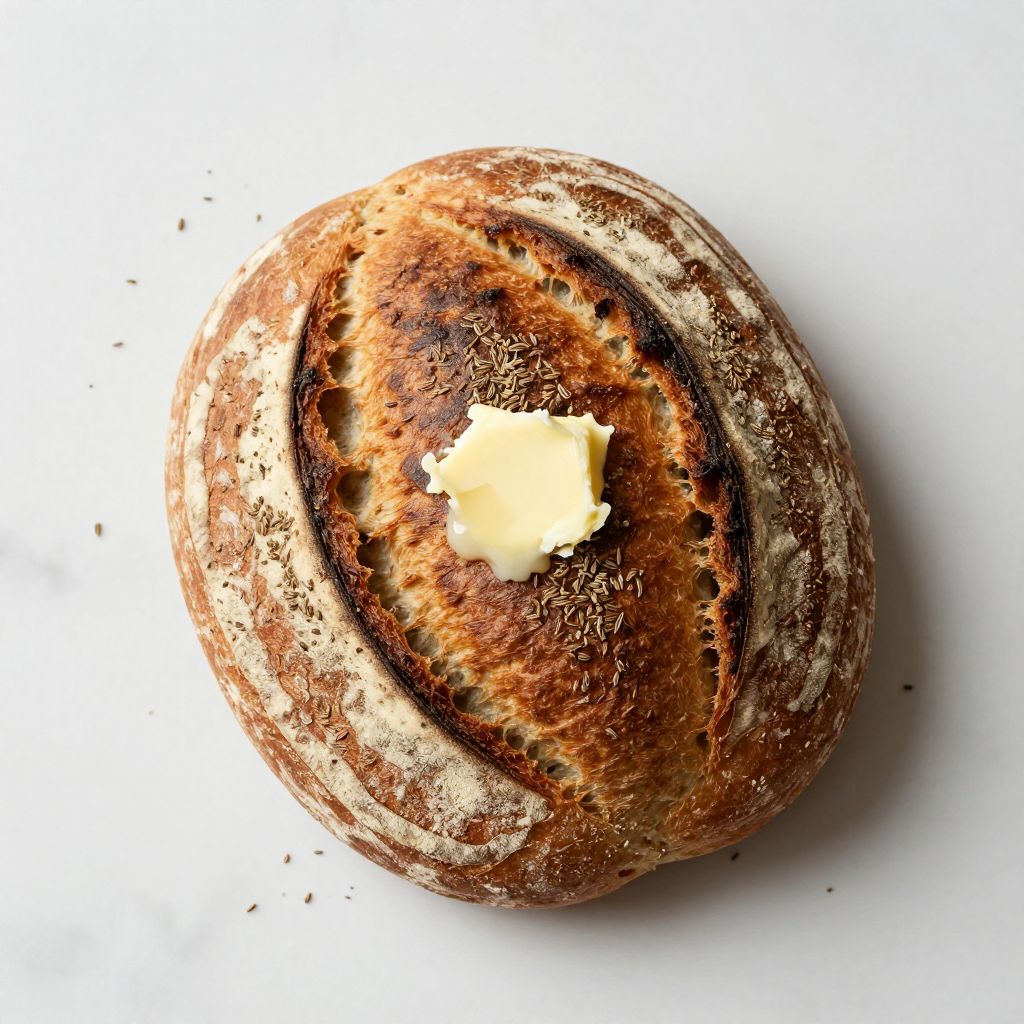
Traditional Rye Bread
Ingredients
Equipment
Method
- In a small bowl, combine warm water, sugar, and yeast. Let it sit for about 5-10 minutes until frothy.
- In a large mixing bowl, whisk together rye flour, bread flour, salt, and caraway seeds.
- Pour the yeast mixture into the dry ingredients and stir with a wooden spoon until a shaggy dough forms.
- Turn the dough onto a lightly floured surface and knead for about 10 minutes.
- Place the dough in a greased bowl, cover with a kitchen towel, and let it rise in a warm place for about 1 hour.
- Punch down the risen dough and shape it into a loaf or place it on a baking sheet.
- Cover the shaped dough with a towel and let it rise for another 30 minutes.
- Preheat the oven to 375°F and bake the bread for 30-35 minutes.