
There’s something magical about the aroma of simmering tomatoes, garlic, and herbs filling your kitchen, isn’t there? Making your own Spaghetti Sauce is not just a recipe; it’s a comforting experience that brings back memories of family dinners and laughter around the table.
This sauce is rich, flavorful, and surprisingly simple to prepare. With its vibrant taste and versatility, it can elevate any pasta dish, pizza, or even be used as a dipping sauce. Let’s dive into how you can create this delightful sauce right at home!
Why You’ll Love This Recipe
Once you try this recipe, you might find it hard to go back to store-bought sauces.
- Quick and easy to prepare.
- Customizable to suit your flavor preferences.
- Perfect for meal prep and freezes well.
- Made with fresh ingredients for a homemade touch.
- A family favorite that everyone will enjoy.
My Experience Making This Recipe
Making Spaghetti Sauce has become one of my favorite kitchen rituals. The moment I chop the garlic and feel that satisfying sizzle in the pan, I know I’m in for a treat.
Every time I serve it, the sauce receives rave reviews. The rich flavors and fresh ingredients create a dish that feels both cozy and elegant.
Recipe Overview
- Recipe Name: Spaghetti Sauce
- Servings: 4
- Prep Time: 10 minutes
- Cook Time: 30 minutes
- Total Time: 40 minutes
- Course: Main Course
- Cuisine: Italian
- Calories per Serving: 180
Equipment You Will Need
- Large saucepan
- Wooden spoon
- Chopping board
- Knife
- Measuring cups and spoons
Ingredients for Spaghetti Sauce
- 2 tablespoons olive oil
- 1 medium onion, diced
- 3 cloves garlic, minced
- 1 carrot, finely chopped
- 1 bell pepper, diced
- 1 can (28 ounces) crushed tomatoes
- 2 teaspoons dried oregano
- 1 teaspoon dried basil
- Salt and pepper, to taste
- 1 teaspoon sugar (optional)
Ingredient Notes and Substitutions
- Olive oil: Adds richness and flavor; you can use vegetable oil if needed.
- Onion: Provides a sweet base; shallots can be a milder substitute.
- Garlic: Essential for aroma; garlic powder works in a pinch.
- Crushed tomatoes: Forms the sauce base; diced tomatoes can also be used for a chunkier texture.
- Dried herbs: They infuse the sauce with flavor; fresh herbs can replace dried ones, but use them in larger amounts.
How to Make Spaghetti Sauce
Step 1: Heat the Oil
In a large saucepan, heat the olive oil over medium heat. This creates a base for your sauce, allowing the flavors to meld beautifully.
Step 2: Sauté the Vegetables
Add the diced onion, carrot, and bell pepper to the pan. Sauté for about 5 minutes until the vegetables are soft, adding a depth of flavor to your sauce.
Step 3: Add the Garlic
Stir in the minced garlic and cook for an additional minute. This step releases the garlic’s aromatic oils, enhancing the overall taste.
Step 4: Incorporate the Tomatoes
Pour in the crushed tomatoes, stirring well to combine. This is where the magic happens, as the sauce starts to take form.
Step 5: Season the Sauce
Add the dried oregano, basil, salt, and pepper to taste. Seasoning at this stage allows the flavors to blend as the sauce simmers.
Step 6: Simmer
Bring the sauce to a gentle boil, then reduce the heat and let it simmer uncovered for about 20 minutes. This thickens the sauce and intensifies the flavors.
Step 7: Adjust Flavors
Taste the sauce and adjust the seasoning as needed, adding sugar if you prefer a sweeter sauce. Balancing the acidity with sweetness can create a more rounded flavor.
Step 8: Serve and Enjoy
Your Spaghetti Sauce is ready to serve! Pair it with your favorite pasta and enjoy the fruits of your labor.
Pro Tip: For a richer flavor, let the sauce simmer longer, even up to an hour if you have the time.
Tips for the Best Spaghetti Sauce
- Use fresh herbs whenever possible for a burst of flavor.
- Don’t rush the sautéing process; caramelizing the vegetables adds depth.
- Adjust the consistency by adding water or broth if the sauce is too thick.
- Feel free to add red pepper flakes for a spicy kick.
- Let the sauce cool before storing for the best results.
Common Mistakes to Avoid
- Not sautéing the vegetables long enough can lead to a raw taste.
- Skipping the seasoning step might result in a bland sauce.
- Using low-quality canned tomatoes can affect the overall flavor.
- Rushing the simmering process won’t allow the flavors to develop.
Serving Suggestions
This sauce pairs beautifully with various dishes beyond spaghetti. Consider these options:
- Serve over zoodles for a low-carb option.
- Pour it on a homemade pizza for extra flavor.
- Use as a base for stuffed bell peppers.
- Pair with garlic bread for a classic combo.
- Top with freshly grated Parmesan cheese for added richness.
Variations to Try
- Add ground meat for a hearty meat sauce.
- Incorporate mushrooms for an earthy flavor.
- Try adding a splash of red wine for depth.
- Incorporate olives for a Mediterranean twist.
- Make it a veggie-packed sauce by adding zucchini or spinach.
Dietary Adaptations
- Gluten-free: Serve with gluten-free pasta or spiralized vegetables.
- Dairy-free: Omit cheese and use nutritional yeast for a cheesy flavor.
- Vegan/Vegetarian: This sauce is naturally vegan and vegetarian-friendly.
- Low-carb/Keto: Pair with zucchini noodles or spaghetti squash.
Storage and Reheating
Refrigerator
Store any leftover sauce in an airtight container in the fridge.
- It will last for up to 4 days.
- Reheat on the stovetop or in the microwave.
Freezer
Freeze the sauce for longer storage in a freezer-safe container.
- It can be frozen for up to 3 months.
- Thaw overnight in the fridge before reheating.
Reheating
Reheat gently on the stovetop over low heat.
- Add a splash of water if the sauce becomes too thick.
- Stir occasionally to prevent sticking.
Nutrition Information
| Nutrient | Amount |
|---|---|
| Calories | 180 |
| Total Fat | 7g |
| Saturated Fat | 1g |
| Carbohydrates | 25g |
| Fiber | 5g |
| Sugar | 6g |
| Protein | 4g |
| Sodium | 300mg |
| Cholesterol | 0mg |
This nutritional information is an estimate and can vary based on your specific ingredients.
Frequently Asked Questions
Can I use fresh tomatoes instead of canned?
Yes, fresh tomatoes can be used, but you’ll need to peel and chop them first, which takes more time.
Can I make this sauce ahead of time?
Absolutely! It tastes even better the next day after the flavors meld.
How long can I store the sauce?
You can store it in the refrigerator for up to 4 days or freeze it for up to 3 months.
What can I do if the sauce is too acidic?
Adding a teaspoon of sugar can help balance the acidity, making it taste more rounded.
Can I add more vegetables?
Definitely! Feel free to add any veggies you like for extra nutrition and flavor.
Final Thoughts
Making your own Spaghetti Sauce is a rewarding experience that will fill your home with delightful scents. I hope you give this recipe a try and enjoy the comfort it brings to your meals.
For more delicious recipes, check out my No Meat Spaghetti Sauce or my Meat Sauce Recipe for variations that delight!
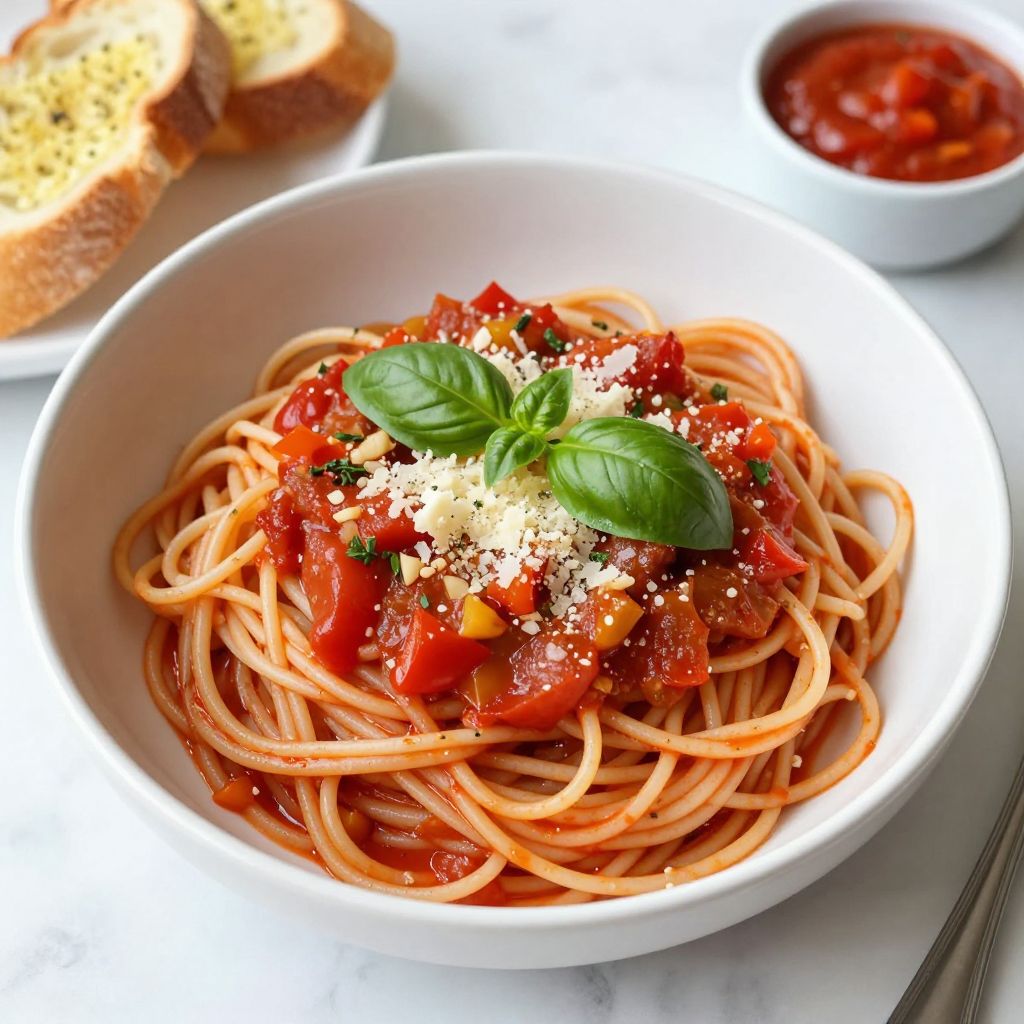
Spaghetti Sauce
Ingredients
Equipment
Method
- In a large saucepan, heat the olive oil over medium heat.
- Add the diced onion, carrot, and bell pepper to the pan. Sauté for about 5 minutes until the vegetables are soft.
- Stir in the minced garlic and cook for an additional minute.
- Pour in the crushed tomatoes and stir well to combine.
- Add the dried oregano, basil, salt, and pepper to taste.
- Bring the sauce to a gentle boil, then reduce the heat and let it simmer uncovered for about 20 minutes.
- Taste the sauce and adjust the seasoning as needed, adding sugar if you prefer a sweeter sauce.
- Your spaghetti sauce is ready to serve!