
There’s something undeniably comforting about the creamy texture and rich flavor of Mangu. This traditional Dominican dish, made from mashed green plantains, is the perfect canvas for savory toppings like fried eggs and sautéed onions, making it a breakfast favorite that warms the heart.
Not only is it quick to whip up, but the combination of flavors and textures keeps you coming back for more. Plus, it’s incredibly versatile, easily adapting to whatever you have on hand.
Why You’ll Love This Recipe
This recipe promises to delight your taste buds and fill your kitchen with irresistible aromas.
- Easy to make with minimal ingredients.
- Rich, creamy texture that pairs well with various toppings.
- A great way to start your day or enjoy as a side dish.
- Versatile enough to customize with your favorite add-ons.
My Experience Making This Recipe
The first time I made Mangu, I was amazed at how simple it was to create such a flavorful dish. As I mashed the plantains, the warm aroma filled my kitchen, instantly transporting me to a cozy Dominican café.
When I served it topped with fried eggs and sautéed onions, my family couldn’t get enough. It was a hit, and now it’s a regular feature on our breakfast table.
Recipe Overview
- Recipe Name: Mangu
- Servings: 4
- Prep Time: 10 minutes
- Cook Time: 20 minutes
- Total Time: 30 minutes
- Course: Breakfast
- Cuisine: Dominican
- Calories per Serving: 250
Equipment You Will Need
- Large pot
- Colander
- Potato masher or fork
- Skillet
- Wooden spoon
Ingredients for Mangu
- 3 green plantains
- 2 cups water
- 1 teaspoon salt
- 2 tablespoons butter or olive oil
- 1 medium onion, sliced
- 4 eggs (optional for topping)
Ingredient Notes and Substitutions
- Green plantains: Used for their starchy texture, they create a creamy base. You can substitute with ripe plantains for a sweeter flavor.
- Salt: Enhances the flavor of the plantains. If avoiding salt, use a salt-free seasoning.
- Butter or olive oil: Adds richness; use coconut oil for a different flavor profile.
- Onion: Provides sweetness when sautéed. Shallots can be used for a milder flavor.
- Eggs: Optional, but they add protein and richness. You can use tofu or chickpeas as a vegan alternative.
How to Make Mangu
Step 1: Peel the Plantains
Start by cutting off the ends of the plantains. Use a knife to slice the skin lengthwise and remove the peel carefully.
Step 2: Cut the Plantains
Slice the peeled plantains into 1-inch pieces. This size ensures they cook evenly and mash easily.
Step 3: Boil the Plantains
Place the cut plantains in a large pot and cover them with water. Add salt and bring to a boil over medium heat.
Step 4: Cook Until Tender
Let the plantains boil for about 15-20 minutes, or until they are fork-tender. This softening is crucial for a smooth mash.
Step 5: Drain the Plantains
Once tender, drain the plantains in a colander. Allow them to cool slightly, which makes them easier to handle.
Step 6: Mash the Plantains
Transfer the drained plantains to a mixing bowl. Use a potato masher or fork to mash until smooth, adding in butter or olive oil gradually.
Step 7: Sauté the Onions
In a skillet, heat a bit of oil over medium heat. Add the sliced onions and sauté until they are soft and translucent.
Step 8: Serve the Mangu
Plate the mashed plantains and top with the sautéed onions. Add fried eggs on top if desired, and enjoy your delicious Mangu!
Pro Tip: For a creamier texture, add a splash of the boiling water to the mash.
Tips for the Best Mangu
- Choose firm green plantains for the best texture.
- Don’t rush the boiling process; tender plantains yield a smoother mash.
- Adjust the salt to taste for a more personalized flavor.
- For added richness, use a combination of butter and olive oil.
- Experiment with different toppings like avocado or cheese for variety.
Common Mistakes to Avoid
- Skipping the boiling step can lead to a chunky texture; always boil until tender.
- Not mashing enough will result in a lumpy Mangu, so mash thoroughly.
- Using ripe plantains will make the dish overly sweet unless that’s your preference.
- Overcooking the onions can cause bitterness; sauté just until soft.
Serving Suggestions
Pair Mangu with a side of scrambled eggs or avocado for a delightful breakfast experience.
- Fried eggs
- Salami or bacon
- Avocado slices
- Queso blanco (white cheese)
- Hot sauce for a spicy kick
Variations to Try
- Add sautéed bell peppers for an extra flavor boost.
- Mix in garlic for a savory twist.
- Top with fresh cilantro for a pop of color and flavor.
- Use coconut milk instead of butter for a tropical flavor.
- Incorporate spices like cumin or paprika for a different profile.
Dietary Adaptations
- Gluten-free: This recipe is naturally gluten-free.
- Dairy-free: Substitute butter with olive oil or coconut oil.
- Vegan: Omit eggs and use a plant-based oil.
- Low-carb/keto: This dish is not low-carb; consider cauliflower mash instead.
Storage and Reheating
Refrigerator
Mangu can be stored in an airtight container in the fridge for up to 3 days.
- Let it cool before sealing.
- Reheat in a skillet or microwave.
Freezer
You can freeze Mangu for up to a month. Just ensure it’s in a freezer-safe container.
- Thaw in the refrigerator overnight before reheating.
Reheating
Reheat in a skillet over low heat, stirring occasionally to prevent sticking.
- For a creamier texture, add a splash of water while reheating.
Nutrition Information
| Nutrient | Amount |
|---|---|
| Calories | 250 |
| Total Fat | 10g |
| Saturated Fat | 3g |
| Carbohydrates | 38g |
| Fiber | 4g |
| Sugar | 1g |
| Protein | 4g |
| Sodium | 200mg |
| Cholesterol | 70mg |
This information is an estimate and can vary based on ingredient brands used.
Frequently Asked Questions
Can I make Mangu ahead of time?
Yes, you can prepare Mangu in advance and store it in the refrigerator to reheat later.
What can I use instead of green plantains?
You could try using ripe plantains, but expect a sweeter taste.
How do I store leftovers?
Store leftovers in an airtight container in the refrigerator for up to three days.
Why is my Mangu lumpy?
Lumps usually come from not mashing the plantains enough; ensure they are well mashed.
Can I add other toppings to Mangu?
Absolutely! Feel free to experiment with toppings like avocado, cheese, or spicy sausage.
Final Thoughts
Making Mangu is a delightful experience that brings a taste of the Dominican Republic to your kitchen. With its creamy texture and savory toppings, it’s sure to become a beloved dish in your home.
So go ahead, give this recipe a try, and don’t forget to explore more delicious options like Jamaican Festival or Corn Pone for your next meal!
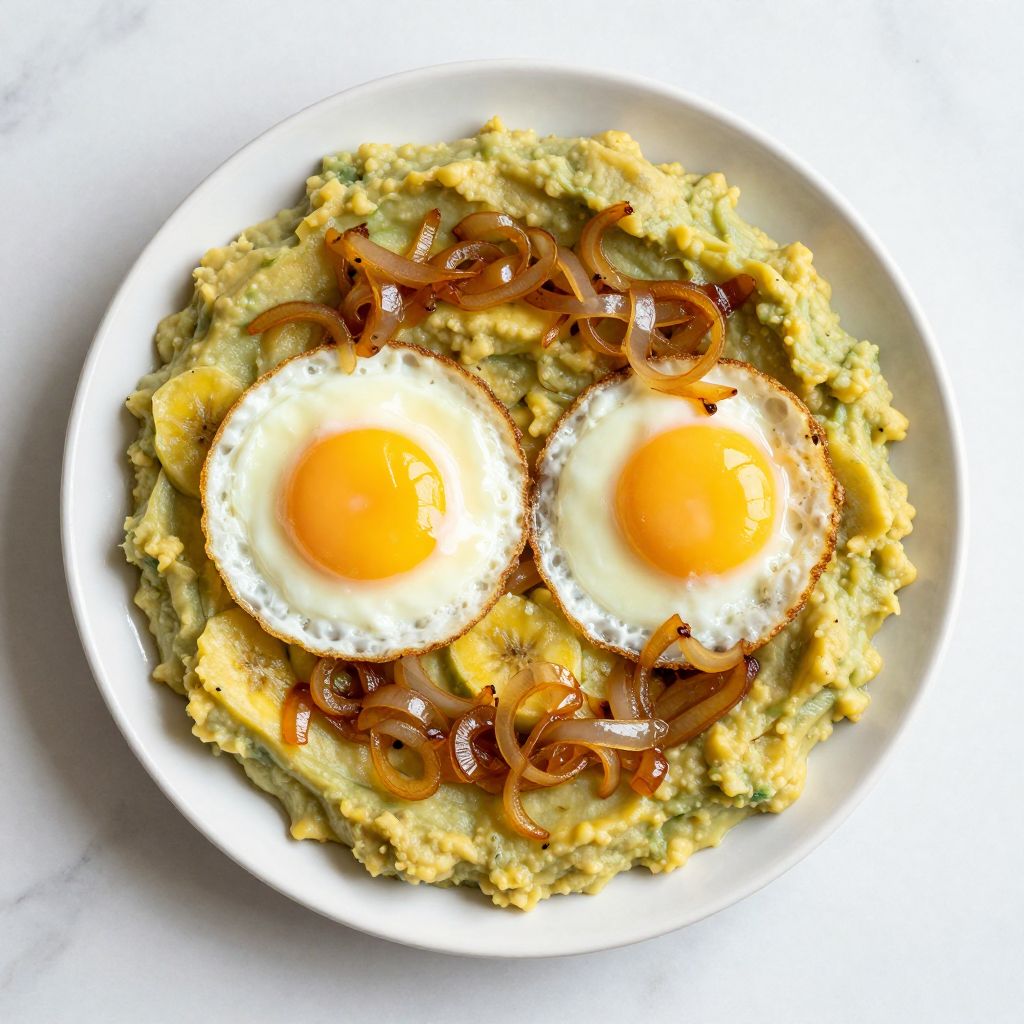
Mangu
Ingredients
Equipment
Method
- Start by cutting off the ends of the plantains. Use a knife to slice the skin lengthwise and remove the peel carefully.
- Slice the peeled plantains into 1-inch pieces.
- Place the cut plantains in a large pot and cover them with water. Add salt and bring to a boil over medium heat.
- Let the plantains boil for about 15-20 minutes, or until they are fork-tender.
- Once tender, drain the plantains in a colander and allow them to cool slightly.
- Transfer the drained plantains to a mixing bowl. Use a potato masher or fork to mash until smooth, adding in butter or olive oil gradually.
- In a skillet, heat a bit of oil over medium heat. Add the sliced onions and sauté until they are soft and translucent.
- Plate the mashed plantains and top with the sautéed onions. Add fried eggs on top if desired.