
Picture this: a cozy kitchen filled with the tangy aroma of simmering cabbage, a dish steeped in tradition and heartwarming flavor. This Bavarian Sauerkraut Recipe is not just a side dish; it’s a celebration of German culinary heritage that brings a unique blend of tartness and earthiness to your table.
With its crisp texture and vibrant taste, sauerkraut is a versatile addition that enhances everything from sausages to salads. Plus, it’s packed with probiotics, making it a healthy choice as well. Let’s dive into the ingredients and steps to create your own batch of this delightful dish!
Why You’ll Love This Recipe
This recipe stands out for its simplicity and depth of flavor. It’s an easy way to elevate your meals.
- Rich in probiotics for gut health.
- Perfect as a side or topping for various dishes.
- Uses basic ingredients you likely have at home.
- Can be made ahead and stored for later use.
- Brings authentic Bavarian flavors to your kitchen.
My Experience Making This Recipe
I have always been fascinated by how something as simple as cabbage can transform into a culinary delight. When I first tried making sauerkraut, the process of fermenting felt almost magical.
The first bite of my homemade sauerkraut was a revelation—tangy, crunchy, and bursting with flavor. It was a hit at my dinner table, and now it’s a regular feature in my cooking repertoire.
Recipe Overview
- Recipe Name: Bavarian Sauerkraut
- Servings: 8
- Prep Time: 15 minutes
- Cook Time: 1 hour
- Total Time: 1 hour 15 minutes
- Course: Side Dish
- Cuisine: German
- Calories per Serving: 50
Equipment You Will Need
- Large pot
- Cutting board
- Sharp knife
- Wooden spoon
- Fermentation jar or container
- Heavy weight (like a small bowl or jar)
Ingredients for Bavarian Sauerkraut
- 1 medium head of green cabbage, finely shredded
- 2 tablespoons salt, preferably sea salt
- 1 tablespoon caraway seeds, optional for flavor
- 1 large onion, thinly sliced
- 1 apple, grated (for sweetness)
- 1 cup water, filtered or distilled
Ingredient Notes and Substitutions
- Cabbage: Provides the base of the dish; use green or red cabbage. Red cabbage will yield a more colorful sauerkraut.
- Salt: Essential for fermentation; avoid table salt. Kosher salt can work as a substitute.
- Caraway seeds: Adds a distinct flavor; feel free to omit if you prefer a milder taste.
- Onion: Adds sweetness and depth; shallots can be a good alternative.
- Apple: Balances the tang; pears can also be used for a different flavor profile.
How to Make Bavarian Sauerkraut
Step 1: Prepare the Cabbage
Begin by removing the outer leaves of the cabbage and cutting it into quarters. This allows for easier shredding and ensures you use only the freshest parts of the cabbage.
Step 2: Shred the Cabbage
Using a sharp knife or a mandoline, finely shred the cabbage into thin strips. Thin strips promote even fermentation and a pleasant texture.
Step 3: Mix with Salt
In a large bowl, combine the shredded cabbage and salt. The salt draws out moisture, creating a brine for fermentation.
Step 4: Massage the Cabbage
With clean hands, massage the cabbage for about 5-10 minutes until it becomes soft and watery. This step is crucial as it helps kickstart the fermentation process.
Step 5: Add Remaining Ingredients
Stir in the sliced onion, grated apple, and caraway seeds if using. Each ingredient adds layers of flavor to your sauerkraut.
Step 6: Pack into Jar
Transfer the mixture into a fermentation jar, pressing down firmly to eliminate air pockets. Air pockets can lead to spoilage, so packing it tightly ensures even fermentation.
Step 7: Weigh Down the Cabbage
Place a weight on top of the cabbage to keep it submerged in its brine. This prevents exposure to air, which can hinder fermentation.
Step 8: Ferment
Cover the jar loosely with a lid or cloth and let it sit at room temperature for 1 to 4 weeks. Taste it periodically to find your perfect tanginess.
Pro Tip: For a milder flavor, ferment for a shorter time. For a punchier taste, let it ferment longer!
Tips for the Best Bavarian Sauerkraut
- Use fresh, organic cabbage for the best flavor and health benefits.
- Do not skip the massaging step; it is key to releasing the cabbage’s natural juices.
- Keep the sauerkraut submerged to prevent mold formation.
- Experiment with spices like juniper berries or bay leaves for added depth.
- Make sure your equipment is clean to avoid unwanted bacteria.
Common Mistakes to Avoid
- Not using enough salt can lead to spoilage instead of fermentation.
- Skipping the weight can cause the cabbage to float above the brine.
- Fermenting in a warm area can lead to off-flavors, so keep it cool.
- Using cabbage that is wilted or damaged can affect the texture.
Serving Suggestions
Bavarian sauerkraut pairs beautifully with a variety of dishes. It’s a fantastic side for sausages or grilled meats.
- Serve alongside bratwurst or pork knuckles.
- Top your hot dogs for an elevated twist.
- Mix into potato salads for a tangy crunch.
- Use as a filling for savory pastries or empanadas.
Variations to Try
- Add beets for a vibrant color and earthy flavor.
- Incorporate ginger for a spicy kick.
- Try adding garlic for an aromatic touch.
- Mix in chopped carrots for a hint of sweetness.
- Use red cabbage for a sweeter, more colorful version.
Dietary Adaptations
- Gluten-free: This recipe is naturally gluten-free.
- Dairy-free: No dairy is used, making it suitable for all diets.
- Vegan/Vegetarian: Completely plant-based, perfect for everyone.
- Low-carb/Keto: Low in carbs, making it a great addition to keto meals.
Storage and Reheating
Refrigerator
Store your sauerkraut in an airtight container in the fridge. It should keep well for several months.
- Transfer to a glass jar with a tight lid.
- Keep away from strong-smelling foods to avoid flavor transfer.
Freezer
You can freeze sauerkraut, but its texture may change. If you don’t mind that, it can be a convenient option.
- Use freezer-safe containers or bags.
- Leave some headspace in the container for expansion.
Reheating
To reheat, simply warm it up on the stove over low heat. Avoid boiling to maintain its crunch.
- Stir occasionally to ensure even heating.
- For added flavor, sauté with onions or bacon.
Nutrition Information
| Nutrient | Amount |
|---|---|
| Calories | 50 |
| Total Fat | 0g |
| Saturated Fat | 0g |
| Carbohydrates | 12g |
| Fiber | 4g |
| Sugar | 2g |
| Protein | 1g |
| Sodium | 400mg |
| Cholesterol | 0mg |
This information may vary based on specific ingredients and quantities used.
Frequently Asked Questions
Can I use pre-shredded cabbage?
Yes, but fresh cabbage is preferred for better flavor and texture.
How long can I store sauerkraut?
It can last several months in the refrigerator if stored properly.
Can I make sauerkraut ahead of time?
Absolutely! It actually improves in flavor with time.
Why is my sauerkraut too watery?
This can happen if too much salt is used or if the cabbage wasn’t packed tightly enough.
Can I make sauerkraut without caraway seeds?
Yes, you can omit them or substitute with other spices according to your taste.
Final Thoughts
Making your own Bavarian sauerkraut is a rewarding experience that fills your kitchen with delightful aromas. It’s a dish that connects you to tradition while also introducing you to the joys of fermentation.
So grab your cabbage, roll up your sleeves, and give this recipe a try. You might just find that homemade sauerkraut is a staple you’ll want to share with everyone!
If you’re looking for more delicious cabbage ideas, check out this cabbage boil recipe or try making German red cabbage for a delightful side dish.
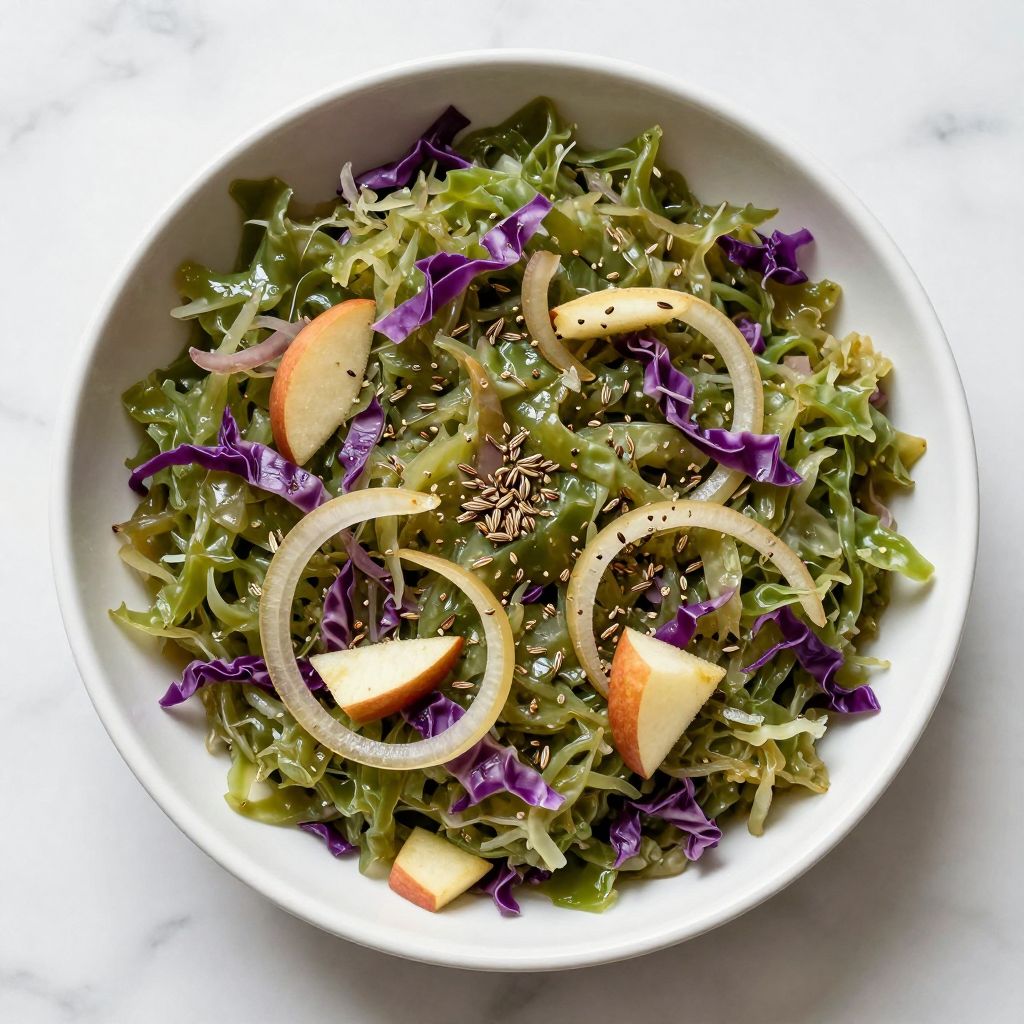
Bavarian Sauerkraut
Ingredients
Equipment
Method
- Begin by removing the outer leaves of the cabbage and cutting it into quarters.
- Using a sharp knife or a mandoline, finely shred the cabbage into thin strips.
- In a large bowl, combine the shredded cabbage and salt.
- With clean hands, massage the cabbage for about 5-10 minutes until it becomes soft and watery.
- Stir in the sliced onion, grated apple, and caraway seeds if using.
- Transfer the mixture into a fermentation jar, pressing down firmly to eliminate air pockets.
- Place a weight on top of the cabbage to keep it submerged in its brine.
- Cover the jar loosely with a lid or cloth and let it sit at room temperature for 1 to 4 weeks.