
Waking up to the aroma of a traditional Japanese breakfast feels like a warm hug from the morning sun. This meal is not just food; it’s a delightful experience that combines flavors, textures, and a touch of ritual, making it special and worth every minute in the kitchen.
With its balance of savory and slightly sweet elements, a Japanese breakfast offers a satisfying start to your day. From fluffy rice to grilled fish and pickled vegetables, each component contributes to a wholesome and fulfilling meal that’s as nutritious as it is delicious.
Why You’ll Love This Recipe
This Japanese breakfast is a treasure trove of flavor and nutrition that will brighten your morning.
- Quick to prepare, perfect for busy mornings.
- Rich in protein and healthy carbs to fuel your day.
- Offers a delightful mix of textures and flavors.
- Versatile; customize it to suit your taste.
- Brings a taste of Japan to your dining table.
My Experience Making This Recipe
When I first made this breakfast, the kitchen filled with an incredible aroma that transported me straight to Japan. The combination of grilled fish and perfectly cooked rice felt like a warm embrace on a chilly morning.
Each bite was a revelation; the harmony of flavors danced on my palate. My family was pleasantly surprised, and I found myself smiling with each serving, knowing I created something special.
Recipe Overview
- Recipe Name: Japanese Breakfast
- Servings: 4
- Prep Time: 15 minutes
- Cook Time: 20 minutes
- Total Time: 35 minutes
- Course: Breakfast
- Cuisine: Japanese
- Calories per Serving: 350
Equipment You Will Need
- Rice cooker or pot for cooking rice
- Grill or frying pan for cooking fish
- Small pot for miso soup
- Serving dishes
- Chopsticks or utensils for serving
Ingredients for Japanese Breakfast
- 2 cups short-grain rice
- 4 pieces grilled salmon or mackerel
- 1 cup dashi or vegetable broth
- 2 tablespoons miso paste
- 1 cup assorted pickled vegetables (tsukemono)
- 2 green onions, chopped
- 1 tablespoon soy sauce (optional)
Ingredient Notes and Substitutions
- Short-grain rice: Used for its sticky texture, which is perfect for breakfast. You can substitute with sushi rice if necessary.
- Grilled salmon or mackerel: Provides healthy fats and protein. You can use any fish you prefer, like trout or even tofu for a vegetarian option.
- Dashi: A traditional Japanese broth that enhances flavor. If unavailable, vegetable broth is a good substitute.
- Miso paste: Adds depth and umami flavor. You can use tahini or another nut butter for a different flavor, but it will change the dish’s profile.
- Pickled vegetables: These add crunch and acidity. Feel free to use any pickled vegetables you enjoy.
How to Make Japanese Breakfast
Step 1: Rinse the Rice
Start by rinsing the rice under cold water until the water runs clear. This removes excess starch and helps achieve that perfect texture.
Step 2: Cook the Rice
Add the rinsed rice and the appropriate amount of water to your rice cooker or pot. Follow the cooker’s instructions, or use a 1:1 ratio of rice to water if cooking on the stovetop.
Step 3: Prepare the Fish
While the rice cooks, heat a grill or frying pan over medium heat. Grill the salmon or mackerel for about 5-7 minutes on each side, or until cooked through and slightly charred.
Step 4: Make the Miso Soup
In a small pot, bring the dashi or vegetable broth to a simmer. Whisk in the miso paste until fully dissolved, and let it cook for a few minutes.
Step 5: Prepare the Pickled Vegetables
Arrange your assorted pickled vegetables on a serving plate. These add a refreshing crunch that complements the meal beautifully.
Step 6: Serve the Rice
Once the rice is cooked, fluff it with a fork and portion it into bowls. The warmth of the rice will enhance the flavors of the other components.
Step 7: Assemble the Plates
On each plate, add a piece of grilled fish, a bowl of miso soup, and a serving of pickled vegetables. This arrangement not only looks beautiful but also balances the flavors.
Step 8: Garnish and Enjoy
Top the rice with chopped green onions and drizzle with soy sauce if desired. Dive in and savor the harmony of flavors!
Pro Tip: Don’t skip rinsing the rice; it’s the secret to achieving that perfect sticky texture.
Tips for the Best Japanese Breakfast
- Use fresh fish for grilling for the best flavor.
- Experiment with different pickled vegetables to find your favorite combination.
- Let the rice sit for a few minutes after cooking to enhance its texture.
- Adjust the miso paste to your taste; some like it stronger!
- Consider adding a side of seaweed salad for an extra flavor boost.
Common Mistakes to Avoid
- Not rinsing the rice can lead to overly sticky and gummy texture.
- Overcooking the fish can make it dry and less enjoyable.
- Skipping the miso soup means missing out on a key component of the meal.
- Using too much water for rice can make it mushy.
- Ignoring the balance of flavors can make the meal less satisfying.
Serving Suggestions
This Japanese breakfast is best served warm and enjoyed right away. Pair it with:
- A cup of green tea for a refreshing drink.
- Fresh fruit like sliced melon or citrus for a sweet contrast.
- Steamed vegetables for added nutrition.
- A side of tofu for additional protein.
- A sprinkle of sesame seeds for extra crunch.
Variations to Try
- Swap the fish for scrambled eggs for a vegetarian option.
- Add some sautéed spinach for an extra nutrient boost.
- Use flavored rice like furikake for added taste.
- Make a breakfast bowl by layering rice, fish, and vegetables.
- Incorporate avocado for a creamy texture.
Dietary Adaptations
- Gluten-free: Use gluten-free soy sauce or omit it entirely.
- Dairy-free: This recipe is naturally dairy-free!
- Vegan/Vegetarian: Use tofu instead of fish and vegetable broth for miso soup.
- Low-carb/Keto: Replace rice with cauliflower rice for a low-carb option.
Storage and Reheating
Refrigerator
Store leftovers in an airtight container for up to 2 days.
- Keep rice separate from fish and soup for best results.
Freezer
This dish is best enjoyed fresh, but you can freeze cooked rice for later use.
- Store rice in a freezer-safe bag, removing as much air as possible.
Reheating
Reheat rice in the microwave with a splash of water to revive its texture.
- Reheat fish in the oven to keep it crispy.
Nutrition Information
| Nutrient | Amount |
|---|---|
| Calories | 350 |
| Total Fat | 15g |
| Saturated Fat | 3g |
| Carbohydrates | 40g |
| Fiber | 3g |
| Sugar | 1g |
| Protein | 20g |
| Sodium | 600mg |
| Cholesterol | 50mg |
This nutrition information is an estimate and can vary based on specific ingredients used.
Frequently Asked Questions
Can I use white rice instead of short-grain rice?
Yes, but the texture will be different; short-grain rice is stickier and more traditional.
Can I make this breakfast ahead of time?
While best enjoyed fresh, you can prepare components in advance and assemble them when ready to eat.
How do I store leftovers?
Store leftovers separately in airtight containers in the refrigerator for up to two days.
What if my miso soup is too salty?
Add more dashi or vegetable broth to dilute the saltiness.
Can I use frozen fish?
Yes, just ensure it is fully thawed and cooked thoroughly before serving.
Final Thoughts
Making a Japanese breakfast is like giving your morning routine a cheerful makeover. The delightful flavors and wholesome ingredients create a meal that nourishes both body and soul.
So why not give this recipe a try? You may just find a new breakfast favorite that brings a little piece of Japan to your kitchen.
For more delicious Japanese recipes, check out my Oden Recipe and Gyudon Recipe.
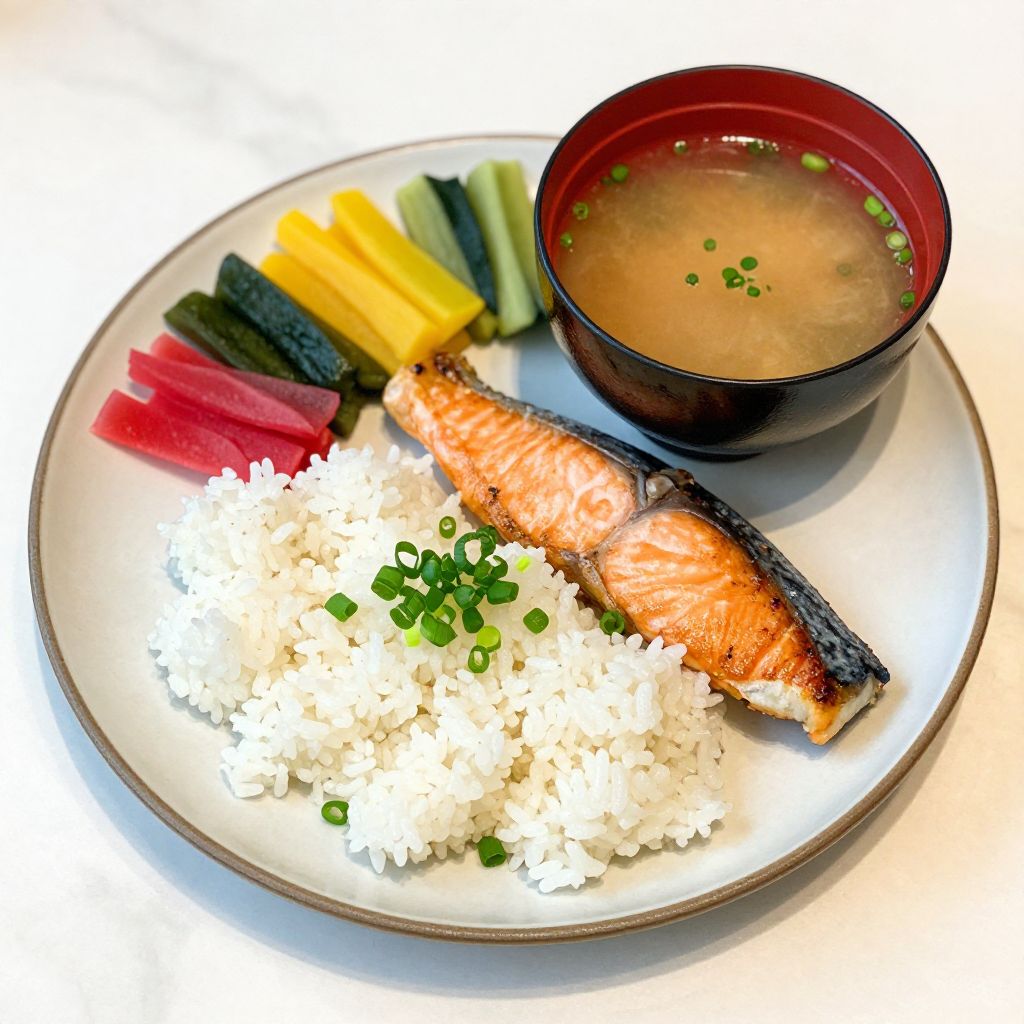
Japanese Breakfast
Ingredients
Equipment
Method
- Rinse the rice under cold water until the water runs clear.
- Add the rinsed rice and the appropriate amount of water to your rice cooker or pot.
- While the rice cooks, heat a grill or frying pan over medium heat and grill the salmon or mackerel for about 5-7 minutes on each side.
- In a small pot, bring the dashi or vegetable broth to a simmer and whisk in the miso paste until fully dissolved.
- Arrange your assorted pickled vegetables on a serving plate.
- Once the rice is cooked, fluff it with a fork and portion it into bowls.
- On each plate, add a piece of grilled fish, a bowl of miso soup, and a serving of pickled vegetables.
- Top the rice with chopped green onions and drizzle with soy sauce if desired.