
There’s nothing quite like the aroma of freshly baked sourdough wafting through your home. This Best Sourdough Recipe For Beginners is perfect for anyone looking to dive into the world of bread making, offering a delightful tang and crusty exterior that will impress friends and family. With just a few straightforward steps, you’ll create a loaf that boasts a chewy texture and a flavor that sings. Let’s roll up our sleeves and get started!
Why You’ll Love This Recipe
This sourdough recipe is a great introduction to bread making, transforming flour and water into something magical.
- Simple ingredients create complex flavors.
- Perfect for beginners, with easy-to-follow steps.
- Versatile for sandwiches, toast, or simply with butter.
- Homemade bread brings a sense of accomplishment.
My Experience Making This Recipe
When I first attempted sourdough, I was a little intimidated. However, each step was a rewarding experience, and the first slice was a moment I’ll never forget.
Watching the dough rise and transform was fascinating, and that first bite? Pure bliss. The crust was crunchy, while the inside was soft and airy—just what I hoped for!
Recipe Overview
- Recipe Name: Best Sourdough Recipe For Beginners
- Servings: 1 loaf
- Prep Time: 15 minutes (plus resting time)
- Cook Time: 30 minutes
- Total Time: 12-24 hours (includes fermentation)
- Course: Bread
- Cuisine: American
- Calories per Serving: 120
Equipment You Will Need
- Large mixing bowl
- Wooden spoon or dough whisk
- Kitchen scale (for accuracy)
- Proofing basket or bowl
- Baking stone or Dutch oven
- Sharp knife or lame for scoring
- Clean kitchen towel
Ingredients for Best Sourdough Recipe For Beginners
- 500g bread flour – This gives the bread its structure and chew.
- 350g water – Hydrates the flour and helps develop gluten.
- 100g sourdough starter – This is the natural leavening agent.
- 10g salt – Enhances flavor and strengthens gluten.
Ingredient Notes and Substitutions
- Bread flour: Used for its high protein content, which creates a better rise. You can substitute with all-purpose flour but results may vary.
- Sourdough starter: This is essential for fermentation. If you don’t have one, you can make your own or use commercial yeast, but the taste will differ.
- Salt: This adds flavor and controls fermentation. Sea salt or kosher salt works well as substitutes.
How to Make Best Sourdough Recipe For Beginners
Step 1: Prepare the Starter
Feed your sourdough starter 4-6 hours before you plan to bake. This ensures it’s active and bubbly, ready to raise your dough.
Step 2: Mix the Dough
In a large mixing bowl, combine the flour, water, and sourdough starter. Mix until a shaggy dough forms; it’s okay if it’s not fully incorporated.
Step 3: Autolyse
Let the dough rest for 30 minutes. This process helps the flour absorb water and begins gluten development.
Step 4: Add Salt
Sprinkle the salt over the dough and mix until fully incorporated. This step is crucial for flavor and dough strength.
Step 5: Bulk Fermentation
Cover the bowl with a towel and let it rise for 4-6 hours at room temperature. Every 30 minutes, perform a series of stretch and folds to develop the dough’s structure.
Step 6: Shape the Dough
Once the dough has doubled in size, transfer it to a floured surface. Shape it into a round or oval loaf, tucking the edges underneath.
Step 7: Proof the Dough
Place the shaped dough into a floured proofing basket or bowl. Cover it with a towel and let it rise for 1-2 hours until puffy.
Step 8: Bake the Bread
Preheat your oven to 450°F (230°C) with a Dutch oven inside. Once hot, carefully place the dough inside, cover it, and bake for 30 minutes. Remove the lid and bake for an additional 15-20 minutes to achieve a beautiful crust.
Pro Tip: Always check your dough’s readiness by performing the poke test; it should spring back slowly when poked.
Tips for the Best Best Sourdough Recipe For Beginners
- Use a kitchen scale for precise measurements; baking is a science.
- Keep your kitchen warm for better fermentation; sourdough loves warmth.
- Experiment with different flours for unique flavors.
- Practice patience; good sourdough takes time to develop flavor.
- Don’t skip the autolyse; it makes a noticeable difference in dough texture.
Common Mistakes to Avoid
- Not feeding your starter enough; a weak starter leads to poor rise.
- Over or under-proofing the dough; both can negatively affect texture.
- Skipping the stretch and folds; this step builds structure.
- Baking in a cold oven; always preheat for the best crust.
Serving Suggestions
This bread pairs beautifully with a variety of dishes. Here are some suggestions to enjoy your sourdough.
- Spread with fresh butter and jam.
- Stack with your favorite sandwich fillings.
- Serve alongside soups for a hearty meal.
- Use for bruschetta topped with tomatoes and basil.
Variations to Try
- Add herbs like rosemary or thyme for a fragrant loaf.
- Incorporate cheese for a savory twist.
- Mix in nuts and dried fruits for added texture and sweetness.
- Try a whole wheat blend for a nuttier flavor.
Dietary Adaptations
- Gluten-free: Use a gluten-free flour blend, but expect different results.
- Dairy-free: This recipe is already dairy-free, so you’re good to go!
- Vegan: The recipe is naturally vegan; just ensure your starter is too.
- Low-carb/keto: Traditional sourdough is not low-carb; alternatives exist but may not have the same flavor.
Storage and Reheating
Refrigerator
Store the bread in a paper bag at room temperature for 2-3 days. This keeps the crust crispy.
- Wrap in plastic for longer storage.
- Slice before freezing for easy use.
Freezer
Freeze slices or the whole loaf for up to three months. Make sure to wrap it well to prevent freezer burn.
- Use a freezer-safe bag or wrap in foil.
- Thaw at room temperature before eating.
Reheating
To reheat, place in a 350°F (175°C) oven for 10-15 minutes. This helps restore the crust.
- Sprinkle a little water on the crust for extra crispiness.
- Toast slices in a pan for a quick heat-up.
Nutrition Information
| Nutrient | Amount |
|---|---|
| Calories | 120 |
| Total Fat | 0.5g |
| Saturated Fat | 0g |
| Carbohydrates | 24g |
| Fiber | 1g |
| Sugar | 0g |
| Protein | 4g |
| Sodium | 200mg |
| Cholesterol | 0mg |
Nutrition values are approximate and may vary based on specific ingredients used.
Frequently Asked Questions
Can I use all-purpose flour instead of bread flour?
Yes, but the texture may differ, as bread flour creates a chewier loaf.
How long can I store my sourdough starter?
Your starter can last several weeks in the fridge if fed regularly; just revive it with a feeding before using.
Can I make this recipe ahead of time?
Yes, you can prepare the dough and refrigerate it overnight for enhanced flavor.
What if my dough is too sticky?
Try adding a little more flour during the mixing step, but be careful not to add too much.
Why does my sourdough not rise?
This could be due to an inactive starter or not enough fermentation time—ensure your starter is bubbly before use.
Final Thoughts
Making sourdough bread is a rewarding journey filled with delicious results. Embrace the process, and don’t hesitate to experiment with flavors and techniques.
So, grab your ingredients and get baking! And if you’re looking to expand your sourdough skills, check out this King Arthur Sourdough Recipe or try a Same Day Sourdough Bread Recipe for a quicker option.
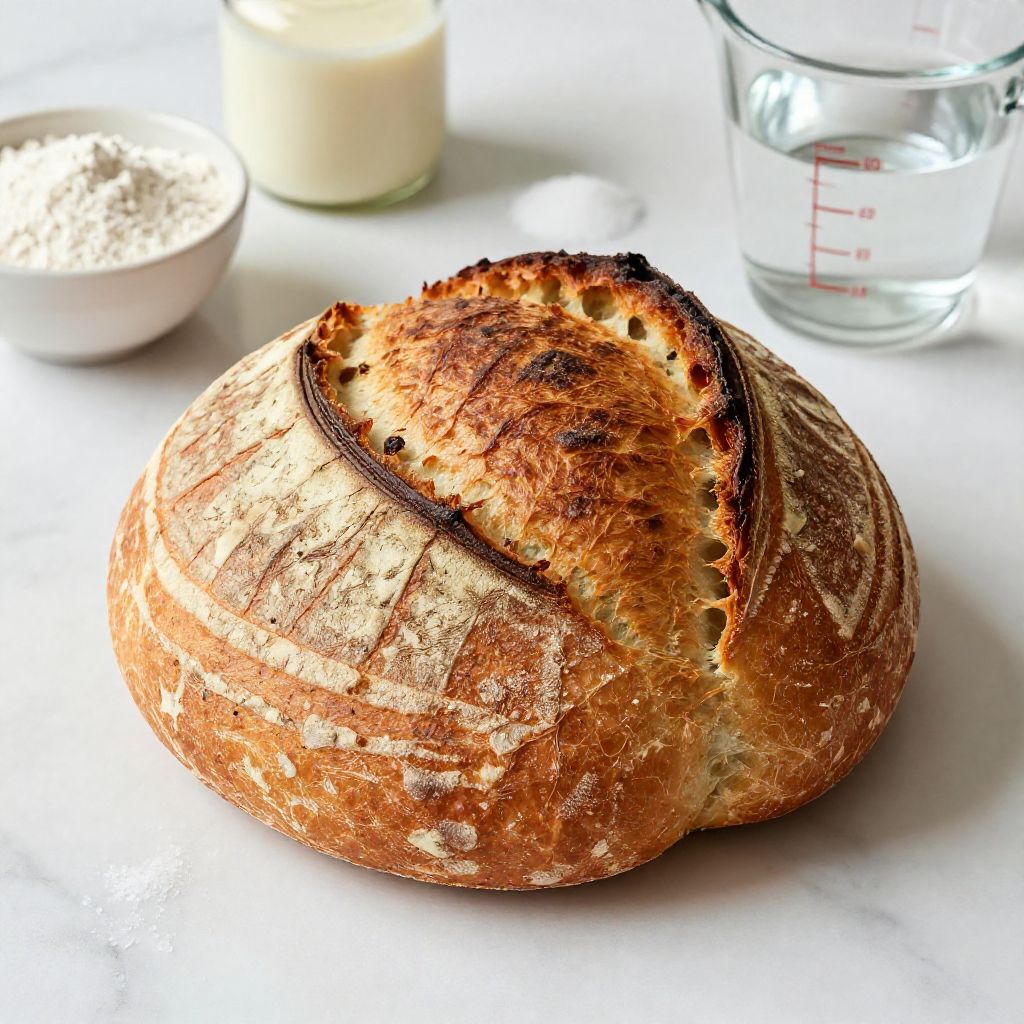
Best Sourdough Recipe For Beginners
Ingredients
Equipment
Method
- Feed your sourdough starter 4-6 hours before you plan to bake.
- In a large mixing bowl, combine the flour, water, and sourdough starter. Mix until a shaggy dough forms.
- Let the dough rest for 30 minutes.
- Sprinkle the salt over the dough and mix until fully incorporated.
- Cover the bowl with a towel and let it rise for 4-6 hours at room temperature, performing stretch and folds every 30 minutes.
- Once the dough has doubled in size, transfer it to a floured surface and shape it into a loaf.
- Place the shaped dough into a floured proofing basket or bowl. Cover and let it rise for 1-2 hours.
- Preheat your oven to 450°F (230°C) with a Dutch oven inside.
- Carefully place the dough inside the hot Dutch oven, cover it, and bake for 30 minutes.
- Remove the lid and bake for an additional 15-20 minutes until the crust is golden brown.