
There’s something magical about the crisp crunch of freshly made Homemade Sauerkraut. This tangy, fermented delight not only brightens up meals but also offers a delightful burst of flavor and a health boost to your gut. Its simple ingredients and straightforward process make it a must-try for anyone looking to elevate their culinary game. Plus, once you master this basic recipe, you can customize it with spices or other vegetables for a twist on traditional flavors.
Why You’ll Love This Recipe
Making your own sauerkraut is incredibly rewarding and surprisingly easy.
- Rich in probiotics, promoting gut health.
- Customizable with spices and flavors.
- Crisp texture and tangy taste elevate any dish.
- Affordable and uses minimal ingredients.
My Experience Making This Recipe
When I first tried making Homemade Sauerkraut, I was amazed at how something so simple could yield such depth of flavor. The aroma of the fermenting cabbage filled my kitchen, bringing back memories of my grandma’s kitchen.
With each bite, I was transported to family gatherings where sauerkraut was a staple. It’s become a fun tradition to make batches with friends, experimenting with different spices and methods.
Recipe Overview
- Recipe Name: Homemade Sauerkraut
- Servings: About 4 cups
- Prep Time: 15 minutes
- Fermentation Time: 1-4 weeks
- Total Time: 1-4 weeks
- Course: Side Dish
- Cuisine: German
- Calories per Serving: Approximately 20
Equipment You Will Need
- Large mixing bowl
- Sharp knife or mandoline
- Fermentation jar or crock with a lid
- Weight (like a clean rock or a smaller jar) to weigh down the cabbage
- Clean cloth or coffee filter
Ingredients for Homemade Sauerkraut
- 1 medium green cabbage (about 2-3 pounds)
- 1 tablespoon kosher salt (or sea salt)
- Optional spices: caraway seeds, juniper berries, or garlic cloves
Ingredient Notes and Substitutions
- Cabbage: It is the main ingredient, providing the base for fermentation. You can substitute with red cabbage for a colorful twist.
- Kosher salt: It helps create the brine. Avoid table salt, as it contains anti-caking agents that can hinder fermentation.
How to Make Homemade Sauerkraut
Step 1: Prepare the Cabbage
Remove the outer leaves of the cabbage and set them aside. Cut the cabbage into quarters, remove the core, and slice it thinly.
Step 2: Mix with Salt
In a large mixing bowl, combine the sliced cabbage with the salt. This process draws out moisture, creating the brine essential for fermentation.
Step 3: Massage the Cabbage
Using clean hands, massage the cabbage for about 5-10 minutes. You want to break down the cell walls, releasing as much liquid as possible.
Step 4: Add Optional Spices
If desired, mix in any optional spices like caraway seeds or garlic. These will infuse your sauerkraut with additional flavor.
Step 5: Pack the Jar
Transfer the cabbage mixture to a fermentation jar or crock. Pack it tightly to eliminate air pockets, ensuring the brine covers the cabbage completely.
Step 6: Weigh It Down
Place a weight on top of the cabbage to keep it submerged under the brine. This helps prevent mold and ensures the cabbage ferments properly.
Step 7: Cover and Ferment
Cover the jar with a clean cloth or coffee filter secured with a rubber band. Store it in a cool, dark place, allowing it to ferment.
Step 8: Taste and Store
Check your sauerkraut after a week. Taste it and let it ferment longer if you prefer a tangier flavor. Once it reaches your desired taste, transfer it to the refrigerator to slow fermentation.
Pro Tip: Always keep the cabbage submerged in brine to avoid spoilage.
Tips for the Best Homemade Sauerkraut
- Use fresh, organic cabbage for the best flavor and crunch.
- Keep everything clean to avoid unwanted bacteria.
- Ferment at room temperature, ideally between 65-75°F.
- Try fermenting in smaller batches if you’re unsure about flavors.
- Experiment with different spices to find your favorite combinations.
Common Mistakes to Avoid
- Not using enough salt can lead to spoilage instead of fermentation.
- Allowing the cabbage to float above the brine can cause mold to develop.
- Fermenting at too high a temperature can lead to off-flavors.
- Using non-sterile equipment can introduce unwanted bacteria.
Serving Suggestions
Homemade Sauerkraut pairs well with many dishes, adding a zesty touch to your meals.
- Serve it with sausages and mustard for a classic combination.
- Top a hot dog for an extra crunch.
- Add it to sandwiches for a delightful tang.
- Mix into salads for a probiotic boost.
Variations to Try
- Add shredded carrots for a hint of sweetness.
- Incorporate beets for a vibrant color and earthy flavor.
- Mix in spices like turmeric for an anti-inflammatory twist.
- Try different vinegars for a unique tang.
Dietary Adaptations
- Gluten-free: This recipe is naturally gluten-free.
- Dairy-free: No dairy ingredients are used.
- Vegan/Vegetarian: Completely plant-based, perfect for everyone.
- Low-carb/Keto: Low in carbs and suitable for a ketogenic diet.
Storage and Reheating
Refrigerator
Store sauerkraut in a sealed jar in the fridge. It can last for several months.
- Keep it submerged in brine.
- Check for any off smells before use.
Freezer
While not recommended for long-term storage, you can freeze sauerkraut.
- Use freezer-safe containers.
- Defrost in the refrigerator before use.
Reheating
Sauerkraut is typically eaten cold or at room temperature. If you prefer it warm, heat gently on the stove.
- Avoid overheating to retain probiotics.
Nutrition Information
| Nutrient | Amount |
|---|---|
| Calories | 20 |
| Total Fat | 0g |
| Saturated Fat | 0g |
| Carbohydrates | 4g |
| Fiber | 2g |
| Sugar | 1g |
| Protein | 1g |
| Sodium | 400mg |
| Cholesterol | 0mg |
This nutritional information is an estimate and can vary based on specific ingredients used.
Frequently Asked Questions
Can I use a different type of cabbage?
Absolutely! Red cabbage or Napa cabbage can be great substitutes, each bringing a unique flavor.
How long can I ferment my sauerkraut?
Fermentation can be done anywhere from 1 to 4 weeks, depending on your taste preference.
What’s the best way to store leftover sauerkraut?
Store it in an airtight container in the refrigerator to maintain its crunch.
Why is my sauerkraut not crunchy?
If the cabbage is over-massaged or packed too tightly, it can become mushy. Make sure to follow the instructions for gentle handling.
Can I make sauerkraut without salt?
While salt is essential for flavor and fermentation, you can experiment with less salt, but results may vary.
Final Thoughts
Making Homemade Sauerkraut is not just about the end product; it’s a delightful process that connects you to tradition and flavor. I encourage you to give it a try and taste the difference homemade can make.
Explore more delicious recipes and methods, like this Napa cabbage recipe or learn how to create your own pickling spice blend for added fun in your kitchen adventures.
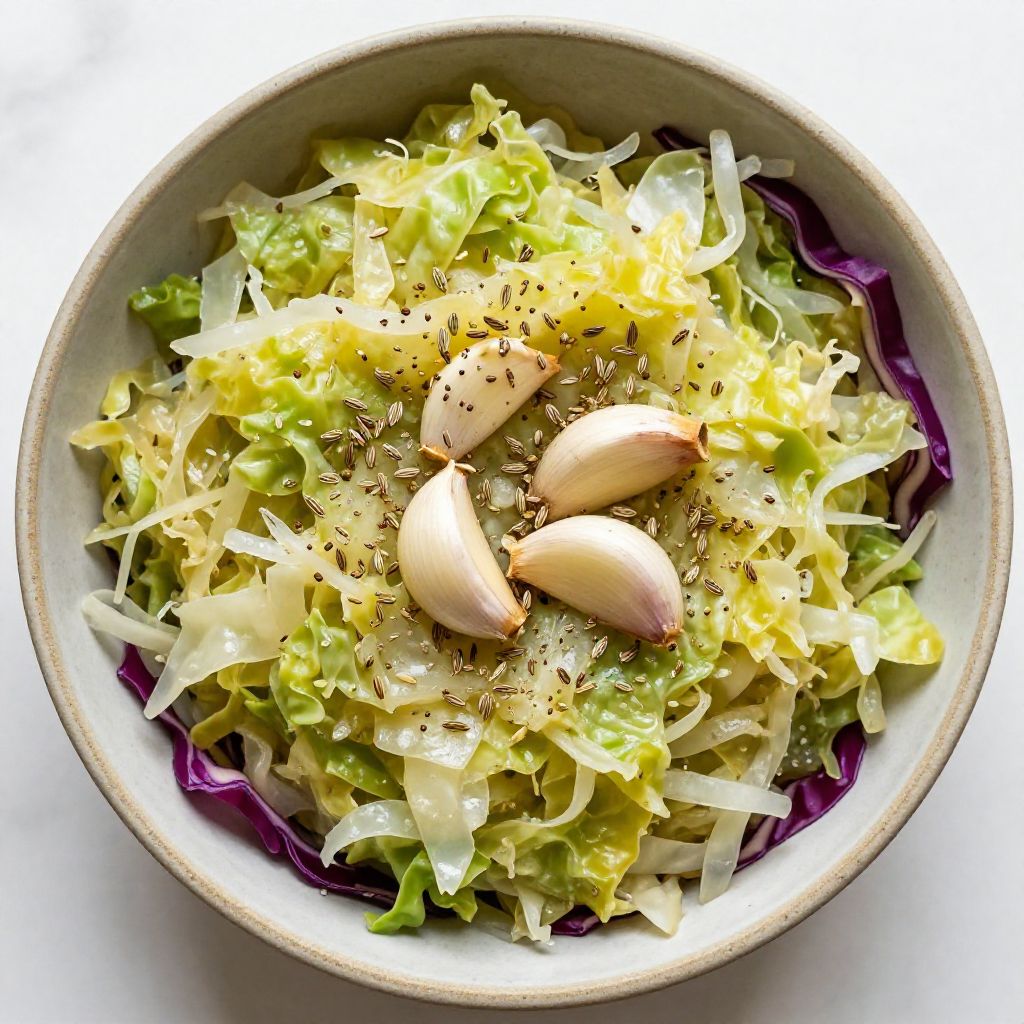
Homemade Sauerkraut
Ingredients
Equipment
Method
- Remove the outer leaves of the cabbage and set them aside.
- Cut the cabbage into quarters, remove the core, and slice it thinly.
- In a large mixing bowl, combine the sliced cabbage with the salt.
- Massage the cabbage for about 5-10 minutes to release liquid.
- Mix in any optional spices like caraway seeds or garlic.
- Transfer the cabbage mixture to a fermentation jar, packing it tightly.
- Place a weight on top of the cabbage to keep it submerged.
- Cover the jar with a clean cloth or coffee filter secured with a rubber band.
- Store the jar in a cool, dark place to ferment.
- Check after a week and taste, letting it ferment longer if preferred.