
Imagine the first bite of a slice of cake, and the creamy, sweet Buttercream Frosting just melts in your mouth. This recipe is a staple in my kitchen, perfect for birthdays, holidays, or just because you want something delicious to top your baked goods. Its light, fluffy texture and rich flavor make it a favorite for all ages. Not only is it incredibly easy to whip up, but it’s also versatile enough to customize with flavors or colors. Now, let’s get into the ingredients and how to create this delightful frosting!
Why You’ll Love This Recipe
You’ll adore this Buttercream Frosting for its simplicity and delightful taste.
- Quick to prepare and requires minimal ingredients.
- Perfect for decorating cakes, cupcakes, and cookies.
- Can be flavored and colored to suit any occasion.
- Stays fluffy and holds its shape beautifully.
- Pairs well with various cake and dessert flavors.
My Experience Making This Recipe
Every time I make this frosting, it reminds me of baking with my grandmother, who taught me the importance of a good frosting. The smell of vanilla and the sight of the buttercream coming together always brings a smile to my face.
When I served this at a family gathering, it was gone in minutes. Everyone was asking for the recipe, and I couldn’t help but feel proud!
Recipe Overview
- Recipe Name: Buttercream Frosting
- Servings: 12
- Prep Time: 10 minutes
- Cook Time: 0 minutes
- Total Time: 10 minutes
- Course: Dessert
- Cuisine: American
- Calories per Serving: 120
Equipment You Will Need
- Mixing bowl
- Electric mixer or whisk
- Rubber spatula
- Measuring cups
- Measuring spoons
Ingredients for Buttercream Frosting
- 1 cup unsalted butter, softened
- 4 cups powdered sugar
- 2 teaspoons vanilla extract
- 2–4 tablespoons heavy cream or milk
- Pinch of salt
Ingredient Notes and Substitutions
- Unsalted butter: Used for a creamy texture. You can substitute it with margarine for a dairy-free option.
- Powdered sugar: Provides sweetness and structure. Granulated sugar can be blended to make powdered sugar, but the texture may differ.
- Vanilla extract: Adds flavor. Almond extract can be used for a different taste.
- Heavy cream: Helps achieve the right consistency. Milk can work, but may yield a lighter texture.
- Salt: Balances sweetness. You can omit it if you prefer a sweeter frosting.
How to Make Buttercream Frosting
Step 1: Cream the Butter
Start by placing the softened butter in a mixing bowl. Cream it on medium speed until it’s light and fluffy, which takes about 2 minutes.
Step 2: Add Powdered Sugar
Gradually add the powdered sugar, about a cup at a time. This helps prevent a sugar cloud from forming and ensures a smooth mixture.
Step 3: Mix Until Combined
Continue mixing on low speed until the sugar is incorporated. Scrape down the sides of the bowl as needed to ensure everything is combined.
Step 4: Add Vanilla Extract
Pour in the vanilla extract and mix on low speed until it’s fully combined. This little addition packs a punch of flavor.
Step 5: Adjust Consistency
Add heavy cream or milk, one tablespoon at a time, until you reach your desired consistency. This step is crucial for achieving that perfect spreadable texture.
Step 6: Beat for Fluffiness
Increase the mixer speed to medium-high and beat for an additional 2-3 minutes. This makes the frosting airy and fluffy.
Step 7: Taste and Adjust
Take a taste and adjust the sweetness or flavor as needed. Don’t be afraid to add a bit more vanilla or a sprinkle of salt!
Step 8: Use or Store
Use the frosting immediately for your baked goods. If storing, place it in an airtight container in the refrigerator for later use.
Pro Tip: For vibrant colors, use gel food coloring instead of liquid, as it won’t change the consistency.
Tips for the Best Buttercream Frosting
- Ensure your butter is at room temperature for easy creaming.
- Mix slowly to prevent powdered sugar from spilling everywhere.
- Beat well to incorporate air for that light, fluffy texture.
- Store any leftovers in an airtight container to keep it fresh.
- Always taste as you go to get the flavor just right.
Common Mistakes to Avoid
- Using cold butter: This makes it hard to cream properly, resulting in a lumpy frosting.
- Adding too much liquid: This can make the frosting runny instead of fluffy.
- Not mixing enough: Insufficient mixing can lead to a dense texture.
- Skipping the salt: It balances the sweetness and enhances flavor.
Serving Suggestions
This frosting is incredibly versatile and can enhance many desserts. Here are a few ideas:
- Top your favorite cake, like chocolate or vanilla.
- Spread it on freshly baked cupcakes.
- Use it as a filling between cake layers.
- Pipe it onto cookies for an extra treat.
Variations to Try
- Add cocoa powder for a delicious chocolate buttercream.
- Mix in crushed fruit for a fruity twist.
- Incorporate espresso powder for a coffee-flavored frosting.
- Use citrus zest for a refreshing lemon or orange buttercream.
Dietary Adaptations
- Gluten-free: This recipe is naturally gluten-free.
- Dairy-free: Substitute the butter with a dairy-free margarine.
- Vegan: Use a plant-based butter alternative and non-dairy milk.
- Low-carb/keto: Use a powdered erythritol substitute for a sugar-free option.
Storage and Reheating
Refrigerator
Store any leftover frosting in an airtight container in the fridge for up to a week.
- Keep it covered to prevent it from drying out.
- Before using, let it sit at room temperature for a bit.
Freezer
You can freeze buttercream frosting for up to three months.
- Use a freezer-safe container or bag.
- Thaw in the refrigerator overnight before using.
Reheating
Reheat gently if the frosting has hardened.
- Use a microwave in short bursts, stirring in between.
- Whip again to restore fluffiness.
Nutrition Information
| Nutrient | Amount |
|---|---|
| Calories | 120 |
| Total Fat | 7g |
| Saturated Fat | 4g |
| Carbohydrates | 14g |
| Fiber | 0g |
| Sugar | 14g |
| Protein | 0g |
| Sodium | 30mg |
| Cholesterol | 20mg |
This nutrition information is an estimate and may vary based on ingredients used.
Frequently Asked Questions
Can I use margarine instead of butter?
Yes, margarine can be used, but it may change the flavor and texture slightly.
How far in advance can I make this frosting?
You can make it a week in advance and store it in the refrigerator.
Can I freeze buttercream frosting?
Absolutely! Just make sure to store it in a freezer-safe container.
Why is my buttercream too runny?
This could be due to too much liquid added. You can add a bit more powdered sugar to thicken it up.
How do I get a smooth finish when frosting a cake?
Use a warm spatula to smooth the frosting, which melts it slightly for an even finish.
Final Thoughts
This Buttercream Frosting is truly a must-have for any baking enthusiast. Its rich flavor and creamy texture make it a delightful addition to any dessert.
So, grab your ingredients and give this recipe a try. You won’t be disappointed!
If you are curious to explore more delicious frosting options, check out this German chocolate frosting recipe or try this sugar cookie frosting recipe for a sweet treat!
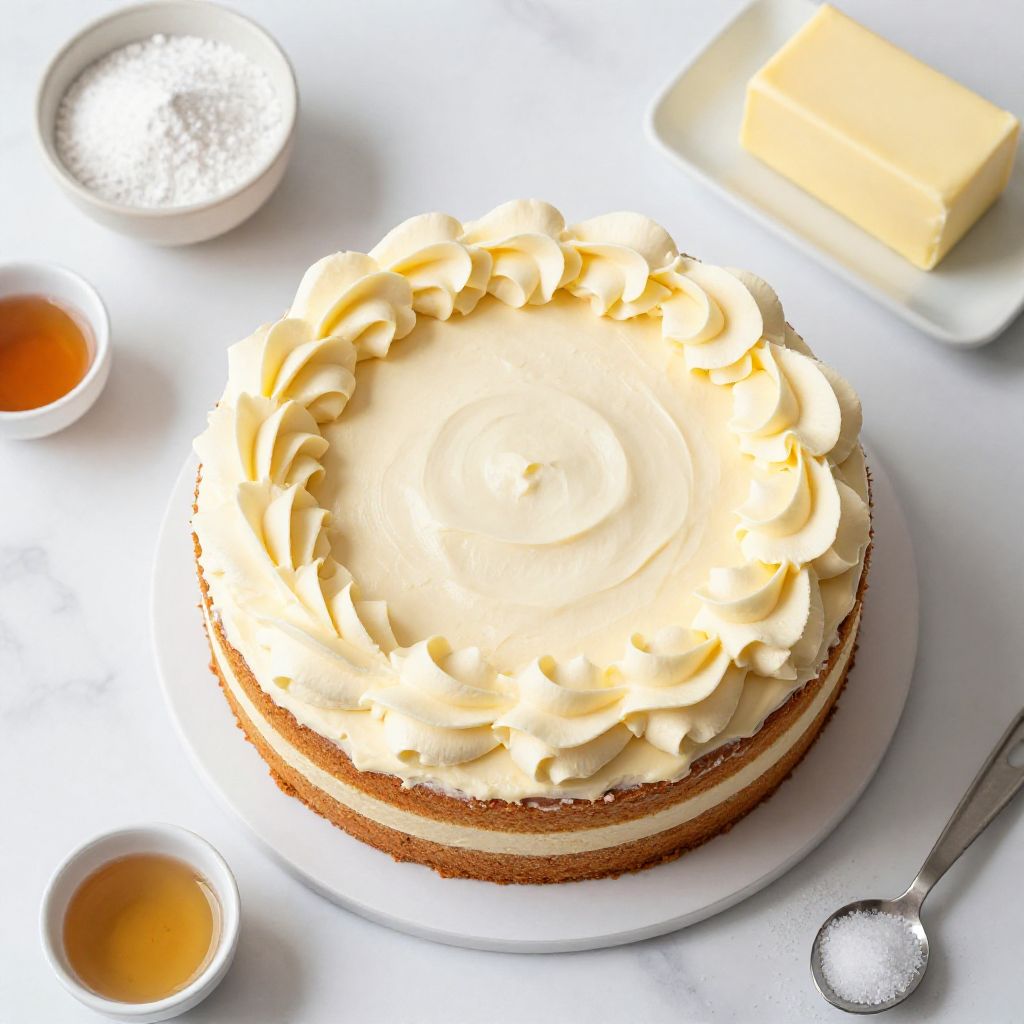
Buttercream Frosting
Ingredients
Equipment
Method
- Place softened butter in a mixing bowl and cream on medium speed with an electric mixer for about 2 minutes until light and fluffy.
- Gradually add powdered sugar, one cup at a time, mixing on low speed until each addition is fully incorporated.
- Scrape down the sides of the bowl and continue mixing on low speed until the mixture is smooth, about 1 minute.
- Add vanilla extract and mix on low speed until fully combined, about 30 seconds.
- Add heavy cream or milk, one tablespoon at a time, until the frosting reaches your desired consistency.
- Increase mixer speed to medium-high and beat for 2–3 minutes until the frosting is airy and fluffy.
- Taste the frosting and adjust sweetness or flavor by adding more vanilla or a pinch of salt if desired.
- Use the frosting immediately to frost your baked goods or transfer to an airtight container and refrigerate for up to 1 week.