
There’s something magical about the aroma of stir-fried noodles wafting through the kitchen, especially when it’s a classic Pad Thai. This dish is a delightful balance of savory, sweet, and tangy flavors that transport you straight to a bustling Thai street market. What makes this recipe a must-try is its quick preparation and the ease of customizing ingredients to suit your taste. Whether you’re a fan of shrimp, chicken, or tofu, you’ll find this dish offers the perfect way to enjoy a vibrant meal any night of the week.
Why You’ll Love This Recipe
This Pad Thai recipe is a go-to for many reasons. It’s not just about the taste; it’s about the experience.
- Quick to prepare, making it perfect for busy weeknights.
- Versatile with endless ingredient options for personal preference.
- Perfect balance of flavors that will impress family and friends.
- Great for meal prep or leftovers that taste even better the next day.
- Authentic flavor profile that can rival your favorite Thai restaurant.
My Experience Making This Recipe
When I first attempted this Pad Thai, I was surprised by how quickly everything came together. The sizzle of the noodles in the wok and the vibrant colors of the ingredients made the kitchen feel alive.
My family devoured it in minutes, asking for seconds and raving about the flavors. It quickly became a family favorite, proving that homemade can indeed be better than takeout.
Recipe Overview
- Recipe Name: Pad Thai
- Servings: 4
- Prep Time: 15 minutes
- Cook Time: 15 minutes
- Total Time: 30 minutes
- Course: Main Course
- Cuisine: Thai
- Calories per Serving: 400
Equipment You Will Need
- Wok or large skillet
- Spatula or wooden spoon
- Measuring cups and spoons
- Large bowl for soaking noodles
- Knife and cutting board
Ingredients for Pad Thai
- 8 ounces rice noodles
- 2 tablespoons vegetable oil
- 2 cloves garlic, minced
- 1 cup protein of choice (shrimp, chicken, or tofu)
- 2 eggs, lightly beaten
- 1 cup bean sprouts
- 1/4 cup green onions, sliced
- 1/4 cup roasted peanuts, crushed
- 2 tablespoons fish sauce
- 1 tablespoon tamarind paste
- 1 tablespoon sugar
- 1 tablespoon lime juice
- Chili flakes, to taste
Ingredient Notes and Substitutions
- Rice noodles: These are the base of Pad Thai; you can substitute with any thin noodle if needed.
- Vegetable oil: You can use peanut oil for a more authentic flavor.
- Tamarind paste: A key ingredient for the tanginess; a mix of lime juice and brown sugar can be used as a substitute.
- Fish sauce: Adds depth; soy sauce can be a vegetarian alternative.
- Protein: Feel free to mix it up with beef or even just vegetables for a plant-based option.
How to Make Pad Thai
Step 1: Soak the Noodles
Start by soaking the rice noodles in warm water for about 30 minutes until they are soft. This step is crucial as it ensures even cooking later on.
Step 2: Prepare the Sauce
In a small bowl, whisk together fish sauce, tamarind paste, sugar, and lime juice. This sauce adds that signature sweet and tangy flavor to the dish.
Step 3: Heat the Wok
Heat vegetable oil in a wok over medium-high heat. A hot wok is key to getting that perfect stir-fried texture.
Step 4: Sauté Garlic
Add minced garlic to the hot oil and sauté for about 30 seconds until fragrant. This will infuse the oil with flavor for the noodles.
Step 5: Cook the Protein
Add your chosen protein to the wok and cook until done, about 3-5 minutes. Cooking it first ensures it gets that lovely sear and flavor.
Step 6: Add the Noodles
Drain the soaked noodles and add them to the wok along with the prepared sauce. Toss everything together to coat the noodles evenly.
Step 7: Push to the Side
Push the noodle mixture to one side of the wok, and pour the beaten eggs into the empty space. Scramble the eggs until just set, then mix into the noodles.
Step 8: Stir in Veggies and Serve
Add bean sprouts and green onions, tossing everything to combine. Serve hot, garnished with crushed peanuts and chili flakes.
Pro Tip: For the best flavor, let the noodles absorb the sauce for a minute before serving.
Tips for the Best Pad Thai
- Use a hot wok for a great sear on the ingredients.
- Don’t overcook the noodles; they should be tender but not mushy.
- Adjust the sauce ingredients to suit your taste; more lime for tang or sugar for sweetness.
- Prep all ingredients ahead of time to ensure a smooth cooking process.
- Garnish generously with crushed peanuts and fresh lime for extra flavor.
Common Mistakes to Avoid
- Soaking noodles too long can make them mushy.
- Not using enough oil can lead to sticking and uneven cooking.
- Overcooking the protein can make it tough; cook just until done.
- Skipping the garnishes can mean missing out on flavor and texture.
Serving Suggestions
Pair your Pad Thai with a refreshing Thai cucumber salad or a side of spring rolls for a complete meal.
- Thai cucumber salad
- Spring rolls
- Thai iced tea
- Sliced lime wedges
- Chili garlic sauce for extra heat
Variations to Try
- Swap shrimp for chicken for a different protein experience.
- Add extra veggies like bell peppers or carrots for more crunch.
- Try a vegan version by using tofu and omitting fish sauce.
- Experiment with different nuts, like cashews, for a unique twist.
Dietary Adaptations
- Gluten-free: Use rice noodles and tamari instead of soy sauce.
- Dairy-free: This recipe is naturally dairy-free; no adjustments needed.
- Vegan/Vegetarian: Use tofu and replace fish sauce with soy sauce or coconut aminos.
- Low-carb/Keto: Substitute rice noodles with spiralized zucchini or shirataki noodles.
Storage and Reheating
Refrigerator
Store leftovers in an airtight container in the fridge for up to 3 days.
- Let it cool completely before sealing.
- Refrigerate in individual portions for easy reheating.
Freezer
For longer storage, freeze the cooked Pad Thai for up to 2 months.
- Pack in freezer-safe containers or bags.
- Label with the date for easy reference.
Reheating
Reheat in a hot pan or microwave until warmed through.
- Add a splash of water or extra sauce to prevent drying out.
- Stir well to heat evenly.
Nutrition Information
| Nutrient | Amount |
|---|---|
| Calories | 400 |
| Total Fat | 15g |
| Saturated Fat | 2g |
| Carbohydrates | 55g |
| Fiber | 3g |
| Sugar | 5g |
| Protein | 15g |
| Sodium | 600mg |
| Cholesterol | 100mg |
Nutrition values may vary based on brands and ingredients used.
Frequently Asked Questions
Can I make Pad Thai ahead of time?
Yes, you can prepare the ingredients in advance but it’s best to cook it fresh for optimal flavor and texture.
What if my Pad Thai is too dry?
If your Pad Thai is dry, simply add a little more sauce or a splash of water while reheating.
Can I substitute the protein?
Absolutely! Chicken, shrimp, tofu, or even a mix of vegetables all work great.
What if I can’t find tamarind paste?
You can substitute with a mix of lime juice and brown sugar for a similar flavor profile.
Is Pad Thai gluten-free?
Yes, if you use rice noodles and ensure your sauces are gluten-free, it can be suitable for those with gluten sensitivities.
Final Thoughts
Cooking Pad Thai at home is not only rewarding but also a fun way to explore Thai cuisine. I hope this recipe inspires you to create your own delicious version and share it with loved ones.
For more delightful recipes, check out this Thai cucumber salad or try my favorite Thai eggplant recipe. Happy cooking!
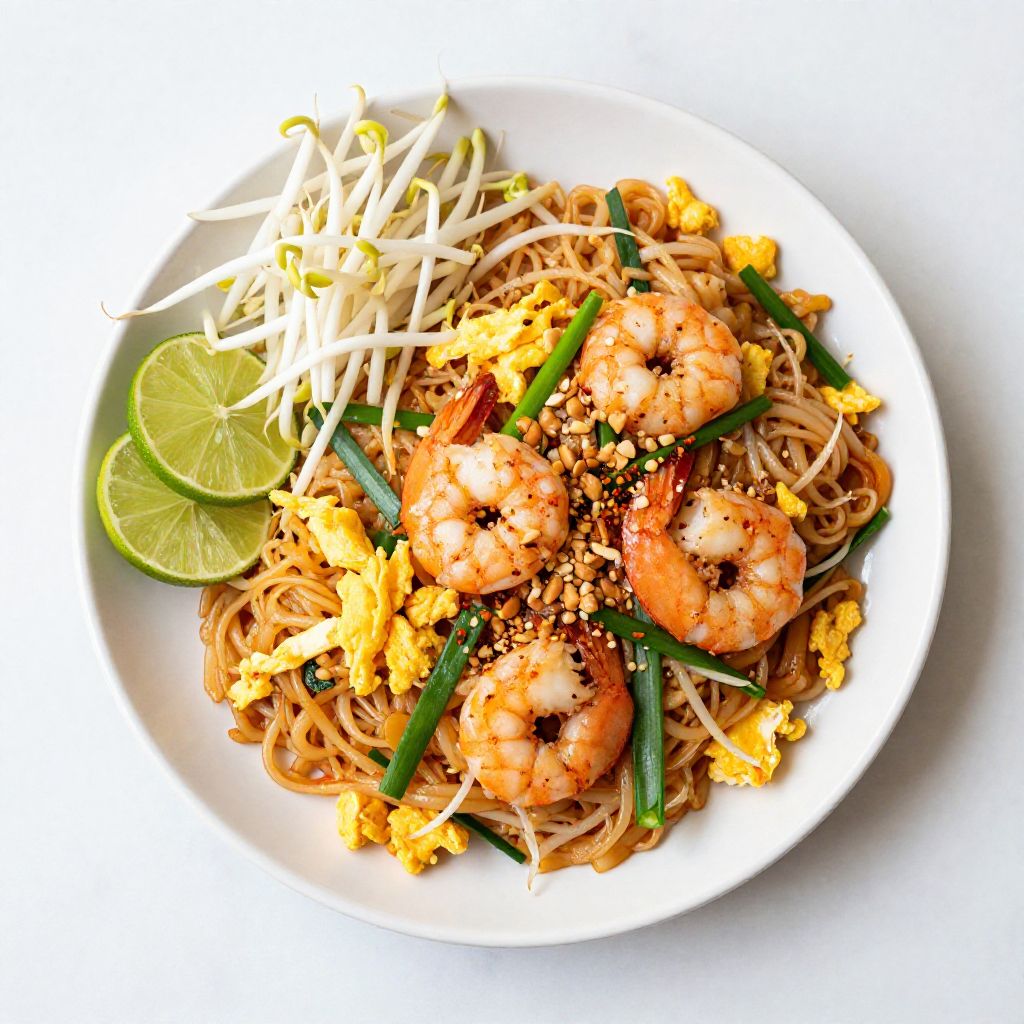
Pad Thai
Ingredients
Equipment
Method
- Soak the rice noodles in warm water for about 30 minutes until soft.
- In a small bowl, whisk together fish sauce, tamarind paste, sugar, and lime juice to make the sauce.
- Heat vegetable oil in a wok over medium-high heat until shimmering.
- Add minced garlic and sauté for about 30 seconds until fragrant.
- Add your chosen protein and cook for 3-5 minutes until cooked through.
- Drain the soaked noodles and add them to the wok along with the prepared sauce; toss for 1-2 minutes to coat evenly.
- Push the noodle mixture to one side of the wok and pour the beaten eggs into the empty space; scramble until just set, about 1 minute, then mix into the noodles.
- Add bean sprouts and green onions; toss for another minute until warmed through.
- Remove from heat and serve hot, garnished with crushed peanuts and chili flakes.