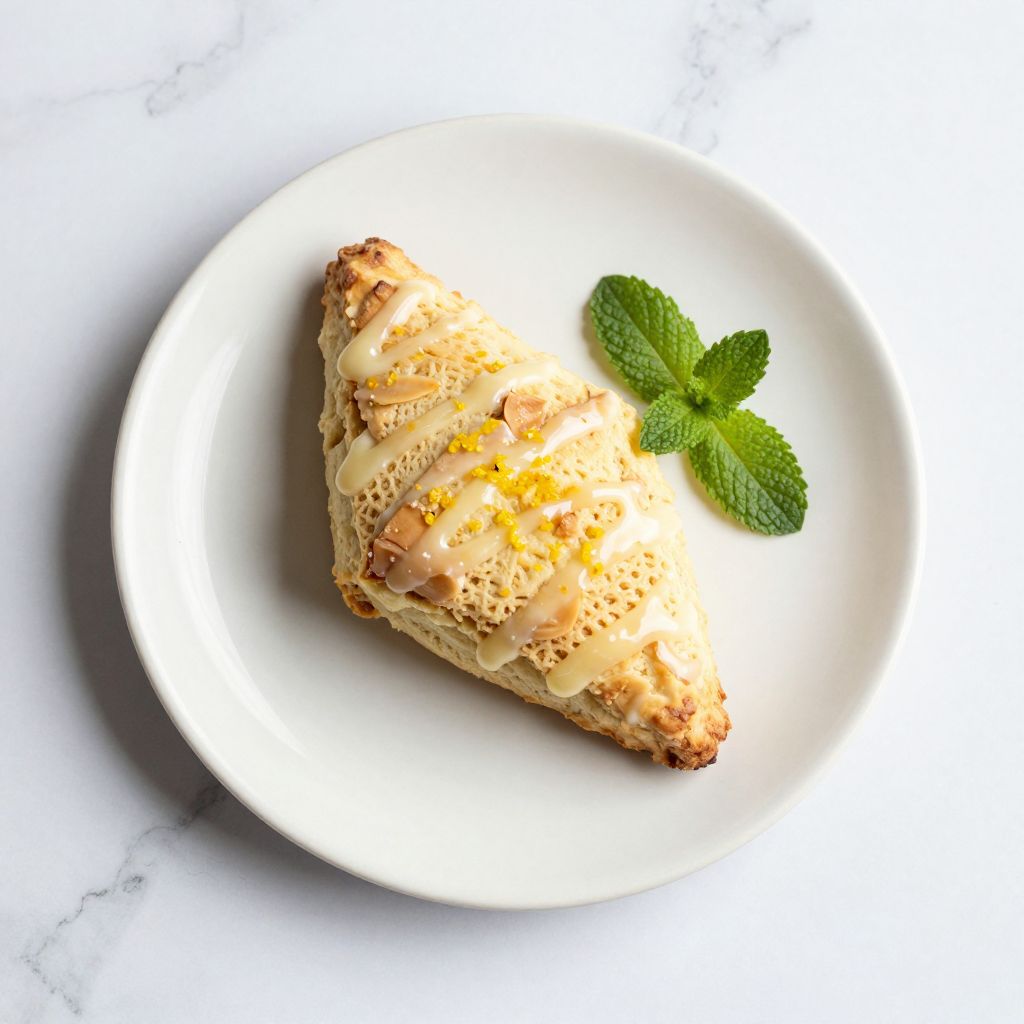
Ingredients
Equipment
Method
- Roll the lemons firmly on your countertop before cutting to release more juice from the membranes inside. Cut them in half and juice them using a citrus juicer, catching any seeds in a strainer.
- Place the powdered sugar in your mixing bowl, breaking up any lumps with your whisk. Sifting isn't absolutely necessary, but it prevents clumps and creates a smoother final texture.
- Start by adding 3 tablespoons of lemon juice to the powdered sugar. Adding liquid gradually gives you control over the final consistency.
- Whisk vigorously until the mixture is completely smooth and no sugar lumps remain. The glaze should be thick but pourable at this stage, similar to heavy cream.
- Check the thickness by lifting your whisk and watching how the glaze falls back into the bowl. For a thinner drizzle, add the remaining tablespoon of lemon juice or even a bit more; for a thicker coating, add more powdered sugar a tablespoon at a time.
- If using, whisk in the lemon zest and pinch of salt until evenly distributed. The zest adds beautiful speckles and intensifies that lemony punch.
- Drizzle a small amount on a plate or piece of parchment to see how it behaves. It should spread slightly then settle into a smooth coating that will set within 10 to 15 minutes.
- Apply your glaze right away while it's at peak consistency. The glaze will begin to thicken and set as it sits, so if you wait too long, you may need to whisk in a few drops of lemon juice to loosen it again.
Notes
Use room temperature lemon juice for easier mixing. Strain your lemon juice if you want a perfectly smooth glaze without any pulp bits. Apply glaze to completely cooled baked goods unless you want a thinner, more absorbed finish. For a glossier finish, add 1 teaspoon of light corn syrup or honey to the mixture. The glaze will set and harden within 15 to 20 minutes at room temperature. Store leftover glaze in an airtight container in the refrigerator for up to one week.