
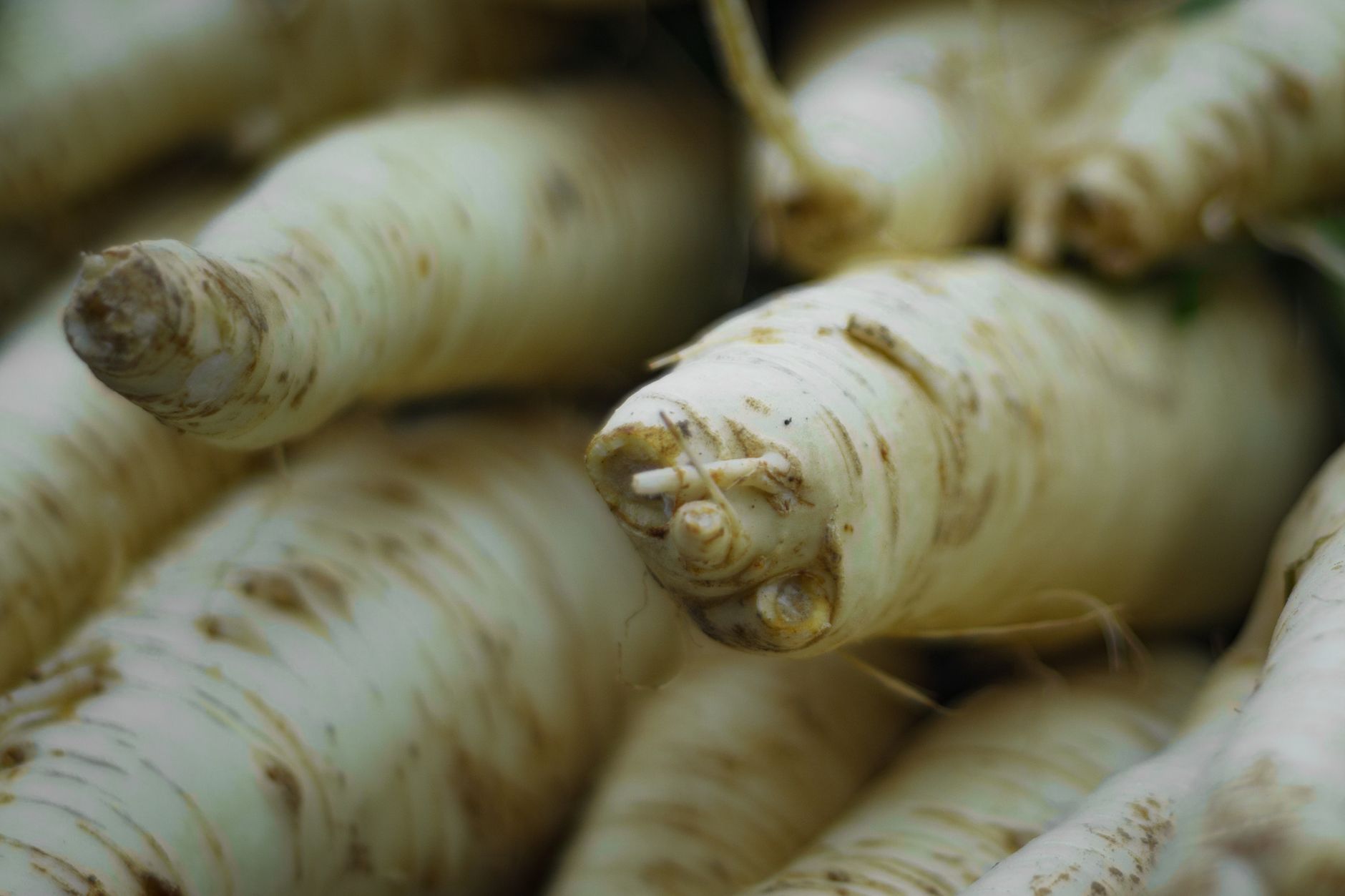
Horseradish is a unique and pungent root vegetable commonly used as a condiment and flavoring agent in various cuisines. Renowned for its spicy kick, horseradish adds depth to dishes and enhances the flavor of meats, seafood, and sauces.
This article will explore what horseradish is made of, how it is processed, its culinary uses, potential substitutes, and more to help you appreciate this powerful ingredient fully.
What Is Horseradish Made Of?
Horseradish is made from the root of the plant Armoracia rusticana, which belongs to the Brassicaceae family. The root is characterized by its large size, brownish skin, and white flesh. When grated or processed, horseradish releases potent compounds that give it its characteristic heat and flavor. These compounds include glucosinolates, which produce mustard oil when the root is damaged or cut, leading to its sharp taste and aroma.
The plant itself is a perennial herb that thrives in temperate climates, often growing in gardens or wild in Europe, Asia, and North America. The flavor of horseradish can range from mildly spicy to intensely pungent, depending on how it is prepared and its freshness.
How Is Horseradish Processed?
From harvesting to making a condiment, horseradish requires specific processing techniques to preserve its flavor and pungency. Here’s a step-by-step breakdown of how horseradish is processed:
- Harvesting: Horseradish roots are typically harvested in the fall, after the first frost. This helps to enhance their flavor by naturally sweetening them.
- Cleaning: The harvested roots are thoroughly washed to remove dirt and impurities. Maintaining cleanliness is essential to prevent spoilage during processing.
- Trimming: After cleaning, the roots are trimmed to remove any damaged or undesirable sections, ensuring only the freshest parts are used.
- Grating or Grinding: The prepared root is either grated or ground using a food processor or a grater. This process releases the volatile compounds responsible for the strong flavor and aroma.
- Mixing with Vinegar: To stabilize the flavor and prolong shelf life, freshly grated horseradish is typically mixed with vinegar. This also helps to balance the heat and creates a more palatable condiment.
- Bottling: The prepared horseradish is then bottled. Commercial varieties often include preservatives to extend the shelf life, while fresh versions are best used within a few weeks.
Culinary Uses of Horseradish
Horseradish is a versatile ingredient with numerous culinary applications ranging from condiment to flavor enhancer. Here are some popular ways to incorporate horseradish into your cooking:
- Condiment: Horseradish is famously paired with prime rib and other roasted meats, often served as a side sauce. Prepared horseradish comes in jars at the market and can be added directly to dishes.
- Seafood Dishes: Many seafood recipes feature horseradish as a key ingredient to provide a spicy kick. It’s often included in cocktail sauces for shrimp and crab dishes.
- Dressings and Sauces: Mix horseradish into mayonnaise or sour cream to create flavorful dressings for salads or dips for vegetables. It can also be an excellent addition to sauces for steak or fish.
- Soups: Horseradish can elevate the flavor of certain soups, particularly clam chowder or borscht, where its heat complements other ingredients.
- Meat Marinades: The root can be used as a marinade for meats, adding depth and spiciness that penetrate through the meat while it cooks.
What Are the Different Forms of Horseradish?
Horseradish can be found in several forms, each serving different culinary needs. Here are the most common varieties:
- Fresh Horseradish Root: Ideally used when freshly grated, it has the strongest flavor and pungency.
- Prepared Horseradish: This is the most common commercial product, where grated horseradish is mixed with vinegar and sometimes additional seasonings, sold in jars.
- Horseradish Sauce: This is a creamy blend of prepared horseradish with sour cream, mayonnaise, and seasonings. It’s milder than fresh horseradish.
- Horseradish Powder: Dried and ground horseradish can be used as a seasoning in spice blends or rubs.
Choosing and Storing Horseradish
Choosing the right horseradish root is essential for flavor potency. Here are some tips:
- Appearance: Select firm roots with smooth skin, avoiding any that are shriveled or sprouting.
- Size: Larger roots have more flavor and can be grated for various uses.
- Aroma: Fresh horseradish should have a strong, pungent smell. If it lacks this characteristic aroma, it may not be fresh.
For storage, fresh horseradish root can be kept in the refrigerator in a plastic bag, where it should last for a few weeks. Prepared horseradish should also be refrigerated and consumed within a few months for optimal flavor.
Substitutes for Horseradish
If you find yourself without horseradish, there are several substitutes you can use, but be aware that the flavor profile will vary. Here are some common alternatives:
- Wasabi: This Japanese condiment offers a similar heat profile but can be slightly more pungent. Use it in equal quantities, but taste as you go to avoid overpowering the dish.
- Mustard: A strong mustard, such as Dijon, can mimic the sharpness of horseradish. Use about half the amount of mustard as you would horseradish and adjust to taste.
- Spicy Mustard Sauce: A combination of Dijon mustard and a bit of hot sauce can provide a comparable kick in recipes.
- Garlic: If you’re looking for a different flavor entirely but still want a strong taste, consider fresh minced garlic, adding it according to preferred intensity.
- Ginger: While not as spicy, fresh ginger can offer warmth and can replace horseradish in some sauces. Again, adjust quantities to taste.
Each substitute may impart a slightly different flavor, but they can work well depending on the dish.
Common Mistakes When Using Horseradish
- Overusing: Horseradish has a strong flavor, and it’s easy to overpower a dish. Start with a small amount and add more as needed.
- Using Old Horseradish: Freshness matters for horseradish; avoid using roots or sauces that show signs of staleness.
- Not Adjusting for Vinegar Content: Prepared horseradish contains vinegar, which can alter the flavor profile of your dish. Adjust other acidic ingredients accordingly when using it.
- Neglecting to Refrigerate: Store fresh horseradish and prepared sauces in the fridge to maintain their flavor and prevent spoilage.
Cooking with Horseradish: Tips and Tricks
To maximize horseradish’s flavor in cooking, consider the following tips:
- Fresh is Best: Whenever possible, use fresh horseradish root for intense flavor. Grate just what you need to preserve its potency.
- Balance Its Heat: Pair horseradish with creamy ingredients like sour cream or yogurt to balance its heat in sauces or dressings.
- Add at the End: To retain more pungency, add horseradish towards the end of cooking to minimize the loss of flavor during heating.
- Experiment: Horseradish is not just for savory dishes. Its unique flavor can complement certain fruits, particularly apples and pears, or enhance marinades.
Health Benefits of Horseradish
While horseradish is primarily used for its culinary applications, it also offers some potential health benefits:
- Rich in Nutrients: Horseradish is low in calories but contains vitamins C, B6, folate, and several minerals like calcium, magnesium, and potassium.
- Antimicrobial Properties: Some studies suggest that horseradish may possess antimicrobial effects, helping to fight infections.
- Aids Digestion: Horseradish has been traditionally used to stimulate appetite and digestion.
However, it is important to consume horseradish in moderation as excessive amounts can irritate the gastrointestinal tract.
Recipe: Classic Horseradish Sauce
This simple horseradish sauce combines prepared horseradish with sour cream, making a delightful companion to meats and seafood. It takes only a few minutes to prepare.
Yield: About 1 cup
Preparation Time: 5 minutes
Total Time: 5 minutes
Ingredients
- 1 cup sour cream
- 2 tablespoons prepared horseradish (adjust to taste)
- 1 tablespoon fresh lemon juice
- 1 teaspoon Dijon mustard
- Salt and pepper to taste
Equipment
- Mixing bowl
- Whisk or spoon
- Taste testing spoon
Method
- In a mixing bowl, combine the sour cream with the prepared horseradish.
- Add the lemon juice and Dijon mustard, stirring to combine until smooth.
- Season with salt and pepper to taste. Adjust horseradish quantity if more heat is desired.
- Serve immediately or refrigerate for up to 1 week.
Conclusion
Horseradish is a powerful and versatile ingredient that can elevate a wide array of dishes with its spicy flavor and unique aroma. Understanding what horseradish is made of, how to process it, and its culinary uses enhances home cooking. By using it thoughtfully, you can enjoy all the benefits of horseradish in your meals.
For more great information, consider exploring what molasses is made from at What Is Molasses Made From or learning about substitutes for vanilla extract at What Is a Substitute for Vanilla Extract.