
Dashi is a fundamental component of Japanese cuisine, serving as a base for many soups and sauces. Known for its umami flavor, dashi enhances the depth of any dish. This article delves into what dashi is made of, its flavor profile, various types, and its versatile kitchen uses.
Whether you are a seasoned chef or a curious home cook, understanding dashi will elevate your culinary skills and introduce you to authentic Japanese flavors. Let’s explore the main ingredients of dashi, how to prepare it, and its various applications in the kitchen.
What Is Dashi Made Of?
Dashi is traditionally made from three primary ingredients: kombu (dried kelp), katsuobushi (dried bonito flakes), and water. The combination of these ingredients creates a savory broth that is rich in umami, an essential taste in Japanese cooking. Some variations may use additional elements like dried shiitake mushrooms or sardines, but the core ingredients remain consistent.
The Key Ingredients of Dashi
Kombu
Kombu is a type of edible seaweed that is rich in glutamic acid, contributing significantly to the umami flavor. It comes in dried sheets that must be rehydrated and simmered to extract its flavor. When selecting kombu, look for a dark, thick piece with a bright green sheen, as it indicates freshness and quality.
Katsuobushi
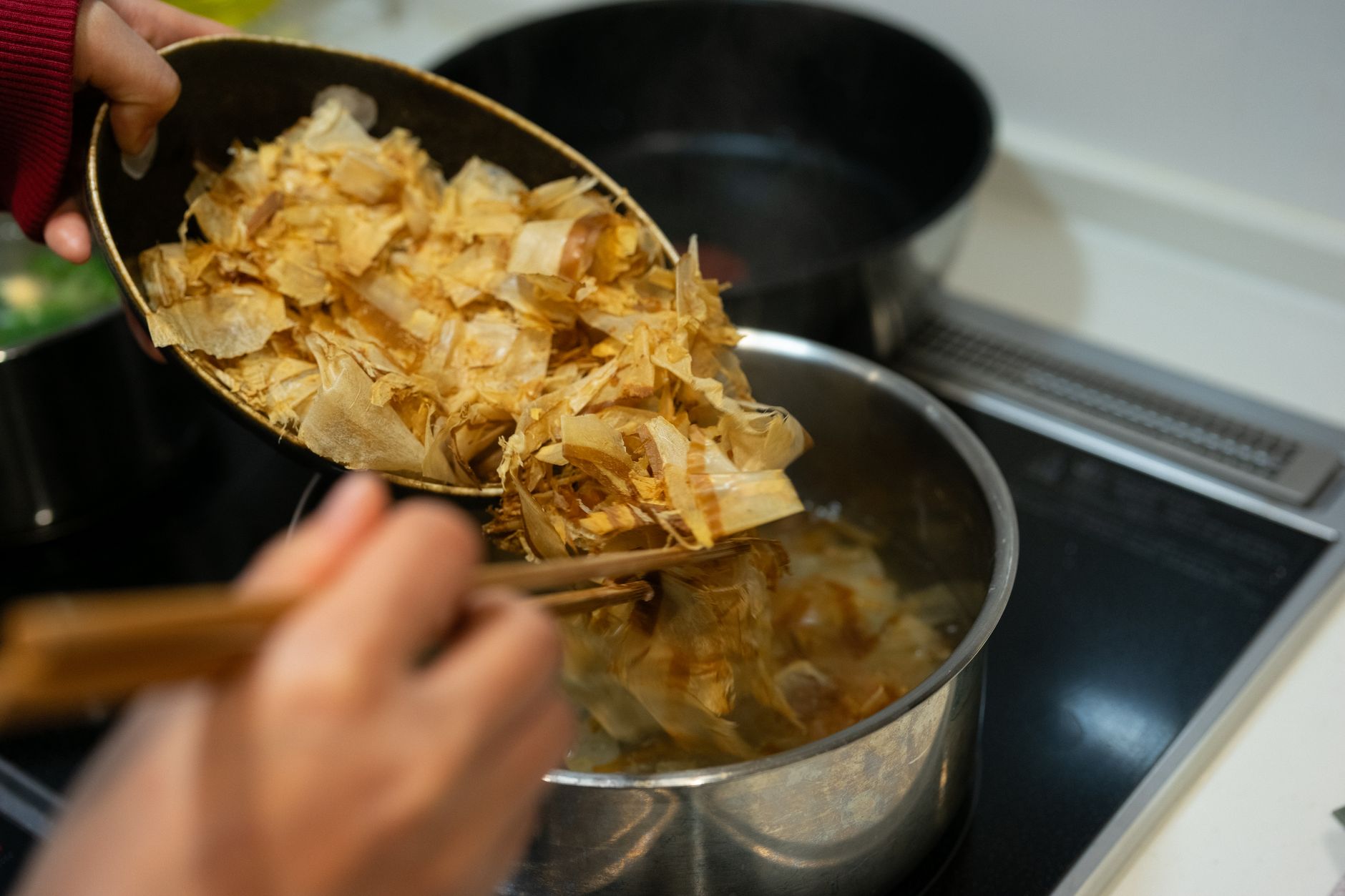
Katsuobushi consists of dried and fermented bonito fish, processed into thin flakes. It adds a deep, smoky flavor to dashi, enhancing its complexity. Katsuobushi should have a high-quality appearance with a rich aroma. When using, ensure you use freshly opened packets, as exposure to air can diminish its flavor.
Water
The quality of water used to make dashi is crucial since it is the medium that extracts flavors from kombu and katsuobushi. Ideally, use filtered water for the best results, as impurities in tap water can affect the taste.
Different Types of Dashi
While the traditional dashi uses kombu and katsuobushi, there are several variations worth noting:
Niban Dashi
Niban dashi is a secondary dashi made using the same kombu and katsuobushi that have already been used once for the original batch. It has a milder flavor, suitable for lighter dishes.
Shiitake Dashi
This vegetarian option uses dried shiitake mushrooms instead of fish flakes. Soaking the mushrooms creates a rich broth that is perfect for plant-based cooking or for those avoiding seafood.
Sardine Dashi
In this variation, dried sardines are used alongside or instead of katsuobushi. Sardine dashi offers a unique flavor profile, slightly fishy but also rich in umami.
Instant Dashi
For those short on time, instant dashi granules offer a quick solution. Though it may not match the depth of traditionally made dashi, it is convenient and widely available.
How to Make Dashi
Making dashi at home is straightforward and requires minimal effort. The following is a basic recipe for preparing traditional dashi:
Ingredients
- 1 piece (about 15 cm) of kombu
- 30 grams (about 1 cup) of katsuobushi
- 4 cups of water
Essential Equipment
- Medium saucepan
- Strainer or cheesecloth
- Measuring cup
- Knife (for cutting kombu)
Step-By-Step Instructions
- Begin by wiping the kombu with a damp cloth to remove any impurities, avoiding rinsing it under water, as this can wash away flavors.
- In a medium saucepan, combine the kombu with the water and let it soak for about 30 minutes. This helps to hydrate the kombu and release its flavors.
- After soaking, place the saucepan over low heat and slowly bring the water to a near-boil. Once small bubbles start to form, remove the kombu from the pot (do not let it boil, as this can produce a bitter taste).
- Add the katsuobushi to the pan and increase the heat to a gentle simmer. Allow it to simmer for 5 to 10 minutes, depending on your desired flavor intensity.
- After simmering, turn off the heat and let the mixture steep for about 5 minutes.
- Strain the broth through a fine mesh strainer or cheesecloth into a clean bowl. Press lightly on the katsuobushi to extract more flavor, but avoid overly squeezing as this can cloud the dashi.
- Your dashi is now ready to be used in various dishes. You can store it in an airtight container in the refrigerator for up to one week or freeze it for longer storage.
The Flavor Profile of Dashi
Dashi presents a delicate balance of flavors, prominently featuring umami, which is often described as a savory taste. The kombu lends a subtle sweetness, while the katsuobushi imparts a rich, smoky depth. This harmonious blend forms the backbone of many Japanese dishes, providing a rich source of flavor without overwhelming other ingredients. The clarity of dashi is another notable characteristic.
Common Mistakes When Making Dashi
While making dashi is simple, some common mistakes can lead to less than perfect results:
- Boiling Kombu: Boiling can release bitter flavors and undesirable aromas. Always heat gently and remove kombu before it reaches a rolling boil.
- Squeezing the Katsuobushi: Forcing out every droplet of liquid can cloud the dashi and give an overly fishy taste. Strain gently.
- Using Tap Water: The quality of water affects the flavor; always use clean, filtered water for the best results.
Kitchen Uses for Dashi
Dashi is incredibly versatile and can be used in a variety of dishes beyond traditional miso soup. Here are some popular applications:
Soups and Stews
Dashi serves as the foundation for many Japanese soups, including miso soup and clear broth soups. Its umami flavor enhances the overall taste of the dish.
Sauces and Seasonings
Incorporate dashi into sauces such as ponzu and teriyaki for an extra depth of flavor. It can also be added to marinades or used as a seasoning in rice dishes.
Cooking Grains and Noodles
Using dashi instead of plain water for cooking rice, soba, or udon noodles infuses them with flavor, enhancing your dishes considerably.
Vegetable Dishes
Dashi can elevate vegetable dishes through its rich flavor. Use it to blanch vegetables or in stir-fries and braised dishes.
Storing and Reheating Dashi
Dashi can be stored in the refrigerator for up to one week in an airtight container. For longer storage, consider freezing it in ice cube trays to easily portion it out for future use. When reheating, do so gently to maintain its flavor and avoid boiling, which can alter the flavor profile.
Practical Substitutions for Dashi Ingredients
If you find yourself without the classic dashi ingredients, here are some suitable substitutions:
- For Kombu: Use other types of seaweed, like wakame or nori, but be conscious that flavors will differ in intensity.
- For Katsuobushi: Skip it entirely or replace it with smoked fish flakes or even liquid smoke for a similar smoky flavor.
- For Vegetarian Options: Use vegetable broth infused with dried mushrooms or a blend of soy sauce and miso for an umami kick.
Final Thoughts
Dashi is a fundamental element of Japanese cuisine that is simple to prepare yet transformative in the kitchen. By understanding its ingredients and applications, you can enrich your cooking and bring authentic flavors to your dishes. Start experimenting with dashi today, and enjoy the depth it adds to various recipes.
Explore related recipes or kitchen techniques to further enhance your culinary skills. Check out what is molasses made from or learn how to make an oyster sauce recipe.