
There’s something magical about the sizzle of a pork chop hitting a hot pan, especially when you’re making Vietnamese pork chops. This dish captures everything I love about Southeast Asian cooking: bold caramelized edges, a savory-sweet glaze, and meat so tender it practically melts on your tongue.
Vietnamese pork chops are a weeknight hero because they come together in under 30 minutes, yet taste like you spent hours in the kitchen. The magic lies in a simple marinade of fish sauce, garlic, and brown sugar that transforms ordinary pork into something restaurant-worthy.
What makes this recipe special is how the marinade builds layers of flavor while the high-heat searing creates caramelized crust. You’ll serve these alongside steamed rice and pickled vegetables for a complete meal that feels both comforting and sophisticated.
Why You’ll Love This Recipe
This recipe delivers bold Vietnamese flavors in minimal time, with a marinade that does most of the heavy lifting. The result is juicy, caramelized pork that tastes authentic without requiring specialty equipment or hard-to-find ingredients.
- Quick marinade that infuses flavor in as little as 15 minutes
- High-heat searing creates an irresistible caramelized crust
- Uses pantry staples like fish sauce, garlic, and brown sugar
- Naturally gluten-free and works for meal prep
- Impressive enough for guests, easy enough for busy weeknights
My Experience Making This Recipe
I first made Vietnamese pork chops after a trip to Hanoi, where street vendors were grilling them over charcoal at every corner. I was determined to recreate that smoky, caramelized flavor at home, and this recipe nails it without needing a backyard grill.
The first time I made this for my family, my kids asked for seconds, which rarely happens with any protein. The combination of savory fish sauce and sweet brown sugar creates a complexity that keeps you coming back for more bites.
What surprised me most was how forgiving the recipe is. Whether I marinated for 20 minutes or overnight, the pork stayed juicy and flavorful. The key is not overcooking the chops, which I learned after my first attempt landed me with slightly dry edges.
Recipe Overview
- Recipe Name: Vietnamese Pork Chops
- Servings: 4 servings
- Prep Time: 15 minutes
- Cook Time: 10 minutes
- Total Time: 25 minutes (plus marinating time)
- Course: Main Course
- Cuisine: Vietnamese
- Calories per Serving: 285 calories
Equipment You Will Need
- Large bowl or shallow dish for marinating
- Cast iron skillet or heavy-bottomed stainless steel pan
- Meat thermometer
- Tongs or a meat fork
- Paper towels for patting dry
- Small whisk or fork for mixing marinade
Ingredients for Vietnamese Pork Chops
- 4 pork chops, bone-in or boneless (about 1 inch thick, roughly 6 ounces each)
- 4 cloves garlic, minced
- 3 tablespoons fish sauce
- 2 tablespoons brown sugar
- 1 tablespoon soy sauce
- 1 teaspoon sesame oil
- 1/2 teaspoon black pepper
- 2 tablespoons vegetable oil for cooking
- Salt to taste
Ingredient Notes and Substitutions
- Fish sauce: This ingredient is the backbone of authentic Vietnamese flavor, providing umami depth that soy sauce alone cannot match. If you cannot find fish sauce, substitute with soy sauce, though the final dish will taste less authentic.
- Brown sugar: Brown sugar caramelizes beautifully on high heat and adds subtle molasses notes to the glaze. You can use regular white sugar or honey, but expect slightly less depth of flavor and a thinner glaze.
- Sesame oil: The toasted variety adds a nutty aroma that lifts the entire dish. If unavailable, skip it rather than using neutral oil, as the flavor profile will suffer.
- Pork chops: Choose bone-in chops for extra flavor, though boneless work fine. Look for chops that are 1 inch thick to ensure even cooking and a juicy center.
How to Make Vietnamese Pork Chops
Step 1: Prepare Your Marinade
Combine minced garlic, fish sauce, brown sugar, soy sauce, sesame oil, and black pepper in a bowl. Whisk everything together until the brown sugar dissolves completely, which ensures even flavor distribution throughout the marinade.
Step 2: Pat the Pork Chops Dry
Remove pork chops from packaging and pat them completely dry with paper towels on both sides. Dry meat develops better caramelization because moisture creates steam and prevents the fond from forming.
Step 3: Marinate the Pork
Place pork chops in a shallow dish and pour the marinade over them, coating both sides thoroughly. Let them marinate for at least 15 minutes at room temperature, or up to 8 hours in the refrigerator for deeper flavor.
Step 4: Heat Your Pan
Heat vegetable oil in a cast iron skillet or heavy-bottomed pan over medium-high heat until it shimmers and moves freely across the surface. A properly heated pan is non-negotiable because it creates the caramelized crust that makes these pork chops so irresistible.
Step 5: Sear the Pork Chops
Carefully place each marinated pork chop into the hot oil, leaving space between them to avoid overcrowding. Sear for 4 to 5 minutes on the first side without moving them, which allows the sugars in the marinade to caramelize and create a golden crust.
Step 6: Flip and Cook the Second Side
Using tongs, flip each pork chop and cook for another 4 to 5 minutes on the second side until a meat thermometer reads 145 degrees Fahrenheit in the thickest part. The internal temperature is critical because undercooked pork poses food safety risks, while overcooked pork becomes dry and tough.
Step 7: Baste with Pan Drippings
In the final minute of cooking, spoon the caramelized pan drippings and any remaining marinade over the pork chops. This step adds extra flavor and ensures the meat stays moist while finishing to perfection.
Step 8: Rest Before Serving
Transfer the pork chops to a plate and let them rest for 3 to 5 minutes before serving. Resting allows the juices to redistribute throughout the meat, guaranteeing tender, succulent results with every bite.
Pro Tip: Do not skip the resting step; rushing to plate the pork immediately after cooking causes all those flavorful juices to run onto your plate instead of staying in the meat.
Tips for the Best Vietnamese Pork Chops
- Choose pork chops that are uniform in thickness so they cook evenly and finish at the same time. Thinner spots will dry out while thicker sections catch up to temperature.
- Bring marinated pork to room temperature 10 minutes before cooking for more even internal doneness. Cold meat from the refrigerator creates a temperature gradient that makes consistent results harder to achieve.
- Use a cast iron skillet if possible because it retains heat better than other pans and creates superior caramelization. Stainless steel works well too, but nonstick pans do not develop the same flavorful fond.
- Resist the urge to move the pork chops around the pan during the first side; let them sit undisturbed to build that golden crust. Moving them repeatedly prevents browning and breaks up the caramelization process.
- Save any pan drippings and spoon them over rice or use them as a sauce for vegetables. This liquid gold captures all the concentrated flavor from the marinade and cooking process.
- If your pork chops are thicker than 1 inch, reduce heat to medium after searing and finish cooking more slowly to avoid charring the outside before the inside cooks through.
Common Mistakes to Avoid
- Overcooking the pork: Cooking past 145 degrees Fahrenheit turns pork dry and tough, destroying all the work the marinade did. Use a meat thermometer rather than guessing or cutting into the meat to check doneness.
- Skipping the drying step: Wet pork creates steam instead of caramelization, resulting in pale, bland chops rather than the golden, flavorful crust you want. Always pat pork dry before searing.
- Using low heat: Medium-high heat is essential for caramelizing the marinade’s sugars and creating those restaurant-quality edges. Low heat steams the meat instead of searing it.
- Marinating too long in acidic ingredients: While fish sauce is not highly acidic, marinating for more than 8 hours can start breaking down the meat’s proteins and make texture mushy. Aim for 15 minutes to 8 hours maximum.
- Crowding the pan: Placing too many pork chops in the skillet at once drops the pan temperature and causes steaming rather than searing. Cook in batches if needed to maintain proper heat.
Serving Suggestions
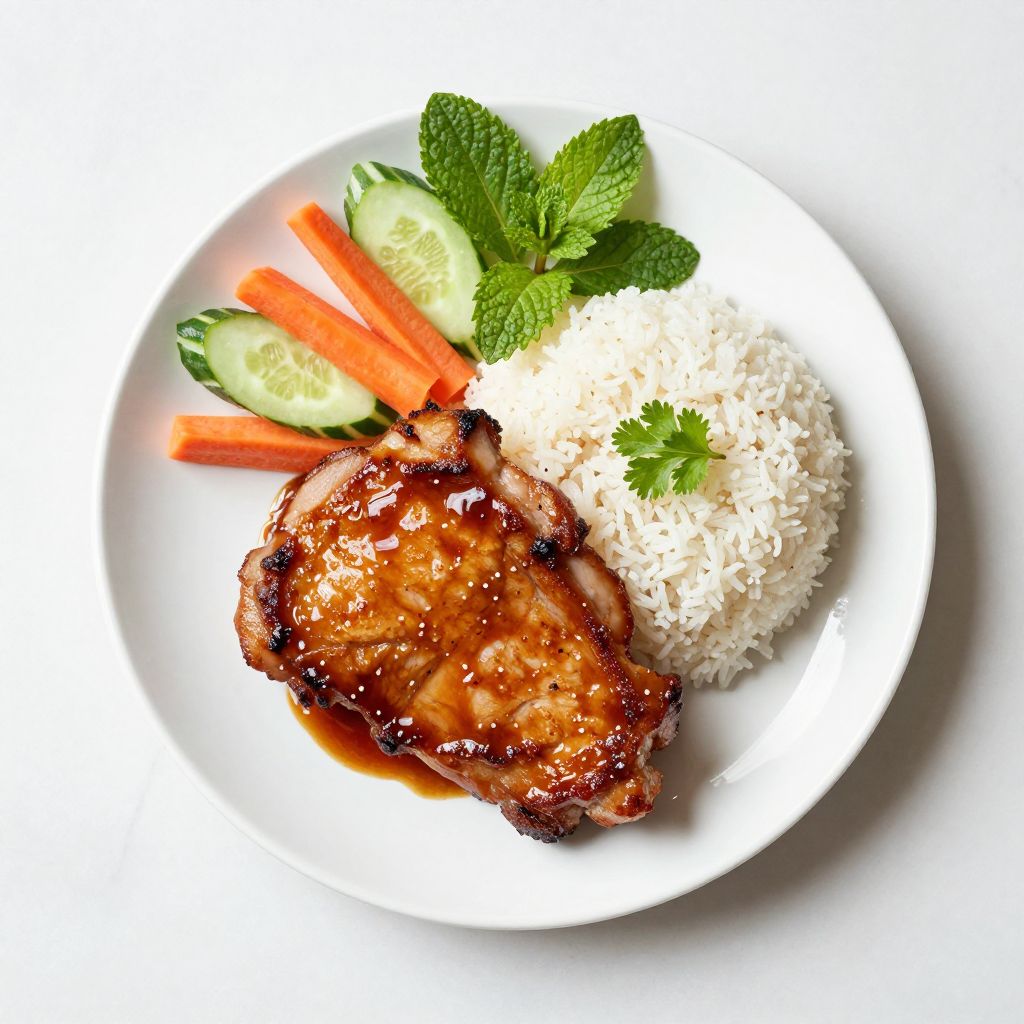
Vietnamese pork chops shine brightest when served with cooling, acidic sides that balance the richness of the meat. This combination of flavors and textures creates a complete, satisfying meal that tastes authentically Vietnamese.
- Steamed jasmine rice to soak up the caramelized pan drippings
- Quick pickled daikon radish and carrots for bright acidity and crunch
- Fresh cucumber slices with a light vinaigrette
- Steamed bok choy or broccoli for a vegetable component
- Fresh herbs like cilantro, mint, and Thai basil for aromatic garnish
Variations to Try
- Lemongrass Pork Chops: Add 1 tablespoon minced lemongrass to the marinade for a bright, citrusy twist that complements the caramel beautifully. The herbaceous quality elevates the dish without masking the core Vietnamese flavors.
- Spicy Version: Mix in 1/2 teaspoon red pepper flakes or 1 minced Thai chili to the marinade for heat that builds gradually with each bite. The spice plays nicely against the sweet-savory glaze.
- Grilled Pork Chops: After marinating, grill the pork chops over medium-high heat for 4 to 5 minutes per side instead of pan-searing for a smokier flavor. The char from the grill adds another dimension of complexity.
- Honey Variation: Replace brown sugar with honey for a smoother, more delicate sweetness that caramelizes quickly over high heat. The flavor is slightly less intense than brown sugar but still satisfying.
- Garlic-Forward Version: Increase garlic to 6 cloves and add 1/4 teaspoon garlic powder to the marinade for serious garlic lovers who want bold, savory dominance. The extra garlic caramelizes into sweet, mellow notes rather than staying pungent.
Dietary Adaptations
- Gluten-free: This recipe is naturally gluten-free as written, but verify your fish sauce and soy sauce labels since some brands contain gluten. The trade-off is minimal since the core flavors remain intact.
- Dairy-free: Vietnamese pork chops contain no dairy, so this recipe works perfectly for dairy-free diets without any modifications needed. All the richness comes from the pork itself and the flavorful marinade.
- Low-carb/Keto: Replace brown sugar with monk fruit sweetener or erythritol in a 1:1 ratio to keep the dish keto-friendly. The sweetness remains but the carbohydrate content drops significantly, making it ideal for low-carb eating.
- Vegan/Vegetarian: Substitute pork with thick-cut pressed tofu or tempeh using the same marinade and cooking method. The result will be different in texture but captures the same bold Vietnamese flavors with plant-based protein.
Storage and Reheating
Refrigerator
Store cooked pork chops in an airtight container for up to 3 days in the refrigerator. Keep any pan drippings in a separate container to prevent the meat from drying out.
- Let refrigerated pork chops come to room temperature for 15 minutes before reheating
- Store raw marinated pork in an airtight container for up to 8 hours before cooking
Freezer
Freeze cooked pork chops in a freezer-safe container for up to 3 months for later enjoyment. Marinated raw pork chops also freeze well, which makes this recipe excellent for meal prep.
- Thaw frozen cooked pork overnight in the refrigerator before reheating
- Frozen marinated pork can go straight from freezer to hot pan, adding a few extra minutes to cooking time
Reheating
Gently reheat pork chops in a skillet over medium heat with a splash of water or broth to restore moisture. Avoid the microwave, which tends to dry out the meat further.
- Heat for 3 to 4 minutes, turning once, until warmed through
- Add a spoonful of reserved pan drippings or a bit of sesame oil for extra flavor and moisture
Nutrition Information
| Nutrient | Amount |
|---|---|
| Calories | 285 |
| Total Fat | 16 g |
| Saturated Fat | 5 g |
| Carbohydrates | 8 g |
| Fiber | 0 g |
| Sugar | 6 g |
| Protein | 32 g |
| Sodium | 680 mg |
| Cholesterol | 82 mg |
These values are approximate and based on standard USDA data for pork loin chops with the marinade ingredients listed. Individual nutrition will vary based on the exact cut of pork, cooking method, and any ingredients added during serving.
Frequently Asked Questions
Can I make this recipe ahead of time?
Absolutely, you can marinate the pork chops up to 8 hours in advance and cook them right before serving. This makes the recipe perfect for busy weekdays when you want to prep in the morning and cook in the evening.
What can I substitute for fish sauce?
Soy sauce works as a substitute, though the flavor will be less complex and more salty. Worcestershire sauce or anchovy paste mixed with a bit of water also provide umami depth, though the result will taste less authentically Vietnamese.
How do I know when the pork is done cooking?
Use a meat thermometer and check for an internal temperature of 145 degrees Fahrenheit in the thickest part of the chop. This temperature is the USDA safe minimum for pork and ensures the meat is cooked through while remaining tender and juicy.
Why is my pork chop tough after cooking?
Overcooking past 145 degrees Fahrenheit is the most common culprit, as pork dries out quickly once it reaches that temperature. Always use a thermometer rather than cooking by time alone, since pork chop thickness varies.
Can I double this recipe for a crowd?
Yes, double or triple the marinade and pork chops easily, but cook them in batches to avoid overcrowding the pan. Crowding reduces the pan temperature and prevents proper caramelization.
Is this recipe kid-friendly?
Most kids enjoy Vietnamese pork chops because the marinade is sweet enough to balance the savory fish sauce. Serve with milder sides if your children prefer less bold flavors, and let them skip pickled vegetables if they are not yet adventurous eaters.
Final Thoughts
Making Vietnamese pork chops at home proves that restaurant-quality cooking does not require fancy techniques or hard-to-find ingredients. What it requires is proper heat, a good marinade, and respect for cooking times, all of which this recipe breaks down perfectly.
I encourage you to try this recipe this week and discover how easily you can bring authentic Vietnamese flavors to your table. Your family will taste the difference between homemade and anything else, and you will feel proud serving something this delicious.
Explore More Pork Recipes
If you enjoyed making Vietnamese pork chops, consider exploring other pork dishes that showcase similar flavor profiles and cooking techniques. Check out these related recipes to expand your pork cooking repertoire and impress your family with new weeknight favorites.
Try this versatile pork chop marinade to create endless variations of the classic dish. You can also explore baked pork chop recipes for a hands-off cooking method that delivers equally delicious results.
Vietnamese Pork Chops
Ingredients
Equipment
Method
- Combine minced garlic, fish sauce, brown sugar, soy sauce, sesame oil, and black pepper in a bowl and whisk until the sugar is fully dissolved.
- Pat the pork chops dry on both sides with paper towels to promote better caramelization.
- Place the pork chops in a shallow dish, pour the marinade over them, and marinate for at least 15 minutes at room temperature or up to 8 hours in the refrigerator.
- Heat the vegetable oil in a cast iron skillet or heavy-bottomed pan over medium-high heat until shimmering.
- Carefully add the pork chops to the hot pan, leaving space between them, and sear for 4 to 5 minutes without moving to develop a golden crust.
- Flip the pork chops and cook for another 4 to 5 minutes, or until a meat thermometer inserted into the thickest part reads 145°F.
- In the final minute of cooking, spoon the pan drippings and any remaining marinade over the chops to baste and add extra flavor.
- Transfer the pork chops to a plate and let them rest for 3 to 5 minutes before serving to allow the juices to redistribute.