
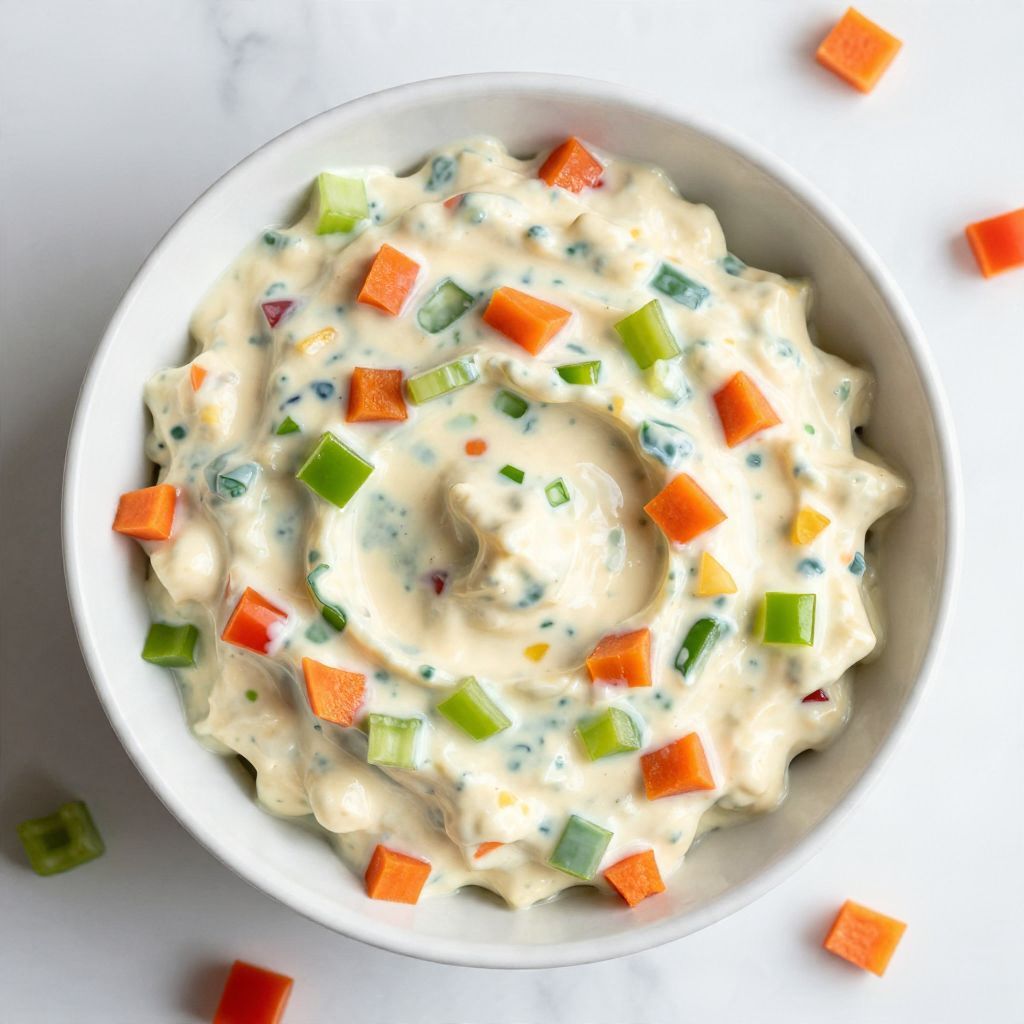
Imagine a delightful swirl of creamy goodness that adds zest to any sandwich or salad. This Vegetable Mayonnaise is not just a condiment; it’s an experience, bringing a burst of flavor and a lovely texture that elevates everyday meals.
It’s quick to make and incredibly versatile, allowing you to customize it with your favorite veggies. This mayonnaise is perfect for busy parents looking for a tasty spread or food enthusiasts wanting to impress with a homemade touch.
Why You’ll Love This Recipe
This recipe is a must-try for anyone who enjoys vibrant flavors and fresh ingredients.
- Quick and simple to prepare.
- Customizable with your favorite vegetables.
- Perfect for sandwiches, dips, or dressings.
- Great way to sneak in extra veggies.
- Deliciously creamy without store-bought additives.
My Experience Making This Recipe
When I first whipped up this Vegetable Mayonnaise, I was surprised by how easy it was. The aroma of fresh vegetables blended with the creaminess of the mayonnaise was simply irresistible.
My family raved about it, using it in everything from veggie wraps to simple salads. It quickly became a staple in our fridge, and I find myself making a new batch every week!
Recipe Overview
- Recipe Name: Vegetable Mayonnaise
- Servings: 4
- Prep Time: 10 minutes
- Cook Time: 0 minutes
- Total Time: 10 minutes
- Course: Condiment
- Cuisine: International
- Calories per Serving: 120
Equipment You Will Need
- Blender or food processor
- Measuring cups
- Measuring spoons
- Spatula
- Storage container
Ingredients for Vegetable Mayonnaise
- 1 cup of mayonnaise
- 1/4 cup of finely chopped carrots
- 1/4 cup of finely chopped bell peppers
- 1/4 cup of finely chopped celery
- 1 tablespoon of lemon juice
- Salt to taste
- Black pepper to taste
Ingredient Notes and Substitutions
- Mayonnaise: It provides a creamy base; you can substitute with vegan mayonnaise for a plant-based option.
- Carrots: They add sweetness and color; grated zucchini works well if you want a milder flavor.
- Bell peppers: They give a crunchy texture; you can swap them for finely chopped cucumbers.
- Celery: This adds crunch; try using green onions for a different flavor profile.
- Lemon juice: It brightens the flavor; vinegar can be used for a tangy twist.
How to Make Vegetable Mayonnaise
Step 1: Prepare the Vegetables
Start by finely chopping the carrots, bell peppers, and celery. The smaller the pieces, the better they blend into the mayonnaise.
Step 2: Combine Mayonnaise and Vegetables
In a blender or food processor, add the mayonnaise and the chopped vegetables. This ensures an even distribution of flavors.
Step 3: Add Lemon Juice
Pour in the lemon juice for a fresh zing. This acidity balances the richness of the mayonnaise perfectly.
Step 4: Season with Salt and Pepper
Add salt and black pepper to taste. Don’t be shy; seasoning is key to bringing out all those delicious flavors.
Step 5: Blend Until Smooth
Blend the mixture until it reaches your desired consistency. If you prefer a chunkier texture, blend less.
Step 6: Taste and Adjust
Give your mayonnaise a taste. If it needs more zing, add a touch more lemon juice or seasoning.
Step 7: Store in a Container
Transfer the vegetable mayonnaise to a storage container. A glass jar works well and keeps it fresh.
Step 8: Chill Before Serving
Let the mayonnaise chill in the refrigerator for at least 30 minutes. This allows the flavors to meld beautifully.
Pro Tip: Use a mix of colorful vegetables for a more visually appealing mayonnaise.
Tips for the Best Vegetable Mayonnaise
- Fresh vegetables yield the best flavor, so choose the freshest you can find.
- Experiment with different herbs like dill or parsley for added flavor.
- For a spicy kick, add a dash of hot sauce or cayenne pepper.
- Serve it chilled for the best texture and taste.
- Use this mayonnaise as a dip for chips or fresh veggies.
Common Mistakes to Avoid
- Skipping the chilling step can result in a less flavorful mayonnaise.
- Over-blending can turn the texture too smooth; aim for a balance.
- Not seasoning enough can leave your mayonnaise bland.
- Using old vegetables will compromise the taste dramatically.
Serving Suggestions
This mayonnaise is incredibly versatile and pairs beautifully with many dishes.
- Spread it on sandwiches or wraps.
- Use it as a dip for fresh veggies or chips.
- Mix it into salads for extra creaminess.
- Serve alongside grilled meats or fish.
Variations to Try
- For a Mediterranean twist, add chopped olives and sun-dried tomatoes.
- Mix in some avocado for a richer texture and flavor.
- Add herbs like basil or cilantro for a fresh taste.
- Incorporate roasted garlic for a deeper flavor profile.
Dietary Adaptations
- Gluten-free: This recipe is naturally gluten-free.
- Dairy-free: Use vegan mayonnaise to keep it dairy-free.
- Vegan: Substitute with plant-based mayonnaise.
- Low-carb/Keto: Use a low-carb mayonnaise brand for a keto-friendly option.
Storage and Reheating
Refrigerator
Store the vegetable mayonnaise in an airtight container in the refrigerator.
- It will keep for about 5-7 days.
Freezer
This mayonnaise does not freeze well due to its creamy texture.
- It is best enjoyed fresh.
Reheating
No reheating is needed for mayonnaise; simply enjoy it cold.
- Serve straight from the fridge for the best flavor.
Nutrition Information
| Nutrient | Amount |
|---|---|
| Calories | 120 |
| Total Fat | 12g |
| Saturated Fat | 1.5g |
| Carbohydrates | 3g |
| Fiber | 0g |
| Sugar | 1g |
| Protein | 1g |
| Sodium | 200mg |
| Cholesterol | 10mg |
This nutritional information is an estimate and can vary based on specific ingredients used.
Frequently Asked Questions
Can I use different vegetables?
Absolutely! Feel free to experiment with vegetables to suit your taste.
How long does it last in the fridge?
It keeps well for about 5 to 7 days in an airtight container.
Can I make this ahead of time?
Yes! Making it a day before allows the flavors to develop more.
What if the texture is too runny?
If it’s too runny, try blending in a bit more mayonnaise until it thickens.
Is this recipe suitable for kids?
Yes! It’s a great way to introduce more vegetables into their diet.
Final Thoughts
Making your own Vegetable Mayonnaise is not only fun, but it also gives you control over the flavors and ingredients. Once you try it, store-bought versions will seem like a distant memory.
So, roll up your sleeves and give this recipe a go. You won’t regret it!
If you enjoyed this, check out my delicious garlic mayo recipe or try this tasty Knorr vegetable dip for more veggie inspiration!