
The first time I unrolled a perfectly steamed grape leaf and tasted that fragrant burst of rice, herbs, and lemon, I understood why this dish has been passed down through generations across the Mediterranean. Stuffed grape leaves, known as dolmas or dolmades, deliver an elegant combination of tangy, earthy, and bright flavors wrapped in a neat little package.
This recipe produces tender, flavorful rolls that rival any you have tried at your favorite Greek or Lebanese restaurant. The filling stays moist and aromatic, while the leaves soften to a silky texture that melts on your tongue.
Whether you are hosting a dinner party or simply craving something different for meal prep, these beauties work hot or cold. Let me walk you through every step to make stuffed grape leaves that will have everyone asking for your secret.
Why You Will Love This Recipe
These stuffed grape leaves hit all the right notes and look far more impressive than the effort required. Once you get the rolling technique down, you will wonder why you ever bought them from a jar.
- Make ahead friendly and actually taste better the next day as flavors meld together
- Naturally gluten free and vegan, perfect for guests with dietary restrictions
- Freezer friendly for up to three months, so you can batch cook with confidence
- Impressive presentation that elevates any appetizer spread or mezze platter
- Budget friendly ingredients that transform into something extraordinary
My Experience Making This Recipe
I remember my first attempt at rolling grape leaves resulted in torn wrappers and filling spilling everywhere. After a few practice rounds and some choice words muttered under my breath, the rhythm clicked and suddenly I was rolling them like a seasoned grandmother.
The aroma that fills the kitchen while these simmer is intoxicating. Lemon, dill, and olive oil mingle together in a fragrant steam that draws everyone into the kitchen asking when dinner will be ready.
When I served these at a family gathering, the platter was empty within twenty minutes. My cousin, who claims to dislike anything wrapped in leaves, went back for thirds and demanded the recipe.
Recipe Overview
- Recipe Name: Stuffed Grape Leaves (Dolmas)
- Servings: 8 servings (approximately 40 rolls)
- Prep Time: 45 minutes
- Cook Time: 55 minutes
- Total Time: 1 hour 40 minutes
- Course: Appetizer or Main Course
- Cuisine: Mediterranean, Greek, Middle Eastern
- Calories per Serving: 185 calories
Equipment You Will Need
- Large pot with tight fitting lid
- Medium saucepan
- Large mixing bowl
- Colander
- Sharp knife and cutting board
- Wooden spoon
- Heat safe plate that fits inside the pot
- Citrus juicer or reamer
- Measuring cups and spoons
Ingredients for Stuffed Grape Leaves
For the Grape Leaves
- 1 jar (16 ounces) grape leaves in brine, about 50 leaves
For the Filling
- 1 cup long grain white rice, uncooked
- 1 large yellow onion, finely diced
- 1/2 cup fresh dill, chopped
- 1/4 cup fresh mint, chopped
- 1/4 cup fresh parsley, chopped
- 1/3 cup extra virgin olive oil, divided
- 3 green onions, thinly sliced
- 3 tablespoons pine nuts, toasted
- 1/4 cup currants or raisins
- 1 teaspoon salt
- 1/2 teaspoon black pepper
- 1/4 teaspoon allspice
For the Cooking Liquid
- 2 cups vegetable broth or water
- 1/4 cup fresh lemon juice, about 2 lemons
- 2 tablespoons extra virgin olive oil
Ingredient Notes and Substitutions
- Grape leaves: Jarred leaves are brined and ready to use after rinsing. Fresh leaves need blanching for 2 minutes before using.
- Long grain rice: This variety keeps its shape during cooking without becoming mushy. Short grain or medium grain rice works but creates a softer texture.
- Fresh dill: Provides the signature bright, grassy flavor of authentic dolmas. Dried dill can substitute at one third the amount, though fresh is strongly preferred.
- Pine nuts: Add a buttery crunch to the filling. Slivered almonds or chopped walnuts make good alternatives at the same quantity.
- Currants: Offer pops of sweetness that balance the tangy leaves. Golden raisins or chopped dried apricots work beautifully.
- Allspice: A traditional spice that adds warmth and depth. A pinch of cinnamon mixed with cloves can replicate the flavor.
How to Make Stuffed Grape Leaves
Step 1: Prepare the Grape Leaves
Remove the grape leaves from the jar and carefully unroll them. Rinse each leaf under cold running water to remove excess brine, then soak them in a bowl of warm water for 20 minutes.
This soaking step removes the salty, briny flavor that can overpower the delicate filling. Pat the leaves dry with paper towels and trim any tough stems with scissors.
Step 2: Cook the Onions
Heat 2 tablespoons of olive oil in a medium saucepan over medium heat. Add the diced yellow onion and cook for 5 to 7 minutes until softened and translucent.
Cooking the onions first mellows their sharp bite and brings out natural sweetness. Stir occasionally to prevent browning.
Step 3: Make the Filling
Transfer the cooked onions to a large mixing bowl and let them cool for 5 minutes. Add the uncooked rice, fresh herbs, green onions, pine nuts, currants, remaining olive oil, salt, pepper, and allspice.
Mix everything together until well combined. The rice will cook inside the grape leaves, so do not worry about the raw texture at this stage.
Step 4: Set Up Your Rolling Station
Lay a grape leaf flat on your work surface with the smooth side facing down and the rough, veiny side facing up. Position the leaf with the stem end closest to you.
Working with the veiny side up ensures the smooth, attractive side shows on the outside of your finished rolls. Set aside any torn or very small leaves to line the pot later.
Step 5: Fill and Roll the Grape Leaves
Place about 1 tablespoon of filling in a horizontal line near the stem end of the leaf. Fold the bottom of the leaf up over the filling, then fold in both sides toward the center.
Roll the leaf away from you, tucking tightly as you go, like rolling a tiny burrito. The roll should be snug but not so tight that the rice has no room to expand during cooking.
Step 6: Arrange the Rolls in the Pot
Line the bottom of a large pot with the torn or extra grape leaves. This protective layer prevents the stuffed leaves from sticking and burning on the bottom.
Arrange the rolled grape leaves seam side down in tight concentric circles. Stack additional layers on top, keeping them snug so they hold their shape during cooking.
Step 7: Add the Cooking Liquid
Combine the vegetable broth, lemon juice, and 2 tablespoons of olive oil in a measuring cup. Pour this mixture gently over the arranged grape leaves.
Place a heat safe plate directly on top of the rolls to weigh them down. This prevents the leaves from unrolling or floating as they cook.
Step 8: Simmer Until Tender
Bring the liquid to a boil over medium high heat, then immediately reduce to a low simmer. Cover the pot with a tight fitting lid and cook for 45 to 55 minutes.
The low, gentle simmer allows the rice to cook through without bursting the grape leaves. Check doneness by cutting one roll in half to ensure the rice is fully cooked and tender.
Step 9: Rest and Serve
Remove the pot from heat and let the grape leaves rest, still covered, for 15 minutes. Carefully transfer the rolls to a serving platter using a slotted spoon.
Drizzle with additional olive oil and serve with lemon wedges and yogurt sauce on the side. These taste wonderful warm, at room temperature, or chilled straight from the refrigerator.
Pro Tip: For the most flavorful stuffed grape leaves, make them a day ahead and refrigerate overnight. The tangy, herby flavors intensify beautifully as they rest.
Tips for the Best Stuffed Grape Leaves
- Do not overfill the leaves, as the rice expands significantly during cooking. One tablespoon is the sweet spot.
- Roll tightly enough to hold together but loosely enough for rice expansion. Think snug, not strangled.
- Use the largest, most intact leaves for rolling and save smaller or torn ones for lining the pot.
- Keep the finished rolls seam side down at all times to prevent unraveling during cooking.
- A splash of lemon juice added right before serving brightens all the flavors dramatically.
- Toast the pine nuts in a dry skillet until golden for maximum nutty flavor in the filling.
Common Mistakes to Avoid
- Skipping the rinse and soak: Unrinsed grape leaves taste overly salty and briny, masking the delicate herb flavors.
- Overstuffing the leaves: Too much filling causes the leaves to burst as rice expands, ruining your presentation.
- Cooking on high heat: Aggressive boiling toughens the grape leaves and causes uneven rice cooking.
- Forgetting the weight: Without a plate pressing down, rolls float and unfurl in the cooking liquid.
- Serving immediately after cooking: The resting period allows flavors to meld and the rolls to firm up for easier handling.
Serving Suggestions
Stuffed grape leaves shine as part of a Mediterranean mezze spread or as an elegant appetizer course. They also make a satisfying light lunch alongside a crisp salad.
- Creamy tzatziki sauce for dipping
- Warm pita bread and hummus
- Greek salad with feta cheese and Kalamata olives
- Grilled lamb chops or chicken souvlaki for a complete meal
- Cold with a squeeze of fresh lemon as a refreshing summer appetizer
Variations to Try
- Meat filled dolmas: Add 1/2 pound of seasoned ground lamb or beef to the filling for a heartier, protein packed version.
- Lemon herb variation: Increase the lemon juice and add lemon zest to both the filling and cooking liquid for extra brightness.
- Spiced Turkish style: Add 1/2 teaspoon cinnamon and increase the currants for a sweeter, warmly spiced flavor profile.
- Mediterranean quinoa filling: Swap the rice for cooked quinoa for a protein boost and slightly nuttier texture.
- Tomato braised version: Replace half the broth with crushed tomatoes for a richer, tangier cooking liquid.
Dietary Adaptations
- Gluten free: This recipe is naturally gluten free as written. Verify your broth is certified gluten free.
- Dairy free: The recipe contains no dairy. Serve with dairy free yogurt if desired.
- Vegan: Already completely vegan. Use vegetable broth and skip any meat additions.
- Low carb or keto: Replace rice with riced cauliflower, reducing carbs significantly while maintaining similar texture.
Storage and Reheating
Refrigerator
Stuffed grape leaves store beautifully in the refrigerator for up to one week. Keep them in an airtight container with a drizzle of olive oil to prevent drying.
- Store in a single layer if possible
- Add a splash of lemon juice before sealing
- Bring to room temperature for 20 minutes before serving cold
Freezer
Freeze stuffed grape leaves for up to three months without quality loss. Flash freeze on a baking sheet before transferring to freezer bags.
- Freeze uncooked rolls for best results
- Thaw overnight in the refrigerator before cooking
- Add 5 to 10 minutes to cooking time if cooking from frozen
Reheating
Gentle reheating preserves the tender texture of the grape leaves. Avoid the microwave, which can make them rubbery.
- Steam in a covered pan with a splash of broth for 10 minutes
- Warm in a 325F oven covered with foil for 15 minutes
- Alternatively, enjoy them cold or at room temperature
Nutrition Information
| Nutrient | Amount |
|---|---|
| Calories | 185 |
| Total Fat | 10g |
| Saturated Fat | 1.5g |
| Carbohydrates | 22g |
| Fiber | 2g |
| Sugar | 3g |
| Protein | 3g |
| Sodium | 380mg |
| Cholesterol | 0mg |
Nutrition values are estimates based on standard ingredients and may vary based on specific brands and modifications.
Frequently Asked Questions
Can I use fresh grape leaves instead of jarred?
Absolutely, fresh grape leaves work wonderfully and have a more delicate flavor. Blanch them in boiling water for 2 minutes to soften before rolling.
How do I prevent the grape leaves from tearing?
Handle soaked leaves gently and use the thickest, most pliable leaves for rolling. Save any torn leaves for lining the pot bottom.
Can I make stuffed grape leaves ahead of time?
Yes, and I highly recommend it. Make them up to 3 days ahead and store refrigerated for the best flavor development.
Why is my rice still crunchy after cooking?
The cooking liquid may have evaporated too quickly or heat was too high. Add more broth and continue simmering with the lid on tightly.
What should I serve with stuffed grape leaves?
A dollop of Greek yogurt or tzatziki pairs perfectly, along with warm pita bread. Fresh lemon wedges are non negotiable for that final bright squeeze.
Final Thoughts
Making stuffed grape leaves at home is one of those kitchen projects that rewards you tenfold. The meditative rhythm of rolling, the incredible aromas, and the pride of serving something so beautiful make every minute worthwhile.
Give this recipe a try for your next gathering or meal prep session. Once you taste homemade dolmas, those jarred versions at the supermarket will never quite satisfy you again.
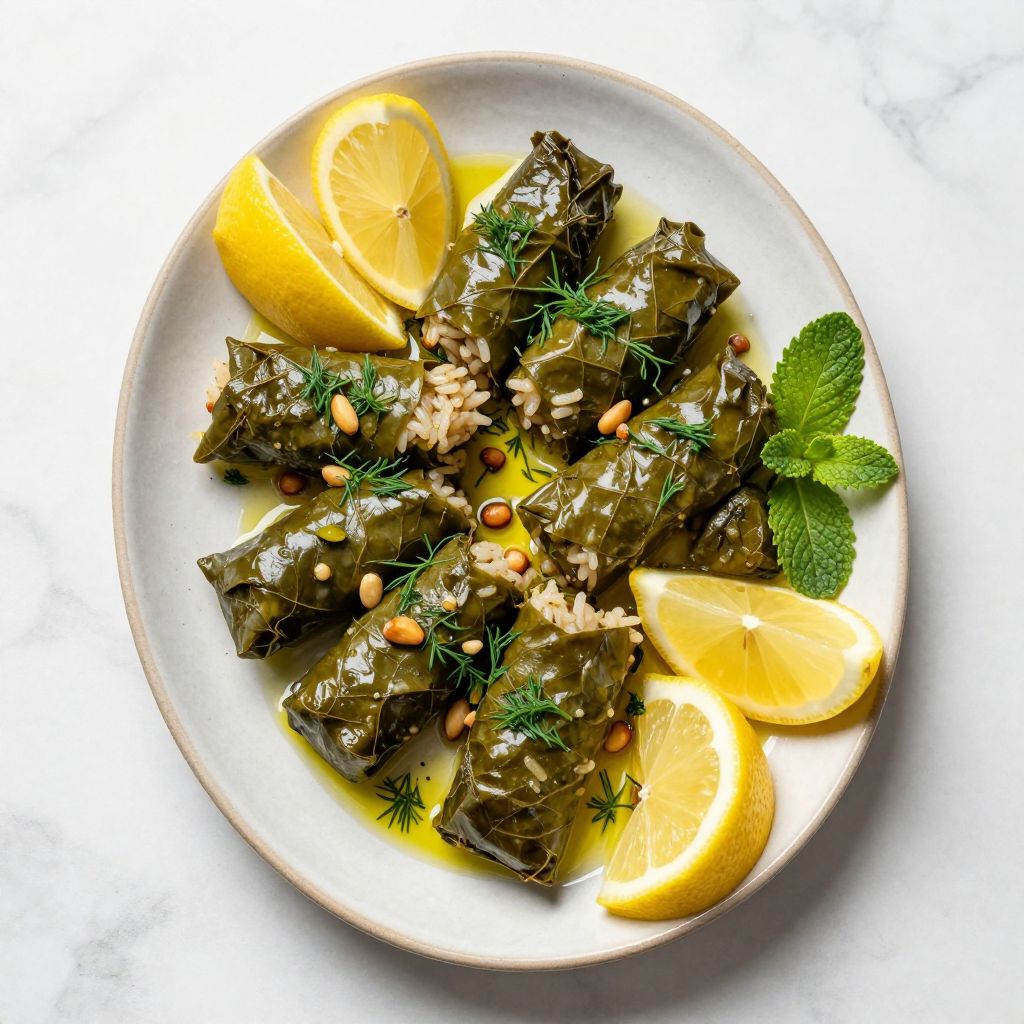
Stuffed Grape Leaves (Dolmas)
Ingredients
Equipment
Method
- Remove the grape leaves from the jar and carefully unroll them. Rinse each leaf under cold running water to remove excess brine, then soak them in a bowl of warm water for 20 minutes. Pat the leaves dry with paper towels and trim any tough stems with scissors.
- Heat 2 tablespoons of olive oil in a medium saucepan over medium heat. Add the diced yellow onion and cook for 5 to 7 minutes until softened and translucent, stirring occasionally to prevent browning.
- Transfer the cooked onions to a large mixing bowl and let them cool for 5 minutes. Add the uncooked rice, fresh dill, mint, parsley, green onions, toasted pine nuts, currants, remaining olive oil, salt, pepper, and allspice. Mix everything together until well combined.
- Lay a grape leaf flat on your work surface with the smooth side facing down and the rough, veiny side facing up. Position the leaf with the stem end closest to you. Set aside any torn or very small leaves to line the pot later.
- Place about 1 tablespoon of filling in a horizontal line near the stem end of the leaf. Fold the bottom of the leaf up over the filling, then fold in both sides toward the center. Roll the leaf away from you, tucking tightly as you go, like rolling a tiny burrito.
- Line the bottom of a large pot with the torn or extra grape leaves. Arrange the rolled grape leaves seam side down in tight concentric circles. Stack additional layers on top, keeping them snug so they hold their shape during cooking.
- Combine the vegetable broth, lemon juice, and 2 tablespoons of olive oil in a measuring cup. Pour this mixture gently over the arranged grape leaves. Place a heat safe plate directly on top of the rolls to weigh them down.
- Bring the liquid to a boil over medium high heat, then immediately reduce to a low simmer. Cover the pot with a tight fitting lid and cook for 45 to 55 minutes. Check doneness by cutting one roll in half to ensure the rice is fully cooked and tender.
- Remove the pot from heat and let the grape leaves rest, still covered, for 15 minutes. Carefully transfer the rolls to a serving platter using a slotted spoon. Drizzle with additional olive oil and serve with lemon wedges and yogurt sauce on the side.