
There’s something magical about the first bite of a spring salad when fresh greens finally appear at the farmers market, still wearing droplets of morning dew. This Spring Salad captures that bright, fleeting season in a bowl, mixing tender lettuces with crisp vegetables, fresh herbs, and a zingy vinaigrette that wakes up your taste buds.
What makes this recipe special is its simplicity and flexibility; you build it around whatever looks best that week, so it never gets boring. The result is a light, refreshing dish that feels indulgent without weighing you down, and comes together in under fifteen minutes from start to finish.
Why You’ll Love This Recipe
This salad checks all the boxes for easy weeknight eating and impressive enough for guests to think you spent hours in the kitchen.
- Ready in under 15 minutes with no cooking required
- Uses seasonal ingredients at their peak flavor and lowest cost
- Naturally gluten-free and easily adapted for any dietary preference
- Tastes better the more you customize it to your own favorites
- Light enough for lunch yet substantial enough for dinner when paired with protein
My Experience Making This Recipe
I first fell in love with this salad while trying to use up a CSA box overflowing with spring vegetables and realizing I had no complicated recipes to handle them all. Instead of panicking, I threw together whatever looked fresh, made a quick vinaigrette, and discovered that sometimes the best meals come from working with what you have on hand.
My family devoured it so quickly that I started making double batches, and now it appears on our table at least twice a week from April through June. The tender crunch of fresh peas, the peppery bite of arugula, and that perfect balance of acid and oil in the dressing all come together in a way that tastes both elegant and comforting.
What surprised me most was how often guests ask for the recipe, expecting some elaborate technique when it’s really just quality ingredients and a good vinaigrette. That’s the beauty of spring produce; it does most of the heavy lifting for you.
Recipe Overview
- Recipe Name: Spring Salad with Lemon Vinaigrette
- Servings: 4 as a side, 2 as a main course
- Prep Time: 12 minutes
- Cook Time: 0 minutes
- Total Time: 12 minutes
- Course: Salad
- Cuisine: American/Mediterranean
- Calories per Serving: 145
Equipment You Will Need
- Large cutting board
- Sharp chef’s knife
- Salad bowl or large mixing bowl
- Small whisk or jar with tight-fitting lid
- Measuring spoons and cups
- Salad spinner or clean kitchen towel
- Small bowl for vinaigrette
Ingredients for Spring Salad
- Spring lettuce or mixed greens, 5 cups loosely packed
- Fresh English cucumber, 1 medium, thinly sliced
- Snap peas, 1 cup, halved lengthwise
- Fresh radishes, 4 to 5, thinly sliced
- Baby carrots, 1 cup, shaved or thinly sliced
- Green onions, 3, chopped
- Fresh dill, 2 tablespoons, chopped
- Fresh mint, 2 tablespoons, thinly sliced
- Crumbled goat cheese, 1/2 cup
- Sliced almonds, 1/4 cup, toasted
For the Lemon Vinaigrette
- Fresh lemon juice, 3 tablespoons
- Dijon mustard, 1 teaspoon
- Shallot, 1 small, minced
- Extra virgin olive oil, 1/4 cup
- Sea salt, 1/4 teaspoon
- Black pepper, pinch
Ingredient Notes and Substitutions
- Spring lettuce: Tender spring lettuce varieties like butter lettuce, oak leaf, or a pre-mixed spring blend provide delicate flavor and soft texture that won’t overpower fresh vegetables. If spring lettuce is unavailable, use baby spinach or arugula, though arugula adds more peppery bite.
- Snap peas: These bring a sweet crunch and represent peak spring flavor. Snow peas work if snap peas aren’t available, or use fresh green peas if you don’t mind cooking them for two minutes first.
- Fresh dill and mint: These herbs brighten the whole salad with fresh, aromatic notes. Parsley or tarragon can replace dill, and basil can replace mint, though each shifts the flavor profile slightly.
- Goat cheese: The tangy creaminess balances the vinaigrette and adds protein. Feta, ricotta salata, or even crumbled soft cheese like chèvre all work well as substitutes.
- Extra virgin olive oil: Quality matters here since the oil is uncooked and tastes raw. A good extra virgin oil adds fruity, peppery notes that cheap oils miss.
How to Make Spring Salad
Step 1: Prepare Your Greens
Rinse your spring lettuce under cool water and spin it completely dry using a salad spinner or by wrapping it gently in a clean kitchen towel. Wet greens dilute your dressing and make the salad taste bland, so this step is worth the small effort.
Step 2: Make the Vinaigrette
Whisk together lemon juice, minced shallot, and Dijon mustard in a small bowl, then let it sit for one minute so the shallot softens slightly and releases its flavor. Slowly whisk in the olive oil while maintaining steady pressure, creating an emulsion that helps the dressing cling to the greens rather than pooling at the bottom.
Step 3: Season the Vinaigrette
Taste your dressing and add sea salt and black pepper to your preference. Remember that salt in the dressing should taste bright, not overwhelming, since it will coat every leaf and vegetable.
Step 4: Slice Your Vegetables
Cut the cucumber into thin half-moons, halve the snap peas lengthwise to show off their pretty interior, and slice radishes paper-thin on a mandoline if you have one. Shaving carrots with a vegetable peeler creates elegant ribbons that look restaurant-quality and cook nothing so they stay crisp.
Step 5: Chop Fresh Herbs
Chop dill into small pieces and slice mint into thin ribbons just before building your salad. Herb flavor fades quickly once cut, so prep them as close to serving time as possible.
Step 6: Assemble the Base
Place your dried spring lettuce in a large salad bowl and toss it very lightly with about two-thirds of your vinaigrette. The greens should glisten but not look wet, and using less dressing than you think you need prevents a soggy salad.
Step 7: Add Your Vegetables
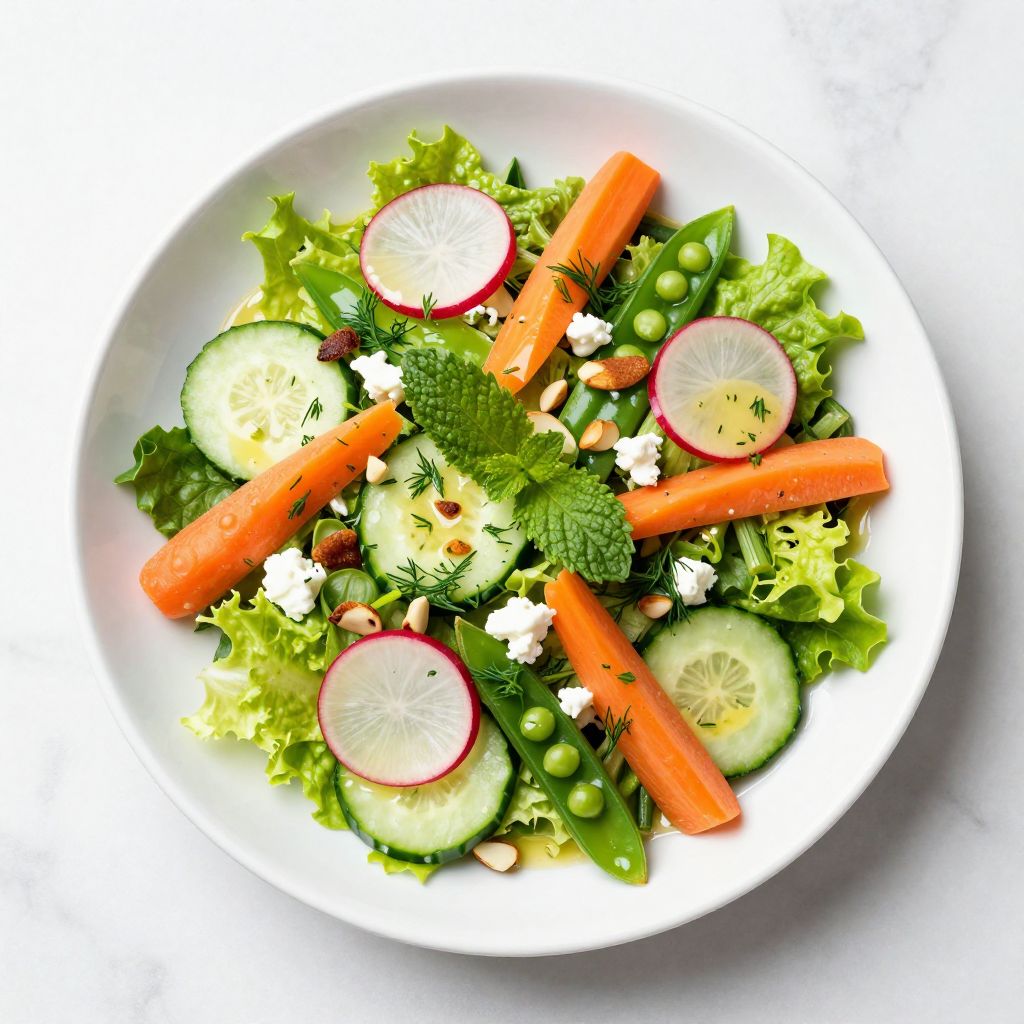
Arrange cucumber slices, snap peas, radish slices, carrot ribbons, and chopped green onions over the dressed greens in a pleasing pattern. You can toss everything together for a casual look or arrange it in sections for a more composed presentation.
Step 8: Top with Cheese and Nuts
Scatter crumbled goat cheese and toasted sliced almonds over the vegetables, then drizzle with any remaining vinaigrette. The cheese and nuts add protein and textural contrast that makes this salad feel complete rather than like a side dish.
Step 9: Finish with Fresh Herbs
Sprinkle fresh dill and mint over the top just before serving, using them almost as a garnish to emphasize the fresh, spring flavors. A final crack of black pepper adds sophistication without being heavy.
Pro Tip: Make your vinaigrette first and let it sit while you prep vegetables, allowing flavors to marry and the shallot to mellow slightly for a more balanced dressing.
Tips for the Best Spring Salad
- Taste your greens before using them; if they taste bitter, soak them in ice water for ten minutes to improve their flavor. Bitterness often comes from heat stress, not poor quality.
- Toast your almonds in a dry skillet over medium heat for two to three minutes, shaking the pan occasionally, to unlock their nutty flavor and add crunch. Soggy nuts from being stored in a wet salad won’t have the same impact.
- Don’t dress the entire salad until just before serving if you’re not eating immediately. Dress just the greens lightly, then add vegetables and toppings at the last moment.
- Invest in a quality extra virgin olive oil and fresh lemon juice; these two ingredients are the foundation of your dressing and deserve to be good. Bottled lemon juice tastes thin and metallic compared to fresh.
- Keep your salad ingredients at slightly cool temperatures by storing them in the coldest part of your refrigerator until assembly. A warm salad wilts faster and tastes less refreshing than a cold one.
- Use a mandoline carefully to slice radishes and vegetables uniformly, creating a more polished presentation than hand-slicing. A sharp knife works fine too; just take your time to avoid uneven pieces that cook at different rates.
Common Mistakes to Avoid
- Skipping the salad spinner: Wet greens turn this crisp salad into something sad and soggy within minutes. Dry greens are non-negotiable for success.
- Over-dressing the salad: A quarter cup of dressing covers four servings when used properly. Too much dressing makes it taste oily rather than bright and fresh.
- Using old vinegar or lemon juice: Acidic ingredients that have lost their punch won’t create a balanced dressing, no matter how good your oil is. Check expiration dates and taste before mixing.
- Adding soft toppings too early: Goat cheese and nuts get soggy if mixed with greens long before serving. Add them at the very last moment for maximum textural impact.
- Forgetting to season the vinaigrette itself: Many home cooks season only the greens and forget that the dressing needs proper salt and pepper to taste complete on its own.
Serving Suggestions
This salad shines as a standalone lunch when paired with crusty bread and a cold glass of white wine, or serves as the perfect light side dish for grilled chicken, fish, or lamb. Its fresh, clean flavors complement rich proteins without overwhelming them.
- Serve alongside grilled salmon fillet for an elegant dinner that feels restaurant-quality but takes thirty minutes total
- Pair with roasted chicken breast and fingerling potatoes for a simple yet satisfying weeknight meal
- Add grilled shrimp or white beans to turn it into a complete protein-forward lunch
- Serve at room temperature as part of a spring picnic spread with cured meats, cheese, and crusty bread
- Top with crumbled feta and pine nuts for a Mediterranean twist that pairs beautifully with lamb
Variations to Try
- Strawberry and Balsamic Version: Replace half the lemon juice with aged balsamic vinegar and add halved fresh strawberries. The sweet-tart berries create a more complex flavor profile that feels almost like dessert.
- Warm Feta and Walnut Version: Toss warm crumbled feta with toasted walnuts and add to the salad just before serving. The warmth of the cheese creates pockets of melted creaminess that contrast beautifully with crisp vegetables.
- Herb Garden Version: Skip the almonds and cheese, and instead add shaved Parmigiano-Reggiano, pea shoots, and microgreens for an even lighter, more delicate salad. This version works perfectly as a starter course before a heavier main dish.
- Creamy Avocado Version: Add sliced ripe avocado and reduce the lemon juice in the vinaigrette slightly since avocado pairs better with less acidity. The creamy richness makes this version feel more substantial as a main course.
- Grain Bowl Version: Toss this salad with cooked farro, barley, or quinoa to create a grain salad that holds up to being made ahead and reheated. The whole grains add substance and make it perfect for meal prep.
Dietary Adaptations
- Gluten-Free: This recipe is naturally gluten-free as written. Simply verify that any pre-made salad dressing or purchased goat cheese doesn’t contain hidden gluten from processing.
- Dairy-Free: Replace goat cheese with nutritional yeast or omit it entirely and add an extra quarter cup of toasted nuts instead. The salad remains delicious and gains a nuttier flavor profile.
- Vegan: Skip the goat cheese and add extra nuts, seeds, or crispy tofu cubes for protein. A vegan version loses some richness but gains a lighter, cleaner taste that many people prefer.
- Low-Carb/Keto: This salad works beautifully for keto eating; just skip the almonds if you’re tracking carbs tightly and add extra cheese or nuts instead. The carb count comes mostly from vegetables, which are allowed in moderation.
Storage and Reheating
Refrigerator
Store prepared vegetables and dressed greens separately in airtight containers for up to three days. Keep vinaigrette in a separate container, shaking it before each use since oil and acid naturally separate.
- Greens: up to three days in a salad container with paper towels to absorb excess moisture
- Vegetables: up to four days in separate containers, keeping sturdy items like cucumbers and carrots away from delicate snap peas
- Vinaigrette: up to five days in a jar with a tight-fitting lid
- Goat cheese and nuts: store separately to prevent softening, up to one week
Freezer
Don’t freeze this salad as the vegetables will become mushy and unappetizing when thawed. The individual components store well, but assembled salad doesn’t freeze successfully.
Reheating
This salad is best served cold and doesn’t require reheating. If you want warm components, toast the nuts fresh and serve them at room temperature scattered over cold greens.
Nutrition Information
| Nutrient | Amount |
|---|---|
| Calories | 145 |
| Total Fat | 10g |
| Saturated Fat | 2g |
| Carbohydrates | 12g |
| Fiber | 3g |
| Sugar | 3g |
| Protein | 5g |
| Sodium | 180mg |
| Cholesterol | 4mg |
Nutrition values are approximations based on standard ingredient brands and may vary depending on your specific products and portion sizes. If you add protein like grilled chicken or salmon, increase the calories and protein accordingly.
Frequently Asked Questions
Can I make this salad ahead of time?
You can prep all components separately up to four hours ahead, but wait to dress the greens until thirty minutes before serving. Combine everything just before the meal for the best texture and flavor.
What if I don’t have fresh dill or mint?
Parsley, tarragon, or even fresh chives work beautifully as substitutes. The salad won’t taste quite the same, but fresh herbs of any kind beat dried versions hands down.
Can I use regular olive oil instead of extra virgin?
Regular olive oil works fine and won’t break your budget, though you’ll lose the fruity, peppery notes that make extra virgin special. For a simple weeknight salad, regular oil is perfectly acceptable.
Why does my salad taste watery even though I dried the greens?
Cucumbers and radishes release water as they sit, even before adding dressing. If making ahead, don’t slice watery vegetables until just before serving, or toss them with a tiny pinch of salt thirty minutes before assembly so they release water gradually.
Is this salad filling enough for dinner?
As written, this works better as a side dish or lunch when paired with bread or protein. To make it a complete dinner, add grilled chicken, fish, beans, or whole grains to boost the protein and carbohydrates.
Final Thoughts
This Spring Salad has become my go-to dish when I want to celebrate fresh produce without spending time cooking. It proves that the best recipes often come from quality ingredients and simple technique rather than complicated instructions or exotic ingredients.
Make it this week while spring produce is at its peak, and watch how quickly it becomes a regular on your dinner table. Your taste buds will thank you, and you’ll finally have a go-to salad recipe that feels both easy and special.
Spring Salad with Lemon Vinaigrette
Ingredients
Equipment
Method
- Rinse your spring lettuce under cool water and spin it completely dry using a salad spinner or by wrapping it gently in a clean kitchen towel. Wet greens dilute your dressing and make the salad taste bland.
- Whisk together lemon juice, minced shallot, and Dijon mustard in a small bowl, then let it sit for one minute so the shallot softens slightly and releases its flavor.
- Slowly whisk in the olive oil while maintaining steady pressure, creating an emulsion that helps the dressing cling to the greens rather than pooling at the bottom.
- Taste your dressing and add sea salt and black pepper to your preference. Remember that salt in the dressing should taste bright, not overwhelming.
- Cut the cucumber into thin half-moons, halve the snap peas lengthwise, and slice radishes paper-thin. Shave carrots with a vegetable peeler to create elegant ribbons.
- Chop dill into small pieces and slice mint into thin ribbons just before building your salad.
- Place your dried spring lettuce in a large salad bowl and toss it very lightly with about two-thirds of your vinaigrette. The greens should glisten but not look wet.
- Arrange cucumber slices, snap peas, radish slices, carrot ribbons, and chopped green onions over the dressed greens.
- Scatter crumbled goat cheese and toasted sliced almonds over the vegetables, then drizzle with any remaining vinaigrette.
- Sprinkle fresh dill and mint over the top just before serving. Add a final crack of black pepper for sophistication.