
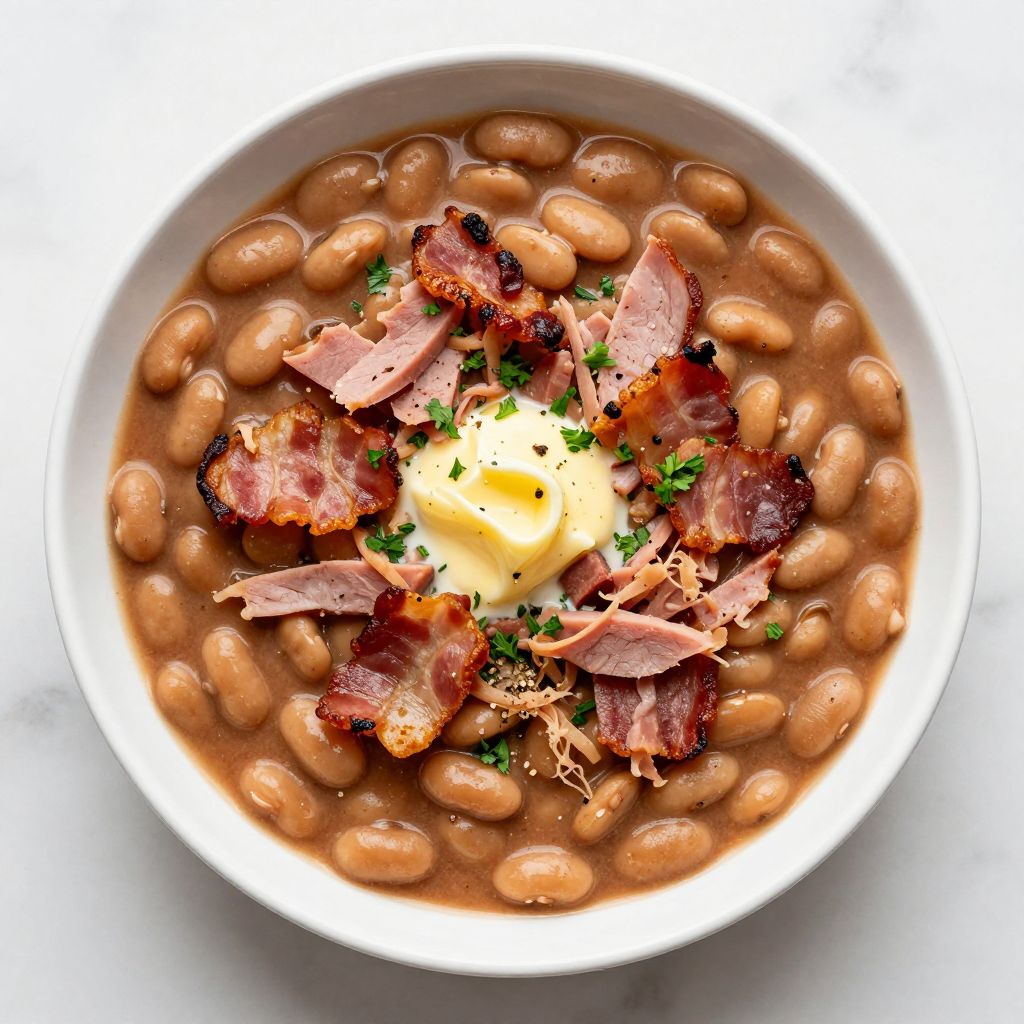
The smell of pinto beans simmering on the stove is pure Southern comfort, and once you taste a homemade batch, you’ll understand why this humble ingredient shows up on tables from Georgia to Texas. Southern pinto beans are budget-friendly, naturally filling, and packed with flavor that builds as they cook low and slow with smoky meat and aromatics.
This recipe delivers tender beans with a savory broth that cries out for cornbread, and it’s the kind of dish that tastes even better the next day. Whether you’re cooking for weeknight dinner or a weekend family gathering, these beans prove that the best Southern food doesn’t need to be complicated.
Why You’ll Love This Recipe
Southern pinto beans hit all the marks for a weeknight winner or comfort food classic. This recipe is budget-friendly, naturally healthy, and creates a soul-warming meal that satisfies without fuss.
- Smoky, savory flavor from bacon and ham hock that makes the whole pot taste like home cooking.
- Tender beans with a rich, flavorful broth that doubles as the best sauce for cornbread.
- One-pot cooking with minimal active time and maximum flavor payoff.
- Naturally vegetarian-friendly (when you skip the meat) and loaded with fiber and protein.
- Freezer-friendly and tastes better as leftovers, so meal prep becomes effortless.
My Experience Making This Recipe
I grew up watching my grandmother sort through dried beans like she was hunting for gold, picking out any odd stones before rinsing them clean. She taught me that this step isn’t fussy—it’s the difference between a perfect bowl of beans and one with a cracked tooth.
The first time I made this recipe on my own, I rushed the soak and undercooked the beans, thinking I could speed things up. The beans turned out mealy and fell apart, and the broth tasted thin and watery.
Once I slowed down and followed the proper method, everything changed. The beans stayed intact, the broth turned rich and silky, and I finally understood why my grandmother always had a pot going on Sunday afternoon.
Recipe Overview
- Recipe Name: Southern Pinto Beans
- Servings: 6 to 8 servings
- Prep Time: 15 minutes plus 4 hours soaking (or overnight)
- Cook Time: 90 minutes
- Total Time: 5 hours plus overnight soaking
- Course: Main Dish or Side Dish
- Cuisine: Southern American
- Calories per Serving: 245 calories
Equipment You Will Need
- Large bowl for soaking beans
- Colander for draining and rinsing
- Large heavy-bottomed pot with lid (6-quart or larger)
- Wooden spoon for stirring
- Knife for chopping onions and garlic
- Cutting board
- Measuring cups and spoons
- Skimmer or slotted spoon to remove foam
Ingredients for Southern Pinto Beans
- 1 pound dried pinto beans
- 6 ounces smoked bacon, chopped into half-inch pieces
- 1 ham hock or 4 ounces ham, chopped
- 1 large yellow onion, diced
- 4 cloves garlic, minced
- 6 cups beef or chicken stock
- 2 tablespoons butter
- 1 teaspoon salt, plus more to taste
- 1/2 teaspoon black pepper
- 1/4 teaspoon red pepper flakes, optional
- 2 bay leaves
- 1 teaspoon smoked paprika
Ingredient Notes and Substitutions
- Dried pinto beans: Pinto beans have a creamy texture and mild flavor that absorbs the smoky broth beautifully. You can swap in cannellini beans or Great Northern beans, though they cook faster and may turn mushy if you’re not careful with timing.
- Smoked bacon: Bacon delivers the smoky backbone of this dish, so don’t skip it. If you need a substitute, use thick-cut smoked salt pork or 2 ounces of smoked paprika mixed into the broth, though the flavor profile shifts slightly.
- Ham hock: A ham hock infuses the broth with collagen and deep smoky flavor that melts into the beans. If you can’t find one, use a smoked turkey leg or just add an extra 4 ounces of diced ham plus 1/2 teaspoon of liquid smoke.
- Stock: Beef stock creates a richer, deeper flavor than chicken stock, but either works. Vegetable stock works for a vegetarian version, though you’ll lose some of that savory depth unless you boost the salt and add extra smoked paprika.
- Butter: Butter rounds out the flavors and adds richness to the broth. Olive oil or bacon fat works fine as a substitute, though the flavor becomes slightly different.
How to Make Southern Pinto Beans
Step 1: Sort and Rinse the Beans
Pour the dried pinto beans into a large bowl and pick through them carefully, removing any cracked beans, stones, or debris. Rinse the beans under cold running water in a colander until the water runs clear, which removes dust and excess starch.
Step 2: Soak the Beans
Place the rinsed beans in a large bowl and cover them with cold water by about 3 inches. Let them soak for at least 4 hours, or better yet, cover and refrigerate overnight so they absorb water evenly and cook more uniformly.
Step 3: Drain and Prepare the Pot
Drain the soaked beans in a colander and set them aside. Place a large heavy-bottomed pot over medium-high heat and add the chopped bacon pieces, cooking them until they’re crispy and the fat renders, about 5 to 7 minutes.
Step 4: Build the Flavor Base
Remove the crispy bacon from the pot with a slotted spoon and set it aside, leaving about 2 tablespoons of bacon fat in the pot. Add the diced onion and cook it for 3 to 4 minutes, stirring often, until it softens and becomes translucent, then stir in the minced garlic and cook for another 30 seconds until fragrant.
Step 5: Add Beans and Liquid
Stir in the drained beans, the ham hock, and the crispy bacon back into the pot. Pour in the beef stock and add the bay leaves, smoked paprika, salt, black pepper, and red pepper flakes if you like a hint of heat.
Step 6: Bring to a Boil and Skim
Turn the heat up to high and bring the pot to a rolling boil, which should take about 10 minutes. Once boiling, skim off any gray foam that rises to the surface with a skimmer or slotted spoon, as this helps create a clearer broth.
Step 7: Simmer Low and Slow
Reduce the heat to low, stir in the butter, and place the lid on the pot, leaving it slightly ajar so steam can escape. Simmer gently for 90 minutes to 2 hours, stirring occasionally, until the beans are fork-tender and the broth becomes rich and silky.
Step 8: Taste and Adjust Seasoning
Remove the ham hock and bay leaves from the pot. Taste the beans and broth, then add more salt and pepper as needed to suit your preference, keeping in mind that the flavors intensify as the beans cool.
Pro Tip: If your beans finish cooking but the broth is too thin, remove the lid and simmer uncovered for another 15 to 20 minutes to allow excess liquid to evaporate and the broth to thicken naturally.
Tips for the Best Southern Pinto Beans
- Don’t skip the soaking step, as it helps beans cook evenly and prevents some of the gas-producing compounds that cause bloating. Overnight soaking is your friend here.
- Use a ham hock if you can find one, as it adds collagen that creates a silky mouthfeel in the broth that you just can’t get from chopped ham alone.
- Keep the heat low once the beans are simmering so they cook gently and stay intact instead of falling apart and turning to mush.
- Taste the beans starting at the 90-minute mark, as some batches finish faster than others depending on bean age and your elevation.
- Save the leftover broth, as it’s liquid gold for soups, stews, or even sipping by the spoonful as a savory tonic.
- Make a double batch and freeze half, because beans freeze beautifully and reheat perfectly, giving you an easy weeknight side dish whenever you need one.
Common Mistakes to Avoid
- Skipping the sort and rinse: Even one tiny stone in your bowl can crack a tooth, and dust leaves a gritty texture on the finished dish.
- Using old dried beans: Beans older than 2 years take forever to cook and may never soften no matter how long you simmer, so buy from a store with good turnover.
- Cooking at too high a heat: A rolling boil causes beans to pop open and lose their shape, turning your dish into bean soup instead of whole tender beans.
- Adding salt too early: Salt toughens bean skins and slows cooking, so wait until the beans are nearly tender before seasoning.
- Not tasting before serving: Beans need proper seasoning to shine, and every pot is different, so always taste and adjust before dishing up.
Serving Suggestions
Southern pinto beans shine as a side dish alongside cornbread, fried chicken, or collard greens, and they’re hearty enough to eat as a main course with just a simple salad on the side. Serve them hot in a bowl with some of that precious broth, and let people add hot sauce or vinegar to taste if they like.
- Cornbread with butter and honey for dipping into the broth.
- Skillet cornbread baked in cast iron and served warm with the beans spooned on top.
- Fried chicken as a protein alongside the beans for a classic Southern plate.
- Collard greens or mustard greens cooked with bacon for a complete vegetable medley.
- White rice or creamed corn to soak up the savory broth.
Variations to Try
- Spicy Pinto Beans: Add 1 to 2 diced jalapeños during the sauté stage and increase the red pepper flakes to 1/2 teaspoon for a dish with more kick and fresh heat.
- Vegetarian Pinto Beans: Skip the bacon and ham hock, then add an extra tablespoon of butter, 1/2 teaspoon of liquid smoke, and 2 tablespoons of tomato paste to build savory depth without meat.
- Tomato Pinto Beans: Stir in 1 can of diced tomatoes with green chiles during the simmer stage for a more complex, slightly tangy flavor that pairs beautifully with Mexican cornbread.
- Smoky Cumin Pinto Beans: Add 1 teaspoon of ground cumin and 1/2 teaspoon of ground coriander during the sauté stage for a bean dish with subtle Southwest flair.
- Creamy Pinto Beans: Once the beans finish cooking, mash about one-third of them against the side of the pot, then stir in 1/4 cup of heavy cream for a creamier consistency.
Dietary Adaptations
- Gluten-Free: This recipe is naturally gluten-free as written, so no changes needed unless you’re using store-bought stock that contains gluten (check the label for safety).
- Dairy-Free: Simply omit the butter or replace it with the same amount of olive oil or bacon fat to keep the dish naturally dairy-free.
- Vegan and Vegetarian: Skip the bacon and ham hock, use vegetable stock, and boost flavor with an extra 1/2 teaspoon of smoked paprika plus 1/2 teaspoon of liquid smoke for that smoky backbone.
- Low-Carb or Keto: Pinto beans are higher in carbs than some alternatives, but you can eat a smaller portion and pair it with leafy greens and fatty proteins, or swap them for mushrooms that have been cooked down with the same seasonings for a lower-carb option.
Storage and Reheating
Refrigerator
Let the beans cool to room temperature, then transfer them to an airtight container and refrigerate for up to 4 days. The flavors actually deepen as the beans sit, making day-two leftovers even more delicious.
- Store beans and broth together so they stay moist and flavorful.
- Keep the ham hock in the pot for extra flavor during storage, or remove it if you prefer.
Freezer
Pinto beans freeze beautifully for up to 3 months when stored in freezer-safe containers or resealable bags. Leave about an inch of headspace in containers so the broth has room to expand as it freezes.
- Freeze in individual portion sizes for easy grab-and-go weeknight meals.
- Consider freezing some beans with broth and some without, so you have options depending on how you plan to use them.
Reheating
Thaw frozen beans overnight in the refrigerator, then reheat them gently in a pot over low to medium heat, stirring occasionally and adding a splash of stock or water if the broth has evaporated. Microwave works fine too: transfer to a microwave-safe bowl, cover loosely, and heat in 2-minute intervals, stirring between each one.
- Never boil beans on high heat when reheating, as this can cause them to fall apart.
- Taste and reseasone after reheating, as salt flavors can shift slightly during storage.
Nutrition Information
| Nutrient | Amount |
|---|---|
| Calories | 245 |
| Total Fat | 9 grams |
| Saturated Fat | 3.5 grams |
| Carbohydrates | 32 grams |
| Fiber | 8 grams |
| Sugar | 1 gram |
| Protein | 12 grams |
| Sodium | 580 milligrams |
| Cholesterol | 18 milligrams |
These values are approximate and based on USDA data for the ingredients listed. Actual nutrition varies depending on specific brands and preparation methods.
Frequently Asked Questions
Can I use canned pinto beans instead of dried?
Yes, canned beans work in a pinch, though they lack the silky, rich broth that develops when you cook dried beans from scratch. If using canned, drain and rinse 4 cans of pinto beans, skip the soaking and first 90 minutes of simmering, and just add them to your sauteed aromatics, then simmer for 20 to 30 minutes to let the flavors meld.
How do I prevent the beans from being mushy?
Keep your heat low once the beans reach a gentle simmer, and resist the urge to stir too often, as this can break the skins. Also, don’t add salt until the beans are nearly tender, and taste them starting at the 90-minute mark so you don’t overcook them.
Can I make this in a slow cooker?
Absolutely. Sauté the bacon, onion, and garlic as directed, then transfer everything to a slow cooker along with the soaked beans, stock, and seasonings. Cook on low for 6 to 8 hours until the beans are tender, then taste and adjust seasonings before serving.
What’s the difference between pinto beans and other dried beans?
Pinto beans have a creamy texture and mild flavor that absorbs the smoky broth beautifully, making them ideal for Southern cooking. Black beans are earthier and firmer, kidney beans are larger and hold their shape better in soups, and chickpeas are denser and better suited for salads or curries.
Why do beans cause gas?
Dried beans contain oligosaccharides, which your digestive system can’t break down easily, so they ferment in your gut and produce gas. Soaking beans overnight and discarding the soaking water removes some of these compounds, and eating beans regularly helps your gut adapt over time.
Can I freeze the ham hock after cooking?
Yes, the ham hock can be frozen along with the beans, or you can remove it, shred the meat, and freeze the meat separately to add back to the beans later. This actually makes a nice time-saver for future pots of beans.
Final Thoughts
Southern pinto beans are proof that the best comfort food doesn’t come from fancy techniques or expensive ingredients, but from patience, good stock, and a little smoky meat simmering away on low heat. This recipe feeds a crowd, costs just pennies per serving, and tastes better than restaurant versions because it’s made with love and respect for the ingredient.
Make a pot this week and taste what real Southern cooking is all about. Your family will thank you, and you’ll understand exactly why this humble dish has earned its place at tables across the South for generations.
Explore More Southern Sides
If you loved these beans, you’ve got to try other classic Southern sides that pair perfectly with them. Check out our pork and beans recipe for a slightly sweeter take on the same comfort food concept, or go bold with our cowboy baked beans recipe for a dish with even more smoky, savory depth. Either way, you’re building a Southern pantry of recipes that deliver genuine flavor and soul-warming satisfaction every single time.
Southern Pinto Beans
Ingredients
Equipment
Method
- Sort and rinse 1 pound dried pinto beans under cold running water to remove any debris.
- Place the rinsed beans in a large bowl, cover with cold water by 3 inches, and soak for at least 4 hours or overnight.
- Drain the soaked beans and set aside. Heat a large heavy-bottomed pot over medium-high heat and add chopped bacon. Cook for 5 to 7 minutes until crispy and fat is rendered.
- Remove bacon with a slotted spoon and leave 2 tablespoons of bacon fat in the pot. Add diced onion and cook for 3 to 4 minutes until translucent, then stir in minced garlic and cook for 30 seconds until fragrant.
- Stir in drained beans, ham hock, and reserved bacon. Add 6 cups stock, 2 bay leaves, 1 teaspoon smoked paprika, 1 teaspoon salt, 1/2 teaspoon black pepper, and 1/4 teaspoon red pepper flakes if desired.
- Increase heat to high and bring to a rolling boil, about 10 minutes. Skim off any foam that rises to the surface using a skimmer.
- Reduce heat to low, stir in 2 tablespoons butter, cover with the lid slightly ajar, and simmer gently for 90 minutes to 2 hours until beans are fork-tender.
- Remove ham hock and bay leaves. Taste and adjust seasoning with additional salt and pepper as needed before serving.