
Picture this: the smell of fresh-baked bread wafting through your home, a warm loaf with a crusty exterior and a soft, tangy interior. That delightful experience starts with a strong and healthy sourdough starter, and I’m here to guide you through making your own from scratch. This starter is not only the foundation for countless delicious recipes, but it also introduces a unique flavor that store-bought yeast simply can’t replicate.
Whether you’re a novice baker or a seasoned pro, nurturing your own sourdough starter is a rewarding journey. It’s versatile, easy to maintain, and once you get the hang of it, you’ll wonder how you ever baked without it. Let’s get into the details of creating your very own sourdough starter!
Why You’ll Love This Recipe
This sourdough starter recipe is a must-try for anyone interested in baking.
- Creates a rich, tangy flavor in your bread.
- Utilizes just flour and water, making it simple and natural.
- Involves a fascinating fermentation process.
- Can be used in a variety of recipes, from pancakes to pizza.
- Enhances your baking skills and knowledge.
My Experience Making This Recipe
When I first started my sourdough journey, I was amazed at how active and alive my starter became. The bubbling mixture was a sight to behold, and it felt like I was nurturing a little pet of my own.
As I continued to feed it, the aroma transformed, and I could hardly wait to bake my first loaf. The excitement in my kitchen was palpable, and the first bite of bread made all the effort worthwhile.
Recipe Overview
- Recipe Name: Sourdough Starter
- Servings: Makes enough for multiple loaves
- Prep Time: 10 minutes
- Cook Time: N/A
- Total Time: 5-7 days (to develop)
- Course: Baking
- Cuisine: American
- Calories per Serving: Varies by use
Equipment You Will Need
- Mixing bowl
- Measuring cups and spoons
- Wooden spoon or spatula
- Clean glass jar with a lid
- Kitchen scale (optional, but recommended)
Ingredients for Sourdough Starter
- Whole wheat flour: 1 cup (for initial feeding)
- All-purpose flour: 1 cup (for regular feedings)
- Water: 1 cup (filtered or bottled is best)
Ingredient Notes and Substitutions
- Whole wheat flour: This flour contains more nutrients to help kick-start fermentation. You can use all-purpose flour, but it may take longer to develop.
- All-purpose flour: This is typically used for feeding the starter after it’s established. You can substitute with bread flour for a chewier texture.
- Water: Use filtered water to avoid chlorine, which can hinder fermentation. Tap water is fine if allowed to sit out overnight.
How to Make Sourdough Starter
Step 1: Mix Initial Ingredients
In a mixing bowl, combine 1 cup of whole wheat flour and 1 cup of water. This mixture will begin the fermentation process.
Step 2: Stir Thoroughly
Use a wooden spoon or spatula to mix until no dry flour remains. This ensures that the water is fully incorporated, creating the right environment for wild yeast.
Step 3: Transfer to Jar
Pour the mixture into a clean glass jar and loosely cover it with a lid. A loose cover allows gases to escape while preventing contamination.
Step 4: Let it Rest
Place the jar in a warm area (around 70-75°F) for 24 hours. This warmth encourages the growth of wild yeast and bacteria.
Step 5: Feed the Starter
After 24 hours, you should see some bubbles. Discard half of the starter and add 1 cup of all-purpose flour and 1 cup of water. This feeding provides fresh nutrients.
Step 6: Repeat Daily
Continue to feed your starter daily by discarding half and adding flour and water. Consistency is key to developing a robust starter.
Step 7: Check for Readiness
After about 5 to 7 days of feeding, your starter should be bubbly and have doubled in size. It should also have a pleasant sour aroma.
Step 8: Store or Use
Once your starter is active, you can use it for baking or store it in the refrigerator. If storing, remember to feed it once a week.
Pro Tip: If you want to speed up the process, try using a mix of whole wheat and all-purpose flour in your initial feedings.
Tips for the Best Sourdough Starter
- Always use clean utensils to avoid contamination.
- Keep your starter in a warm spot, but away from direct sunlight.
- Be patient; fermentation takes time, but it’s worth it.
- Adjust the feeding amounts based on how active your starter is.
- Don’t be afraid to experiment with different flours for unique flavors.
Common Mistakes to Avoid
- Not discarding enough starter can lead to a weak mixture.
- Using chlorinated water can kill the wild yeast.
- Placing the starter in a cold area slows down fermentation.
- Not feeding regularly can cause the starter to die.
Serving Suggestions
Your sourdough starter opens the door to numerous delicious breads and baked goods.
- Use it to make classic sourdough bread.
- Try it in pancakes for a tangy twist.
- Incorporate it into pizza dough for extra flavor.
- Experiment with sourdough cookies for a unique treat.
Variations to Try
- Use rye flour for a different flavor profile and a more robust starter.
- Add a bit of honey or sugar during the initial mix to kickstart fermentation.
- Try mixing in a bit of fruit puree to introduce new flavors.
- For a gluten-free option, use a gluten-free flour blend.
Dietary Adaptations
- Gluten-free: Use a certified gluten-free flour blend to create a gluten-free starter.
- Dairy-free: This recipe is inherently dairy-free; no modifications needed.
- Vegan: The starter is vegan as it contains only flour and water.
- Low-carb/keto: Sourdough is not low-carb; consider alternatives like almond flour for a keto bread.
Storage and Reheating
Refrigerator
If you plan to take a break from baking, store your starter in the refrigerator. This slows fermentation and reduces feeding frequency.
- Feed it once a week while in the fridge.
- Allow it to come to room temperature before using.
Freezer
For long-term storage, you can freeze your starter. Just make sure to feed it before freezing.
- Transfer it to an airtight container.
- Thaw it in the fridge and then resume regular feedings.
Reheating
When you’re ready to use your starter again, feed it and let it sit at room temperature until bubbly. This may take a few feedings to reactivate.
- Be patient; it may take a couple of days.
- Once active, it’s ready to bake with again.
Nutrition Information
| Nutrient | Amount |
|---|---|
| Calories | 50 |
| Total Fat | 0g |
| Saturated Fat | 0g |
| Carbohydrates | 11g |
| Fiber | 1g |
| Sugar | 0g |
| Protein | 2g |
| Sodium | 3mg |
| Cholesterol | 0mg |
This is an estimate and can vary based on the specific ingredients used.
Frequently Asked Questions
Can I use all-purpose flour instead of whole wheat flour?
Yes, you can start with all-purpose flour, but whole wheat flour jumpstarts the fermentation process.
How often should I feed my sourdough starter?
Feed it daily if it’s at room temperature or once a week if stored in the fridge.
Can I make this starter ahead of time?
Absolutely! Just make sure to follow the feeding schedule to keep it active.
Why is my starter not bubbling?
This could be due to cold temperatures or insufficient feeding. Ensure it’s warm and well-fed.
How do I know when my starter is ready to use?
Your starter is ready when it doubles in size within 4-6 hours and has a pleasant sour smell.
Final Thoughts
Creating your own sourdough starter is an adventure that brings great rewards. With just flour and water, you can cultivate a living culture that elevates your baking.
Now that you’re equipped with this simple recipe, I encourage you to give it a try. Explore more delicious ideas like this King Arthur Sourdough Recipe or indulge in a sweet treat with this Sourdough Cookie Recipe. Happy baking!
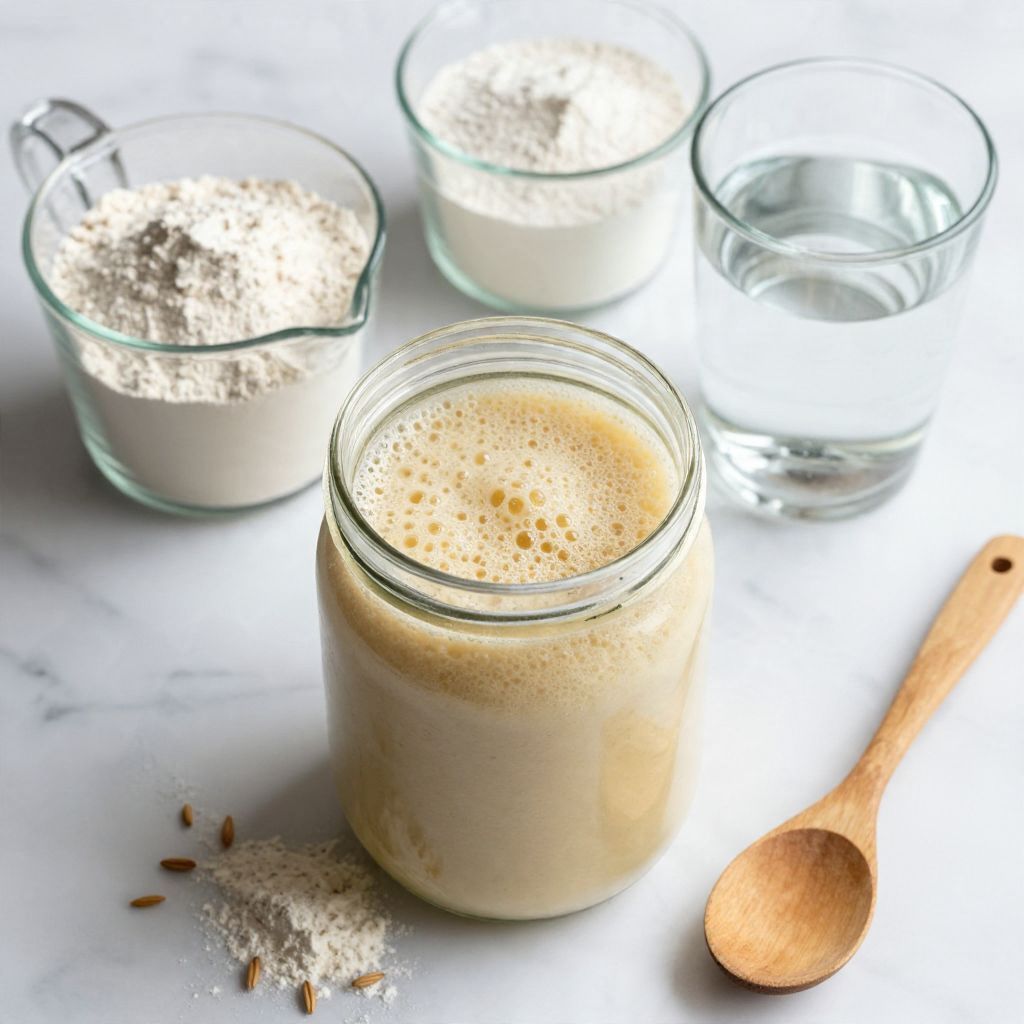
Sourdough Starter
Ingredients
Equipment
Method
- In a mixing bowl, combine 1 cup of whole wheat flour and 1 cup of water.
- Use a wooden spoon or spatula to mix until no dry flour remains.
- Pour the mixture into a clean glass jar and loosely cover it with a lid.
- Place the jar in a warm area (around 70-75°F) for 24 hours.
- After 24 hours, discard half of the starter and add 1 cup of all-purpose flour and 1 cup of water.
- Continue to feed your starter daily by discarding half and adding flour and water for about 5 to 7 days.
- After about 5 to 7 days, your starter should be bubbly and have doubled in size.
- Once active, you can use your starter for baking or store it in the refrigerator.