
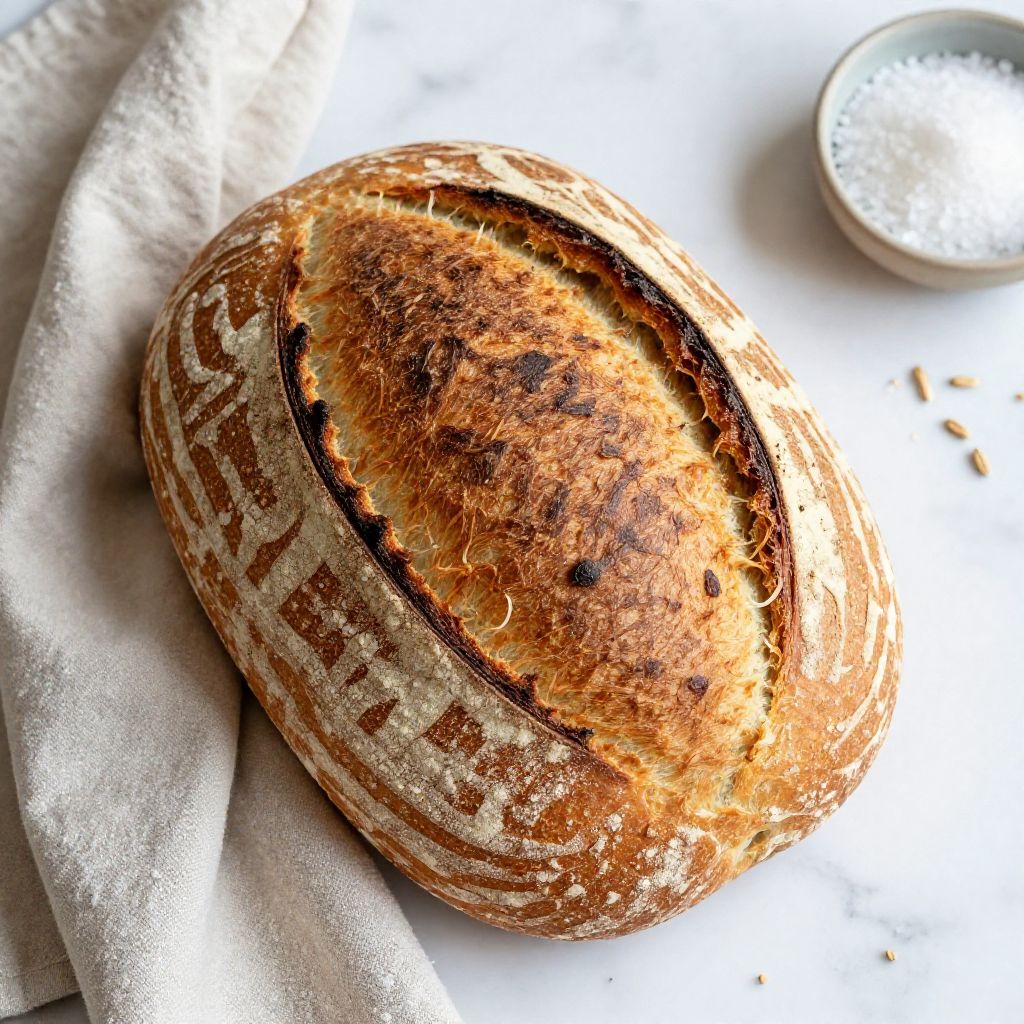
Imagine the warm, tangy aroma of freshly baked sourdough wafting through your kitchen, creating a cozy atmosphere that invites family and friends to gather around the table. This Sourdough Recipe is special because it allows you to create that delightful crusty exterior and soft, chewy interior at home, giving you a satisfying baking experience that’s both rewarding and delicious.
With its unique flavor profile and artisanal appeal, this bread is perfect for sandwiches, toasting, or just slathering with butter. Let’s get started on your journey to homemade sourdough perfection!
Why You’ll Love This Recipe
This sourdough recipe is a must-try for any baking enthusiast.
- It yields a beautiful, rustic loaf.
- The flavor deepens with each day, making it great for leftovers.
- You can customize it with herbs or seeds for added flavor.
- Making sourdough is a lovely way to connect with traditional baking.
- It’s surprisingly easy once you get the hang of it!
My Experience Making This Recipe
When I first attempted this sourdough recipe, I was both excited and a bit intimidated. The moment I pulled that golden loaf from the oven, the sense of accomplishment was palpable.
Every slice revealed the thick crust and airy crumb I had hoped for, and the taste was nothing short of heavenly. Friends and family were blown away by the depth of flavor and the beautiful crust.
Recipe Overview
- Recipe Name: Sourdough Bread
- Servings: 12
- Prep Time: 20 minutes (plus 12-24 hours for fermentation)
- Cook Time: 45 minutes
- Total Time: 12-24 hours (including fermentation)
- Course: Bread
- Cuisine: American
- Calories per Serving: 150
Equipment You Will Need
- Large mixing bowl
- Kitchen scale
- Wooden spoon or dough scraper
- Proofing basket or bowl
- Baking stone or Dutch oven
- Sharp knife or bread lame for scoring
- Kitchen towel
Ingredients for Sourdough Bread
- 500g bread flour – This provides the structure and chewiness.
- 350g water – Hydration is key for a good crumb.
- 100g sourdough starter – This is your leavening agent, giving the bread its unique flavor.
- 10g salt – Enhances flavor and strengthens the dough.
Ingredient Notes and Substitutions
- Bread flour: It has a higher protein content, ideal for bread. All-purpose flour can be used but may yield a denser loaf.
- Sourdough starter: This is essential for leavening. You can make your own or buy one from a bakery.
- Salt: It enhances flavor and controls fermentation. Avoid using table salt, as it can inhibit yeast activity.
How to Make Sourdough Bread
Step 1: Feed Your Starter
Before you begin, ensure your sourdough starter is active. Feed it 4-8 hours prior to mixing the dough for the best results.
Step 2: Mix the Dough
In a large mixing bowl, combine the bread flour and water. Use a wooden spoon or your hands to mix until no dry flour remains.
Step 3: Autolyse
Cover the bowl with a kitchen towel and let it rest for 30 minutes. This process hydrates the flour and begins gluten development.
Step 4: Add Starter and Salt
Add the sourdough starter and salt to the dough. Mix thoroughly until incorporated, which helps distribute the salt evenly.
Step 5: Bulk Fermentation
Cover the bowl and let the dough rise at room temperature for 4-6 hours. Every 30 minutes, perform a series of stretch and folds to strengthen the dough.
Step 6: Shape the Dough
After bulk fermentation, turn the dough onto a lightly floured surface. Shape it into a round loaf by tucking the edges into the center.
Step 7: Proof the Dough
Place the shaped dough into a proofing basket or bowl. Cover with a towel and let it rise for 1-2 hours, or until it’s puffy.
Step 8: Preheat the Oven
About 30 minutes before baking, preheat your oven to 450°F (232°C). If using a Dutch oven, place it inside to heat up as well.
Pro Tip: Make sure your oven is fully preheated to achieve that perfect crust.
Tips for the Best Sourdough Bread
- Use a kitchen scale for precise measurements.
- Keep your kitchen warm for better fermentation.
- Experiment with different flours for unique flavors.
- Be patient; sourdough requires time.
- Practice scoring the dough for a professional look.
Common Mistakes to Avoid
- Not feeding your starter long enough can lead to flat bread.
- Skipping the autolyse can affect gluten development.
- Overproofing can cause the dough to collapse.
- Underbaking will result in a gummy texture.
Serving Suggestions
Sourdough bread is versatile and pairs beautifully with many dishes.
- Enjoy it fresh with butter and jam.
- Use it for sandwiches with your favorite fillings.
- Serve with soups or stews for a hearty meal.
- Toast it for breakfast with avocado and poached eggs.
Variations to Try
- Add herbs like rosemary or thyme for an aromatic twist.
- Incorporate nuts or seeds for added texture and flavor.
- Mix in cheese for a savory surprise.
- Try a whole grain flour for a nuttier taste.
Dietary Adaptations
- Gluten-free: Use a gluten-free flour blend, but results may vary.
- Dairy-free: This recipe is naturally dairy-free.
- Vegan: Perfect for a vegan diet as it contains no animal products.
- Low-carb/keto: Traditional sourdough is not low-carb; consider alternative recipes.
Storage and Reheating
Refrigerator
Store leftover sourdough in a paper bag or wrapped in a cloth. This helps maintain its crust.
- Best consumed within 3-5 days.
Freezer
For longer storage, slice the bread and wrap it tightly in plastic wrap before freezing.
- Can last up to 3 months in the freezer.
Reheating
To reheat, place slices in a toaster or wrap the whole loaf in foil and heat in a 350°F (175°C) oven.
- Reheating restores the crust’s crunchiness.
Nutrition Information
| Nutrient | Amount |
|---|---|
| Calories | 150 |
| Total Fat | 0.5g |
| Saturated Fat | 0g |
| Carbohydrates | 31g |
| Fiber | 1g |
| Sugar | 0g |
| Protein | 5g |
| Sodium | 200mg |
| Cholesterol | 0mg |
This nutritional information is an estimate and may vary based on specific ingredients and portion sizes.
Frequently Asked Questions
Can I use all-purpose flour instead of bread flour?
Yes, but the texture may be denser as bread flour has a higher protein content.
How do I know my sourdough starter is ready to use?
Your starter should double in size within 4-6 hours after feeding and have a pleasant, slightly tangy smell.
Can I make this recipe ahead of time?
Yes, the dough can be refrigerated during the bulk fermentation stage for up to 24 hours.
Why is my sourdough dense?
This can happen if the dough was underproofed or if the starter was not active enough.
How can I add flavor to my sourdough?
You can mix in herbs, spices, or even cheese to enhance the flavor of the bread.
Final Thoughts
Making sourdough bread at home is a rewarding experience that fills your kitchen with warmth and delicious aromas. Once you master this recipe, the possibilities are endless, and you’ll find yourself experimenting with flavors and shapes.
Don’t forget to check out more baking inspiration like this King Arthur Sourdough Recipe or try your hand at a Sourdough Baguette Recipe to keep your baking journey exciting!
Sourdough Bread
Ingredients
Equipment
Method
- Feed your 100g sourdough starter 4-8 hours before use to ensure it is active.
- In a large mixing bowl, combine 500g bread flour and 350g water and mix until no dry flour remains.
- Cover the dough and let it rest for 30 minutes (autolyse) at room temperature.
- Add 100g active sourdough starter and 10g salt to the dough and mix until fully incorporated.
- Cover and let the dough rise at room temperature for 4-6 hours, performing stretch and folds every 30 minutes.
- Turn the dough onto a lightly floured surface and shape it into a round loaf.
- Place the loaf into a proofing basket, cover with a towel, and proof for 1-2 hours at room temperature until puffy.
- Preheat your oven to 450°F (232°C) with a Dutch oven or baking stone inside for 30 minutes.
- Transfer the loaf into the preheated Dutch oven or onto the baking stone, score the top, cover (if using a Dutch oven), and bake for 20 minutes.
- Remove the cover and bake for an additional 25 minutes until the crust is golden brown and the internal temperature reaches 200°F (93°C).
- Remove the bread and let it cool on a wire rack for at least 1 hour before slicing.