
Imagine the comforting aroma of spicy, chewy noodles wafting through your kitchen, instantly making your mouth water. This Rabokki recipe blends the delightful textures of ramen and tteokbokki, creating a dish that’s both satisfying and bursting with flavor.
Perfect for a quick dinner or a cozy snack, Rabokki is a delightful twist on your usual noodle dishes. With its rich sauce and chewy rice cakes, it offers a wonderful combination of sweetness and spice that will have you reaching for seconds.
Why You’ll Love This Recipe
This Rabokki recipe is a must-try for several reasons.
- Quick and easy to prepare, making it perfect for busy weeknights.
- Versatile with various toppings and spice levels to suit your taste.
- Comforting textures from the chewy noodles and rice cakes.
- Rich, bold flavors that will warm your soul.
My Experience Making This Recipe
When I first tried making Rabokki at home, I was skeptical about recreating that street food vibe. However, the moment the noodles hit the sauce and started bubbling, I knew I was in for a treat.
The first bite was a burst of flavors that reminded me of my favorite Korean street food stalls. I couldn’t believe I had made something that tasted so authentic right in my kitchen.
Recipe Overview
- Recipe Name: Rabokki
- Servings: 2
- Prep Time: 10 minutes
- Cook Time: 15 minutes
- Total Time: 25 minutes
- Course: Main Course
- Cuisine: Korean
- Calories per Serving: 550
Equipment You Will Need
- Large pot or saucepan
- Wooden spoon or spatula
- Measuring cups and spoons
- Knife and cutting board
Ingredients for Rabokki
- 2 cups of water
- 1 package (200g) of instant ramen noodles
- 100g of Korean rice cakes (tteok)
- 1 tablespoon of vegetable oil
- 2 tablespoons of gochujang (Korean chili paste)
- 1 tablespoon of gochugaru (Korean chili flakes)
- 1 tablespoon of soy sauce
- 1 tablespoon of sugar
- 2 green onions, chopped
- 1 egg (optional)
Ingredient Notes and Substitutions
- Korean rice cakes: They provide a unique chewy texture. You can substitute with regular rice noodles if needed.
- Gochujang: This gives the dish its signature heat and flavor. If unavailable, sriracha can work in a pinch.
- Soy sauce: Adds depth to the sauce. Tamari can be used for a gluten-free option.
- Egg: Optional for extra protein. You can omit it or replace it with tofu for a vegetarian option.
How to Make Rabokki
Step 1: Boil the Water
In a large pot, bring the water to a boil over high heat. This is essential for cooking both the noodles and rice cakes evenly.
Step 2: Cook the Noodles
Add the instant ramen noodles to the boiling water. Cook for about 2-3 minutes until they start to soften, but don’t cook them all the way through.
Step 3: Add the Rice Cakes
Stir in the Korean rice cakes, allowing them to cook with the noodles for about 5 minutes. They will absorb the flavors of the broth while getting tender.
Step 4: Prepare the Sauce
In a small bowl, mix the gochujang, gochugaru, soy sauce, and sugar. This blend creates that irresistible spicy and sweet flavor profile.
Step 5: Combine the Sauce with Noodles
Add the sauce mixture to the pot with the noodles and rice cakes. Stir well, ensuring everything is coated in that delicious sauce.
Step 6: Add the Oil
Drizzle the vegetable oil into the pot and stir. This adds richness and helps the sauce cling to the noodles and rice cakes.
Step 7: Cook Until Thickened
Let the mixture simmer for about 5 minutes over medium heat. This allows the flavors to meld and the sauce to thicken, making each bite even more flavorful.
Step 8: Add the Egg (Optional)
If using, crack an egg into the pot and gently stir it in. This adds creaminess and enhances the dish’s overall richness.
Pro Tip: For an extra kick, add more gochugaru according to your spice preference.
Tips for the Best Rabokki
- Always taste and adjust the seasoning at the end; everyone’s spice tolerance is different.
- For a richer flavor, consider adding a splash of sesame oil before serving.
- Make sure your rice cakes are fresh; stale ones can be tough.
- Use a non-stick pot to prevent sticking and burning.
- Garnish with sesame seeds for added crunch and flavor.
Common Mistakes to Avoid
- Overcooking the noodles; they should be slightly undercooked as they will continue to cook in the sauce.
- Not mixing the sauce well; a good mix ensures each bite is packed with flavor.
- Skipping the oil; it’s crucial for enhancing the dish’s richness.
- Using too little water; the right amount ensures the dish remains saucy.
Serving Suggestions
Rabokki is fantastic on its own, but you can elevate it by pairing it with some delicious sides.
- Korean fried chicken for a savory contrast.
- Kimchi for a tangy kick.
- Steamed vegetables for a fresh touch.
- A side of pickled radish to balance the spice.
Variations to Try
- Add vegetables like bell peppers or carrots for extra nutrition and color.
- Incorporate protein like chicken or tofu for a heartier meal.
- Switch out the gochujang for a milder sauce if you prefer less heat.
- For a cheesy version, sprinkle grated cheese on top before serving.
Dietary Adaptations
- Gluten-free: Use gluten-free noodles and tamari instead of soy sauce.
- Dairy-free: Skip any cheese toppings and use plant-based ingredients.
- Vegan/Vegetarian: Omit the egg and use tofu for protein.
- Low-carb/Keto: Substitute noodles with zucchini noodles or shirataki noodles.
Storage and Reheating
Refrigerator
Store any leftovers in an airtight container in the fridge for up to 3 days.
- Allow the dish to cool before sealing.
- Reheat in a microwave or on the stovetop with a splash of water.
Freezer
While not ideal, you can freeze Rabokki for up to a month.
- Use freezer-safe containers and separate portions for easy thawing.
- Thaw overnight in the fridge before reheating.
Reheating
Reheat gently to avoid overcooking the noodles.
- Stir in a bit of water or broth to help loosen the sauce.
- Microwave in short intervals to ensure even heating.
Nutrition Information
| Nutrient | Amount |
|---|---|
| Calories | 550 |
| Total Fat | 12g |
| Saturated Fat | 2g |
| Carbohydrates | 100g |
| Fiber | 3g |
| Sugar | 8g |
| Protein | 14g |
| Sodium | 900mg |
| Cholesterol | 70mg |
This nutritional information is approximate and can vary based on preparation and ingredient choices.
Frequently Asked Questions
Can I use different noodles for Rabokki?
Yes, you can use any type of noodles you prefer, but keep in mind that cooking times may vary.
Can I make Rabokki ahead of time?
Yes, you can prepare it in advance, but the noodles may absorb the sauce, making them softer.
How do I store leftovers?
Store leftovers in an airtight container in the fridge for up to 3 days.
Will the texture change when reheating?
Yes, reheating may soften the noodles, but a splash of water can help maintain a good consistency.
What can I add to make it spicier?
Adding more gochugaru or some fresh sliced chili peppers can boost the heat level.
Final Thoughts
If you haven’t tried making Rabokki at home yet, now is the perfect time. Its combination of flavor, texture, and warmth is sure to become a favorite in your household.
Don’t forget to explore more delicious recipes like Ssamjang and Buldak Ramen for even more Korean-inspired meals!
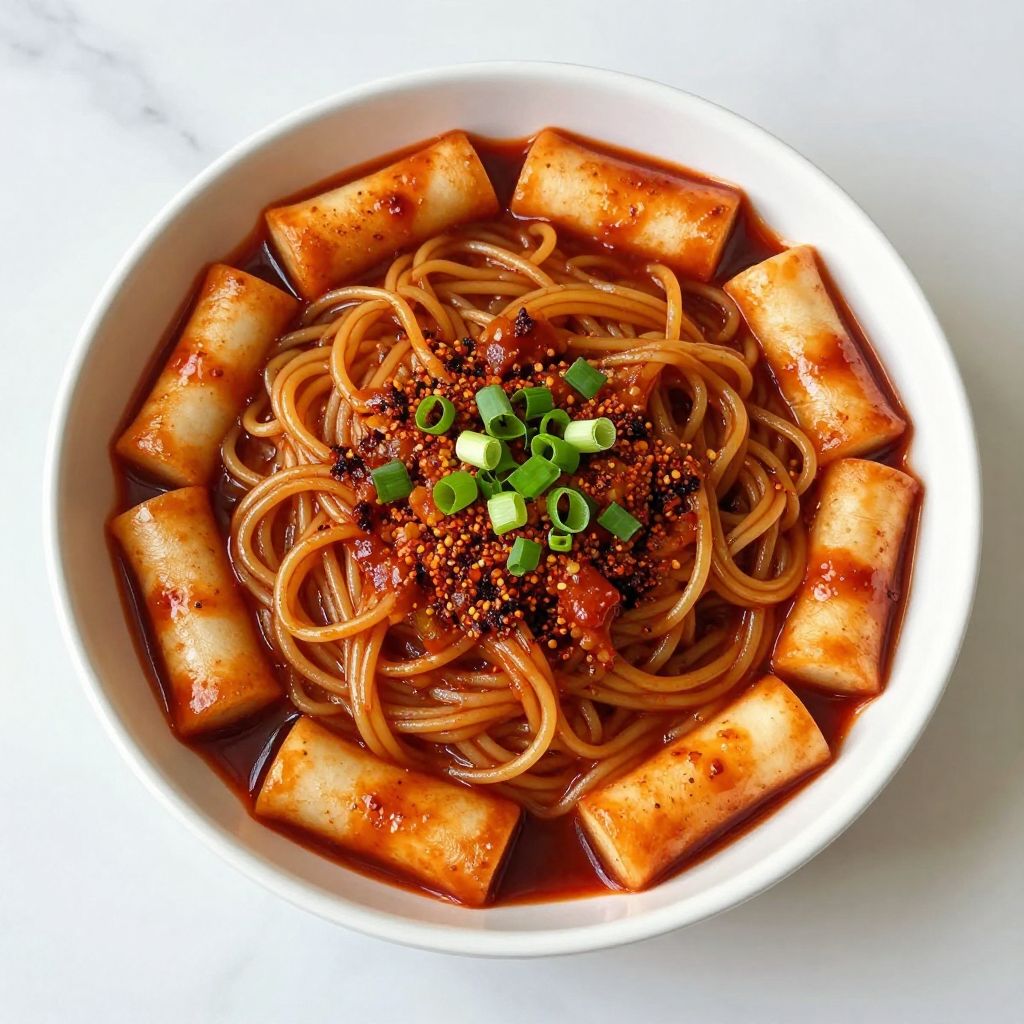
Rabokki
Ingredients
Equipment
Method
- In a large pot, bring 2 cups of water to a boil over high heat.
- Add the instant ramen noodles to the boiling water and cook for about 2-3 minutes until they start to soften.
- Stir in 100g of Korean rice cakes and cook with the noodles for about 5 minutes.
- In a small bowl, mix 2 tablespoons of gochujang, 1 tablespoon of gochugaru, 1 tablespoon of soy sauce, and 1 tablespoon of sugar.
- Add the sauce mixture to the pot with the noodles and rice cakes, stirring well.
- Drizzle 1 tablespoon of vegetable oil into the pot and stir to combine.
- Let the mixture simmer for about 5 minutes over medium heat until the sauce thickens.
- If using, crack 1 egg into the pot and gently stir it in.