
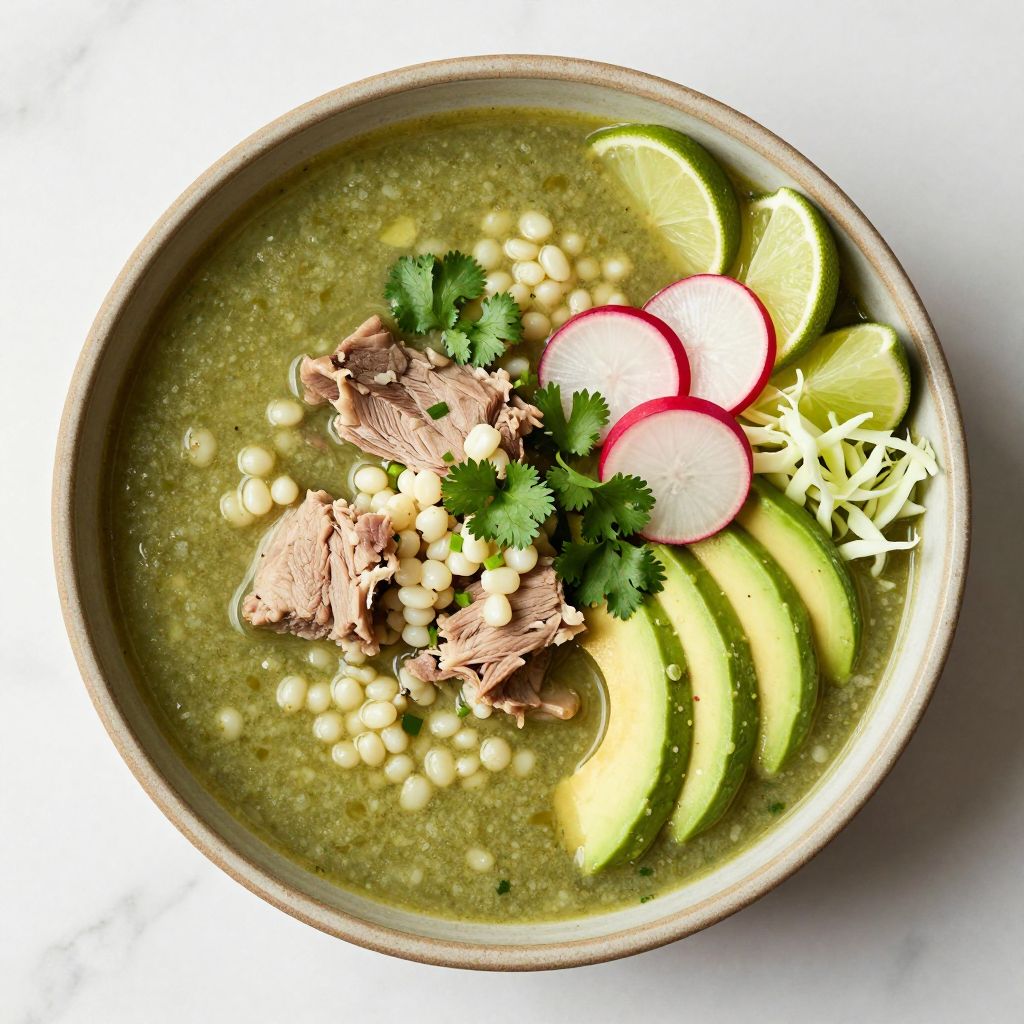
Pozole verde recipe brings together tender pork, hominy, and a vibrant tomatillo-based broth to create one of Mexico’s most beloved comfort foods. This green version stands out with its tangy, herby flavor profile that makes it perfect for family gatherings or cozy weeknight dinners. Whether you’re craving authentic Mexican cuisine or looking to expand your soup repertoire, this recipe delivers bold flavors with surprisingly simple techniques.
The beauty of pozole verde lies in its layers of flavor and customizable toppings. Let me show you exactly how to make this traditional dish in your own kitchen.
Why You’ll Love This Recipe
This pozole verde combines traditional flavors with straightforward cooking methods that any home cook can master. The result is a restaurant-quality dish that impresses without requiring professional skills.
- Rich, complex flavor from roasted tomatillos and fresh herbs that tastes like you spent all day in the kitchen
- Incredibly satisfying with tender pork and chewy hominy in every spoonful
- Feeds a crowd easily and actually tastes better the next day
- Customizable with toppings so everyone can build their perfect bowl
- Makes your house smell absolutely amazing while it simmers
My Experience Making This Recipe
The first time I made pozole verde, I was shocked by how much depth came from just roasting those tomatillos and poblanos. The kitchen filled with this incredible smoky-tangy aroma that had my neighbors texting to ask what I was cooking.
I served it at a casual dinner party with a full topping bar spread across the counter. Watching everyone customize their bowls with radishes, lime, and cabbage felt like hosting my own little taqueria.
The leftovers were even better after sitting overnight, with the flavors melding together beautifully. I’ve been making double batches ever since because this soup has become my go-to for meal prep and entertaining.
Recipe Overview
- Recipe Name: Pozole Verde
- Servings: 8
- Prep Time: 25 minutes
- Cook Time: 2 hours 15 minutes
- Total Time: 2 hours 40 minutes
- Course: Main Course, Soup
- Cuisine: Mexican
- Calories per Serving: 385
Equipment You Will Need
- Large Dutch oven or heavy-bottomed pot (at least 6 quarts)
- Blender or food processor
- Baking sheet
- Tongs
- Large slotted spoon
- Sharp knife and cutting board
- Measuring cups and spoons
- Ladle
Ingredients for Pozole Verde Recipe
For the Soup
- 2 pounds pork shoulder, cut into 2-inch chunks
- 1 pound tomatillos, husks removed and rinsed
- 2 poblano peppers
- 1 jalapeño pepper
- 1/2 white onion, roughly chopped
- 4 cloves garlic, peeled
- 2 cans (29 ounces each) white hominy, drained and rinsed
- 8 cups chicken broth
- 1 cup fresh cilantro, packed
- 1/4 cup fresh oregano leaves (or 2 tablespoons dried Mexican oregano)
- 2 teaspoons ground cumin
- 2 tablespoons vegetable oil
- Salt and black pepper to taste
For Serving
- Shredded cabbage
- Sliced radishes
- Lime wedges
- Diced avocado
- Tostadas or tortilla chips
- Chopped white onion
- Dried oregano
- Hot sauce
Ingredient Notes and Substitutions
- Pork shoulder: This cut provides the perfect fat content for tender, flavorful meat that doesn’t dry out during long simmering. Substitute with pork butt or boneless chicken thighs for a lighter option.
- Tomatillos: These provide the signature tangy green base that defines pozole verde. If unavailable, use 2 cups jarred salsa verde mixed with 1 cup roasted green bell peppers, though the flavor won’t be quite as bright.
- Poblano peppers: They add mild heat and earthy depth without overwhelming spiciness. Swap with green bell peppers for zero heat or add extra jalapeños for more kick.
- Hominy: This treated corn is non-negotiable for authentic pozole texture and flavor. Dried hominy works too but requires soaking overnight and cooking for several hours.
- Fresh herbs: Cilantro and oregano bring essential brightness and aromatic complexity. Use 1 tablespoon dried oregano and 2 tablespoons dried cilantro if fresh isn’t available, but add them earlier in cooking.
How to Make Pozole Verde Recipe
Step 1: Roast the Vegetables
Preheat your broiler to high and place the tomatillos, poblanos, jalapeño, onion, and garlic on a baking sheet. Broil for 8 to 10 minutes, turning halfway through, until the vegetables are charred and blistered.
This roasting step caramelizes the natural sugars and adds a smoky depth that you simply cannot achieve by skipping this process. The charred bits are flavor gold, so don’t worry if some spots look quite dark.
Step 2: Prepare the Peppers
Remove the roasted vegetables from the oven and immediately place the poblanos and jalapeño in a bowl, covering it tightly with plastic wrap or a lid. Let them steam for 10 minutes, then peel off the charred skin, remove the stems and seeds.
The steaming makes the skins slip right off without losing any of that precious roasted flesh underneath. This technique saves you from scrubbing under running water, which would wash away flavor.
Step 3: Blend the Green Sauce
Add the peeled peppers, roasted tomatillos, onion, and garlic to your blender along with the cilantro, oregano, cumin, and 1 cup of chicken broth. Blend on high until completely smooth, about 1 minute.
The sauce should look vibrant green and have a slightly speckled appearance from the herbs. This concentrated flavor base is what transforms simple broth into proper pozole.
Step 4: Brown the Pork
Heat the vegetable oil in your Dutch oven over medium-high heat. Season the pork chunks generously with salt and pepper, then brown them in batches for about 3 minutes per side.
Don’t overcrowd the pot or the meat will steam instead of developing that beautiful golden crust. That crust adds another layer of savory depth to your finished soup.
Step 5: Build the Broth
Return all the browned pork to the pot and pour in the blended green sauce. Cook for 3 to 4 minutes, stirring frequently, until the sauce darkens slightly and becomes fragrant.
This brief cooking blooms the spices and melds the flavors before adding liquid. You’ll notice the sauce thickening and clinging to the meat, which creates a richer final broth.
Step 6: Simmer the Pozole
Add the remaining 7 cups of chicken broth and bring the mixture to a boil. Reduce heat to low, cover partially, and simmer for 1 hour and 30 minutes until the pork is fork-tender.
Low and slow is the only way to break down the collagen in pork shoulder without drying it out. Resist the urge to crank up the heat because gentle simmering creates silky, shreddable meat.
Step 7: Add the Hominy
Stir in the drained hominy and continue simmering uncovered for another 30 minutes. Taste and adjust the seasoning with salt and pepper as needed.
The hominy needs time to soak up the flavorful broth and soften slightly while still maintaining that signature chewy texture. This final simmer also allows the broth to reduce and concentrate.
Step 8: Shred and Serve
Remove the pork chunks with a slotted spoon and shred them with two forks, discarding any large pieces of fat. Return the shredded meat to the pot and stir to combine.
Ladle the pozole into deep bowls and set out all your toppings so everyone can customize their bowl. The contrast of cool, crunchy toppings against hot, rich soup is what makes pozole truly special.
Pro Tip: Make the pozole a day ahead and refrigerate it overnight. The flavors deepen considerably, and any excess fat solidifies on top for easy removal, giving you a cleaner, more refined broth.
Tips for the Best Pozole Verde Recipe
- Don’t skip charring the vegetables under the broiler because that smoky flavor is what separates good pozole from great pozole.
- Taste your broth before adding the hominy and adjust seasoning then, since the hominy will absorb some salt as it simmers.
- Keep a handful of fresh cilantro separate from the blending step and stir it in at the end for a bright, fresh finish that cuts through the richness.
- If your pozole tastes flat, add a squeeze of lime juice directly to the pot, not just as a topping, to brighten all the flavors.
- Use bone-in pork shoulder for even richer broth, then remove the bones before shredding the meat.
- Set up your topping bar with small bowls and spoons so guests can easily customize without creating a mess around the pot.
Common Mistakes to Avoid
- Boiling the soup at high heat instead of simmering gently makes the pork tough and stringy instead of meltingly tender.
- Adding the cilantro and oregano too early in the cooking process causes them to lose their vibrant color and fresh flavor.
- Not rinsing the canned hominy leaves a metallic taste and cloudy residue that muddles the broth.
- Cutting the pork too small results in dry, overcooked meat because small pieces can’t withstand the long cooking time.
- Serving pozole without enough toppings misses the whole point of customization and textural contrast that makes this dish special.
Serving Suggestions
Pozole verde shines as the centerpiece of a casual gathering where everyone builds their own perfect bowl. Set out all the toppings in small bowls and let the interactive experience become part of the meal.
- Serve alongside warm corn tortillas or crispy tostadas for scooping and dipping
- Pair with Mexican rice and refried beans for a complete traditional feast
- Offer ice-cold Mexican beer or agua fresca to balance the rich, warming broth
- Add a simple cabbage slaw dressed with lime juice as a refreshing side
- Finish the meal with churros or tres leches cake for an authentic experience
Variations to Try
- Pozole Rojo: Replace the tomatillos and poblanos with dried guajillo and ancho chiles for a deep red, slightly sweeter version with earthy spice notes.
- Chicken Pozole Verde: Use bone-in chicken thighs instead of pork and reduce the cooking time to 45 minutes for a lighter, quicker weeknight option.
- Vegetarian Pozole Verde: Skip the meat entirely, use vegetable broth, and add chunks of zucchini, mushrooms, and extra beans for a surprisingly hearty plant-based version.
- Spicy Pozole Verde: Add 2 to 3 serrano peppers to the blending step for serious heat that builds with each spoonful.
- Seafood Pozole Verde: Substitute shrimp and white fish for pork, adding them during the last 10 minutes of cooking for a coastal twist with bright, clean flavors.
Dietary Adaptations
- Gluten-Free: This recipe is naturally gluten-free as long as you verify your chicken broth and any packaged toppings don’t contain gluten additives.
- Dairy-Free: Pozole verde contains no dairy in the traditional recipe, so skip the cheese garnish or use dairy-free alternatives if needed.
- Vegan: Replace pork with jackfruit or cauliflower florets, use vegetable broth, and add extra cumin and smoked paprika to compensate for missing meat depth, though the texture won’t be identical.
- Low-Carb/Keto: Substitute the hominy with cauliflower florets or radishes for a lower-carb version, but accept that you’re fundamentally changing what makes pozole pozole.
Storage and Reheating
Refrigerator
Store leftover pozole in an airtight container in the refrigerator for up to 5 days. The flavors actually improve after a day or two as everything melds together.
- Let the soup cool completely before refrigerating to prevent bacterial growth
- Store toppings separately in their own containers so they stay fresh and crunchy
- Skim off any solidified fat from the surface before reheating for a lighter broth
Freezer
Pozole freezes beautifully for up to 3 months in freezer-safe containers or heavy-duty freezer bags. Leave about an inch of headspace to allow for expansion.
- Freeze in individual portions for easy single-serving meals
- Label containers with the date and contents
- Thaw overnight in the refrigerator for best results
Reheating
Reheat pozole gently on the stovetop over medium-low heat, stirring occasionally until heated through. Avoid microwaving large portions because it heats unevenly.
- Add a splash of chicken broth or water if the soup has thickened too much
- Bring to a gentle simmer rather than a rolling boil to preserve the tender texture of the meat
- Refresh with a squeeze of lime juice and fresh cilantro after reheating
Nutrition Information
| Nutrient | Amount |
|---|---|
| Calories | 385 |
| Total Fat | 18g |
| Saturated Fat | 5g |
| Carbohydrates | 28g |
| Fiber | 6g |
| Sugar | 4g |
| Protein | 28g |
| Sodium | 890mg |
| Cholesterol | 75mg |
Nutritional values are approximate and based on the soup alone without toppings, which will add additional calories and nutrients depending on your selections.
Frequently Asked Questions
Can I use canned green chiles instead of fresh poblanos?
You can, but you’ll lose the smoky, roasted flavor that makes this pozole special. If using canned, add a pinch of smoked paprika to compensate for the missing depth.
Can I make pozole verde in a slow cooker?
Absolutely! Brown the pork first, then add all ingredients except hominy to the slow cooker and cook on low for 6 to 8 hours, adding the hominy during the last hour. The texture will be slightly different but still delicious.
How do I know when the pork is done?
The pork is ready when it shreds easily with a fork and has no pink remaining in the center. If it’s still tough after the suggested cooking time, just keep simmering until it reaches that fall-apart texture.
Why is my pozole verde bitter?
Bitterness usually comes from over-charring the tomatillos or leaving the seeds in the poblanos. Make sure to remove all seeds and don’t let the vegetables burn completely black under the broiler.
Can I prepare any components ahead of time?
The green sauce can be made up to 3 days ahead and stored in the refrigerator, which actually saves significant time on cooking day. You can also brown the pork the day before and refrigerate it until you’re ready to simmer.
What’s the difference between pozole verde and pozole rojo?
The color and base ingredients differ: verde uses tomatillos and green chiles for a tangy, bright flavor, while rojo uses dried red chiles for an earthier, slightly sweeter profile. Both feature hominy and meat in a rich
Pozole Verde
Ingredients
Equipment
Method
- Preheat your broiler to high and place the tomatillos, poblanos, jalapeño, onion, and garlic on a baking sheet. Broil for 8 to 10 minutes, turning halfway through, until the vegetables are charred and blistered.
- Remove the roasted vegetables from the oven and immediately place the poblanos and jalapeño in a bowl, covering it tightly with plastic wrap or a lid. Let them steam for 10 minutes, then peel off the charred skin, remove the stems and seeds.
- Add the peeled peppers, roasted tomatillos, onion, and garlic to your blender along with the cilantro, oregano, cumin, and 1 cup of chicken broth. Blend on high until completely smooth, about 1 minute.
- Heat the vegetable oil in your Dutch oven over medium-high heat. Season the pork chunks generously with salt and pepper, then brown them in batches for about 3 minutes per side.
- Return all the browned pork to the pot and pour in the blended green sauce. Cook for 3 to 4 minutes, stirring frequently, until the sauce darkens slightly and becomes fragrant.
- Add the remaining 7 cups of chicken broth and bring the mixture to a boil. Reduce heat to low, cover partially, and simmer for 1 hour and 30 minutes until the pork is fork-tender.
- Stir in the drained hominy and continue simmering uncovered for another 30 minutes. Taste and adjust the seasoning with salt and pepper as needed.
- Remove the pork chunks with a slotted spoon and shred them with two forks, discarding any large pieces of fat. Return the shredded meat to the pot and stir to combine.
- Ladle the pozole into deep bowls and set out all your toppings so everyone can customize their bowl with shredded cabbage, sliced radishes, lime wedges, diced avocado, tostadas, chopped onion, oregano, and hot sauce.