
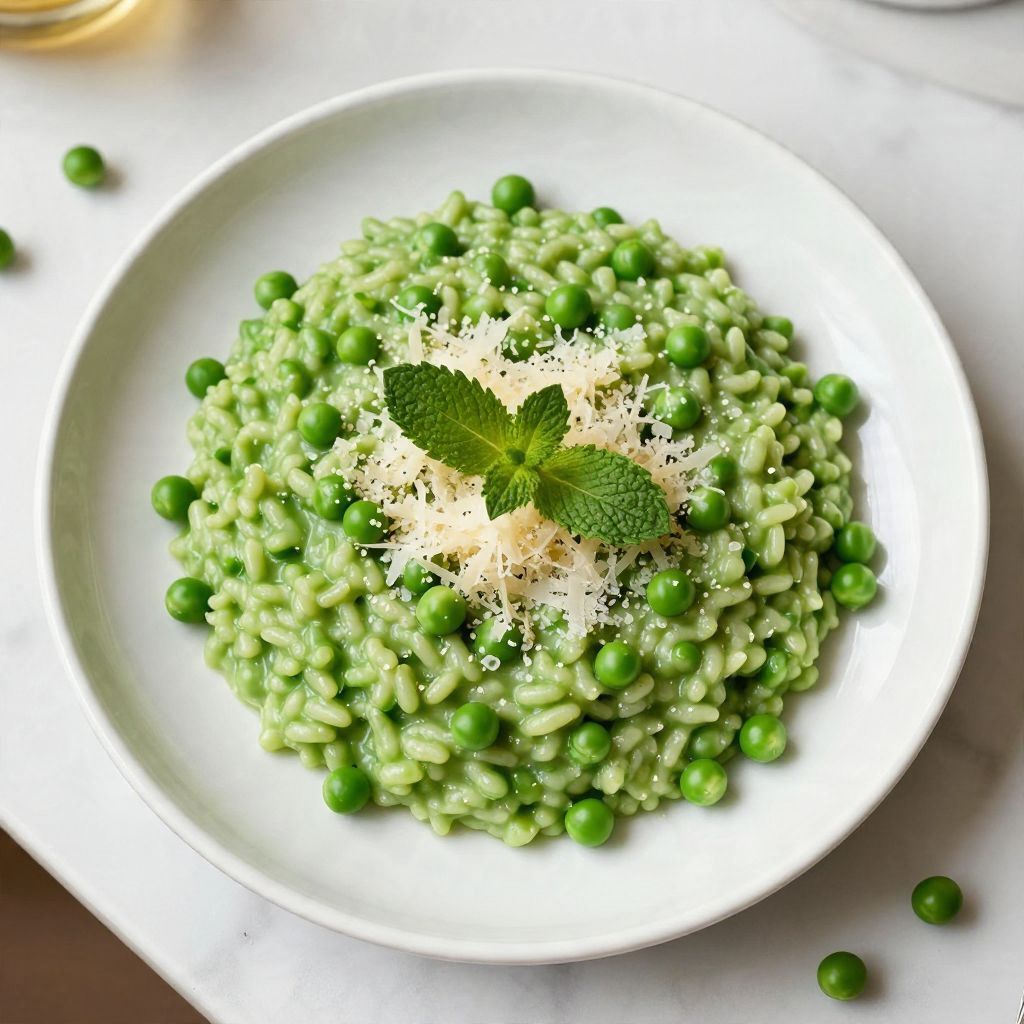
There’s something magical about the creamy texture of a well-made Pea Risotto. This dish brings together the sweetness of fresh peas and the comforting richness of arborio rice, making it a delightful choice for any occasion.
This recipe is special because it’s simple yet elegant, perfect for impressing guests or enjoying a cozy night in. The risotto’s velvety texture and vibrant color make it a standout on any table, and the combination of flavors is just irresistible.
Why You’ll Love This Recipe
Making Pea Risotto at home is a rewarding experience. Here are a few reasons to give it a try:
- Quick to prepare, taking about 30 minutes.
- Versatile enough for any meal, from casual to formal.
- Rich in flavor thanks to the fresh ingredients.
- Perfect for using up leftover peas or asparagus.
- Comforting and satisfying, a real crowd pleaser.
My Experience Making This Recipe
When I first attempted this Pea Risotto, I was amazed by how quickly it came together. The smell of onions sautéing in butter filled my kitchen, instantly making it feel like a gourmet restaurant.
As I stirred the risotto, the rice transformed into a creamy delight, and the bright green peas added a pop of color. My family couldn’t resist digging in, and their smiles were all the encouragement I needed to keep making this dish.
Recipe Overview
- Recipe Name: Pea Risotto
- Servings: 4
- Prep Time: 10 minutes
- Cook Time: 20 minutes
- Total Time: 30 minutes
- Course: Main dish
- Cuisine: Italian
- Calories per Serving: 320
Equipment You Will Need
- Large saucepan
- Wooden spoon
- Measuring cups and spoons
- Cutting board
- Chef’s knife
Ingredients for Pea Risotto
- 1 cup arborio rice
- 4 cups vegetable broth
- 1 tablespoon olive oil
- 1 small onion, finely chopped
- 2 cloves garlic, minced
- 1 cup fresh or frozen peas
- 1/2 cup grated Parmesan cheese
- Salt and pepper to taste
- Fresh mint for garnish (optional)
Ingredient Notes and Substitutions
- Arborio rice: This is the key to creamy risotto. You can substitute it with Carnaroli rice or Vialone Nano if needed.
- Vegetable broth: Adds flavor to the dish. Chicken broth can be used for a non-vegetarian version.
- Parmesan cheese: It adds richness. Nutritional yeast can be a dairy-free option.
- Peas: They bring sweetness and color. Asparagus or spinach can be used for a different taste.
How to Make Pea Risotto
Step 1: Prepare the Broth
Heat the vegetable broth in a separate saucepan over low heat. Keeping it warm helps the rice cook evenly.
Step 2: Sauté the Aromatics
In a large saucepan, heat the olive oil over medium heat. Add the chopped onion and sauté until translucent, about 5 minutes.
Step 3: Add Garlic
Stir in the minced garlic and cook for another minute until fragrant. This step builds the flavor base for the risotto.
Step 4: Toast the Rice
Add the arborio rice to the saucepan and stir well to coat it with oil. Toasting the rice for 1-2 minutes enhances its nutty flavor.
Step 5: Begin Adding Broth
Pour in a ladleful of warm broth and stir continuously until it’s mostly absorbed. This gradual addition helps release the rice’s starch and create creaminess.
Step 6: Stir and Repeat
Continue adding broth, one ladle at a time, stirring frequently. This process takes about 15-20 minutes until the rice is al dente.
Step 7: Mix in Peas and Cheese
Once the rice is cooked, stir in the peas and grated Parmesan cheese. This step adds color and richness to the dish.
Step 8: Season and Serve
Taste and season with salt and pepper as needed. Serve warm, garnished with fresh mint if desired.
Pro Tip: Stirring frequently is key for achieving that creamy texture in risotto.
Tips for the Best Pea Risotto
- Use fresh peas for the best flavor; frozen peas work too but fresh is better.
- Stir continuously to release starch from the rice, which gives risotto its signature creaminess.
- Don’t rush the broth addition; patience is essential for perfect texture.
- Finish with a pat of butter for extra richness if you like.
- Use high-quality Parmesan for the best flavor; it really makes a difference.
Common Mistakes to Avoid
- Skipping the toasting step: This can lead to a lackluster flavor.
- Adding all the broth at once: It prevents proper creaminess.
- Not stirring enough: This is crucial for the right texture.
- Overcooking the rice: Aim for al dente for the best bite.
Serving Suggestions
This Pea Risotto pairs beautifully with various sides and mains. Here are some ideas:
- Grilled chicken or fish for a protein boost.
- Mixed green salad with a light vinaigrette.
- Garlic bread for a comforting touch.
- Lightly sautéed asparagus or spinach for added greens.
Variations to Try
- Add lemon zest for a bright, fresh flavor.
- Incorporate sautéed mushrooms for an earthy twist.
- Try adding a splash of white wine with the broth for depth.
- Mix in roasted vegetables for added texture and flavor.
Dietary Adaptations
- Gluten-free: This recipe is naturally gluten-free, just ensure your broth is certified gluten-free.
- Dairy-free: Substitute Parmesan with nutritional yeast or a dairy-free cheese.
- Vegan: Follow the dairy-free suggestions and omit any animal products.
- Low-carb/keto: You can use cauliflower rice instead of arborio rice for a low-carb option.
Storage and Reheating
Refrigerator
Store leftover risotto in an airtight container in the fridge for up to 3 days.
- Let it cool completely before sealing.
- Reheat gently on the stove with a splash of broth.
Freezer
Risotto can be frozen, but it’s best enjoyed fresh. If freezing, store it in portions.
- Label with the date and use within 2 months.
- Defrost in the refrigerator overnight before reheating.
Reheating
Reheat on the stovetop over low heat, adding water or broth to loosen the texture.
- Stir frequently to prevent sticking.
- Heat until warmed through, about 5 minutes.
Nutrition Information
| Nutrient | Amount |
|---|---|
| Calories | 320 |
| Total Fat | 10g |
| Saturated Fat | 3g |
| Carbohydrates | 45g |
| Fiber | 5g |
| Sugar | 2g |
| Protein | 12g |
| Sodium | 600mg |
| Cholesterol | 10mg |
This nutrition information is an estimate and may vary based on specific ingredients used.
Frequently Asked Questions
Can I use frozen peas in the risotto?
Yes, frozen peas are a great option and will cook quickly in the risotto.
Can I make this risotto ahead of time?
Risotto is best enjoyed fresh, but you can prepare the base ahead and add the peas just before serving.
How should I store leftover risotto?
Store in an airtight container in the refrigerator for up to 3 days, or freeze for longer storage.
Why did my risotto turn out too sticky?
This can happen if too much broth was added at once or if it was overcooked. Stirring helps achieve creaminess.
Can I add other vegetables to the risotto?
Absolutely! Mushrooms, asparagus, or spinach can be great additions for extra flavor and nutrition.
Final Thoughts
Making Pea Risotto is a delightful experience that brings comfort and joy to any meal. With its creamy texture and vibrant flavors, it’s a dish you’ll want to come back to time and time again.
Explore more delicious recipes like lemon risotto or check out a classic pasta and peas recipe to keep your culinary adventures going!
Pea Risotto
Ingredients
Equipment
Method
- Heat the vegetable broth in a separate saucepan over low heat.
- In a large saucepan, heat the olive oil over medium heat.
- Add the chopped onion and sauté until translucent, about 5 minutes.
- Stir in the minced garlic and cook for another minute until fragrant.
- Add the arborio rice to the saucepan and stir well to coat it with oil.
- Toast the rice for 1-2 minutes.
- Pour in a ladleful of warm broth and stir continuously until mostly absorbed.
- Continue adding broth, one ladle at a time, stirring frequently for about 15-20 minutes until the rice is al dente.
- Once cooked, stir in the peas and grated Parmesan cheese.
- Taste and season with salt and pepper as needed.
- Serve warm, garnished with fresh mint if desired.