
Picture a perfect spread of creamy, rich, and velvety Mayonnaise Recipe Without Vinegar on your favorite sandwich. This mayonnaise is not just a simple condiment; it’s a versatile kitchen staple that enhances flavors and adds texture to countless dishes. The best part? It’s made without vinegar, making it a great option for those sensitive to its tangy bite. With just a few common ingredients, you can whip up a batch that is both delicious and easy to customize.
Why You’ll Love This Recipe
This mayonnaise is a must-try for any home cook looking for an easy and satisfying recipe.
- No vinegar means a smoother, creamier taste.
- It takes only minutes to prepare.
- Customizable with herbs and spices for added flavor.
- Perfect for sandwiches, salads, and dips.
- Made with simple ingredients you probably already have!
My Experience Making This Recipe
The first time I made this mayonnaise, I was amazed at how simple and quick it was. The creamy texture and rich flavor blew me away, and I found myself using it on everything from sandwiches to fresh veggies.
Since then, it’s become a staple in my kitchen. Friends and family rave about it, and I love how versatile it is!
Recipe Overview
- Recipe Name: Mayonnaise Recipe Without Vinegar
- Servings: 1 cup
- Prep Time: 10 minutes
- Cook Time: 0 minutes
- Total Time: 10 minutes
- Course: Condiment
- Cuisine: American
- Calories per Serving: 94
Equipment You Will Need
- Mixing bowl
- Hand whisk or electric mixer
- Measuring cups
- Measuring spoons
- Storage container
Ingredients for Mayonnaise Recipe Without Vinegar
- 1 large egg
- 1 cup of oil (canola or light olive oil)
- 1 tablespoon lemon juice
- 1 teaspoon mustard (Dijon or yellow)
- 1/4 teaspoon salt
Ingredient Notes and Substitutions
- Egg: Used for emulsifying the mayonnaise, giving it a creamy texture. You can substitute with a vegan egg replacer if needed.
- Oil: Provides the base for the mayonnaise. Avocado oil can be used for a different flavor profile.
- Lemon juice: Adds acidity and brightness. Lime juice is a great alternative for a zesty twist.
- Mustard: Enhances flavor and stability. You can skip it or use a flavored mustard for a unique taste.
- Salt: Balances the flavors. Use sea salt for a more pronounced taste.
How to Make Mayonnaise Recipe Without Vinegar
Step 1: Gather Your Ingredients
Start by measuring out all your ingredients. Having everything ready makes the process smooth and prevents any last-minute scrambling.
Step 2: Combine Egg and Mustard
In a mixing bowl, add the large egg and mustard. This combination helps create the emulsion that gives mayonnaise its texture.
Step 3: Whisk Together
Using a hand whisk or electric mixer, beat the egg and mustard until well combined. This step is crucial for integrating the flavors right from the start.
Step 4: Slowly Add Oil
Begin to drizzle the oil into the egg mixture very slowly while whisking continuously. This gradual addition helps to emulsify the mixture, creating a thick and creamy texture.
Step 5: Incorporate Lemon Juice and Salt
Once the mixture thickens, add the lemon juice and salt. This will enhance the flavor and provide that characteristic tang.
Step 6: Adjust Consistency
If the mayonnaise is too thick, add a teaspoon of water to loosen it up. You want it to be spreadable yet still hold its shape.
Step 7: Taste and Adjust Seasoning
Give your mayonnaise a taste and adjust the seasoning as needed. If you like it tangier, add more lemon juice.
Step 8: Store Properly
Transfer the mayonnaise to a storage container and refrigerate. Homemade mayonnaise can last about a week in the fridge.
Pro Tip: Always use fresh eggs for the best flavor and safety!
Tips for the Best Mayonnaise Recipe Without Vinegar
- Use room temperature eggs for better emulsification.
- Whisk continuously while adding the oil for a smooth consistency.
- Experiment with different oils for unique flavors.
- For a flavored mayonnaise, add herbs or spices during the mixing process.
- Store in a clean, airtight container to maintain freshness.
Common Mistakes to Avoid
- Adding oil too quickly can cause the mayonnaise to break. Always drizzle slowly!
- Using cold eggs can lead to poor emulsification. Make sure they are at room temperature.
- Not whisking enough can lead to a runny texture. Keep whisking until thick!
- Overmixing can result in a grainy texture. Once it’s thick, stop mixing.
Serving Suggestions
This mayonnaise is incredibly versatile and can elevate many dishes. Try it with:
- Classic sandwiches and wraps.
- Fresh vegetable sticks for dipping.
- Potato or pasta salads.
- Burgers or sliders.
- As a base for flavored dips.
Variations to Try
- Add garlic for a delicious garlic mayonnaise.
- Mix in fresh herbs like dill or basil for a garden-fresh taste.
- Stir in sriracha for a spicy twist.
- Use avocado oil for a richer flavor profile.
- Incorporate smoked paprika for a smoky flavor.
Dietary Adaptations
- Gluten-free: This recipe is naturally gluten-free!
- Dairy-free: Contains no dairy products, making it suitable for lactose intolerance.
- Vegan/Vegetarian: Substitute the egg with a vegan egg replacer for a plant-based option.
- Low-carb/Keto: This mayonnaise is low in carbs, perfect for keto diets.
Storage and Reheating
Refrigerator
Store your mayonnaise in an airtight container in the fridge. It will last about a week.
- Keep it in the main compartment, not the door.
- Label the container with the date made.
Freezer
Mayonnaise does not freeze well due to its emulsified nature. It’s best made fresh.
- Avoid freezing to maintain texture and flavor.
Reheating
There is no need to reheat mayonnaise. Use it straight from the fridge.
- Allow it to come to room temperature if desired for spreading.
Nutrition Information
| Nutrient | Amount |
|---|---|
| Calories | 94 |
| Total Fat | 10g |
| Saturated Fat | 1g |
| Carbohydrates | 0g |
| Fiber | 0g |
| Sugar | 0g |
| Protein | 1g |
| Sodium | 124mg |
| Cholesterol | 31mg |
This nutrition information is an estimate and can vary based on the specific ingredients used.
Frequently Asked Questions
Can I use a different acid instead of lemon juice?
Yes, lime juice or even apple cider vinegar can be used for a different flavor profile.
How long can I store homemade mayonnaise?
Homemade mayonnaise can last about a week in the refrigerator when stored properly.
Can I make this mayonnaise ahead of time?
Absolutely! You can make it a few days in advance for convenience.
What if my mayonnaise doesn’t thicken?
If it doesn’t thicken, try whisking in a little more oil slowly to help with emulsification.
Can I use olive oil for this recipe?
Yes, but use a light olive oil for a milder flavor; extra virgin olive oil can be too strong.
Final Thoughts
Making your own mayonnaise without vinegar is not just easy; it can be downright fun! The first time you taste your homemade creation, you’ll wonder why you ever bought store-bought.
Give this recipe a try and enjoy a fresh, creamy addition to your meals. And while you’re at it, check out my garlic mayo recipe or try out my mayo chicken recipe for more delicious ideas!
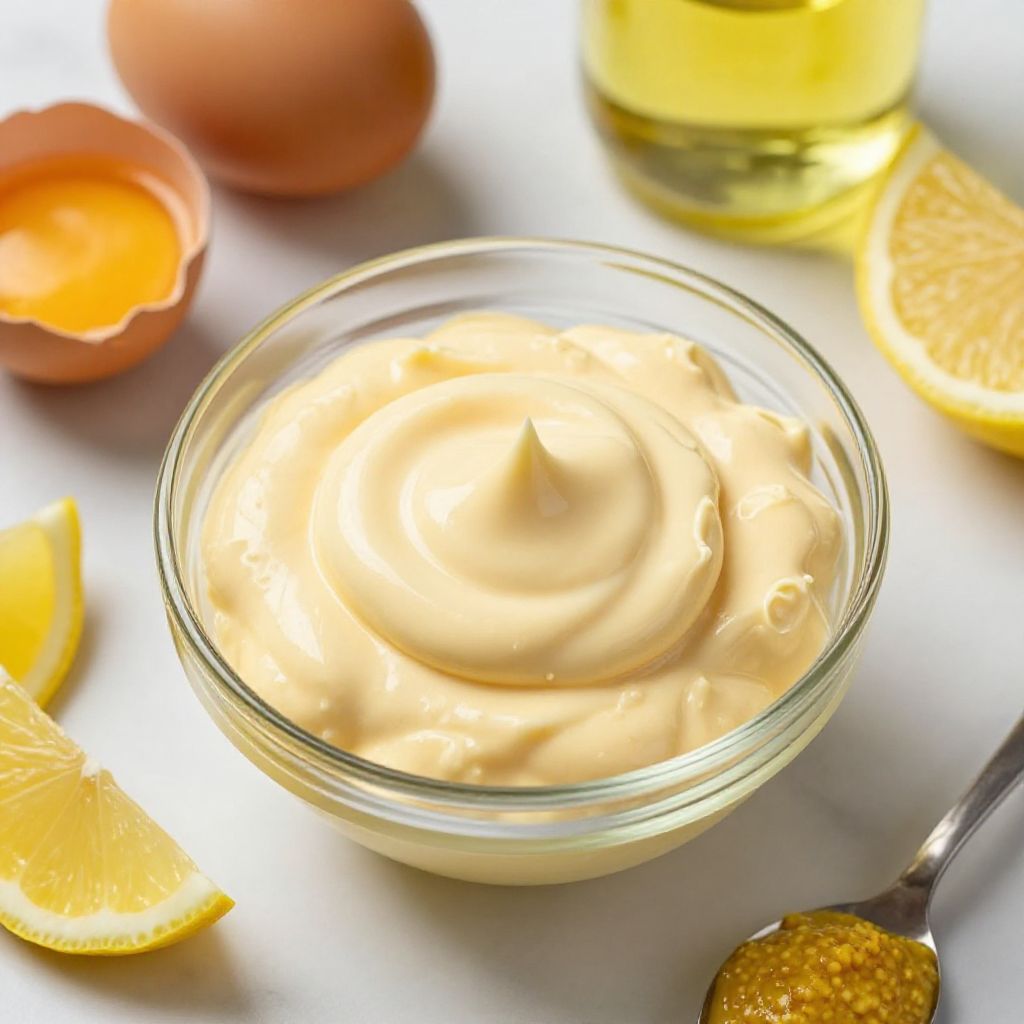
Mayonnaise Recipe Without Vinegar
Ingredients
Equipment
Method
- Gather all ingredients and measure them out to ensure a smooth process.
- In a mixing bowl, add the large egg and mustard to start the emulsion.
- Using a hand whisk or electric mixer, beat the egg and mustard until well combined.
- Slowly drizzle the oil into the egg mixture while whisking continuously to emulsify.
- Once thickened, stir in the lemon juice and salt to enhance the flavor.
- If the mayonnaise is too thick, add a teaspoon of water and mix to reach desired consistency.
- Taste the mayonnaise and adjust seasoning with more lemon juice or salt as needed.
- Transfer to a clean, airtight storage container and refrigerate for up to one week.