
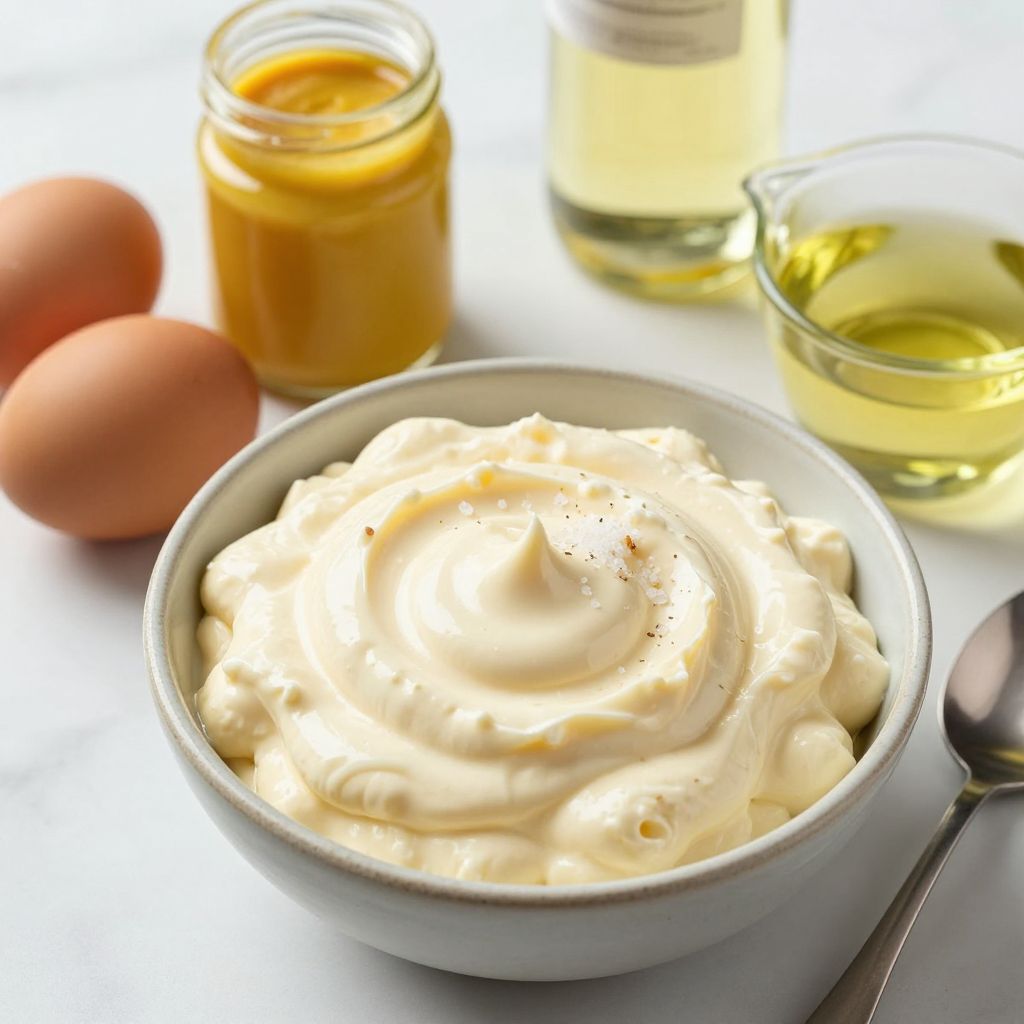
There’s something magical about making your own Mayonnaise at home. The creamy texture and rich flavor are a world apart from store-bought versions, and it’s surprisingly easy to whip up.
This recipe shines because it allows you to control the ingredients, resulting in a fresh, customizable condiment that can elevate any dish. With just a few simple ingredients, you can create a versatile mayo that enhances sandwiches, dips, and salads.
Why You’ll Love This Recipe
This homemade mayonnaise is a game changer for your kitchen.
- Quick to prepare in about 10 minutes.
- Uses basic ingredients you probably already have.
- Customizable flavors to suit your taste.
- Great for sandwiches, salads, and dips.
- Free from preservatives and additives.
My Experience Making This Recipe
I remember the first time I made mayonnaise; it felt like I was unlocking a culinary secret. The way the ingredients transformed into a luscious emulsion was both exciting and satisfying.
Once I tasted it, I was hooked. The rich flavor and creamy texture added a whole new dimension to my dishes, making me wonder why I ever relied on store-bought mayo.
Recipe Overview
- Recipe Name: Mayonnaise
- Servings: 1 cup
- Prep Time: 10 minutes
- Cook Time: 0 minutes
- Total Time: 10 minutes
- Course: Condiment
- Cuisine: American
- Calories per Serving: 100
Equipment You Will Need
- Mixing bowl
- Whisk or hand mixer
- Measuring cups and spoons
- Storage container
Ingredients for Mayonnaise
- 1 large egg (at room temperature)
- 1 tablespoon Dijon mustard
- 1 tablespoon white wine vinegar
- 1 cup neutral oil (such as canola or vegetable)
- Salt to taste
Ingredient Notes and Substitutions
- Egg: The egg acts as an emulsifier, binding the oil and water. You can use pasteurized eggs for safety.
- Dijon mustard: Adds flavor and aids in emulsification. Yellow mustard can be used as a substitute.
- White wine vinegar: Provides acidity and brightness. Lemon juice is a great alternative.
- Neutral oil: Ensures a light flavor. Olive oil can be used, but it will change the taste.
- Salt: Enhances flavor. Adjust to your preference or try flavored salts for variety.
How to Make Mayonnaise
Step 1: Gather Your Ingredients
Start by assembling all your ingredients on the counter. This makes the process smoother and ensures you don’t forget anything.
Step 2: Combine Egg and Mustard
In a mixing bowl, add the egg and Dijon mustard. Whisk them together until combined, which helps create a stable emulsion.
Step 3: Add Vinegar
Pour in the white wine vinegar and whisk again until the mixture is homogenous. This step adds acidity, which brightens the flavor of the mayo.
Step 4: Begin Adding Oil
Start adding the oil very slowly, almost drop by drop, while whisking continuously. This slow incorporation is key for emulsification.
Step 5: Increase Oil Addition
Once the mayo begins to thicken, you can add the oil a little faster. Continue whisking vigorously to keep the emulsion stable.
Step 6: Season with Salt
After all the oil is incorporated, taste your mayonnaise and add salt. Adjust according to your taste preferences.
Step 7: Store the Mayonnaise
Transfer the mayo to a clean storage container. It can be refrigerated for about a week, but good luck keeping it around that long!
Step 8: Enjoy Your Creation
Use your homemade mayonnaise in sandwiches, salads, or dips. Enjoy the satisfaction of knowing you made it from scratch!
Pro Tip: If your mayonnaise splits, add a teaspoon of water and whisk vigorously; it often helps bring it back together.
Tips for the Best Mayonnaise
- Make sure all ingredients are at room temperature for better emulsification.
- Use a neutral oil to keep the flavor light and versatile.
- Whisk continuously to ensure a smooth consistency.
- Experiment with flavored oils or herbs for unique variations.
- Store in an airtight container to maintain freshness.
Common Mistakes to Avoid
- Adding oil too quickly can cause the mayo to break. Slow and steady wins the race.
- Using cold ingredients can prevent emulsification. Room temperature is key.
- Not whisking enough can lead to a runny consistency. Keep whisking until thick and creamy.
- Forgetting to season can result in bland mayo. Salt is your friend.
Serving Suggestions
This homemade mayonnaise pairs beautifully with many dishes.
- Spread it on sandwiches for a creamy boost.
- Mix it into potato salad for a rich flavor.
- Use it as a dip for fresh vegetables.
- Combine with herbs to create a flavorful aioli.
Variations to Try
- Add garlic to make a delicious garlic mayo.
- Stir in sriracha for a spicy kick.
- Incorporate fresh herbs like basil or dill for added flavor.
- Use avocado oil for a healthier twist.
Dietary Adaptations
- Gluten-free: This recipe is naturally gluten-free.
- Dairy-free: No dairy products are used, making it suitable for lactose intolerance.
- Vegan: Substitute the egg with aquafaba (chickpea liquid) for a vegan mayo.
- Low-carb/Keto: Perfect for low-carb diets as it contains no sugars.
Storage and Reheating
Refrigerator
Store the mayonnaise in an airtight container in the refrigerator.
- Keep it sealed for up to a week.
- Check for any off smells before using.
Freezer
Mayonnaise does not freeze well due to its emulsified nature.
- It’s best enjoyed fresh.
Reheating
No reheating is necessary as mayonnaise is served cold.
- Simply stir and enjoy directly from the fridge.
Nutrition Information
| Nutrient | Amount |
|---|---|
| Calories | 100 |
| Total Fat | 11g |
| Saturated Fat | 1g |
| Carbohydrates | 0g |
| Fiber | 0g |
| Sugar | 0g |
| Protein | 1g |
| Sodium | 50mg |
| Cholesterol | 15mg |
This nutritional information is an estimate and may vary based on specific brands of ingredients used.
Frequently Asked Questions
Can I use olive oil instead of neutral oil?
Yes, but be aware that it will impart a stronger flavor to the mayonnaise.
Can I make mayonnaise ahead of time?
Absolutely! It can be made a few days in advance and stored in the refrigerator.
What should I do if my mayo is too thick?
Add a teaspoon of warm water and whisk to loosen it up.
Why did my mayonnaise separate?
This can happen if the oil is added too quickly or if the ingredients are cold. Try whisking vigorously to bring it back together.
How can I customize the flavor of my mayonnaise?
You can add herbs, spices, or even different types of vinegar to create your desired flavor profile.
Final Thoughts
Making your own mayonnaise is a rewarding experience that adds a special touch to your meals. With this recipe, you can enjoy a fresher, tastier condiment that’s perfect for any dish.
If you loved this recipe, consider exploring more flavor possibilities with our garlic mayo recipe or try a delicious mayo chicken recipe. Happy cooking!
Mayonnaise
Ingredients
Equipment
Method
- Gather all your ingredients on the counter.
- In a mixing bowl, add the egg and Dijon mustard. Whisk them together until combined.
- Pour in the white wine vinegar and whisk until the mixture is homogenous.
- Start adding the oil very slowly, almost drop by drop, while whisking continuously.
- Once the mayo begins to thicken, add the oil a little faster while continuing to whisk vigorously.
- After all the oil is incorporated, taste the mayonnaise and add salt as desired.
- Transfer the mayonnaise to a clean storage container.
- Refrigerate the mayonnaise for up to a week.
- Use your homemade mayonnaise in sandwiches, salads, or dips.