
There’s something incredibly satisfying about making your own mayonnaise, especially when you see it come together in mere minutes. This Mayonnaise Recipe with Olive Oil and Whole Egg is a luscious blend that balances rich flavor and creamy texture, making it a must-try for any home cook.
What sets this recipe apart is its simplicity and versatility; you can whip it up in a flash and customize it to fit your taste. Plus, the use of olive oil adds a delightful flavor twist that elevates your sandwiches and salads. Let’s get started with the ingredients!
Why You’ll Love This Recipe
This mayonnaise recipe will quickly become your go-to for several reasons.
- Quick and easy to make
- Rich, creamy texture with a hint of olive oil flavor
- Customizable with various herbs and spices
- Perfect for sandwiches, dips, or salad dressings
- Made with wholesome ingredients you likely have at home
My Experience Making This Recipe
The first time I made this mayonnaise, I was amazed at how quickly everything came together. Just a few pulses with my immersion blender, and I had a creamy, dreamy condiment that put store-bought varieties to shame.
Family and friends were equally impressed, and I found myself sharing the recipe more times than I could count. It’s a delightful feeling to serve something homemade and watch everyone enjoy it; there’s a certain pride in that creamy goodness!
Recipe Overview
- Recipe Name: Mayonnaise Recipe Olive Oil Whole Egg
- Servings: 1 cup
- Prep Time: 5 minutes
- Cook Time: 0 minutes
- Total Time: 5 minutes
- Course: Condiment
- Cuisine: American
- Calories per Serving: 100
Equipment You Will Need
- Immersion blender or food processor
- Measuring cups
- Measuring spoons
- Jar or container for storage
Ingredients for Mayonnaise Recipe Olive Oil Whole Egg
- 1 large whole egg (room temperature)
- 1 cup olive oil (extra virgin is best)
- 1 tablespoon lemon juice (freshly squeezed)
- 1 teaspoon Dijon mustard (optional for flavor)
- Salt (to taste)
Ingredient Notes and Substitutions
- Whole egg: Provides richness and emulsification. You can use pasteurized eggs for safety.
- Olive oil: Adds flavor and creaminess. Avocado oil can work as a neutral alternative.
- Lemon juice: Brightens the flavor profile. Vinegar can substitute in a pinch.
- Dijon mustard: Adds depth and enhances emulsification. You can skip it if you prefer a simpler taste.
- Salt: Balances flavors. Adjust to your preference.
How to Make Mayonnaise Recipe Olive Oil Whole Egg
Step 1: Gather Your Ingredients
Start by gathering all your ingredients and equipment. This makes the process smoother and helps you ensure you have everything on hand.
Step 2: Add Egg to the Blender
Crack the whole egg into your immersion blender cup or food processor. This is the base of your mayonnaise, providing the necessary emulsification.
Step 3: Incorporate Lemon Juice and Mustard
Add the lemon juice and Dijon mustard if using. These ingredients not only enhance flavor but also help stabilize the emulsion.
Step 4: Add Olive Oil
Pour in the olive oil while being careful not to mix yet. The oil is what gives your mayo its creamy consistency.
Step 5: Blend the Mixture
Insert the immersion blender into the cup, making sure it’s touching the bottom. Blend on high speed for about 30 seconds, then slowly pull the blender up to incorporate all the oil.
Step 6: Check Consistency
After blending, you should see a thick, creamy mayonnaise. If it’s too runny, blend for a bit longer to achieve your desired thickness.
Step 7: Season to Taste
Taste your mayo and add salt as needed. This last step personalizes the flavor and ensures it’s just right for you.
Step 8: Store Your Mayonnaise
Transfer the mayonnaise to a jar or container with a lid. It will keep in the refrigerator for about a week.
Pro Tip: For an extra creamy texture, use room temperature ingredients!
Tips for the Best Mayonnaise Recipe Olive Oil Whole Egg
- Use fresh, high-quality ingredients for the best flavor.
- Make sure the egg is at room temperature; this helps emulsification.
- Blend on high speed but don’t rush; patience is key to the perfect texture.
- Experiment with flavors by adding garlic or herbs for a twist.
- Keep the blender steady at the bottom initially to create the emulsion.
Common Mistakes to Avoid
- Using cold eggs can lead to a broken emulsion; always use room temperature.
- Pouring the oil in too quickly can cause separation; add it slowly.
- Not blending long enough may leave you with a runny mayo.
- Skipping the acid can result in bland flavor; always add lemon juice or vinegar.
- Storing in a non-airtight container can spoil your mayo faster.
Serving Suggestions
This mayonnaise is versatile and can elevate many dishes. Here are some great pairing ideas:
- Spread on sandwiches or burgers for extra creaminess.
- Use as a base for salad dressings.
- Pair with fresh vegetables as a dip.
- Mix into potato or pasta salad for added richness.
- Slather on grilled meats or fish for a flavorful twist.
Variations to Try
- Add garlic for a creamy garlic mayo that’s perfect for dipping.
- Mix in fresh herbs like dill or basil for a flavorful herb mayo.
- Swap lemon juice for lime juice for a zesty twist.
- Incorporate spices like smoked paprika for a smoky flavor.
- Try using flavored olive oils for even more depth.
Dietary Adaptations
- Gluten-free: This recipe is naturally gluten-free!
- Dairy-free: Contains no dairy; perfect for lactose intolerant folks.
- Vegan/Vegetarian: Substitute the egg with aquafaba for a vegan version.
- Low-carb/Keto: With no added sugars, this recipe fits low-carb diets.
Storage and Reheating
Refrigerator
Store your mayonnaise in an airtight container in the fridge. It will last about a week.
- Use a clean spoon each time to avoid contamination.
- Label the jar with the date it was made.
Freezer
Mayonnaise does not freeze well due to its emulsified nature. It is best enjoyed fresh.
- Consider making smaller batches to avoid waste.
- Use the fridge instead of the freezer for storage.
Reheating
No reheating is necessary, as mayonnaise is used cold. Just give it a good stir before using.
- Check for separation; a quick mix should bring it back together.
- Discard if it smells off or has changed in texture.
Nutrition Information
| Nutrient | Amount |
|---|---|
| Calories | 100 |
| Total Fat | 11g |
| Saturated Fat | 1.5g |
| Carbohydrates | 0g |
| Fiber | 0g |
| Sugar | 0g |
| Protein | 1g |
| Sodium | 25mg |
| Cholesterol | 37mg |
Nutrition values are approximate and can vary based on specific ingredients used.
Frequently Asked Questions
Can I use a different oil besides olive oil?
Yes, you can use other oils like avocado or canola oil for a milder flavor.
How long does homemade mayonnaise last?
It typically lasts about a week in the refrigerator if stored properly.
Can I make this mayo ahead of time?
Absolutely! It’s perfect for meal prep and can be made in advance.
What if my mayo doesn’t thicken?
If it doesn’t thicken, try blending a bit longer or adding another egg yolk.
Is it safe to eat raw eggs?
Using pasteurized eggs can reduce the risk of salmonella if you’re concerned.
Final Thoughts
Making your own mayonnaise is a rewarding experience that enhances your meals. Trust me, once you try this olive oil version, you’ll never look back.
So gather those ingredients and give it a whirl; I promise it will become a staple in your kitchen. For more variations, check out my Garlic Mayo Recipe and a delicious Mayo Chicken Recipe for inspiration!
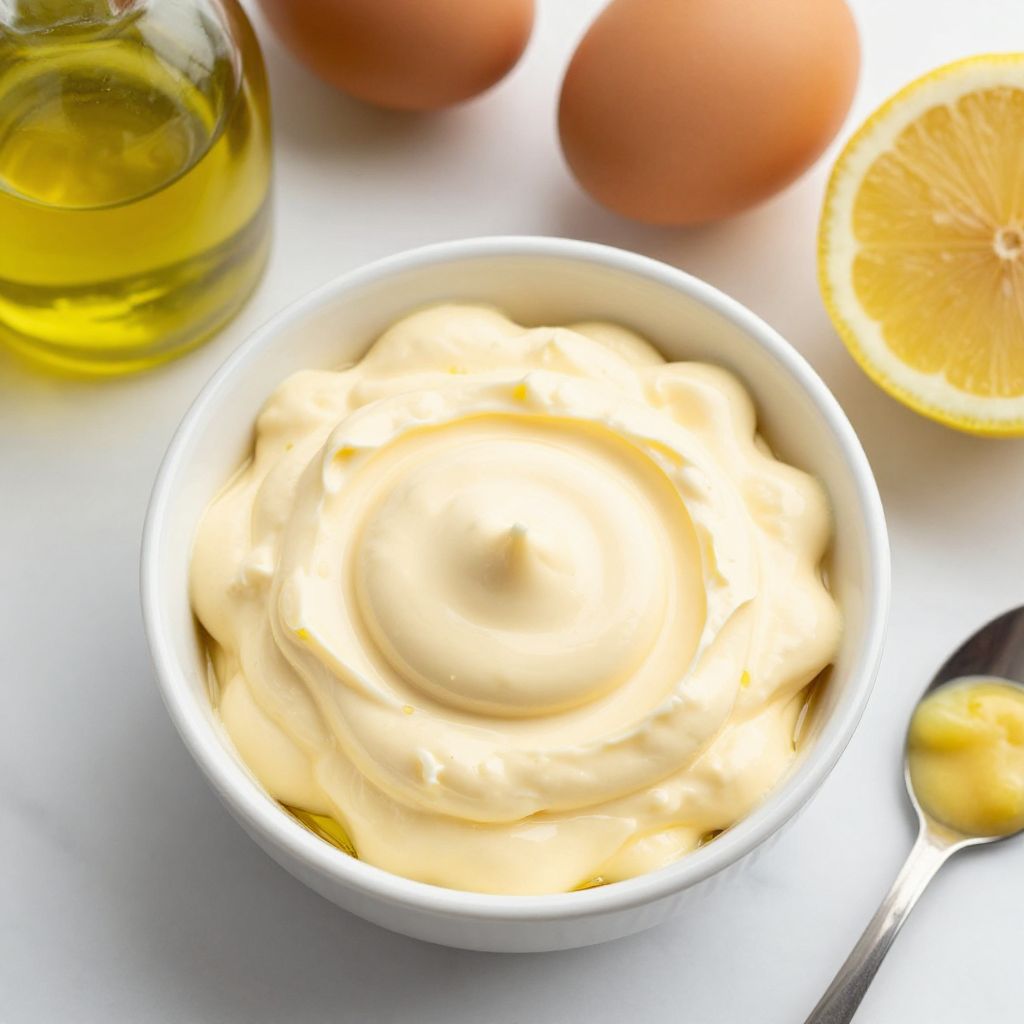
Mayonnaise Recipe with Olive Oil and Whole Egg
Ingredients
Equipment
Method
- Gather all your ingredients and equipment.
- Crack the whole egg into your immersion blender cup or food processor.
- Add the lemon juice and Dijon mustard if using.
- Pour in the olive oil without mixing.
- Blend on high speed for about 30 seconds, then slowly move the blender up to incorporate all the oil.
- Check the consistency; blend longer if it's too runny.
- Season the mayonnaise with salt to taste.
- Transfer the mayonnaise to a jar or container and refrigerate.