
There’s something magical about the smell of mango bread baking in the oven, filling your kitchen with tropical warmth on even the greyest afternoon. Mango bread is that perfect cross between a quick bread and a cake, moist enough to feel indulgent but wholesome enough to eat for breakfast without guilt.
This recipe delivers tender crumb, bright mango flavor, and a subtle spice that makes people ask for seconds. Unlike dense banana bread, mango bread stays light and fluffy, and the fruit’s natural sweetness means you won’t need excessive sugar.
Whether you’re using fresh mangoes, frozen chunks, or canned puree, you’ll have a foolproof loaf ready in under an hour. It’s the kind of recipe that impresses guests and disappears fast, so plan to make two.
Why You’ll Love This Recipe
Mango bread hits every mark for home bakers seeking something special but simple. You need just basic pantry staples and minimal technique to nail it every time.
- Naturally sweet mango reduces added sugar, making it lighter than traditional cakes
- Takes under 10 minutes of hands-on prep time before baking
- Works with fresh, frozen, or canned mango without compromising texture
- Stays moist for days, actually improving in flavor by day two
- Freezes beautifully for up to three months, perfect for meal prep
My Experience Making This Recipe
I first baked mango bread on a whim using overripe mangoes I’d bought at the farmer’s market. The result was so good that my neighbor actually showed up the next day asking if I’d bake another loaf for her book club.
What surprised me most was how forgiving the recipe is. I’ve made it with frozen mango chunks from my freezer, fresh Alfonso mangoes, and even canned mango puree when fresh wasn’t available, and every version turned out equally tender and fragrant.
The bread stays fresh longer than you’d expect, staying moist and flavor-packed for nearly a week when wrapped well. I now keep a loaf in my freezer at all times for unexpected guests or when I need a quick breakfast that feels special.
Recipe Overview
- Recipe Name: Mango Bread
- Servings: 12 slices (one loaf)
- Prep Time: 10 minutes
- Cook Time: 50 to 60 minutes
- Total Time: 70 minutes
- Course: Breakfast, Dessert, Snack
- Cuisine: Tropical, Contemporary American
- Calories per Serving: 215 calories
Equipment You Will Need
- 9×5 inch loaf pan
- Parchment paper or nonstick cooking spray
- Large mixing bowl
- Medium mixing bowl
- Whisk
- Wooden spoon or spatula
- Measuring cups and spoons
- Oven thermometer (optional but helpful)
- Toothpick or skewer for doneness testing
- Wire cooling rack
Ingredients for Mango Bread
- 1 3/4 cups all-purpose flour
- 1 teaspoon baking soda
- 1/2 teaspoon salt
- 1/2 teaspoon ground cinnamon
- 1/4 teaspoon ground ginger
- 1/4 teaspoon ground nutmeg
- 2/3 cup granulated sugar
- 1/2 cup light brown sugar
- 1/3 cup neutral oil (vegetable or canola)
- 2 large eggs
- 1 1/2 cups fresh mango puree or canned mango puree
- 1/2 teaspoon vanilla extract
- 1/3 cup shredded unsweetened coconut (optional)
- 1/4 cup macadamia nuts, chopped (optional)
Ingredient Notes and Substitutions
- Fresh Mango: Use ripe mangoes (they yield slightly to pressure at the stem). Blend or mash until completely smooth; you need about three medium mangoes. If using frozen mango chunks, thaw them first and drain excess liquid, then blend smooth. Canned mango puree works perfectly and requires no prep.
- All-Purpose Flour: Provides structure and tender crumb. For a gluten-free version, swap 1:1 with a quality gluten-free all-purpose blend (King Arthur or Bob’s Red Mill work well).
- Baking Soda: Creates lift and ensures the bread rises evenly. Don’t substitute with baking powder as it changes the texture significantly.
- Brown Sugar: Adds moisture and caramel notes that enhance mango flavor. You can replace it with an equal amount of granulated sugar if needed, though you’ll lose slight depth.
- Oil: Creates a moist, tender crumb better than butter for this recipe. You can use melted coconut oil for tropical flavor, but keep the amount the same.
- Spices: Cinnamon, ginger, and nutmeg warm up mango’s brightness without overpowering it. If you dislike warm spices, reduce them by half.
- Coconut and Nuts: Both are optional but add texture and flavor complexity. Omit them if you have allergies or prefer pure mango flavor.
How to Make Mango Bread
Step 1: Prepare Your Pan and Preheat the Oven
Preheat your oven to 350 degrees Fahrenheit and position a rack in the center. Line a 9×5 inch loaf pan with parchment paper or coat it generously with nonstick spray, making sure the bottom and sides are fully covered.
Step 2: Mix Your Dry Ingredients
In a medium bowl, whisk together flour, baking soda, salt, cinnamon, ginger, and nutmeg. Whisking these together instead of simply stirring distributes the leavening agent and spices evenly throughout, preventing lumpy pockets of baking soda taste.
Step 3: Combine Sugars and Oil
In a large bowl, whisk together granulated sugar, brown sugar, and oil until the mixture looks slightly sandy and combined. This step incorporates the oil into the sugars, creating an emulsion that helps the batter stay moist and prevents a dense crumb.
Step 4: Add Eggs and Vanilla
Crack your eggs into the sugar-oil mixture and whisk vigorously for about 30 seconds until the eggs are fully incorporated and the mixture looks lighter and slightly fluffy. Add vanilla extract and whisk once more until combined, about 10 seconds.
Step 5: Stir in the Mango Puree
Pour the mango puree into your egg mixture and stir with a wooden spoon or rubber spatula until completely combined and smooth. The batter should look uniform and pale orange at this point, with no white streaks remaining.
Step 6: Combine Wet and Dry Ingredients
Add the dry ingredients to the wet mixture and fold gently with a spatula until just combined. Overmixing develops gluten and creates a tough, dense crumb, so stop folding as soon as you no longer see streaks of flour.
Step 7: Add Optional Additions
If using coconut and macadamia nuts, fold them in gently with a few strokes of the spatula. These additions distribute more evenly when folded in at the end rather than mixed into the dry ingredients.
Step 8: Pour and Bake
Transfer the batter to your prepared loaf pan and smooth the top gently with a spatula. Bake for 50 to 60 minutes until a toothpick inserted into the center comes out clean or with just a few moist crumbs attached (not wet batter).
Step 9: Cool and Rest
Let the bread cool in the pan for 10 minutes, then turn it out onto a wire cooling rack to cool completely. The bread continues to cook slightly during this cooling period, so resisting the urge to cut into it warm ensures it holds together neatly.
Pro Tip: Mango bread actually tastes better on day two after flavors have fully melded together, so bake it a day ahead if you’re serving guests.
Tips for the Best Mango Bread
- Use ripe mangoes that yield slightly to pressure but aren’t mushy. Under-ripe mangoes lack flavor depth, while over-ripe ones become stringy and harder to blend smooth.
- Measure your mango puree carefully and drain off excess liquid if your mangoes are particularly juicy. Too much liquid throws off the dry-to-wet ratio and creates a dense, gummy crumb.
- Bring your eggs to room temperature before mixing. Cold eggs incorporate unevenly and can create a slightly grainy texture in the final bread.
- Don’t skip the spices even if you think you don’t like warm spices. The amounts used are subtle and simply warm up the mango’s brightness rather than adding strong spice flavor.
- Check doneness starting at 50 minutes since oven temperatures vary. A toothpick test is more reliable than baking time alone, especially if your oven runs hot or cold.
- Wrap cooled bread tightly in plastic wrap or foil immediately after cooling. This traps moisture and keeps the bread from drying out over the next few days.
Common Mistakes to Avoid
- Using canned mango nectar instead of puree: Nectar contains added sugar and liquid that throws off your ratio. Stick to mango puree or blend fresh mango until completely smooth.
- Overmixing the batter once you add flour: This develops gluten and creates a tough, dense crumb instead of the tender texture you’re aiming for. Fold gently and stop as soon as flour disappears.
- Skipping the pan lining step: Mango bread sticks stubbornly without proper preparation. Parchment paper is your best friend here and takes 30 seconds to apply.
- Pulling the bread out too early: Underbaked mango bread tastes gummy and falls apart when you try to slice it. Wait for the toothpick test to show clean before removing from the oven.
- Not letting it cool fully before wrapping: Wrapping warm bread traps steam that creates condensation and a soggy crust. Cool completely to room temperature first.
Serving Suggestions
Mango bread shines as a standalone snack with morning coffee or tea, but it’s equally at home as a light dessert. A simple cream cheese frosting or a dollop of whipped coconut cream takes it from breakfast to dinner party worthy.
- Serve slices toasted with butter and a drizzle of honey for a breakfast treat
- Pair with a scoop of vanilla ice cream for an easy warm-weather dessert
- Top with cream cheese frosting thinned with a bit of lime juice for subtle tang
- Serve alongside fresh tropical fruit like pineapple or papaya for a cohesive flavor story
- Toast a slice and top with ricotta, a sprinkle of cinnamon, and fresh berries for an elevated breakfast
Variations to Try
- Mango-Cardamom Bread: Replace nutmeg with 1/2 teaspoon ground cardamom for a more floral, sophisticated warmth. Cardamom pairs beautifully with mango and adds an unexpected spice note that impresses mango bread veterans.
- Tropical Mango Bread with Pineapple: Reduce mango puree to 1 cup and add 1/2 cup crushed pineapple, drained well. The pineapple adds bright acidity that cuts through richness and adds complexity.
- Mango Bread with Lime Zest: Add 1 tablespoon fresh lime zest to the dry ingredients for a citrus lift. Lime brightens mango’s tropical character and prevents the bread from tasting one-note.
- Spiced Mango Bread with Cayenne: Add 1/8 teaspoon cayenne pepper to your dry ingredients for a subtle heat. A whisper of heat makes mango sing and keeps people guessing about the flavor.
- Healthier Mango Bread: Replace 3/4 cup all-purpose flour with whole wheat pastry flour (not regular whole wheat, which is too heavy). This adds nuttiness and fiber while keeping the crumb relatively tender.
Dietary Adaptations
- Gluten-Free: Substitute all-purpose flour with a 1:1 gluten-free all-purpose flour blend and add 1/2 teaspoon xanthan gum (unless your blend already contains it). The trade-off is a slightly grainier texture, but quality blends perform nearly identically to wheat flour.
- Dairy-Free: This recipe is naturally dairy-free as written since it uses oil instead of butter. Simply verify your oil is dairy-free (most vegetable and canola oils are) and confirm your other ingredients are certified dairy-free if needed.
- Vegan: Replace eggs with 2 flax eggs (2 tablespoons ground flaxseed mixed with 5 tablespoons water, rested 5 minutes). The bread will be slightly less tender but still moist and delicious.
- Lower-Sugar: Reduce granulated sugar to 1/2 cup and brown sugar to 1/3 cup. The bread will be less sweet but the mango flavor shines through more clearly. Expect slightly less rise and a less tender crumb.
- Keto or Low-Carb: This recipe doesn’t adapt well to keto without major modifications. Mango is relatively high in carbs, and replacing flour requires multiple substitutions that change the bread’s character significantly.
Storage and Reheating
Refrigerator
Wrap cooled mango bread tightly in plastic wrap or store it in an airtight container. It keeps fresh for up to one week in the refrigerator, and flavor actually improves on day two as the mango flavor deepens and layers meld together.
- Wrap tightly in plastic wrap to prevent it from absorbing odors
- Store in an airtight container with parchment between slices to prevent sticking
- Keep away from strong-smelling foods like onions or fish
Freezer
Mango bread freezes beautifully for up to three months, making it ideal for baking ahead. Wrap it well to prevent freezer burn and protect the delicate crumb.
- Cool completely before wrapping in plastic wrap and foil
- Alternatively, slice before freezing and store slices in a freezer-safe zip-top bag with parchment between layers
- Label with the date so you remember when you baked it
Reheating
You can enjoy mango bread cold from the fridge, but warming it briefly restores softness and brings out the tropical aroma. A light toasting or gentle warming in the oven works best.
- Toast individual slices in a toaster or toaster oven for 2 to 3 minutes until warm
- Wrap the whole loaf loosely in foil and warm in a 300-degree oven for 10 minutes
- Thaw frozen slices at room temperature for 30 minutes before toasting
Nutrition Information
| Nutrient | Amount |
|---|---|
| Calories | 215 |
| Total Fat | 8g |
| Saturated Fat | 1g |
| Carbohydrates | 34g |
| Fiber | 1g |
| Sugar | 24g |
| Protein | 3g |
| Sodium | 185mg |
| Cholesterol | 32mg |
Nutritional values are approximate and calculated per slice based on 12 servings per loaf. Values may vary depending on specific ingredient brands used and how you measure your ingredients.
Frequently Asked Questions
Can I use frozen mango to make this bread?
Yes, frozen mango chunks work beautifully. Thaw them completely, drain off excess liquid, and blend until smooth before measuring out 1 1/2 cups.
How do I know when the mango bread is fully baked?
Insert a toothpick into the center of the loaf. It should come out clean or with just a few moist crumbs, never with wet batter clinging to it.
Can I make mango bread in muffin tins instead of a loaf pan?
Yes, divide the batter among lined muffin cups and reduce baking time to 20 to 25 minutes. Check for doneness starting at 20 minutes since smaller portions bake faster.
Why is my mango bread dense and gummy?
This usually happens from too much mango liquid, overmixing the batter, or underbaking. Drain excess liquid from your mango, fold gently once flour is added, and bake until a toothpick test shows clean.
Can I make this recipe with mango extract instead of fresh mango?
Mango extract won’t work as a substitute because it lacks the moisture and bulk that actual mango puree provides. You need the physical mango fruit to get proper texture and rise.
Is this bread better warm or cold?
It’s delicious both ways, but flavor truly peaks on day two once the mango and spice flavors have melded together. If serving warm, toast it lightly to refresh the crumb.
What’s the difference between using canned mango puree and fresh mango?
Canned puree is convenient and reliable, delivering consistent results every time. Fresh mango offers slightly brighter flavor but requires more prep work and can have variable moisture levels.
Final Thoughts
Mango bread is the tropical escape your kitchen deserves, ready whenever the craving for something sweet and fruity hits. This recipe’s simplicity makes it approachable for newer bakers while the flavor sophistication keeps experienced cooks interested and coming back.
Bake a loaf this week and watch how quickly it disappears. Your next step might be exploring a light mango mousse recipe for an elegant finish, or trying mango habanero sauce to drizzle over ice cream or cake.
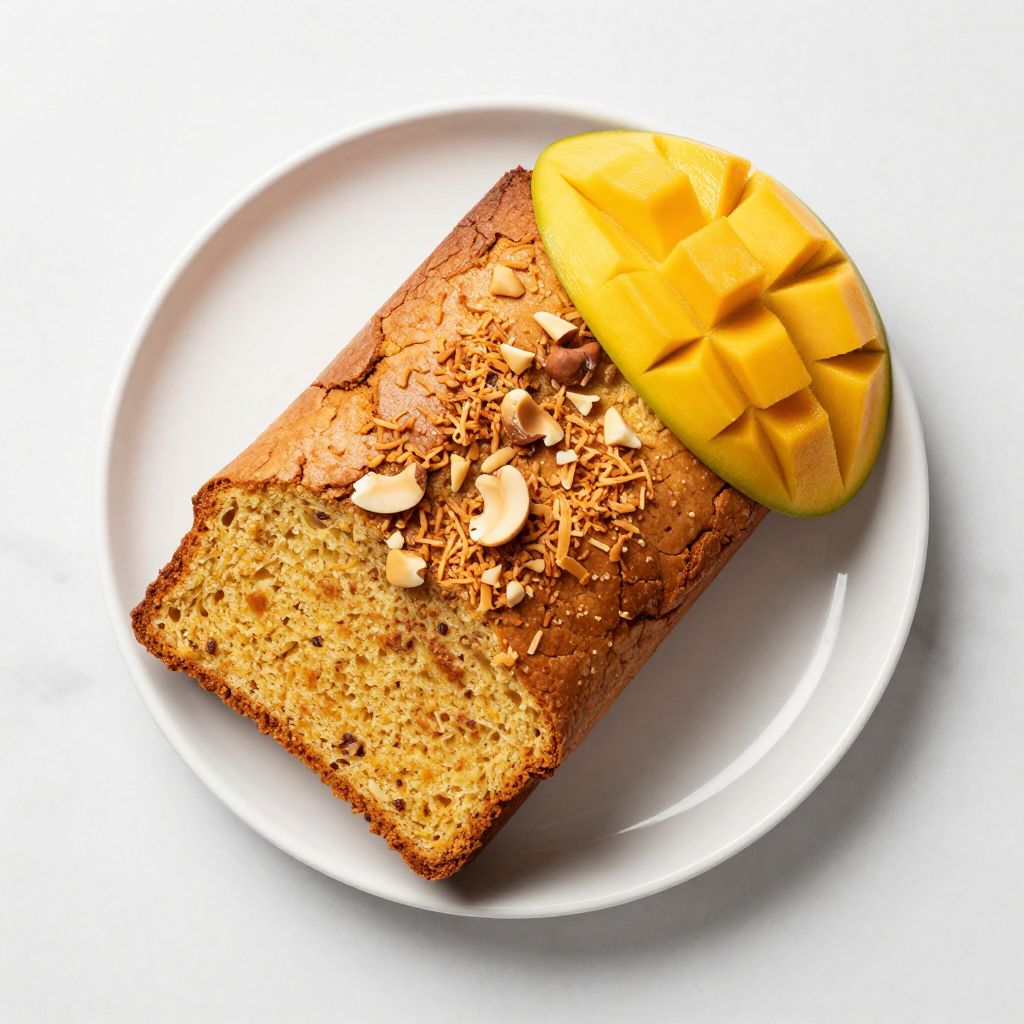
Mango Bread
Ingredients
Equipment
Method
- Preheat your oven to 350°F (175°C) and line a 9x5 inch loaf pan with parchment paper or coat it with nonstick spray.
- In a medium bowl, whisk together the all-purpose flour, baking soda, salt, ground cinnamon, ground ginger, and ground nutmeg until evenly distributed.
- In a large bowl, whisk the granulated sugar, light brown sugar, and neutral oil until the mixture is sandy and well combined.
- Add the eggs to the sugar-oil mixture and whisk vigorously for 30 seconds until light and slightly fluffy, then stir in the vanilla extract.
- Pour the mango puree into the egg mixture and stir with a spatula until the batter is smooth and uniform in color.
- Add the dry ingredients to the wet mixture and fold gently with a spatula until no streaks of flour remain, avoiding overmixing.
- If using, fold in the shredded coconut and chopped macadamia nuts with a few gentle strokes of the spatula.
- Transfer the batter to the prepared loaf pan and smooth the top. Bake for 50 to 60 minutes or until a toothpick inserted into the center comes out clean or with a few moist crumbs.
- Allow the bread to cool in the pan for 10 minutes, then remove it and let it cool completely on a wire rack before slicing.