
Picture this: a colorful stir-fry of sweet potato noodles, crisp vegetables, and tender beef, all bathed in a savory-sweet sauce. Korean Japchae is not just a dish; it’s a celebration on a plate, perfect for cozy family dinners or special occasions. This recipe shines with its glorious textures and rich flavors, making it a standout in any meal lineup. Plus, it’s quick to whip up and can easily adapt to your pantry staples, making it a delightful go-to. Let’s gather our ingredients and get cooking!
Why You’ll Love This Recipe
This dish is a delightful experience for your taste buds and your kitchen.
- Versatile: Customize with your favorite proteins and veggies.
- Quick: Ready in about 30 minutes, perfect for busy nights.
- Colorful: A feast for the eyes with its vibrant ingredients.
- Flavorful: A perfect balance of sweet, savory, and umami.
- Make-ahead: Tastes even better the next day, great for meal prep.
My Experience Making This Recipe
Every time I make Korean Japchae, I am transported back to the bustling markets of Seoul. The aroma of sesame oil and garlic fills my kitchen, making it feel so inviting.
Friends and family always ask for seconds, and you can see their eyes light up with each bite. It’s a dish that brings everyone together, and I love sharing it during gatherings.
Recipe Overview
- Recipe Name: Korean Japchae
- Servings: 4
- Prep Time: 15 minutes
- Cook Time: 15 minutes
- Total Time: 30 minutes
- Course: Main Dish
- Cuisine: Korean
- Calories per Serving: 300
Equipment You Will Need
- Large skillet or wok
- Cooking pot
- Colander
- Wooden spoon or spatula
- Measuring cups and spoons
Ingredients for Korean Japchae
- 8 ounces sweet potato noodles (dangmyeon)
- 1 tablespoon vegetable oil
- 1 small onion, thinly sliced
- 1 carrot, julienned
- 1 bell pepper, sliced
- 1 cup spinach, washed and drained
- 1 cup mushrooms, sliced
- 6 ounces beef or protein of choice, thinly sliced
- 3 tablespoons soy sauce
- 1 tablespoon sesame oil
- 1 tablespoon sugar
- 2 cloves garlic, minced
- 1 teaspoon sesame seeds (for garnish)
Ingredient Notes and Substitutions
- Sweet potato noodles: These noodles give a chewy texture. Substitute with rice noodles if needed.
- Vegetable oil: Used for stir-frying. Olive oil is a good alternative.
- Beef: Adds richness and flavor. Chicken or tofu works wonderfully too.
- Soy sauce: Provides saltiness. Tamari is a good gluten-free option.
- Spinach: Adds color and nutrition. Kale or bok choy can be substituted.
How to Make Korean Japchae
Step 1: Soak the Noodles
Begin by soaking the sweet potato noodles in hot water for about 30 minutes. This softens them, allowing for that delightful chewy texture we love in japchae.
Step 2: Prepare the Vegetables
While the noodles soak, slice the onion, carrot, bell pepper, and mushrooms. Preparing your veggies ahead makes the stir-frying process smooth and efficient.
Step 3: Cook the Beef
In a large skillet, heat the vegetable oil over medium heat. Add the sliced beef and cook until browned, about 3-4 minutes, ensuring it’s tender and flavorful.
Step 4: Add the Vegetables
Add the onion, carrot, bell pepper, and mushrooms to the skillet. Stir-fry for about 5 minutes until the vegetables are tender but still crisp.
Step 5: Drain the Noodles
Once the noodles are ready, drain them in a colander. This step is essential to remove excess water, ensuring the dish doesn’t become soggy.
Step 6: Combine Ingredients
Add the drained noodles and spinach to the skillet with the beef and vegetables. Toss everything gently to combine, allowing the spinach to wilt slightly.
Step 7: Mix the Sauce
In a small bowl, mix together the soy sauce, sesame oil, sugar, and minced garlic. Pour this sauce over the noodle mixture, stirring well to coat every ingredient evenly.
Step 8: Serve and Garnish
Once everything is well combined and heated through, transfer the japchae to a serving dish. Sprinkle with sesame seeds for a touch of crunch and flavor.
Pro Tip: For the best flavor, allow the japchae to sit for a few minutes before serving. This lets the flavors meld beautifully.
Tips for the Best Korean Japchae
- Use high heat for stir-frying to achieve that nice char on the veggies.
- Don’t overcook the noodles; they should be al dente for the best texture.
- Feel free to add other vegetables like broccoli or zucchini for variety.
- Garnish with green onions for extra flavor and color.
- Prepare the sauce ahead to save time during cooking.
Common Mistakes to Avoid
- Overcooking the noodles makes them mushy; keep an eye on the soaking time.
- Skipping the sesame oil diminishes that authentic flavor.
- Not stir-frying on high heat can lead to uneven cooking of vegetables.
- Using too much soy sauce can make the dish overly salty; measure carefully.
Serving Suggestions
Korean Japchae pairs beautifully with various sides and dishes. Here are some ideas to complement your meal:
- Serve alongside kimchi for a spicy kick.
- Pair with steamed rice for a hearty meal.
- Add a side of grilled fish for a balanced plate.
- Enjoy with a refreshing salad to lighten up the meal.
Variations to Try
- Add shrimp for a seafood twist that brings an ocean flavor.
- Substitute quinoa for a gluten-free noodle alternative.
- Mix in some sliced jalapeños for extra heat.
- Use different proteins like pork or tempeh for variety.
Dietary Adaptations
- Gluten-free: Use tamari instead of soy sauce for a gluten-free option.
- Dairy-free: This recipe is already dairy-free, making it suitable for those avoiding dairy.
- Vegan: Substitute beef with tofu or mushrooms for a plant-based version.
- Low-carb/Keto: Replace sweet potato noodles with zucchini noodles or shirataki noodles.
Storage and Reheating
Refrigerator
Store any leftovers in an airtight container in the fridge for up to 3 days.
- Cool completely before refrigerating to avoid sogginess.
- Reheat in a skillet for best texture.
Freezer
Japchae can be frozen for up to 2 months.
- Freeze in portions for convenience.
- Thaw in the fridge overnight before reheating.
Reheating
Reheat in a skillet over medium heat, adding a splash of water if needed.
- Stir occasionally to heat evenly.
- Microwave can be used, but be cautious not to overheat.
Nutrition Information
| Nutrient | Amount |
|---|---|
| Calories | 300 |
| Total Fat | 10g |
| Saturated Fat | 1.5g |
| Carbohydrates | 45g |
| Fiber | 3g |
| Sugar | 5g |
| Protein | 7g |
| Sodium | 600mg |
| Cholesterol | 25mg |
This nutritional information is an estimate and can vary based on specific ingredients used.
Frequently Asked Questions
Can I make Japchae ahead of time?
Yes, you can prepare japchae a day in advance. Store it in the fridge and reheat before serving.
What can I substitute for sweet potato noodles?
You can use rice noodles or zucchini noodles if you prefer a different option. Each will offer its own unique texture.
How do I store leftovers?
Store leftovers in an airtight container in the fridge for up to 3 days. Reheat in a skillet for the best results.
Why is my Japchae soggy?
Soggy japchae usually comes from overcooked noodles or excess water in the vegetables. Ensure you drain everything well.
Can I add more vegetables?
Absolutely! Feel free to add any veggies you have on hand, such as broccoli or snap peas, for more color and nutrients.
Final Thoughts
Cooking Korean Japchae is a joyous experience that fills your kitchen with mouthwatering aromas. I encourage you to give this recipe a try and savor the delightful blend of flavors it brings.
Once you taste this vibrant dish, you might find yourself craving it often. For more Korean recipes, check out my Hwachae recipe or whip up your own Gochujang sauce to accompany it!
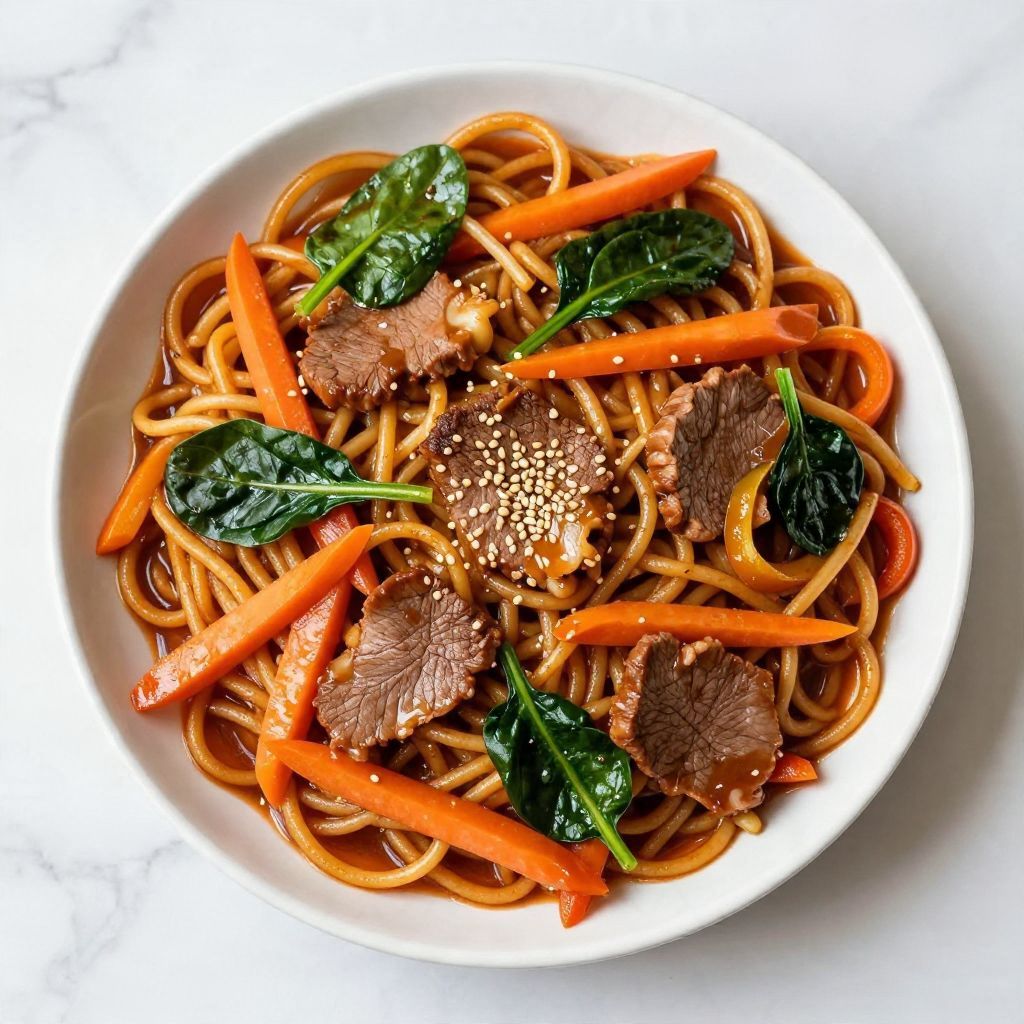
Korean Japchae
Ingredients
Equipment
Method
- Soak the sweet potato noodles in hot water for about 30 minutes.
- Slice the onion, carrot, bell pepper, and mushrooms while the noodles soak.
- Heat vegetable oil in a large skillet over medium heat.
- Add sliced beef and cook for about 3-4 minutes until browned.
- Add onion, carrot, bell pepper, and mushrooms to the skillet and stir-fry for about 5 minutes.
- Drain the soaked noodles in a colander.
- Add drained noodles and spinach to the skillet, tossing to combine.
- In a small bowl, mix soy sauce, sesame oil, sugar, and garlic, then pour over the noodle mixture.
- Heat everything through, then transfer to a serving dish and garnish with sesame seeds.