
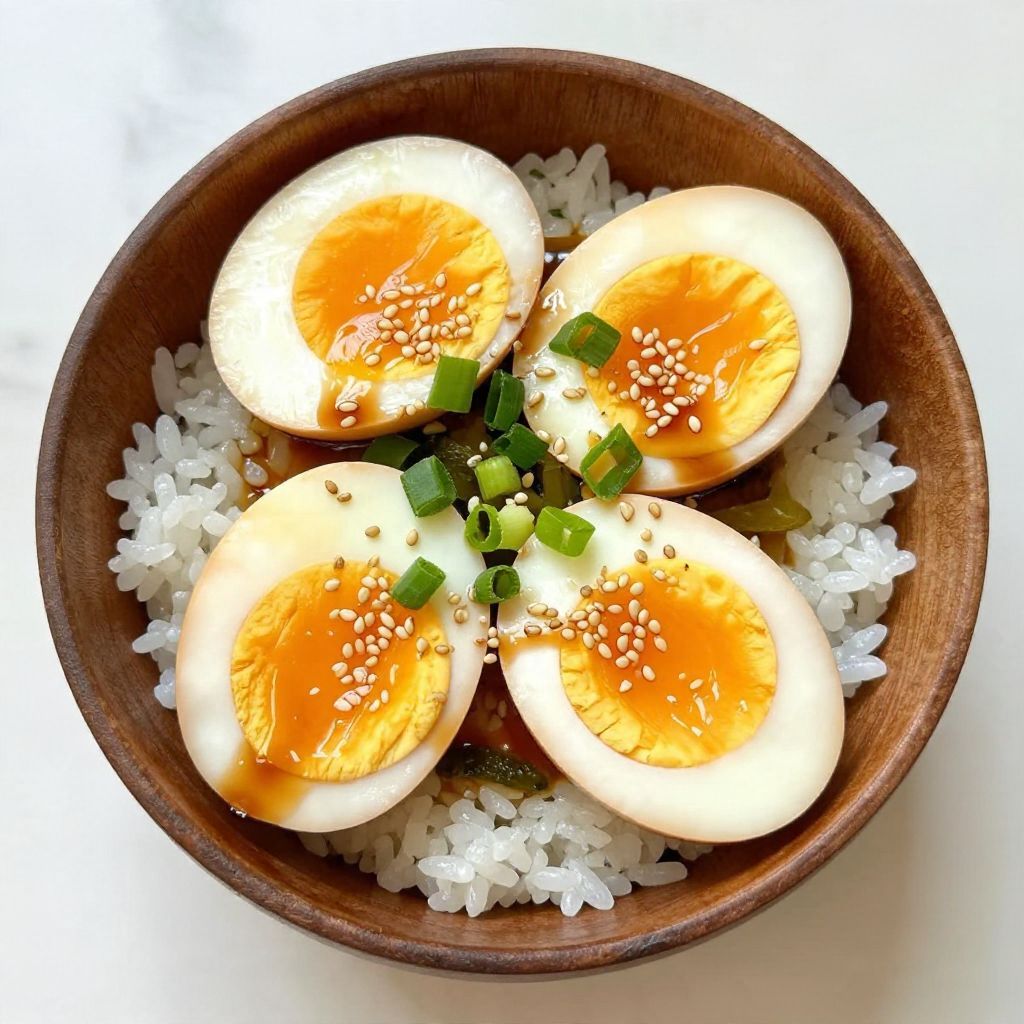
Picture a cozy weekend morning, where the sun peeks through the kitchen window as you savor a warm bowl of rice topped with perfectly seasoned Korean Boiled Eggs. This dish is a delightful twist on classic boiled eggs, bringing a unique flavor that elevates your breakfast or lunch. With its savory soy sauce glaze and a hint of sesame oil, these eggs are not just tasty; they are a comforting treat that can be enjoyed any time of day. Let’s get started on this simple yet satisfying recipe that will soon become a staple in your kitchen.
Why You’ll Love This Recipe
This recipe is a fantastic way to add flavor to a simple boiled egg. It’s quick, delicious, and versatile enough for any meal.
- Quick and easy to make.
- Flavorful soy sauce glaze.
- Perfect for meal prep or as a snack.
- Great addition to salads or rice bowls.
- Nutritious and filling.
My Experience Making This Recipe
Making these Korean Boiled Eggs was an absolute joy. The moment I poured the soy sauce mixture over the eggs, the aroma filled my kitchen, making my mouth water.
Each bite was a delightful experience, with the rich flavors complementing the creamy yolk. Friends and family were impressed, and I knew I had found a new favorite recipe.
Recipe Overview
- Recipe Name: Korean Boiled Eggs
- Servings: 4
- Prep Time: 5 minutes
- Cook Time: 10 minutes
- Total Time: 15 minutes
- Course: Snack/Breakfast
- Cuisine: Korean
- Calories per Serving: 90 kcal
Equipment You Will Need
- Medium saucepan
- Mixing bowl
- Whisk or fork
- Measuring cups and spoons
- Slotted spoon
- Container for marinating
Ingredients for Korean Boiled Eggs
- 4 large eggs
- 1/4 cup soy sauce
- 1 tablespoon sesame oil
- 1 tablespoon sugar
- 1 tablespoon rice vinegar
- 1 teaspoon minced garlic
- 1 teaspoon sesame seeds (for garnish)
- 2 green onions, chopped (for garnish)
Ingredient Notes and Substitutions
- Eggs: Used for their protein and texture; can substitute with medium eggs for a smaller bite.
- Soy sauce: Adds umami; low-sodium soy sauce can be used for less saltiness.
- Sesame oil: Provides a nutty flavor; can replace with olive oil for a milder taste.
- Sugar: Balances the soy sauce; honey or maple syrup can be used as a natural sweetener.
- Rice vinegar: Adds acidity; apple cider vinegar can be a good substitute.
How to Make Korean Boiled Eggs
Step 1: Boil the Eggs
Place the eggs in a medium saucepan and cover them with cold water. Bringing them to a boil gently ensures the whites stay tender.
Step 2: Cook the Eggs
Once boiling, reduce the heat to low and simmer for about 8 minutes. This timing yields a slightly soft yolk that is perfect for this recipe.
Step 3: Ice Bath
Remove the eggs from the heat and immediately transfer them to a bowl of ice water. This stops the cooking process and helps to peel them easily.
Step 4: Prepare the Marinade
In a mixing bowl, whisk together soy sauce, sesame oil, sugar, rice vinegar, and minced garlic. This marinade is where all the flavor magic happens.
Step 5: Peel the Eggs
Once the eggs are cool, gently tap them on a hard surface and peel under running water. This trick helps remove the shell without damaging the egg.
Step 6: Marinate the Eggs
Submerge the peeled eggs into the marinade and let them sit for at least 30 minutes. The longer they soak, the more flavorful they become.
Step 7: Garnish
After marinating, remove the eggs and place them on a serving plate. Sprinkle with sesame seeds and chopped green onions for a beautiful presentation.
Step 8: Serve and Enjoy
These eggs can be enjoyed warm or cold. Serve them as a side dish or on top of rice for a hearty meal.
Pro Tip: Let the eggs marinate overnight for an even deeper flavor.
Tips for the Best Korean Boiled Eggs
- Use fresh eggs for the best texture and taste.
- Adjust the marinating time based on your flavor preference.
- Experiment with adding spices like chili flakes for an extra kick.
- Make a larger batch to enjoy throughout the week.
- Always cool the eggs quickly to avoid overcooking.
Common Mistakes to Avoid
- Overcooking the eggs can lead to a rubbery texture.
- Skipping the ice bath makes peeling difficult.
- Not marinating long enough results in bland flavor.
- Using old eggs can make peeling a nightmare.
Serving Suggestions
Korean Boiled Eggs make a delightful addition to many dishes. Pair them with rice, salads, or ramen for a complete meal.
- Serve alongside steamed rice.
- Add to a hearty salad.
- Include in a ramen bowl.
- Pair with pickled vegetables for extra crunch.
Variations to Try
- Add a splash of hot sauce for a spicy version.
- Incorporate herbs like cilantro for a fresh twist.
- Try different marinades, such as miso or teriyaki.
- Make a creamy version by adding mayo on top.
Dietary Adaptations
- Gluten-free: Use tamari instead of soy sauce.
- Dairy-free: This recipe is naturally dairy-free.
- Vegetarian: Eggs are suitable for vegetarians.
- Low-carb/keto: Enjoy as is; it’s low in carbs.
Storage and Reheating
Refrigerator
Store leftover marinated eggs in an airtight container for up to 4 days.
- Keep the marinade to enhance flavors.
Freezer
Freezing is not recommended for boiled eggs as they change texture.
- Best enjoyed fresh or in the fridge.
Reheating
Reheat by placing them in warm water for a few minutes or enjoy cold. Microwaving is not advised as it can make them rubbery.
- Warm water helps maintain the texture.
Nutrition Information
| Nutrient | Amount |
|---|---|
| Calories | 90 |
| Total Fat | 6g |
| Saturated Fat | 1.5g |
| Carbohydrates | 2g |
| Fiber | 0g |
| Sugar | 1g |
| Protein | 8g |
| Sodium | 400mg |
| Cholesterol | 186mg |
This information is an estimate and can vary based on specific ingredients used.
Frequently Asked Questions
Can I use medium eggs instead of large?
Yes, medium eggs work well, but adjust the cooking time slightly for best results.
Can I make these eggs ahead of time?
Absolutely! They keep well in the fridge for several days.
How do I store leftover eggs?
Store them in an airtight container with the marinade for optimal flavor.
What should I do if my eggs crack while boiling?
If they crack, just keep cooking; they will still be fine, though the presentation may suffer.
Can I eat these eggs cold?
Yes, they are delicious both cold and warm, making them great for meal prep.
Final Thoughts
These Korean Boiled Eggs are a delightful addition to your recipe repertoire that you won’t want to miss. They’re simple, flavorful, and versatile enough to enjoy in various meals.
Give this recipe a try and see how it transforms your breakfast or snacks. You might even want to check out more delicious ideas like mayak eggs or jammy eggs to keep your culinary adventures exciting!
Korean Boiled Eggs
Ingredients
Equipment
Method
- Place the eggs in a medium saucepan and cover them with cold water.
- Bring them to a gentle boil and then reduce heat to low and simmer for about 8 minutes.
- Remove the eggs from heat and transfer them to a bowl of ice water to stop cooking.
- In a mixing bowl, whisk together soy sauce, sesame oil, sugar, rice vinegar, and minced garlic.
- Peel the eggs under running water for easy shell removal.
- Submerge peeled eggs in the marinade and let them sit for at least 30 minutes.
- After marinating, remove the eggs and place them on a serving plate.
- Garnish with sesame seeds and chopped green onions.
- Serve warm or cold, either as a side dish or on top of rice.