
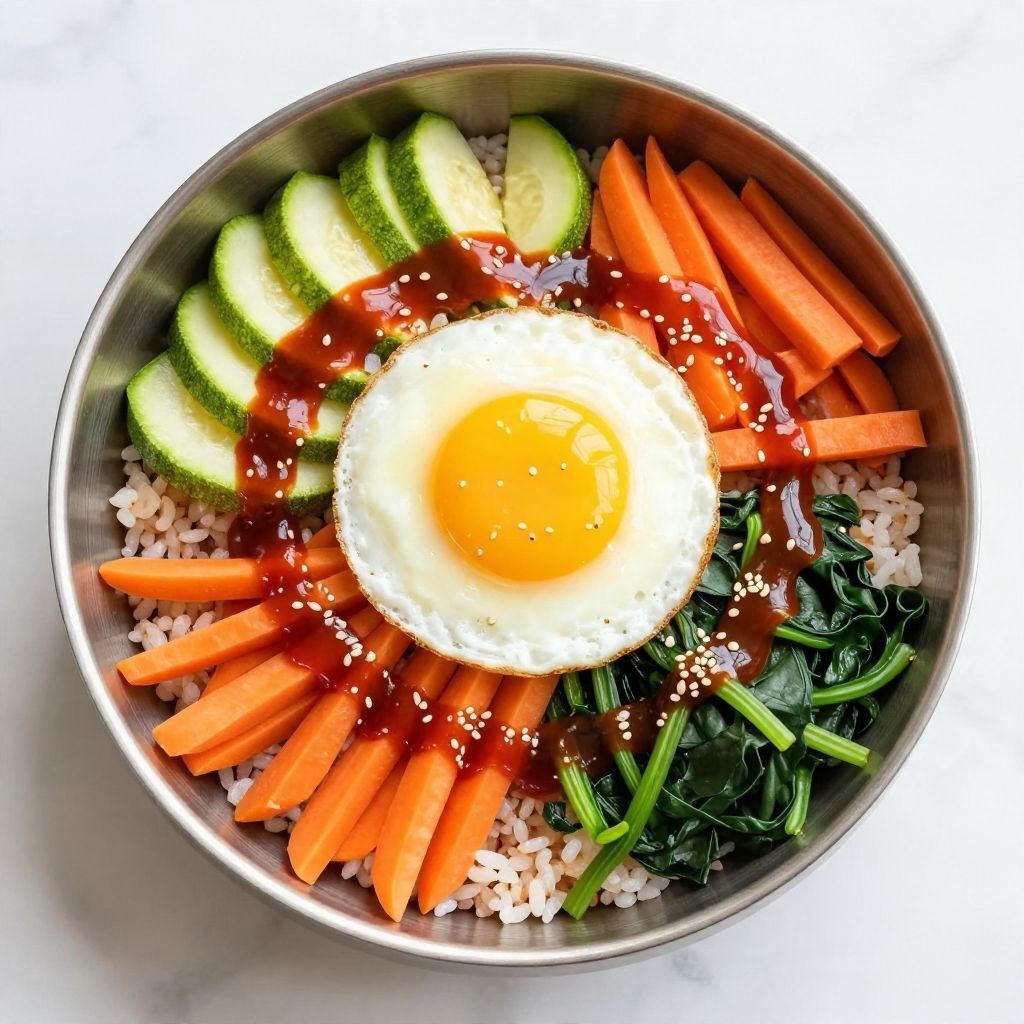
Picture a colorful bowl filled with warm rice, topped with vibrant vegetables and a perfectly fried egg. That is the essence of Korean Bibimbap, a dish that not only tastes incredible but also looks like a work of art. This recipe is a fantastic way to enjoy a healthy meal that’s quick to prepare, making it perfect for busy weeknights or a cozy weekend feast. With its delightful mix of flavors and textures, this dish is bound to impress not just your taste buds, but also your guests. Let’s gather our ingredients and get started!
Why You’ll Love This Recipe
This Bibimbap recipe will become a staple in your kitchen for good reason.
- Quick and easy to make, perfect for any night of the week.
- Customizable to suit any dietary preferences or restrictions.
- Packed with nutrition from a variety of fresh vegetables.
- Rich in flavor thanks to the savory sauce and toppings.
- Visually appealing with its colorful presentation.
My Experience Making This Recipe
When I first made this Bibimbap, I was amazed at how simple it was to create something so delicious. The aroma of sizzling vegetables filled my kitchen, transporting me to a bustling Korean street market.
As I plated it up, the vibrant colors of the veggies and that sunny-side-up egg made my heart flutter. Everyone who tried it raved about the explosion of flavors, and I couldn’t help but feel proud of my creation.
Recipe Overview
- Recipe Name: Korean Bibimbap
- Servings: 4
- Prep Time: 20 minutes
- Cook Time: 15 minutes
- Total Time: 35 minutes
- Course: Main Course
- Cuisine: Korean
- Calories per Serving: 550
Equipment You Will Need
- Large skillet or wok
- Medium saucepan
- Cutting board
- Knife
- Wooden spoon or spatula
- Measuring cups and spoons
Ingredients for Korean Bibimbap
- 2 cups of cooked rice (white or brown)
- 1 cup of carrots, julienned
- 1 cup of zucchini, julienned
- 1 cup of spinach
- 4 large eggs
- 1 tablespoon of sesame oil
- 4 tablespoons of gochujang (Korean chili paste)
- 2 tablespoons of soy sauce
- 1 tablespoon of sesame seeds
- Salt and pepper to taste
Ingredient Notes and Substitutions
- Rice: Provides a hearty base for the dish. Substitute with quinoa or cauliflower rice for a low-carb option.
- Vegetables: Adds freshness and crunch. Feel free to use bell peppers, mushrooms, or any seasonal veggies.
- Eggs: Gives a rich flavor and creaminess. For a vegan version, use tofu or avocado instead.
- Gochujang: Brings a spicy kick. If unavailable, mix chili paste with a touch of honey for a sweet-spicy blend.
- Sesame oil: Adds depth and nuttiness. You can substitute with olive oil, though the flavor will differ.
How to Make Korean Bibimbap
Step 1: Prepare the Rice
Start by cooking the rice according to package instructions. This forms the base of your Bibimbap.
Step 2: Sauté the Vegetables
Heat sesame oil in a large skillet over medium heat. Add carrots and zucchini, and sauté until tender, about 3-4 minutes.
Step 3: Cook the Spinach
Add the spinach to the skillet and cook until wilted, about 1-2 minutes. This adds a nice green element to your dish.
Step 4: Fry the Eggs
In a separate pan, fry the eggs sunny-side up. This creates a rich, creamy topping that blends beautifully with the other ingredients.
Step 5: Assemble the Bowls
In a bowl, layer the cooked rice first, then arrange the sautéed vegetables around the edges. The colorful presentation makes it visually appealing.
Step 6: Add the Egg
Place a fried egg in the center of each bowl. This adds richness and a lovely touch to the dish.
Step 7: Drizzle with Sauce
In a small bowl, mix gochujang with soy sauce. Drizzle this mixture over the top to enhance flavor.
Step 8: Garnish and Serve
Sprinkle sesame seeds on top for added crunch. Enjoy your delicious homemade Bibimbap!
Pro Tip: Make sure to serve Bibimbap hot, as mixing it while warm allows the flavors to meld beautifully.
Tips for the Best Korean Bibimbap
- Use day-old rice for better texture; it holds up well when stir-fried.
- Don’t skip the sesame oil; it adds a fantastic flavor.
- Feel free to mix in your favorite proteins, like chicken or tofu, for extra heartiness.
- Adjust the level of gochujang to suit your spice preference.
- Mix all ingredients thoroughly before eating to combine the flavors.
Common Mistakes to Avoid
- Overcooking the vegetables can make them mushy; aim for tender-crisp.
- Using too much sauce can overpower the dish; start with less and add more to taste.
- Not salting the rice; a pinch of salt can enhance its flavor significantly.
- Skipping the frying of the egg; it adds a delightful creaminess that’s key to Bibimbap.
Serving Suggestions
This dish pairs wonderfully with a variety of sides and drinks. Here are some tasty ideas.
- Korean pickled vegetables (banchan)
- Miso soup for a comforting addition
- A light cucumber salad to balance the meal
- Green tea for a refreshing drink
Variations to Try
- Switch up the vegetables based on what you have on hand.
- Add kimchi for an extra zing and probiotic boost.
- Use quinoa instead of rice for a different grain option.
- Try different proteins like bulgogi beef or shrimp for variety.
Dietary Adaptations
- Gluten-free: Use tamari instead of soy sauce.
- Dairy-free: This recipe is naturally dairy-free.
- Vegan/Vegetarian: Replace eggs with tofu or avocado.
- Low-carb/Keto: Use cauliflower rice for a low-carb option.
Storage and Reheating
Refrigerator
Store leftover Bibimbap in an airtight container in the fridge for up to 3 days.
- Keep the egg separate for best texture.
- Vegetables may become softer upon reheating.
Freezer
For longer storage, freeze the rice and vegetables separately for up to 2 months.
- Thaw overnight in the fridge before reheating.
- Fried eggs do not freeze well; add fresh when serving.
Reheating
Reheat in a skillet over medium heat until warm. Add a splash of water to steam veggies if needed.
- Microwave can be used but may make the rice soggy.
- Stir occasionally for even heating.
Nutrition Information
| Nutrient | Amount |
|---|---|
| Calories | 550 |
| Total Fat | 20g |
| Saturated Fat | 4g |
| Carbohydrates | 80g |
| Fiber | 5g |
| Sugar | 4g |
| Protein | 15g |
| Sodium | 600mg |
| Cholesterol | 200mg |
This nutritional information is an estimate and may vary based on specific ingredients used.
Frequently Asked Questions
Can I make Bibimbap ahead of time?
You can prepare the vegetables and rice in advance, but it’s best to assemble and add the egg just before serving.
What can I use instead of gochujang?
If you don’t have gochujang, a mix of chili paste with a bit of honey can provide a similar sweet heat.
How should I store leftovers?
Store leftovers in an airtight container in the fridge for up to three days; keep the egg separate for best results.
What if my vegetables are too watery?
Make sure to sauté them over medium-high heat and avoid overcrowding the pan to prevent steaming.
Can I use brown rice?
Yes, brown rice is a great choice for a nuttier flavor and added fiber.
Final Thoughts
Making your own Korean Bibimbap is a delightful experience that brings a burst of flavors to your table. With its colorful presentation and customizable ingredients, you’ll want to make it again and again.
If you’re eager to explore more delicious recipes, check out this Bibimbap sauce recipe or learn how HelloFresh works for more meal inspiration.
Korean Bibimbap
Ingredients
Equipment
Method
- Cook the rice according to package instructions.
- Heat sesame oil in a large skillet over medium heat.
- Add carrots and zucchini, and sauté until tender, about 3-4 minutes.
- Add the spinach to the skillet and cook until wilted, about 1-2 minutes.
- In a separate pan, fry the eggs sunny-side up.
- In a bowl, layer the cooked rice first, then arrange the sautéed vegetables around the edges.
- Place a fried egg in the center of each bowl.
- In a small bowl, mix gochujang with soy sauce and drizzle this mixture over the top.
- Sprinkle sesame seeds on top for added crunch.