
There’s something magical about the sweet and savory aroma of a homemade Japchae Sauce wafting through your kitchen. This sauce, with its perfect balance of flavors, elevates any stir-fry, especially the traditional Korean dish, Japchae, made with glass noodles and vegetables. It’s not just a taste sensation; the versatility of this sauce makes it a must-have in your culinary arsenal. Ready to learn how to whip up this delightful sauce? Let’s dive right in!
Why You’ll Love This Recipe
This Japchae Sauce is a true pantry hero, transforming simple ingredients into a gourmet experience.
- Rich in flavor with a perfect blend of sweet and savory.
- Quick to prepare, making it ideal for busy weeknights.
- Versatile enough to complement various dishes beyond Japchae.
- Uses easily accessible ingredients that you likely already have.
- Can be adjusted to suit your taste preferences.
My Experience Making This Recipe
When I first made this sauce, I was amazed at how quickly everything came together. The first taste was a delightful explosion of umami that made my taste buds dance.
Friends and family were blown away by the flavors, and I found myself sharing the recipe more than a few times. This sauce has become my go-to for elevating simple meals to something extraordinary.
Recipe Overview
- Recipe Name: Japchae Sauce
- Servings: 4
- Prep Time: 5 minutes
- Cook Time: 5 minutes
- Total Time: 10 minutes
- Course: Sauce
- Cuisine: Korean
- Calories per Serving: Approximately 80
Equipment You Will Need
- Measuring spoons
- Measuring cups
- Small mixing bowl
- Whisk or fork
- Storage container
Ingredients for Japchae Sauce
- ¼ cup soy sauce
- 2 tablespoons sesame oil
- 2 tablespoons brown sugar
- 1 tablespoon rice vinegar
- 1 teaspoon minced garlic
- 1 teaspoon sesame seeds
Ingredient Notes and Substitutions
- Soy sauce: Provides the salty umami flavor. You can use tamari for a gluten-free option.
- Sesame oil: Adds a rich, nutty flavor. Olive oil can be used, but it will alter the taste.
- Brown sugar: Balances the saltiness with sweetness. Honey or maple syrup can work as substitutes.
- Rice vinegar: Contributes acidity to the sauce. Apple cider vinegar can be an alternative.
- Minced garlic: Enhances flavor depth. Garlic powder can be used in a pinch.
- Sesame seeds: Provide texture and garnish. Chopped peanuts can be a tasty alternative.
How to Make Japchae Sauce
Step 1: Gather Your Ingredients
Start by assembling all the ingredients on your countertop. This makes the process smoother and ensures you do not forget anything.
Step 2: Measure the Soy Sauce
In a small mixing bowl, pour in the soy sauce. This will be the backbone of your sauce, so make sure it’s a quality brand.
Step 3: Add Sesame Oil
Next, measure and add the sesame oil to the bowl. This will infuse the sauce with that distinctive nutty aroma.
Step 4: Incorporate Brown Sugar
Stir in the brown sugar until it dissolves completely. This sweetness will balance out the saltiness from the soy sauce.
Step 5: Mix in Rice Vinegar
Add the rice vinegar to the mixture. This will provide a nice tang that brightens the overall flavor.
Step 6: Add Minced Garlic
Stir in the minced garlic. This ingredient is key for depth and will bring a wonderful fragrance to the sauce.
Step 7: Sprinkle Sesame Seeds
Finally, add the sesame seeds to the bowl. They add a crunchy texture and a touch of elegance to your sauce.
Step 8: Whisk Until Combined
Using a whisk or a fork, mix all the ingredients thoroughly until well combined. Taste and adjust seasoning if necessary.
Pro Tip: Let the sauce sit for about 10 minutes before using it; this allows the flavors to meld beautifully.
Tips for the Best Japchae Sauce
- Use low-sodium soy sauce if you’re watching your salt intake.
- Experiment with adding chili flakes for a spicy kick.
- Double the recipe and store extras in the fridge for quick meals.
- Mix in fresh herbs like green onions for a burst of freshness.
- Always taste as you go; adjust sweetness or saltiness according to your preference.
Common Mistakes to Avoid
- Using low-quality soy sauce can lead to a bland sauce. Choose a good brand for the best flavor.
- Not letting the sauce sit can result in a less developed flavor. Give it time to meld.
- Skipping the garlic will leave your sauce flat. Don’t underestimate its impact.
- Not adjusting for personal taste can lead to disappointment. Always taste and tweak.
Serving Suggestions
This sauce pairs perfectly with a variety of dishes, adding a delightful kick.
- Stir-fried vegetables
- Grilled meats, like chicken or beef
- Rice or quinoa bowls for an added flavor boost
- As a marinade for tofu or shrimp
Variations to Try
- Add a splash of spicy chili oil for a fiery version.
- Incorporate mango puree for a fruity twist.
- Mix in some hoisin sauce for an even sweeter profile.
- Use lime juice instead of rice vinegar for a zesty flavor.
Dietary Adaptations
- Gluten-free: Use tamari instead of regular soy sauce.
- Dairy-free: This recipe is naturally dairy-free.
- Vegan: All ingredients are plant-based; no adjustments needed.
- Low-carb/keto: Substitute brown sugar with a keto-friendly sweetener.
Storage and Reheating
Refrigerator
Store the sauce in an airtight container in the fridge for up to one week.
- Keep it sealed to maintain freshness.
- Label with the date for easy reference.
Freezer
This sauce can be frozen for up to three months.
- Portion it into small containers for easy thawing.
- Thaw in the refrigerator before use.
Reheating
To reheat, simply warm it in a saucepan over low heat, stirring until heated through.
- Avoid boiling to maintain the texture.
- Adjust seasoning if necessary after reheating.
Nutrition Information
| Nutrient | Amount |
|---|---|
| Calories | 80 |
| Total Fat | 7g |
| Saturated Fat | 1g |
| Carbohydrates | 5g |
| Fiber | 0g |
| Sugar | 3g |
| Protein | 1g |
| Sodium | 800mg |
| Cholesterol | 0mg |
This nutritional information is an estimate and can vary based on specific ingredients used.
Frequently Asked Questions
Can I make this sauce ahead of time?
Absolutely! This sauce can be prepared a day in advance and stored in the refrigerator.
What can I substitute for brown sugar?
You can use honey or maple syrup, but this may alter the flavor slightly.
How long does the sauce last?
It will stay fresh in the refrigerator for up to a week if stored properly.
Will the sauce thicken when cooked?
Yes, cooking the sauce will thicken it slightly, making it cling better to your noodles or veggies.
Can I use this sauce for other recipes?
Definitely! It works great as a marinade or a dressing for various dishes.
Final Thoughts
Making your own Japchae Sauce is not just rewarding; it opens up a world of flavor possibilities. Once you try this sauce, you’ll wonder how you ever cooked without it!
Feel free to explore more delicious recipes like this Bibimbap Sauce Recipe or this Gochujang Sauce Recipe to enhance your culinary adventures.
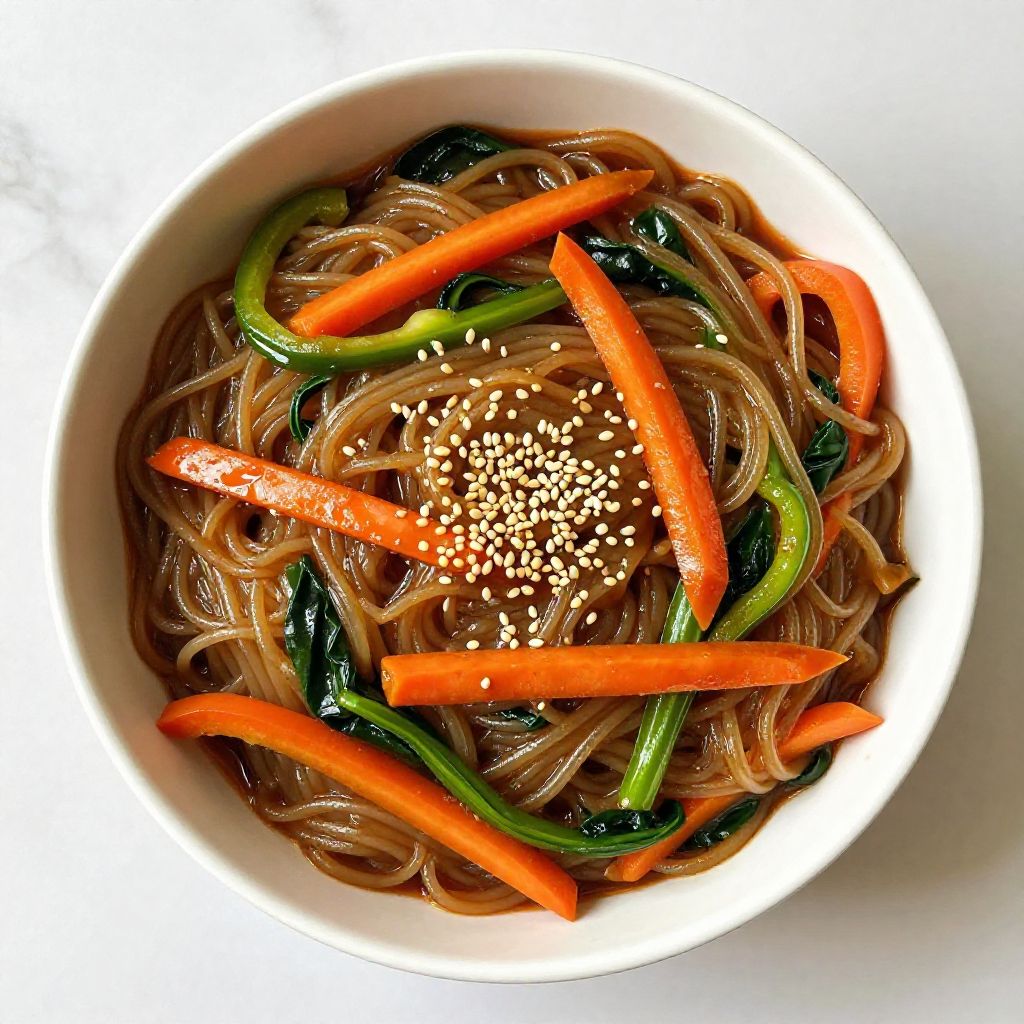
Japchae Sauce
Ingredients
Equipment
Method
- Gather all the ingredients on your countertop.
- In a small mixing bowl, pour in the soy sauce.
- Measure and add the sesame oil to the bowl.
- Stir in the brown sugar until it dissolves completely.
- Add the rice vinegar to the mixture.
- Stir in the minced garlic.
- Add the sesame seeds to the bowl.
- Using a whisk or a fork, mix all the ingredients thoroughly until well combined.
- Let the sauce sit for about 10 minutes before using.