
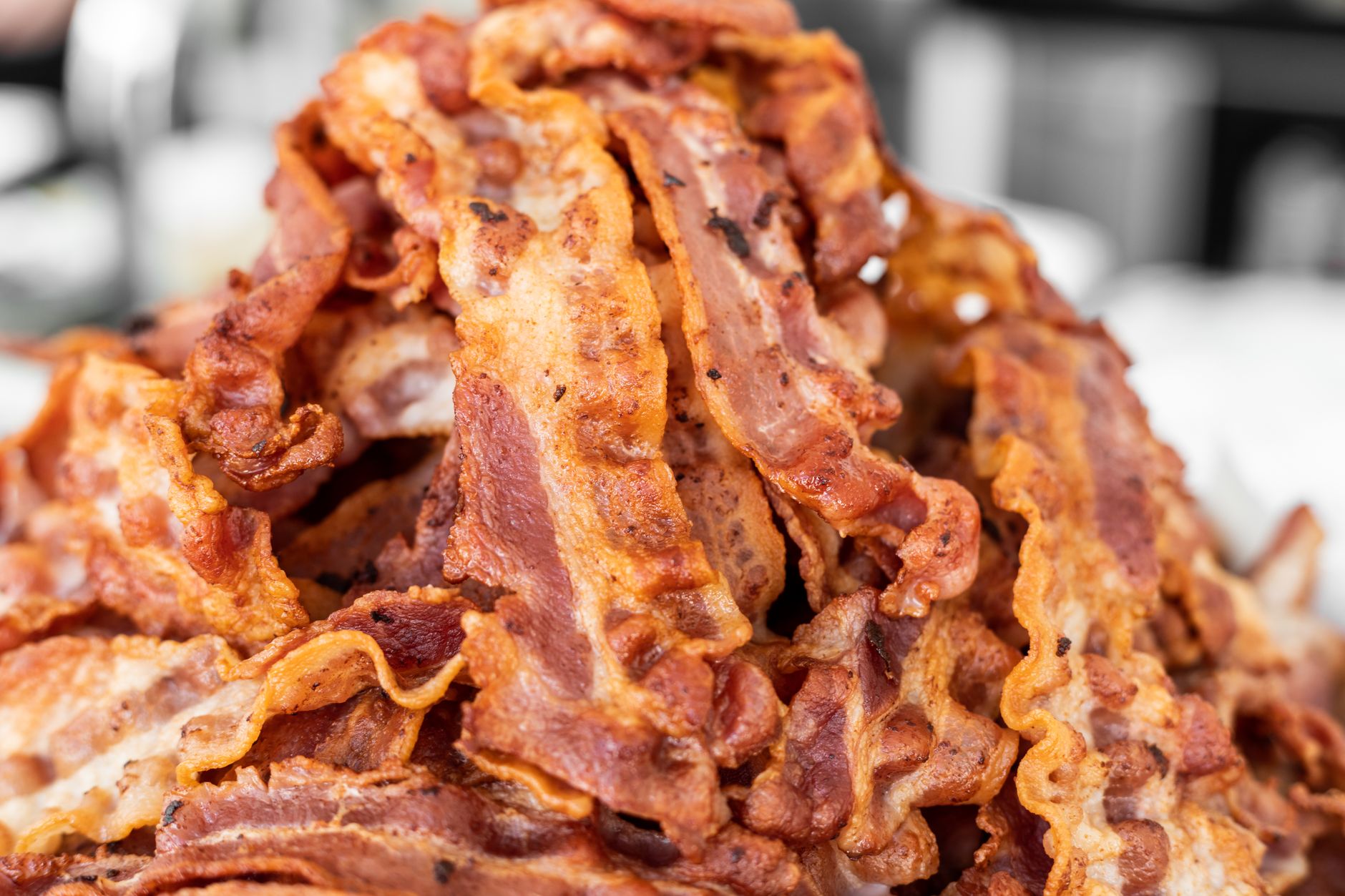
Bacon is a beloved breakfast staple and a flavorful addition to various dishes. It’s crispy, savory, and adds an enticing smoky aroma to any meal. But for those interested in nutrition, a common question arises: how much protein is in one piece of bacon?
This article will explore the protein content in bacon, why it matters, and how it fits into different dietary needs. We’ll also look at different types of bacon, cooking methods, and practical considerations for portion sizes.
How Much Protein Is in One Piece of Bacon?
One typical slice of cooked bacon contains around 3 grams of protein. However, this can vary slightly based on the thickness of the slice and how it is cooked. A standard serving of bacon usually includes two slices, totaling approximately 6 grams of protein.
Understanding Bacon Varieties and Their Impact on Protein Content
Before diving deeper into protein, it’s important to recognize the different types of bacon available. The most common types include:
- Regular Bacon: The standard, typically made from pork belly.
- Turkey Bacon: A leaner alternative made from turkey, often lower in fat and calories but still a good protein source.
- Canadian Bacon: A thicker cut from the loin, higher in protein relative to regular bacon.
- Beef Bacon: Made from the belly of the cow, which can also vary in protein amount depending on the cut.
Each type offers different nutritional profiles, so it’s beneficial to choose based on your dietary needs.
Cooking Methods and Their Effects on Nutritional Content
The cooking method can influence the protein and fat content of bacon. Here are some common methods to consider:
- Frying: Traditional pan-frying can render out significant fat, but it keeps protein levels consistent. You might end up with more crispy bits if you cook it longer.
- Oven-Baking: Cooking bacon in the oven allows for even cooking and less mess. You can also control how crispy you want it while keeping the protein intact.
- Microwaving: A quick method that usually retains the protein without the additional fat that frying might yield.
Regardless of the cooking method, the protein content in bacon remains relatively stable. The rendered fat is what changes between different methods.
Protein Quality and Composition in Bacon
Not all protein sources are created equal. The protein in bacon is considered high-quality because it contains all nine essential amino acids that the body cannot produce on its own.
However, it’s essential to balance your protein intake with other nutrients. Bacon is also known for its high sodium and saturated fat content, which can be concerning for those monitoring their cardiovascular health.
Incorporating Bacon into Your Diet
Bacon can be a flavorful addition to your meals, but moderation is key. Here are practical suggestions to incorporate bacon while maintaining a balanced diet:
- Add to Salads: Crumbled bacon can enhance the flavor profile of a salad, adding both protein and crunch.
- Wrap Around Vegetables: Bacon-wrapped asparagus or Brussels sprouts can make for a delightful appetizer, increasing the protein and flavor.
- In Breakfast Dishes: Bacon can complement eggs, yogurt, or smoothies for a protein kick in the morning.
Determining Portion Size and Protein Intake
While bacon can provide a protein boost, it’s essential to consider portion sizes. The American Heart Association recommends limiting saturated fat intake to about 5-6% of total daily calories.
This means that if you consume 2,000 calories a day, you should aim to limit saturated fat to around 120 calories, or about 13 grams—equivalent to roughly 3-4 slices of bacon if they’re cooked traditionally.
Practical Substitutions for Bacon
If you’re looking to lower your saturated fat intake but still crave the flavor of bacon, consider these alternatives:
- Turkey Bacon: An excellent substitute that usually contains less fat and fewer calories.
- Vegetarian Bacon: Made from soy or tempeh, it mimics the texture and taste of bacon but is plant-based.
- Crispy Seaweed: Offers crunch and umami flavor for those seeking a non-meat alternative.
These options can still provide a satisfying flavor without the high levels of saturated fats and calories found in traditional bacon.
Common Mistakes When Cooking Bacon
Getting bacon just right can be a challenge, and several common mistakes can affect both flavor and texture:
- Overcrowding the Pan: Cooking too many slices at once can lower the temperature and result in soggy bacon.
- Lifting Too Soon: Constantly checking on bacon can make it less crispy. Let it cook undisturbed until it’s close to the desired doneness.
- Not Drying Before Cooking: Patting dry before cooking allows for crispier outcomes by reducing excess moisture.
Food Safety and Storage Considerations
Food safety is crucial when it comes to bacon. Here are some essential handling and storage tips:
- Cooking Temperature: Ensure bacon is cooked to a minimum internal temperature of 145°F (63°C) for safety.
- Storage: Uncooked bacon should be refrigerated and consumed by the date on the package. Cooked bacon can last up to a week in the fridge.
- Freezing: You can freeze bacon if you wrap it tightly. It can maintain quality for up to six months in the freezer.
Measuring Protein Intake from Bacon
If you’re tracking your protein intake, understanding how to measure the protein from bacon is helpful. Here’s a quick guide:
- Standard Slice: 3 grams of protein per slice.
- Two Slices: Approximately 6 grams, recommended as a standard serving.
- Three Slices: About 9 grams—great if you’re pairing it with eggs or another protein source.
Be mindful, though, that while bacon can contribute to your protein daily intake, it’s crucial to balance it with leaner protein options such as chicken, fish, legumes, and nuts.
Conclusion
In summary, one piece of cooked bacon contains roughly 3 grams of protein. While it can be a delicious addition to various meals, it’s important to consume it in moderation due to its high sodium and saturated fat content. The choice of bacon type and cooking method can also affect its nutritional profile.
For a diverse meal that meets your protein goals, consider exploring different ways to incorporate bacon or its alternatives into your diet. If you’re looking for delicious bacon recipes, why not try out some candied bacon or explore protein-rich brownies? These options can add variety to your meals while still letting you enjoy the unique flavor of bacon.
Explore more delicious recipes such as candied bacon or protein brownies to diversify your meals even further.