
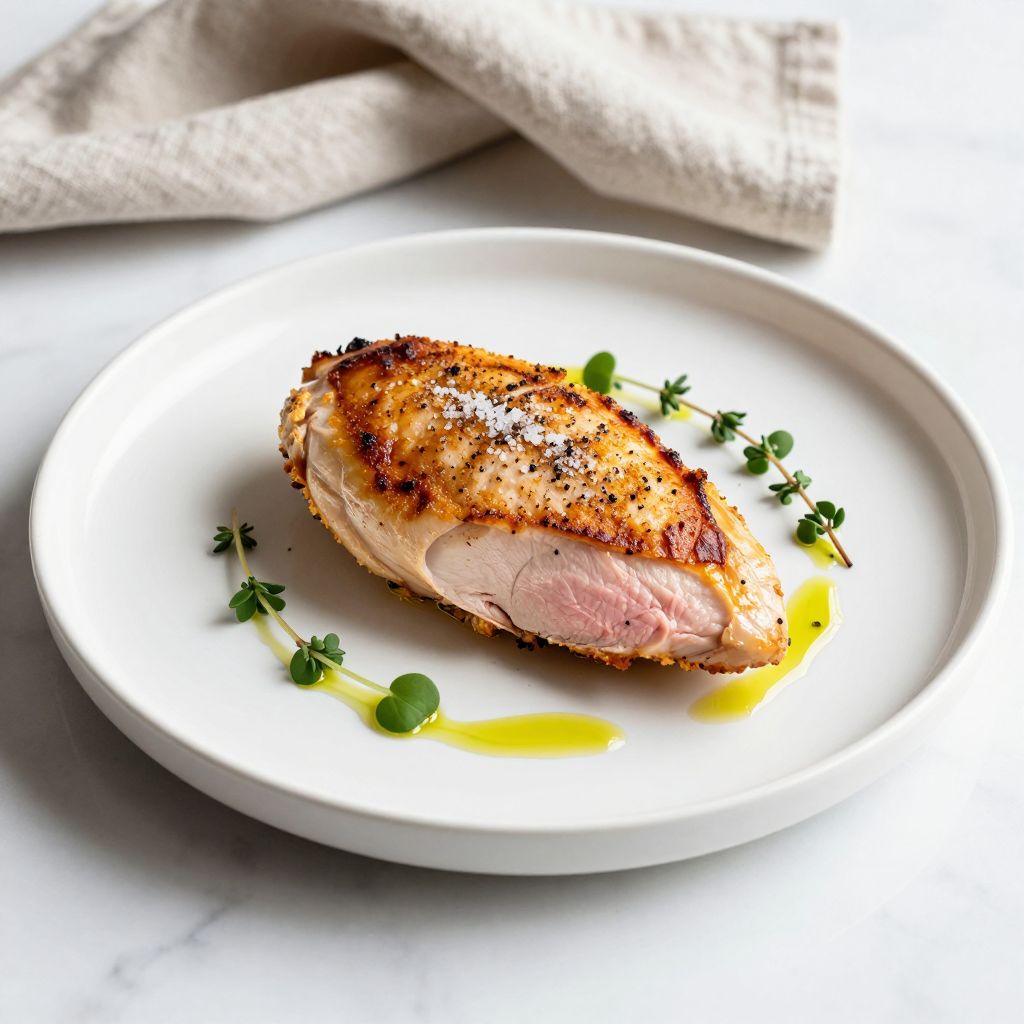
Leaving chicken on the counter while you prep other ingredients or after a meal is a common kitchen scenario, but it comes with real food-safety risks. Understanding how long chicken can safely sit out at room temperature helps you prevent foodborne illness while keeping your cooking routine practical and efficient.
This guide explains the safety window for raw and cooked chicken at room temperature, what happens when chicken sits out too long, and how to handle chicken safely from grocery store to table.
How Long Can Chicken Sit Out Before It Becomes Unsafe?
Chicken should not sit out at room temperature for more than two hours, or one hour if the ambient temperature is above 90°F (32°C). This applies to both raw and cooked chicken. Beyond this window, bacteria multiply rapidly to dangerous levels, and the chicken should be discarded rather than cooked or refrigerated.
Why the Two-Hour Rule Matters
The two-hour guideline comes from food-safety science, not arbitrary caution. Chicken harbors bacteria such as Salmonella, Campylobacter, and sometimes Clostridium perfringens, which thrive between 40°F and 140°F (4°C and 60°C), a range food scientists call the danger zone.
At room temperature, these bacteria double in number approximately every twenty minutes. After two hours, bacterial populations can reach levels that cause food poisoning even if you cook the chicken thoroughly afterward, because some bacteria produce heat-stable toxins that survive high temperatures.
When the room is warmer than 90°F, bacteria multiply even faster, which is why the safe window drops to one hour on hot days, during outdoor gatherings, or in kitchens without air conditioning.
Raw Chicken at Room Temperature
Raw chicken is particularly vulnerable because it starts with a higher baseline bacterial load than many other proteins. The surface moisture and protein-rich environment provide ideal conditions for rapid microbial growth.
If you need to bring raw chicken to room temperature before cooking—a step some recipes suggest for even cooking—limit this to thirty minutes maximum and keep the chicken on a plate in the coolest part of your kitchen, away from direct sunlight or heat sources.
For most home cooking, taking the chill off chicken is unnecessary. Cooking from refrigerator temperature works perfectly well and keeps you safely within food-safety guidelines.
Thawing Chicken Safely
Never thaw frozen chicken on the counter, even if you plan to cook it immediately. Safe thawing methods include refrigerator thawing, which takes several hours to overnight; cold-water thawing in a sealed bag, changing the water every thirty minutes; or microwave thawing if you cook the chicken right away.
Countertop thawing allows the outer layers to enter the danger zone while the center remains frozen, creating a perfect environment for bacterial growth on the surface.
Cooked Chicken at Room Temperature
Cooked chicken follows the same two-hour rule as raw chicken. Even though cooking kills most bacteria present in raw chicken, spores from bacteria like Clostridium perfringens can survive cooking temperatures and germinate as the chicken cools.
Leftovers from dinner should be refrigerated within two hours of cooking. If you served a roast chicken or grilled chicken breasts and left them on the table during a long meal, calculate the time from when the chicken finished cooking, not from when you stopped eating.
For buffets, picnics, or potlucks where food sits out longer, use chafing dishes, slow cookers on the warm setting, or ice baths to keep hot foods above 140°F or cold foods below 40°F.
Reheating Does Not Reset the Clock
If chicken has been sitting out for three hours, reheating it to steaming hot will not make it safe. Heat kills bacteria but does not destroy toxins already produced during the time the chicken spent in the danger zone.
When in doubt, throw it out. The cost of replacing chicken is far less than the misery of food poisoning.
Signs Chicken Has Sat Out Too Long
Relying on appearance, smell, or texture to judge chicken safety is unreliable. Dangerous bacteria do not always produce obvious spoilage signs, especially within the first few hours at room temperature.
However, if chicken develops a slimy texture, off odor, or grayish color, these are clear signs of spoilage and the chicken should be discarded immediately, regardless of how long it has been sitting out.
The safest approach is to track time rather than trust your senses. Set a timer when you take chicken out of the refrigerator or finish cooking it.
Proper Chicken Storage and Handling
Minimizing time at room temperature starts with smart handling from the moment you buy chicken.
- Transport chicken from the grocery store in an insulated bag or cooler if your drive is longer than thirty minutes
- Refrigerate chicken immediately upon arriving home, ideally at 40°F (4°C) or below
- Store raw chicken on the lowest refrigerator shelf in a container or on a plate to prevent drips onto other foods
- Use or freeze raw chicken within one to two days of purchase
- Cool cooked chicken quickly by transferring it to shallow containers, which allows heat to dissipate faster than deep pots
- Refrigerate cooked chicken within two hours and use within three to four days
Freezing for Longer Storage
Freezing stops bacterial growth entirely. Raw chicken keeps well in the freezer for up to nine months when wrapped tightly in freezer paper or stored in freezer bags with air removed. Cooked chicken maintains quality for two to six months frozen.
Label packages with the date so you can use older chicken first and maintain a rotation in your freezer.
Special Situations and Common Questions
Marinating Chicken
Always marinate chicken in the refrigerator, never on the counter. Acidic marinades do not preserve chicken or slow bacterial growth enough to make room-temperature marinating safe.
If a recipe calls for bringing marinated chicken to room temperature, limit this to thirty minutes and keep the chicken covered.
Brining Chicken
Brines contain salt, which has some preservative effect, but not enough to keep chicken safe at room temperature for extended periods. Refrigerate chicken while it brines, and if you need to bring brined chicken to room temperature before cooking, follow the same thirty-minute guideline.
For more guidance on safe brining, see our detailed instructions in a chicken brine recipe.
Chicken Left Out Overnight
Chicken left out overnight is not safe to eat, regardless of whether it is raw or cooked. Discard it without tasting or attempting to salvage it by cooking or reheating.
Rotisserie Chicken from the Store
Rotisserie chicken from the grocery store follows the same two-hour rule once you bring it home. If the chicken was hot when purchased and you drive directly home, refrigerate it as soon as you arrive. If your trip takes longer or includes multiple stops, the chicken may already be approaching the two-hour limit.
What Happens If You Eat Chicken That Sat Out Too Long
Consuming chicken that has been at room temperature beyond the safety window can cause food poisoning. Symptoms typically appear six to forty-eight hours after eating contaminated food and may include nausea, vomiting, diarrhea, abdominal cramping, and fever.
Most healthy adults recover within a few days, but food poisoning can be severe for young children, elderly adults, pregnant women, and people with weakened immune systems. In these populations, bacterial infections from improperly handled chicken can lead to hospitalization.
Prevention is straightforward: respect the two-hour limit and prioritize food safety over the inconvenience of discarding chicken.
Practical Tips for Busy Cooks
Managing the two-hour rule does not require constant vigilance, just a few simple habits.
- Prep other ingredients first and take chicken out of the refrigerator last
- Set a timer on your phone when you remove chicken from cold storage
- Divide large batches of cooked chicken into smaller portions for faster cooling
- Use a refrigerator thermometer to confirm your fridge maintains 40°F or below
- Keep a cooler with ice packs in your car for grocery trips on warm days
- Plan meals so chicken goes straight from cooking to serving to refrigerator without long delays
Hosting and Serving Chicken Safely
When entertaining, serve chicken dishes in smaller batches and replenish from the refrigerator rather than leaving a large platter out for hours. For outdoor gatherings, keep cold chicken salads and appetizers on ice and hot dishes in chafing dishes or slow cookers.
If guests linger and the meal stretches beyond two hours, refrigerate chicken dishes at the two-hour mark and reheat portions as needed.
Frequently Asked Questions
Can I leave chicken out to marinate for a few hours?
No. Always marinate chicken in the refrigerator. Marinades do not prevent bacterial growth at room temperature, and leaving chicken out to marinate for even a few hours exceeds safe handling guidelines.
Is chicken safe if it sat out for two and a half hours?
No. Once chicken has been at room temperature for more than two hours, it should be discarded. The additional thirty minutes allows bacterial populations to multiply beyond safe levels.
Does cooking chicken that sat out too long make it safe?
No. While cooking kills bacteria, it does not destroy heat-stable toxins that some bacteria produce. If chicken has been in the danger zone for more than two hours, cooking it will not make it safe to eat.
How can I tell if refrigerated chicken has gone bad?
Fresh chicken should have little to no odor, a pink color, and a slightly moist but not slimy texture. If refrigerated chicken smells sour or sulfurous, feels sticky or slimy, or has turned gray, discard it even if it is within the use-by date.
Can I refreeze chicken that thawed at room temperature?
If chicken thawed at room temperature, it is not safe to cook or refreeze. Discard it. Chicken thawed safely in the refrigerator can be refrozen within one to two days, though the texture may suffer slightly.
What temperature should I cook chicken to for safety?
Cook all chicken to an internal temperature of 165°F (74°C) measured with a food thermometer in the thickest part of the meat. This temperature kills harmful bacteria, but proper cooking cannot compensate for unsafe handling before cooking.
The Bottom Line on Chicken and Room Temperature
Keeping chicken out of the danger zone is one of the simplest and most effective ways to prevent foodborne illness in your kitchen. The two-hour rule is easy to remember and apply, and it protects everyone who eats your cooking.
When you handle chicken with care—refrigerating promptly, tracking time at room temperature, and discarding anything that exceeds the safety window—you can cook with confidence and serve meals that are both delicious and safe.
For more chicken techniques and recipes that prioritize both flavor and safety, explore our guides on making rich chicken stock recipe and perfecting a flavorful chicken brine recipe for juicy, well-seasoned results every time.