
There’s something truly satisfying about creating your own mayonnaise at home, especially when it’s made with high-quality olive oil. This Homemade Mayonnaise Recipe Olive Oil is not just a creamy delight; it’s a way to elevate your sandwiches, salads, and dips with a flavor that store-bought versions can’t compete with. The rich, smooth texture and the hint of peppery notes from the olive oil make it a standout condiment.
Why You’ll Love This Recipe
This mayonnaise recipe is quick to whip up and uses simple ingredients you probably already have in your kitchen.
- Rich and creamy texture that’s hard to resist.
- Customizable flavor with fresh herbs or spices.
- Perfect for sandwiches, salads, or as a dip.
- Healthier than many store-bought options.
My Experience Making This Recipe
When I first made this mayonnaise, I was blown away by how easy it was. The aroma of olive oil filled my kitchen, and it was hard to resist tasting it straight from the bowl.
My family absolutely loved it, and they couldn’t believe I made it myself. Now, it’s a staple in my home; I even experiment with different flavors!
Recipe Overview
- Recipe Name: Homemade Mayonnaise Recipe Olive Oil
- Servings: 8
- Prep Time: 10 minutes
- Cook Time: 0 minutes
- Total Time: 10 minutes
- Course: Condiment
- Cuisine: Mediterranean
- Calories per Serving: 100
Equipment You Will Need
- Mixing bowl
- Whisk or hand mixer
- Measuring cups and spoons
- Spatula
Ingredients for Homemade Mayonnaise Recipe Olive Oil
- 1 large egg (room temperature)
- 1 tablespoon Dijon mustard
- 1 tablespoon white wine vinegar
- 1 cup extra virgin olive oil
- Salt (to taste)
- Freshly ground black pepper (to taste)
Ingredient Notes and Substitutions
- Egg: Used for emulsification, you can substitute with a pasteurized egg or egg yolk for safety.
- Dijon mustard: Adds flavor and helps emulsify; yellow mustard can work in a pinch.
- White wine vinegar: Provides acidity; apple cider vinegar is a good substitute.
- Extra virgin olive oil: The star of this recipe; avocado oil can be used for a milder flavor.
How to Make Homemade Mayonnaise Recipe Olive Oil
Step 1: Gather Ingredients
Make sure all your ingredients are at room temperature for the best emulsification. Cold ingredients can lead to a failed mayonnaise.
Step 2: Combine Egg and Mustard
In a mixing bowl, add the large egg and Dijon mustard. Whisk them together until well combined, which helps create a stable base.
Step 3: Add Vinegar
Add the white wine vinegar into the mixture. This adds acidity, which balances the richness of the mayonnaise.
Step 4: Slowly Incorporate Olive Oil
While whisking continuously, slowly drizzle in the olive oil. This gradual incorporation is key to achieving the desired creamy texture.
Step 5: Whisk Until Thick
Keep whisking until the mayonnaise thickens and emulsifies. This should take about 1-2 minutes of vigorous whisking.
Step 6: Season to Taste
Add salt and freshly ground black pepper to taste. Adjust the seasoning according to your preference for a personalized touch.
Step 7: Store Properly
Transfer the mayonnaise to an airtight container. Proper storage keeps it fresh and safe for up to one week in the refrigerator.
Step 8: Enjoy!
Use your homemade mayonnaise to elevate your dishes. Whether on a sandwich or as a dip, the fresh flavor is unbeatable.
Pro Tip: Use a hand mixer for a foolproof emulsification if whisking by hand feels daunting.
Tips for the Best Homemade Mayonnaise
- Use fresh, quality ingredients for the best flavor.
- Make sure the egg is at room temperature to help with emulsification.
- Whisk vigorously to incorporate air, which helps achieve a fluffy texture.
- Don’t rush the oil; a slow drizzle is crucial for a stable mayo.
- Experiment with herbs or spices to create your unique flavor.
Common Mistakes to Avoid
- Using cold ingredients can prevent emulsification.
- Adding oil too quickly may cause the mixture to separate.
- Not whisking enough can lead to a thin consistency.
- Forgetting to season can make the mayonnaise bland.
Serving Suggestions
This mayonnaise pairs wonderfully with various dishes, enhancing their flavors beautifully.
- Spread on sandwiches and wraps for extra creaminess.
- Mix into salads like potato or egg salad for a rich texture.
- Use as a dip for fresh vegetables or fries.
- Add to sauces for a creamy finish.
Variations to Try
- Add minced garlic for a delicious garlic mayonnaise.
- Mix in fresh herbs like basil or dill for a herbed twist.
- Incorporate a touch of lemon juice for brightness.
- Try using flavored olive oil for a unique taste.
Dietary Adaptations
- Gluten-free: This recipe is already gluten-free; enjoy without worry.
- Dairy-free: No dairy is used, making it suitable for those with lactose intolerance.
- Vegan: Use aquafaba instead of egg for a vegan version.
- Low-carb/keto: This mayonnaise is low in carbs, perfect for keto diets.
Storage and Reheating
Refrigerator
Store homemade mayonnaise in a tightly sealed container in the refrigerator.
- Keep it for up to one week for the best flavor and safety.
Freezer
Freezing mayonnaise is not recommended as it can change the texture upon thawing.
- It is best enjoyed fresh within the week.
Reheating
No reheating needed, but ensure it remains stored properly if not consumed immediately.
- Stir well if the mixture separates in the fridge.
Nutrition Information
| Nutrient | Amount |
|---|---|
| Calories | 100 |
| Total Fat | 11g |
| Saturated Fat | 1.5g |
| Carbohydrates | 0g |
| Fiber | 0g |
| Sugar | 0g |
| Protein | 1g |
| Sodium | 50mg |
| Cholesterol | 30mg |
This nutritional information is approximate and can vary based on specific ingredients used.
Frequently Asked Questions
Can I use a different type of oil?
Yes, you can substitute with avocado oil for a milder flavor.
How long can I store homemade mayonnaise?
It can be stored in the refrigerator for up to one week.
Can I make this ahead of time?
Absolutely! Making it a day ahead allows the flavors to meld beautifully.
What if my mayonnaise is too thin?
If it’s too thin, slowly whisk in more olive oil until you reach the desired thickness.
Is this recipe safe with raw eggs?
Using fresh, high-quality eggs minimizes risks; consider using pasteurized eggs for safety.
Final Thoughts
Making your own mayonnaise is a rewarding experience that brings fresh flavors to your table. I encourage you to give this recipe a try and enjoy the delicious results.
For more flavor options, check out my garlic mayo recipe or learn if avocado oil can be substituted for olive oil. Happy cooking!
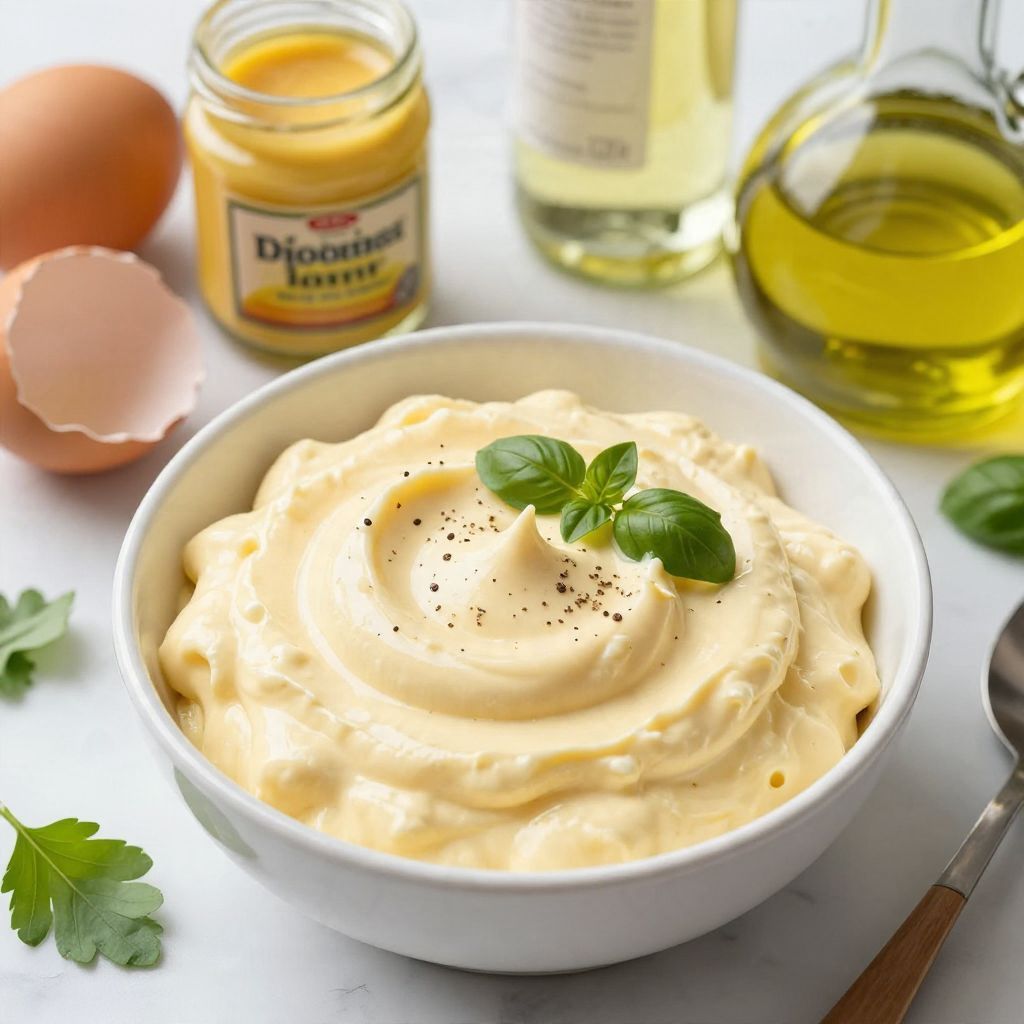
Homemade Mayonnaise Recipe Olive Oil
Ingredients
Equipment
Method
- Make sure all your ingredients are at room temperature for the best emulsification.
- In a mixing bowl, add the large egg and Dijon mustard. Whisk them together until well combined.
- Add the white wine vinegar into the mixture and mix well.
- While whisking continuously, slowly drizzle in the olive oil.
- Keep whisking until the mayonnaise thickens and emulsifies, about 1-2 minutes.
- Add salt and freshly ground black pepper to taste.
- Transfer the mayonnaise to an airtight container and store in the refrigerator.