
There’s nothing quite like the aroma of freshly baked bread filling your home, especially when it’s a warm loaf of Gluten Free Potato Bread. This recipe is a comforting blend of fluffy texture and rich flavor, perfect for sandwiches or simply slathered with butter. With its tender crumb and subtle potato sweetness, this bread is not only gluten-free but also remarkably easy to whip up, making it a great choice for busy cooks. Let’s dive right into the ingredients you’ll need to create this delightful bread!
Why You’ll Love This Recipe
This recipe stands out for its incredible taste and ease of preparation.
- Fluffy and moist texture that rivals traditional bread.
- Simple ingredients you likely already have on hand.
- Perfect for sandwiches, toast, or as a side with soups.
- Versatile enough to customize with herbs or spices.
- Free from gluten, making it safe for those with sensitivities.
My Experience Making This Recipe
When I first tried making this Gluten Free Potato Bread, I was pleasantly surprised by how easy it was. The batter came together quickly, and the smell of baking bread brought back memories of my grandmother’s kitchen.
As the loaf baked, the aroma wafted through my home, making it hard to wait for it to cool before slicing. The first bite was nothing short of heavenly; it was a perfect blend of soft and hearty, making it a new family favorite.
Recipe Overview
- Recipe Name: Gluten Free Potato Bread
- Servings: 1 loaf
- Prep Time: 15 minutes
- Cook Time: 50 minutes
- Total Time: 1 hour 5 minutes
- Course: Bread
- Cuisine: American
- Calories per Serving: 120
Equipment You Will Need
- Mixing bowl
- Whisk
- Measuring cups and spoons
- Loaf pan
- Oven
Ingredients for Gluten Free Potato Bread
- 1 cup mashed potatoes (about 2 medium potatoes)
- 1 cup gluten-free all-purpose flour
- 1/2 cup tapioca flour
- 1/4 cup milk (or dairy-free alternative)
- 2 large eggs
- 1 tablespoon olive oil
- 2 teaspoons baking powder
- 1 teaspoon salt
- 1 teaspoon sugar
Ingredient Notes and Substitutions
- Mashed Potatoes: Provides moisture and flavor; you can substitute with sweet potatoes for a different taste.
- Gluten-Free All-Purpose Flour: This is the base; ensure it’s a blend that contains xanthan gum for better structure.
- Tapioca Flour: Helps with texture; can be replaced with arrowroot powder if needed.
- Milk: Adds richness; use almond milk for a dairy-free option.
- Olive Oil: Adds moisture; can be swapped with melted coconut oil for a different flavor.
How to Make Gluten Free Potato Bread
Step 1: Prepare the Potatoes
Begin by peeling and boiling the potatoes until they are fork-tender. This ensures they mash well and integrate smoothly into the batter.
Step 2: Mash the Potatoes
Once cooked, drain the potatoes and mash them in a bowl until smooth. This will create a creamy base for the bread that adds moisture and flavor.
Step 3: Preheat the Oven
Preheat your oven to 375°F (190°C). This step is crucial for achieving the perfect rise and texture in your bread.
Step 4: Mix Dry Ingredients
In a separate bowl, combine the gluten-free all-purpose flour, tapioca flour, baking powder, salt, and sugar. Mixing these ingredients beforehand helps ensure even distribution in the batter.
Step 5: Combine Wet Ingredients
In a large mixing bowl, whisk together the mashed potatoes, milk, eggs, and olive oil until well blended. This creates a smooth mixture that will bind the dry ingredients together.
Step 6: Combine Wet and Dry Mixtures
Gradually add the dry ingredients to the wet mixture, stirring until just combined. Be careful not to overmix, as this can affect the bread’s texture.
Step 7: Pour into Loaf Pan
Pour the batter into a greased loaf pan and smooth the top with a spatula. This ensures an even rise and a nice crust.
Step 8: Bake the Bread
Bake in the preheated oven for 50 minutes or until golden brown and a toothpick inserted in the center comes out clean. This step is key for achieving that lovely crust while keeping the inside soft.
Pro Tip: Allow the bread to cool in the pan for about 10 minutes before transferring it to a wire rack. This helps prevent sogginess.
Tips for the Best Gluten Free Potato Bread
- Use room temperature ingredients to help the bread rise better.
- Don’t skip the cooling step; it enhances the bread’s texture.
- Store leftover bread in an airtight container to maintain freshness.
- For added flavor, mix in herbs like rosemary or thyme.
- Experiment with different gluten-free flour blends for varied textures.
Common Mistakes to Avoid
- Not mashing the potatoes thoroughly can lead to lumps in the bread.
- Overmixing the batter can result in dense bread; mix just until combined.
- Skipping the preheating step can affect the rise and crust.
- Using cold ingredients can hinder the bread’s ability to rise properly.
Serving Suggestions
This bread pairs wonderfully with various dishes, making it a versatile addition to your meals.
- Serve it warm with butter or olive oil.
- Use it for hearty sandwiches with your favorite fillings.
- Pair it with soups or stews for a comforting meal.
- Create garlic bread with a spread of garlic butter.
Variations to Try
- Mix in shredded cheese for a cheesy garlic loaf.
- Add chopped olives or sun-dried tomatoes for Mediterranean flavor.
- Incorporate spices like paprika or cumin for a twist.
- Sweeten it with honey or maple syrup for a breakfast treat.
Dietary Adaptations
- Gluten-Free: This recipe is naturally gluten-free.
- Dairy-Free: Use a non-dairy milk alternative to make it dairy-free.
- Vegetarian: The recipe is vegetarian-friendly as is.
- Low-Carb/Keto: Substitute potatoes with cauliflower puree for a lower carb option.
Storage and Reheating
Refrigerator
Store the bread in an airtight container in the fridge for up to a week.
- Wrap it in plastic wrap or foil.
- Refrigeration helps maintain freshness.
Freezer
This bread freezes well for up to three months.
- Wrap slices individually in plastic wrap.
- Place them in a freezer bag for easy access.
Reheating
Reheat slices in the toaster or oven until warmed through.
- For best results, toast directly from frozen if you freeze it.
- Oven reheating gives a nice crisp texture.
Nutrition Information
| Nutrient | Amount |
|---|---|
| Calories | 120 |
| Total Fat | 3g |
| Saturated Fat | 0.5g |
| Carbohydrates | 22g |
| Fiber | 2g |
| Sugar | 1g |
| Protein | 3g |
| Sodium | 200mg |
| Cholesterol | 70mg |
This information is approximate and may vary based on specific ingredients used.
Frequently Asked Questions
Can I use instant mashed potatoes?
Yes, instant mashed potatoes can be used, but the texture may differ slightly.
Can I make this bread ahead of time?
Absolutely! You can prepare the dough a day in advance and bake it fresh when needed.
How should I store leftovers?
Keep leftover bread in an airtight container at room temperature or refrigerate it for longer freshness.
Why is my bread dense?
Overmixing or not using the right gluten-free flour blend can lead to density in the bread.
Can I add seeds or nuts to the recipe?
Yes, feel free to add sunflower seeds or walnuts for extra texture and flavor.
Final Thoughts
Making your own Gluten Free Potato Bread is a rewarding experience that fills your kitchen with warmth and deliciousness. I hope you enjoy creating this loaf as much as I did.
Don’t hesitate to explore more gluten-free recipes, like this gluten-free cupcake recipe or learn about gluten in potatoes. Happy baking!
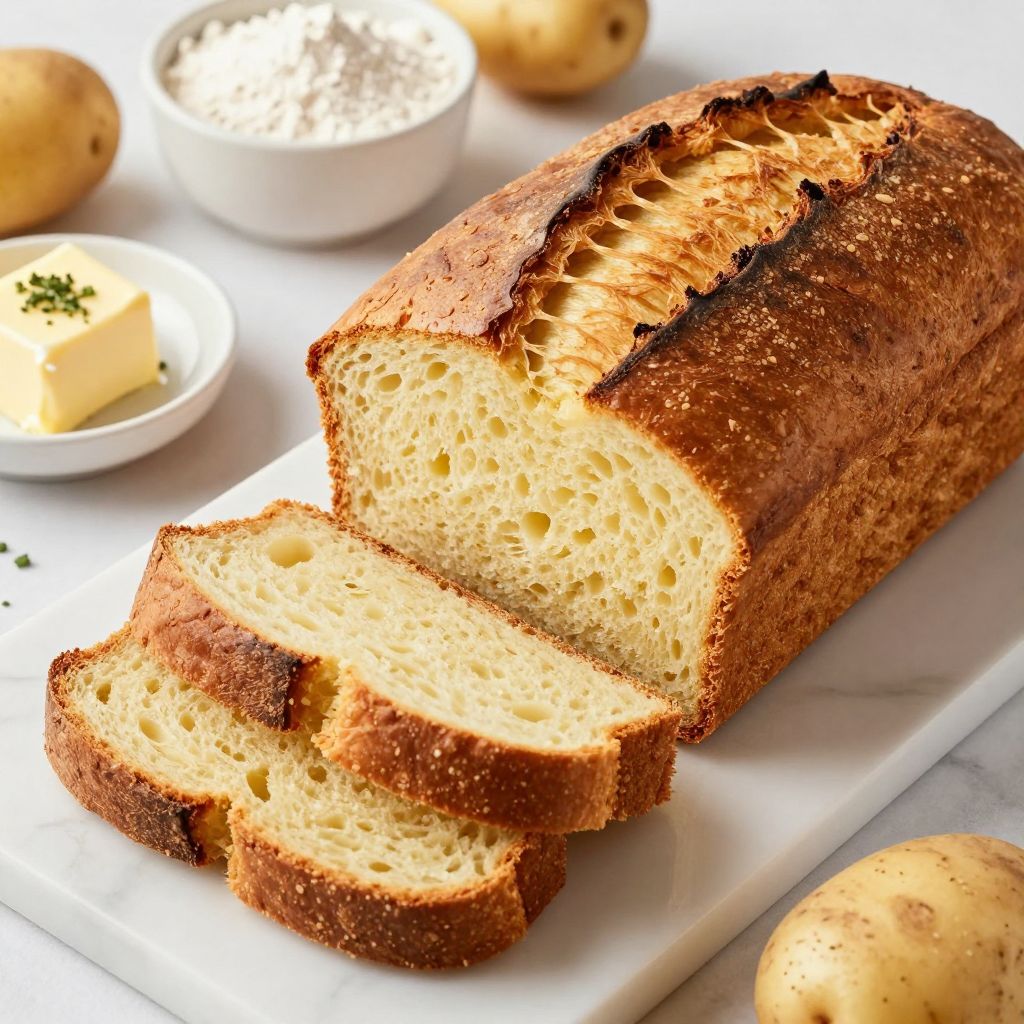
Gluten Free Potato Bread
Ingredients
Equipment
Method
- Peel and boil the potatoes until they are fork-tender.
- Drain the potatoes and mash them in a bowl until smooth.
- Preheat your oven to 375°F (190°C).
- In a separate bowl, combine the gluten-free all-purpose flour, tapioca flour, baking powder, salt, and sugar.
- In a large mixing bowl, whisk together the mashed potatoes, milk, eggs, and olive oil until well blended.
- Gradually add the dry ingredients to the wet mixture, stirring until just combined.
- Pour the batter into a greased loaf pan and smooth the top.
- Bake in the preheated oven for 50 minutes or until golden brown and a toothpick inserted in the center comes out clean.
- Allow the bread to cool in the pan for about 10 minutes before transferring it to a wire rack.