
Picture a cozy kitchen filled with the mouthwatering aroma of simmering soy sauce and garlic. That’s the magic of Filipino Pork Adobo, a dish that brings together savory, tangy, and sweet flavors in a harmony that feels like a warm hug on a busy day.
This beloved Filipino classic is not just a meal; it’s a cherished tradition passed down through generations. With its tender pork and rich sauce, it’s perfect for busy weeknights or special gatherings, showcasing a delightful blend of flavors that’s both comforting and satisfying.
Why You’ll Love This Recipe
This recipe is a true crowd-pleaser that brings everyone to the table. Here’s why it’s worth making:
- Rich, savory flavor that’s packed with umami.
- Simple ingredients that you likely already have.
- One-pot cooking means less cleanup.
- Versatile; it pairs well with rice, noodles, or even bread.
- Perfect for meal prep; the flavors deepen as it sits.
My Experience Making This Recipe
Every time I make Filipino Pork Adobo, I’m transported to my childhood, where the scent alone sparks memories of family dinners. The first time I made it, I was amazed at how easily the flavors melded together, creating something so delicious with minimal effort.
My family couldn’t believe how tender the pork turned out, soaking up the marinade beautifully. Each bite is a reminder of the importance of tradition and how food can bring us closer together.
Recipe Overview
- Recipe Name: Filipino Pork Adobo
- Servings: 4
- Prep Time: 15 minutes
- Cook Time: 1 hour
- Total Time: 1 hour 15 minutes
- Course: Main Dish
- Cuisine: Filipino
- Calories per Serving: 350
Equipment You Will Need
- Large pot or Dutch oven
- Cutting board
- Sharp knife
- Measuring cups and spoons
- Wooden spoon or spatula
Ingredients for Filipino Pork Adobo
- 2 pounds pork shoulder, cut into cubes
- 1 cup soy sauce
- 1/2 cup vinegar (white or cane vinegar)
- 1/2 cup water
- 1 onion, sliced
- 6 cloves garlic, minced
- 3 bay leaves
- 1 teaspoon black peppercorns
- 1 tablespoon brown sugar (optional)
- Salt and pepper to taste
Ingredient Notes and Substitutions
- Pork shoulder is ideal for its tenderness; you can substitute with chicken thighs for a lighter option.
- Soy sauce adds depth; tamari can be used for a gluten-free version.
- Vinegar is key for tang; apple cider vinegar works if you don’t have cane vinegar.
- Brown sugar balances acidity; skip it if you prefer a more savory taste.
- Black peppercorns enhance flavor; use ground black pepper if that’s all you have.
How to Make Filipino Pork Adobo
Step 1: Marinate the Pork
In a large bowl, combine the pork cubes with soy sauce, vinegar, minced garlic, and black peppercorns. Marinating for at least 30 minutes allows the flavors to penetrate the meat.
Step 2: Sauté the Aromatics
In your pot, heat a splash of oil over medium heat. Add the sliced onions and sauté until they become translucent, releasing their sweet aroma.
Step 3: Brown the Pork
Add the marinated pork (reserve the marinade) to the pot. Sear the meat on all sides until it’s browned, which builds a rich flavor base.
Step 4: Add the Marinade and Water
Pour in the reserved marinade and water, scraping the bottom of the pot to release any browned bits. This step adds depth to the sauce.
Step 5: Add Bay Leaves and Peppercorns
Stir in the bay leaves and additional black peppercorns. They infuse the dish with aromatic flavors as it simmers.
Step 6: Simmer the Dish
Bring the mixture to a gentle boil, then reduce the heat to low. Cover and let it simmer for about 40 minutes, allowing the pork to become tender and soak up the flavors.
Step 7: Adjust Seasoning
After simmering, taste the sauce for seasoning. Adjust with salt, pepper, or brown sugar according to your preference.
Step 8: Serve and Enjoy
Remove from heat and let it rest for a few minutes. Serve your delicious adobo over steamed rice, letting the sauce soak in.
Pro Tip: For even more depth, let the adobo sit overnight in the fridge. The flavors will intensify beautifully.
Tips for the Best Filipino Pork Adobo
- Use a good quality soy sauce for the best flavor.
- Don’t rush the marinating process; it’s worth the wait.
- Keep the pot covered while simmering to retain moisture.
- Feel free to add potatoes or hard-boiled eggs for variation.
- Serve with a side of pickled vegetables for a refreshing contrast.
Common Mistakes to Avoid
- Using low-quality soy sauce can dull the flavor; always opt for the best.
- Not marinating long enough can lead to bland pork; give it at least 30 minutes.
- Overcooking can dry out the pork; keep an eye on the simmering time.
- Skipping the resting time means missing out on flavor development; patience is key.
Serving Suggestions
Filipino Pork Adobo shines when paired with simple sides. Here are some great ideas:
- Steamed white rice is classic and absorbs the sauce perfectly.
- Serve with garlic fried rice for a flavorful twist.
- Pair with a fresh salad for a crunchy contrast.
- Offer some pickled vegetables to balance the richness.
- Try it with crusty bread to soak up the delicious sauce.
Variations to Try
- Use chicken instead of pork for a lighter dish, keeping the same marinade.
- Add coconut milk for a creamy version that mellows the flavors.
- Incorporate vegetables like potatoes or carrots for added nutrition.
- Experiment with different vinegars like apple cider for unique flavor notes.
- For a spicy kick, add sliced chili peppers during cooking.
Dietary Adaptations
- Gluten-free: Use tamari instead of soy sauce.
- Dairy-free: This recipe is naturally dairy-free.
- Vegan/Vegetarian: Substitute pork with tofu or seitan.
- Low-carb/Keto: Serve with cauliflower rice instead of regular rice.
Storage and Reheating
Refrigerator
Store any leftovers in an airtight container in the fridge for up to 3 days.
- Let the adobo cool completely before sealing.
- Reheat on the stove or in the microwave until warmed through.
Freezer
Pork adobo freezes well for up to 3 months.
- Make sure to use freezer-safe containers.
- Thaw in the fridge overnight before reheating.
Reheating
Reheat gently on the stove over low heat until heated through.
- Add a splash of water if it appears too thick.
- Stir occasionally to heat evenly.
Nutrition Information
| Nutrient | Amount |
|---|---|
| Calories | 350 |
| Total Fat | 20g |
| Saturated Fat | 6g |
| Carbohydrates | 5g |
| Fiber | 0g |
| Sugar | 2g |
| Protein | 34g |
| Sodium | 800mg |
| Cholesterol | 90mg |
This nutrition information is an estimate and may vary based on the ingredients used.
Frequently Asked Questions
Can I make this adobo ahead of time?
Yes, adobo tastes even better when made ahead of time, as the flavors develop overnight.
What can I substitute for pork?
You can use chicken thighs or even tofu for a vegetarian version; both will absorb the flavors well.
How should I store leftovers?
Store leftovers in an airtight container in the refrigerator for up to three days, or freeze for longer storage.
Why is my adobo too salty?
This can happen if the soy sauce used is particularly strong; consider adding a bit of water to dilute the flavor.
Can I use other types of vinegar?
Absolutely! Apple cider vinegar or rice vinegar can be good substitutes, each adding a unique twist.
Final Thoughts
Trying out this Filipino Pork Adobo recipe might just become a favorite in your kitchen. With its rich flavors and ease of preparation, it’s bound to impress your family and friends.
So go ahead, give it a try, and let the comforting aroma fill your home. For more delicious recipes, check out my Pork Chop Supreme Recipe and Pork Chop Marinade Recipe for more culinary inspiration!
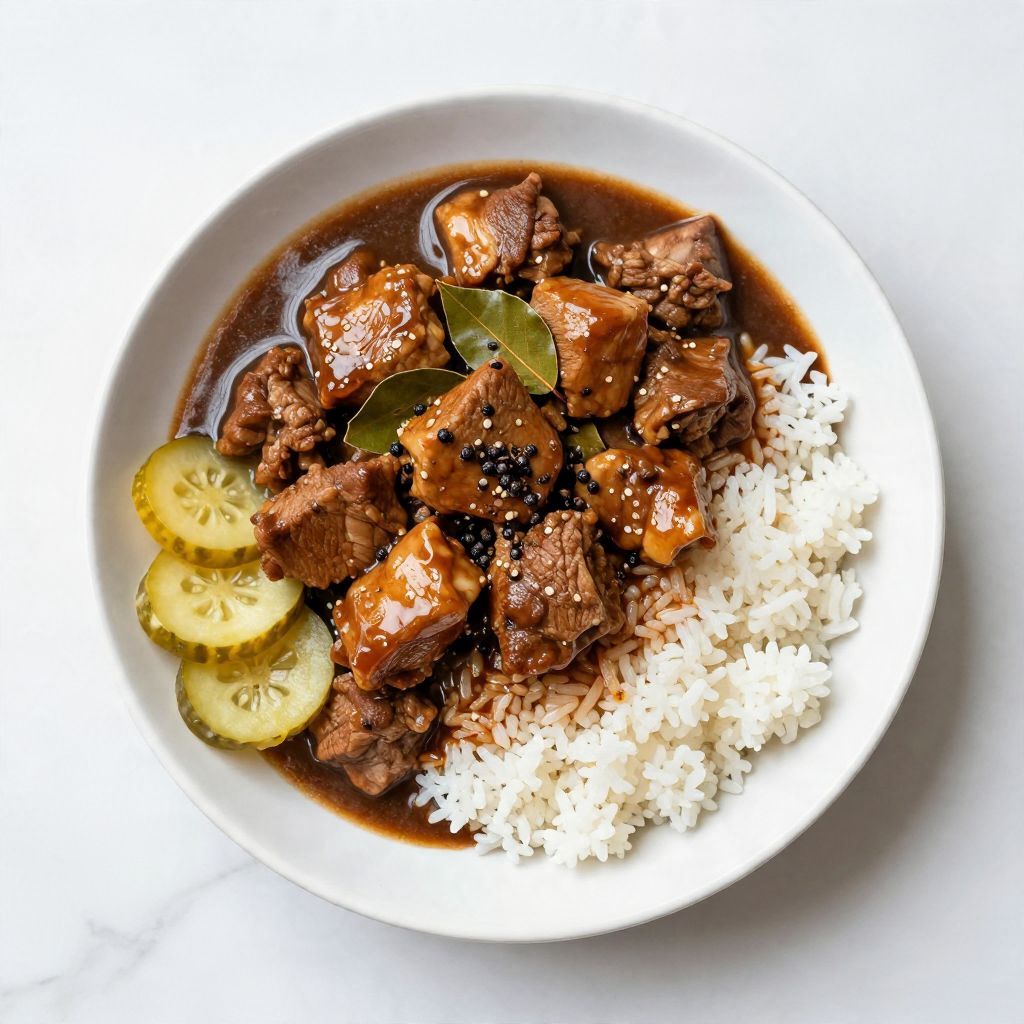
Filipino Pork Adobo
Ingredients
Equipment
Method
- In a large bowl, combine the pork cubes with soy sauce, vinegar, minced garlic, and black peppercorns. Marinate for at least 30 minutes.
- In your pot, heat a splash of oil over medium heat. Add the sliced onions and sauté until they become translucent.
- Add the marinated pork (reserve the marinade) to the pot and sear the meat on all sides until browned.
- Pour in the reserved marinade and water, scraping the bottom of the pot.
- Stir in the bay leaves and additional black peppercorns.
- Bring the mixture to a gentle boil, then reduce the heat to low. Cover and let it simmer for about 40 minutes.
- After simmering, taste the sauce for seasoning and adjust with salt, pepper, or brown sugar.
- Remove from heat and let it rest for a few minutes. Serve over steamed rice.