
Picture yourself cracking into a plate of eggs so rich and savory that you can’t stop eating them, even when you’re already full. Drug Eggs are a beloved diner classic that earned their name for good reason: they’re dangerously addictive.
These scrambled eggs are loaded with crispy bacon, melted cheese, and caramelized onions, all bound together in a creamy, buttery base that makes ordinary scrambled eggs look boring. What makes them special is the combination of high heat, constant stirring, and generous additions that transform simple ingredients into something crave-worthy. If you’ve ever wondered why some scrambled eggs taste like cloud fluff while others taste like rubber, this recipe solves that problem.
Why You’ll Love This Recipe
Drug Eggs deliver comfort food satisfaction without any fussy techniques or hard-to-find ingredients.
- Indulgent and decadent, yet totally approachable for weeknight cooking
- Ready in under 15 minutes from pan to plate
- Loaded with bacon, cheese, and onions for maximum flavor in every bite
- Perfect for breakfast, brunch, or even a late-night snack
- Naturally adaptable to whatever proteins or vegetables you have on hand
My Experience Making This Recipe
The first time I made Drug Eggs, I was skeptical about the name and the method. I’d always made scrambled eggs the “proper” way: low heat, patience, constant stirring, eggs that took ten minutes to cook.
This recipe flips that script entirely. You use medium-high heat, and you let the eggs get a little color and texture before breaking them up.
The moment I added the bacon, caramelized onions, and melted cheddar, everything clicked. The eggs tasted rich and savory in a way that made me understand exactly why they earned their name. My family polished off the plate in minutes and asked for seconds immediately.
Recipe Overview
- Recipe Name: Drug Eggs
- Servings: 2
- Prep Time: 10 minutes
- Cook Time: 10 minutes
- Total Time: 20 minutes
- Course: Breakfast or Brunch
- Cuisine: American
- Calories per Serving: 385
Equipment You Will Need
- Large nonstick skillet or cast iron pan
- Medium skillet (for cooking bacon and onions)
- Whisk or fork
- Spatula or wooden spoon
- Cutting board and sharp knife
- Measuring cups and spoons
- Plate (for draining bacon)
Ingredients for Drug Eggs
- 6 large eggs
- 4 slices bacon, chopped into bite-sized pieces
- 1 medium yellow onion, thinly sliced
- 3/4 cup sharp cheddar cheese, shredded
- 2 tablespoons unsalted butter
- 2 tablespoons heavy cream or whole milk
- 1/2 teaspoon salt
- 1/4 teaspoon black pepper
- 1/4 teaspoon garlic powder
Ingredient Notes and Substitutions
- Bacon: Bacon adds smoky, salty richness and crispy texture that anchors the whole dish. You can swap it for smoked sausage, prosciutto, or skip it entirely for a vegetarian version, though you’ll lose some depth.
- Sharp cheddar cheese: Sharp cheddar provides bold flavor that stands up to the bacon and onions without getting lost. Gruyere, smoked gouda, or even pepper jack will work; mild cheeses won’t have enough personality.
- Heavy cream: Heavy cream makes the eggs creamy and silky without making them watery. Milk works in a pinch but gives less richness; cream cheese stirred in at the end adds tanginess and body.
- Yellow onion: Caramelized onions add sweet, umami depth that balances the salty bacon and cheese. You can use white onion, but cook an extra minute or two to develop color.
- Butter: Butter is essential for flavor and prevents sticking on a nonstick pan. Olive oil produces a greasier texture and competes with the other flavors.
How to Make Drug Eggs
Step 1: Cook the Bacon Until Crispy
Place chopped bacon in a medium skillet over medium heat. Cook, stirring occasionally, until the bacon is golden brown and crispy, about 5 to 7 minutes.
Rendering the bacon fat is crucial because it carries flavor and helps cook the onions. Using medium heat instead of high keeps the bacon from burning while the inside stays tender.
Step 2: Remove and Drain the Bacon
Transfer the cooked bacon to a paper towel-lined plate using a slotted spoon. Leave about 1 tablespoon of bacon fat in the skillet; you’ll use this to cook the onions.
Saving some bacon fat is the secret move that adds incredible depth to the whole dish. If you drained it all, your onions won’t caramelize as quickly or taste as good.
Step 3: Caramelize the Onions
Add the sliced onions to the same skillet with the bacon fat remaining. Cook over medium heat, stirring frequently, until the onions are golden brown and soft, about 6 to 8 minutes.
Low and slow is the only way to caramelize onions properly; high heat just burns them. The onions will release water first, then reabsorb it, and finally turn sweet and jammy.
Step 4: Whisk the Eggs with Cream
Crack the eggs into a bowl and add the heavy cream, salt, pepper, and garlic powder. Whisk vigorously until the mixture is light, pale, and completely uniform, about 1 minute.
Whisking introduces air into the eggs, which makes them fluffy rather than dense. Adding seasonings and cream now ensures they’re distributed evenly throughout every bite.
Step 5: Combine Caramelized Onions with Bacon
Pour the whisked eggs directly into the skillet with the warm caramelized onions. Do not add the butter yet; let the residual heat from the onions and bacon fat begin cooking the eggs.
This step lets the egg mixture absorb the flavors from the onions and fat without scrambling too fast. You want everything to come together as one cohesive mixture.
Step 6: Add Butter to a Clean Skillet
In your large nonstick skillet, melt 2 tablespoons of butter over medium-high heat. Let the butter foam and turn light golden, about 1 minute.
Using a separate skillet gives you more control over heat and prevents the eggs from sticking or cooking unevenly. Letting butter get foamy adds a nutty flavor that elevates the entire dish.
Step 7: Transfer Eggs and Cook
Pour the egg mixture from the first skillet into the buttered skillet. Let the eggs sit undisturbed for 20 to 30 seconds so they start to set on the bottom.
This brief pause lets you develop a light crust on the bottom, which adds texture and prevents the eggs from becoming rubbery from constant stirring. High heat here is your friend.
Step 8: Scramble and Fold in Cheese
Using a spatula, gently push the cooked portions toward the center of the skillet while tilting it so uncooked egg flows to the hot surface. Continue this motion for 2 to 3 minutes until the eggs are mostly set but still slightly wet on top.
Constant gentle movement keeps the eggs from forming a single block of overcooked protein. The slightly wet top ensures the eggs will continue to cook through residual heat after you remove the pan.
Step 9: Finish with Cheese and Bacon
Remove the skillet from heat and immediately sprinkle the shredded cheddar over the eggs. Fold the cheese in gently along with the cooked bacon pieces, stirring just until combined, about 30 seconds.
Adding cheese off the heat prevents it from separating or becoming grainy from prolonged cooking. The residual heat melts it perfectly without overcooking anything.
Pro Tip: The moment you pull the pan from heat, the eggs are still slightly underdone on top, which is exactly what you want. They’ll continue cooking from residual heat while you plate them, finishing to silky perfection.
Tips for the Best Drug Eggs
- Use the freshest eggs you can find; older eggs won’t whip up as fluffily, and fresher yolks add richer color and flavor to the finished dish.
- Don’t skip the caramelizing step for the onions, even if it takes 8 minutes; rushed onions taste raw and sharp instead of sweet and mellow.
- Add cheese only after you remove the pan from heat to prevent it from breaking or becoming greasy from prolonged high temperature exposure.
- Keep your heat at medium-high, not screaming high; too much heat causes the eggs to set too fast and become rubbery before you can fold in the mix-ins.
- Whisk the raw eggs thoroughly to incorporate air, which translates directly into a fluffier, more delicate finished texture.
- Taste the finished eggs before serving and adjust salt if needed; bacon adds salt, so you might need less than you think.
Common Mistakes to Avoid
- Cooking the eggs on low heat makes them tough and rubbery instead of creamy; you need medium-high heat to develop the right texture and prevent overcooking.
- Constantly stirring from the start overworks the eggs and prevents any browning; let them sit for 20 to 30 seconds first to build flavor.
- Adding cheese while the pan is still on heat causes the protein in the cheese to tighten and separate, creating a greasy, broken texture.
- Using pre-shredded cheese from a bag often contains anti-caking agents that prevent melting smoothly; shred your own or buy pre-shredded from the deli counter.
- Draining all the bacon fat robs the onions of flavor and prevents proper caramelization; leave at least 1 tablespoon in the pan.
Serving Suggestions
Drug Eggs shine with simple, complementary sides that don’t compete for attention. Serve them hot directly from the skillet for maximum impact.
- Crispy toast with butter and jam for a sweet-salty contrast
- Fresh fruit salad or sliced grapefruit to cut through the richness
- Hash browns or home fries for a classic diner pairing
- Avocado slices and fresh lime for brightness
- A simple green salad dressed with vinaigrette to balance the indulgence
Variations to Try
- Spicy Version: Add 1/4 teaspoon cayenne pepper to the egg mixture and use pepper jack cheese instead of cheddar for a kick without overwhelming the other flavors.
- Vegetarian Drug Eggs: Replace bacon with crumbled tempeh or smoked mushrooms cooked with smoked paprika to mimic the smoky, salty quality of bacon.
- Fresh Herb Finish: Stir in 2 tablespoons of fresh chives, parsley, or dill right before serving for a brighter, garden-fresh note.
- Loaded Breakfast: Add 1/2 cup diced bell peppers and 1/4 cup fresh spinach cooked with the onions for more vegetables and nutrition.
- Creamy Upgrade: Stir in 2 tablespoons of cream cheese along with the cheddar for an even richer, tangier finish.
Dietary Adaptations
- Gluten-Free: This recipe is naturally gluten-free as written; just verify your bacon doesn’t contain gluten additives and serve with gluten-free toast.
- Dairy-Free: Use vegan butter and skip the cream and cheese, or use cashew cream and nutritional yeast for a dairy-free approximation, though the texture won’t be quite as rich.
- Vegetarian: Omit the bacon and add smoked mushrooms or caramelized garlic to maintain the savory, umami depth the dish needs.
- Low-Carb/Keto: This recipe fits perfectly into keto; the eggs, bacon, cream, and cheese are all low-carb, and caramelized onions add minimal carbs.
Storage and Reheating
Refrigerator
Store leftover Drug Eggs in an airtight container for up to 2 days. The texture will soften slightly, but the flavor remains excellent.
- Let eggs cool completely before storing to prevent condensation and mushiness
- Keep cheese and bacon mixed in rather than layered separately for even reheating
Freezer
Drug Eggs don’t freeze well because eggs become watery and separate when thawed. For best results, enjoy them fresh or store in the refrigerator instead.
- If you must freeze, do so for no longer than 2 weeks in a freezer bag
- Expect some texture loss and separation of ingredients
Reheating
Reheat refrigerated eggs gently over low heat in a nonstick skillet with a splash of milk to restore creaminess. Stir occasionally until heated through, about 3 to 4 minutes.
- Never use high heat for reheating or the eggs will toughen up immediately
- Add a tiny splash of cream or milk to recover lost moisture
- Microwave reheating is quicker but produces uneven, sometimes rubbery results
Nutrition Information
| Nutrient | Amount |
|---|---|
| Calories | 385 |
| Total Fat | 28g |
| Saturated Fat | 14g |
| Carbohydrates | 8g |
| Fiber | 1g |
| Sugar | 4g |
| Protein | 24g |
| Sodium | 512mg |
| Cholesterol | 315mg |
This nutrition information is an estimate based on standard USDA data for the ingredients listed. Actual values vary based on specific brands and cooking methods used.
Frequently Asked Questions
Can I make Drug Eggs ahead of time?
You can cook the bacon and caramelize the onions up to 1 day ahead and store them separately in the refrigerator. Cook the eggs fresh just before serving for the best creamy texture, though you can reheat already-cooked leftovers as described in the storage section.
What type of cheese works best?
Sharp cheddar is the classic choice because it melts smoothly and adds bold flavor without getting lost among the bacon and onions. Gruyere, smoked gouda, or Swiss will work well; avoid mild cheeses that lack personality.
Why are my scrambled eggs turning out rubbery?
Rubbery eggs come from cooking them too long or on heat that is too high. Use medium-high heat and pull the pan off the heat when the eggs still look slightly wet on top; they continue cooking from residual heat.
Can I use cooking spray instead of butter?
Cooking spray works for preventing sticking but doesn’t add the nutty flavor that butter brings to the finished dish. If you need to reduce calories, use less butter rather than replacing it entirely.
How do I prevent the bacon from becoming too crispy?
Cook the bacon over medium heat rather than medium-high and remove it while it still has a little chew to it, about 5 to 6 minutes into cooking. It will continue to crisp slightly as it cools.
What if I don’t have heavy cream?
Whole milk works as a substitute, though the eggs won’t be quite as creamy; add 1 extra tablespoon of butter to compensate for the richness lost. Half-and-half works beautifully if you have it on hand.
Final Thoughts
Drug Eggs earned their reputation for good reason. They’re indulgent, fast, and so flavorful that you’ll forget you’re eating breakfast food.
Give this recipe a try this weekend and taste why so many people come back to make them again and again. Once you understand the technique, you can adjust the add-ins to match whatever you have in your kitchen, turning this into your own signature dish.
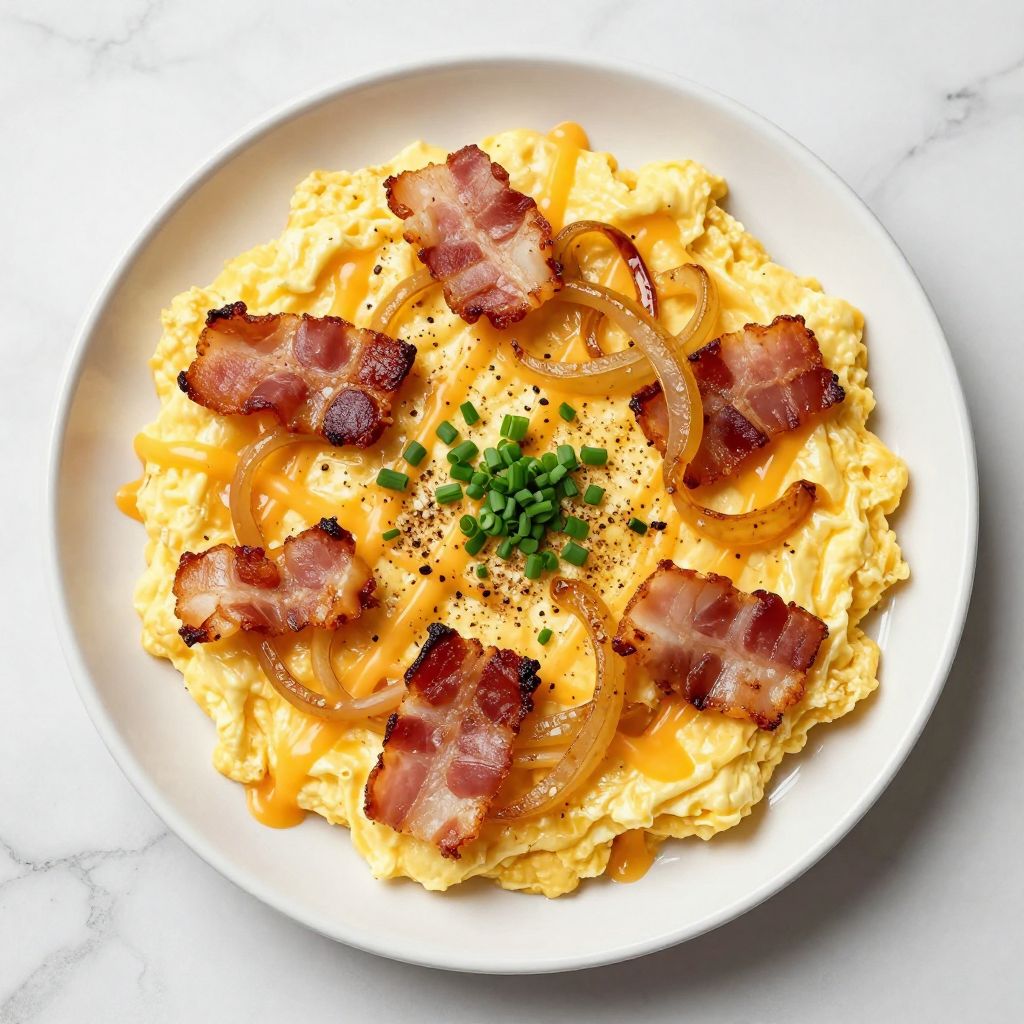
Drug Eggs
Ingredients
Equipment
Method
- Place chopped bacon in a medium skillet over medium heat. Cook, stirring occasionally, until the bacon is golden brown and crispy, about 5 to 7 minutes.
- Transfer the cooked bacon to a paper towel-lined plate using a slotted spoon. Leave about 1 tablespoon of bacon fat in the skillet.
- Add the sliced onions to the same skillet with the bacon fat remaining. Cook over medium heat, stirring frequently, until the onions are golden brown and soft, about 6 to 8 minutes.
- Crack the eggs into a bowl and add the heavy cream, salt, pepper, and garlic powder. Whisk vigorously until the mixture is light, pale, and completely uniform, about 1 minute.
- Pour the whisked eggs directly into the skillet with the warm caramelized onions.
- In your large nonstick skillet, melt 2 tablespoons of butter over medium-high heat. Let the butter foam and turn light golden, about 1 minute.
- Pour the egg mixture from the first skillet into the buttered skillet. Let the eggs sit undisturbed for 20 to 30 seconds so they start to set on the bottom.
- Using a spatula, gently push the cooked portions toward the center of the skillet while tilting it so uncooked egg flows to the hot surface. Continue this motion for 2 to 3 minutes until the eggs are mostly set but still slightly wet on top.
- Remove the skillet from heat and immediately sprinkle the shredded cheddar over the eggs. Fold the cheese in gently along with the cooked bacon pieces, stirring just until combined, about 30 seconds.
- Serve hot directly from the skillet.