
There’s something incredibly satisfying about whipping up a batch of Diy Mayonnaise in your own kitchen. This creamy condiment is not just a staple; it’s a culinary canvas, offering a rich texture and a flavor that store-bought versions can’t compete with.
Making your own mayonnaise is quick, easy, and allows you to customize it to your taste. Plus, you can control the ingredients, making it fresher and healthier. Let’s dive into the simple steps and ingredients you’ll need to create this delightful spread.
Why You’ll Love This Recipe
This mayonnaise recipe is a must-try for anyone who loves cooking. It’s a game changer for your sandwiches and salads.
- Quick and simple to make.
- Customizable flavors to suit your palate.
- Fresher and healthier than store-bought options.
- Perfect for sandwiches, dips, and dressings.
- Uses everyday ingredients you likely have at home.
My Experience Making This Recipe
The first time I made mayonnaise at home, I was amazed by how easy it was. Watching the ingredients transform into a thick, creamy spread was nothing short of magical.
My family couldn’t believe I made it from scratch, and the taste? Well, they were hooked! Once you try this homemade version, you will likely never buy store-bought again.
Recipe Overview
- Recipe Name: Diy Mayonnaise
- Servings: 1 cup
- Prep Time: 10 minutes
- Cook Time: 0 minutes
- Total Time: 10 minutes
- Course: Condiment
- Cuisine: American
- Calories per Serving: 94
Equipment You Will Need
- Blender or food processor
- Measuring cups
- Measuring spoons
- Spatula
- Storage container
Ingredients for Diy Mayonnaise
- 1 large egg (at room temperature for better emulsification)
- 1 tablespoon Dijon mustard (for flavor and stability)
- 1 tablespoon white vinegar (to add acidity)
- 1 cup neutral oil (like canola or sunflower)
- Salt (to taste)
- Optional: lemon juice (for extra zing)
Ingredient Notes and Substitutions
- Egg: Fresh eggs create the best emulsification. You can use pasteurized eggs if you’re concerned about raw eggs.
- Dijon mustard: This adds flavor and helps stabilize the emulsion. You can substitute with yellow mustard if needed.
- White vinegar: This provides acidity. Apple cider vinegar works as a substitute.
- Neutral oil: Choose oils with mild flavors. Olive oil can be used but may result in a stronger taste.
- Salt: Adjust to your preference. Sea salt or kosher salt are great choices.
How to Make Diy Mayonnaise
Step 1: Gather Your Ingredients
Start by measuring out all your ingredients. Having everything ready makes the process smoother and faster.
Step 2: Blend the Egg and Mustard
In your blender or food processor, combine the egg and Dijon mustard. Blend on medium speed for about 10 seconds until combined.
Step 3: Add the Vinegar
Add the white vinegar into the mixture. This will contribute to the flavor and help with the emulsion.
Step 4: Start Adding Oil
With the blender running, slowly drizzle in the neutral oil. Adding it too quickly can break the emulsion, so patience is key.
Step 5: Emulsify
Continue blending until the mixture thickens and turns creamy. This usually takes about 30 seconds to a minute.
Step 6: Season to Taste
Once thick, taste your mayonnaise and add salt as needed. If you like, squeeze in some lemon juice for brightness.
Step 7: Store Your Mayonnaise
Transfer the mayonnaise into a clean storage container. This can be kept in the refrigerator for up to a week.
Step 8: Clean Up
Don’t forget to clean your equipment right away. Mayonnaise can be sticky and harder to wash once it dries.
Pro Tip: Always use room temperature ingredients for better emulsification.
Tips for the Best Diy Mayonnaise
- Use fresh, high-quality ingredients for the best flavor.
- Blend at medium speed to avoid overheating the ingredients.
- Drizzle the oil slowly for a perfect emulsion.
- Experiment with different vinegars to find your favorite taste.
- Make sure your egg is at room temperature for optimal results.
Common Mistakes to Avoid
- Adding oil too quickly can cause the mayonnaise to separate.
- Using cold ingredients can prevent proper emulsification.
- Not blending long enough will result in a runny texture.
- Over-blending can lead to a grainy texture.
- Neglecting to season can make the mayonnaise taste flat.
Serving Suggestions
Your homemade mayonnaise can elevate many dishes. It’s perfect for adding creaminess to your favorite recipes.
- Spread it on sandwiches and burgers.
- Use it as a base for salad dressings.
- Dip veggies or fries in it for a tasty treat.
- Mix it into potato or pasta salads for added richness.
- Pair it with grilled meats for a delicious condiment.
Variations to Try
- Add minced garlic for a classic aioli flavor.
- Incorporate fresh herbs like dill or basil for a herby twist.
- Mix in sriracha or hot sauce for a spicy kick.
- Use flavored oils, like garlic-infused oil, for added depth.
- Stir in capers or olives for a Mediterranean flair.
Dietary Adaptations
- Gluten-free: This recipe is naturally gluten-free.
- Dairy-free: Mayonnaise is dairy-free as it contains no dairy ingredients.
- Vegan/Vegetarian: Use aquafaba (chickpea brine) instead of egg.
- Low-carb/Keto: This is a low-carb condiment, making it keto-friendly.
Storage and Reheating
Refrigerator
Store your mayonnaise in an airtight container in the fridge. It can last for up to a week.
- Keep it sealed to maintain freshness.
- Avoid contaminating the mayonnaise with dirty utensils.
Freezer
Freezing mayonnaise is not recommended as it can change the texture. It is best enjoyed fresh.
- Consider making smaller batches if you worry about leftovers.
Reheating
Mayonnaise should not be reheated. Serve it cold or at room temperature for the best taste.
Nutrition Information
| Nutrient | Amount |
|---|---|
| Calories | 94 |
| Total Fat | 10g |
| Saturated Fat | 1g |
| Carbohydrates | 0g |
| Fiber | 0g |
| Sugar | 0g |
| Protein | 0g |
| Sodium | 5mg |
| Cholesterol | 5mg |
This nutritional information is approximate and can vary based on ingredient brands and quantities used.
Frequently Asked Questions
Can I substitute the egg in this mayonnaise recipe?
Yes, you can use aquafaba (the liquid from canned chickpeas) as a vegan substitute for the egg.
How long can I store homemade mayonnaise?
You can keep it in the refrigerator for up to one week. Always store it in an airtight container.
What if my mayonnaise doesn’t thicken?
If your mayonnaise doesn’t thicken, it may be due to adding the oil too quickly. Start over with a new egg and gradually add the oil.
Can I make mayonnaise without a blender?
Yes, you can use a whisk and bowl to make mayonnaise, but it requires more effort and time to achieve the emulsion.
Can I use flavored oils?
Absolutely! Using flavored oils can add a unique twist to your mayonnaise.
Final Thoughts
Making your own mayonnaise is a rewarding experience that enhances your culinary adventures. With just a few ingredients and some simple steps, you can create a delicious condiment that elevates any dish.
So, why not give this delightful Diy Mayonnaise recipe a try? And while you’re here, check out some other great recipes like garlic mayo or mayo chicken for more delicious ideas!
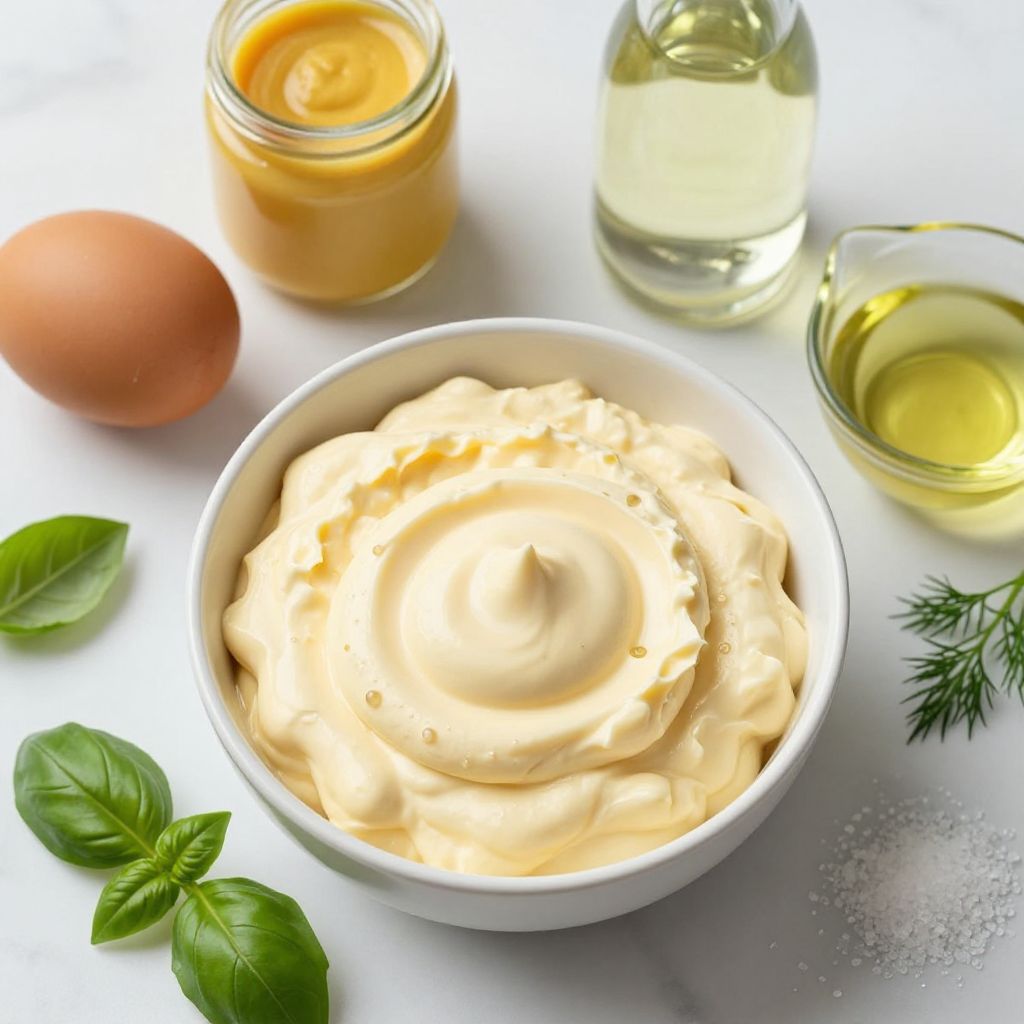
Diy Mayonnaise
Ingredients
Equipment
Method
- Start by measuring out all your ingredients.
- In your blender or food processor, combine the egg and Dijon mustard. Blend on medium speed for about 10 seconds until combined.
- Add the white vinegar into the mixture.
- With the blender running, slowly drizzle in the neutral oil.
- Continue blending until the mixture thickens and turns creamy, about 30 seconds to a minute.
- Once thick, taste your mayonnaise and add salt as needed. Optionally, squeeze in some lemon juice.
- Transfer the mayonnaise into a clean storage container.
- Clean your equipment right away.