
Picture this: a delightful spring afternoon, and the aroma of coconut fills the air. Coconut Easter Eggs are not just a treat; they evoke cherished memories of family gatherings and joyful celebrations.
This recipe is special because it combines the sweet and chewy texture of coconut with a chocolate coating that makes each bite irresistible. With its rich flavor and festive appeal, these eggs are perfect for both gift-giving and indulging.
Let’s hop into the ingredients you will need and how to make these delightful treats!
Why You’ll Love This Recipe
This recipe is a must-try for any coconut lover. Here are a few reasons you’ll adore making them:
- Simple ingredients that are easy to work with.
- Perfect for Easter or any spring celebration.
- A fun activity to do with kids or friends.
- They make delightful homemade gifts.
- Sweet, chewy coconut texture wrapped in chocolate.
My Experience Making This Recipe
The first time I made these eggs, I was instantly transported back to my childhood. My family would gather around the kitchen, crafting these treats, and now I get to share this experience with my little ones.
As I rolled the coconut mixture into eggs, the excitement grew. The moment we took our first bites was pure joy; the balance of flavors was simply magical.
Recipe Overview
- Recipe Name: Coconut Easter Eggs
- Servings: 12 eggs
- Prep Time: 30 minutes
- Cook Time: 0 minutes
- Total Time: 30 minutes
- Course: Dessert
- Cuisine: American
- Calories per Serving: 150
Equipment You Will Need
- Mixing bowl
- Measuring cups and spoons
- Plastic wrap
- Baking sheet
- Double boiler or microwave-safe bowl
- Fork or dipping tool
Ingredients for Coconut Easter Eggs
- 4 cups sweetened shredded coconut
- 1 cup powdered sugar
- 1/4 cup unsalted butter, softened
- 1 teaspoon vanilla extract
- 1 cup semi-sweet chocolate chips
- 1 tablespoon coconut oil (optional, for melting chocolate)
Ingredient Notes and Substitutions
- Sweetened shredded coconut: This is key for that classic coconut flavor. Unsweetened coconut can be used, but adjust the sugar accordingly.
- Powdered sugar: It adds sweetness and helps bind the mixture. Granulated sugar can be used but may change the texture.
- Unsalted butter: It helps achieve the right consistency. Coconut oil can be used for a dairy-free version.
- Semi-sweet chocolate chips: They provide a rich chocolate coating. Dark chocolate can be substituted for a bolder flavor.
How to Make Coconut Easter Eggs
Step 1: Prepare the Coconut Mixture
In a mixing bowl, combine the shredded coconut, powdered sugar, softened butter, and vanilla extract. This mixture will form the base of your coconut eggs, giving them that sweet and chewy texture.
Step 2: Mix Thoroughly
Use your hands or a spatula to mix everything until well combined. The mixture should hold together when pressed; if too crumbly, add a bit more butter.
Step 3: Shape the Eggs
Take a small amount of the coconut mixture and shape it into an egg or oval shape. This is the fun part, so don’t worry about them being perfectly uniform.
Step 4: Chill the Eggs
Place the shaped eggs on a baking sheet lined with plastic wrap. Refrigerate for at least 30 minutes until firm; this helps them hold together during dipping.
Step 5: Melt the Chocolate
In a double boiler or microwave-safe bowl, melt the semi-sweet chocolate chips with coconut oil until smooth. The coconut oil helps the chocolate to be a little thinner for dipping.
Step 6: Dip the Eggs
Using a fork or dipping tool, dip each coconut egg into the melted chocolate. Make sure to coat them evenly and let the excess chocolate drip off.
Step 7: Set the Coated Eggs
Return the dipped eggs to the baking sheet. Let the chocolate set at room temperature, or refrigerate for 15 minutes to speed up the process.
Step 8: Enjoy Your Treats
Once the chocolate is set, your Coconut Easter Eggs are ready to be enjoyed! They are perfect for sharing or hiding in Easter baskets.
Pro Tip: Make extra coconut eggs and freeze them for later; they freeze beautifully!
Tips for the Best Coconut Easter Eggs
- Ensure your butter is soft; this makes mixing easier.
- Chill the eggs thoroughly before dipping to prevent them from falling apart.
- Use high-quality chocolate for a richer flavor.
- Experiment with different coatings like white chocolate or colored candy melts.
- Store them in an airtight container to keep them fresh longer.
Common Mistakes to Avoid
- Not chilling the eggs long enough can lead to a messy dipping process.
- Using too much sugar may make the mixture overly sweet and difficult to shape.
- Not melting the chocolate properly can cause clumping.
- Overheating the chocolate can make it seize up.
Serving Suggestions
These eggs are delightful on their own, but you can elevate your presentation. Consider these serving ideas:
- Serve them on a festive platter during the Easter brunch.
- Pair with fresh fruit for a light dessert.
- Add them to homemade gift baskets.
- Use them as cake decorations for a fun twist.
Variations to Try
- Add a dash of almond extract for a nutty flavor.
- Incorporate chopped nuts into the coconut mixture for extra crunch.
- Use different types of chocolate for a flavor twist.
- Coat them in colored sprinkles for a festive look.
Dietary Adaptations
- Gluten-free: This recipe is naturally gluten-free; just ensure all ingredients are certified gluten-free.
- Dairy-free: Substitute unsalted butter with coconut oil.
- Vegan: Use dairy-free chocolate and coconut oil instead of butter.
- Low-carb/Keto: Substitute powdered sugar with a low-carb alternative like erythritol.
Storage and Reheating
Refrigerator
Store the coconut eggs in an airtight container in the refrigerator. This keeps them fresh and maintains their texture.
- Lasts up to 2 weeks in the refrigerator.
Freezer
For longer storage, you can freeze the eggs. Just make sure they are well-wrapped.
- Lasts up to 3 months in the freezer.
Reheating
There is no need to reheat these eggs; they are best enjoyed chilled or at room temperature.
- Let them sit at room temperature for a few minutes before serving.
Nutrition Information
| Nutrient | Amount |
|---|---|
| Calories | 150 |
| Total Fat | 9g |
| Saturated Fat | 6g |
| Carbohydrates | 18g |
| Fiber | 1g |
| Sugar | 14g |
| Protein | 1g |
| Sodium | 50mg |
| Cholesterol | 15mg |
This nutritional information is approximate and can vary based on specific ingredients used.
Frequently Asked Questions
Can I use unsweetened coconut instead of sweetened?
Yes, but you will need to adjust the sugar for sweetness.
Can I make these eggs ahead of time?
Absolutely! They can be made a few days in advance and stored in the refrigerator.
How do I store leftover eggs?
Keep them in an airtight container in the fridge to maintain freshness.
What if my mixture is too dry?
If it feels crumbly, add a bit more softened butter to help it hold together.
Can I use other types of chocolate for coating?
Yes, you can vary the chocolate type to suit your taste!
Final Thoughts
Making these Coconut Easter Eggs is a delightful way to celebrate any spring occasion. I hope you enjoy creating and sharing them as much as I do.
If you are looking for more delicious coconut recipes, check out my Coconut Cookies Recipe or try a refreshing Coconut Margarita Recipe.
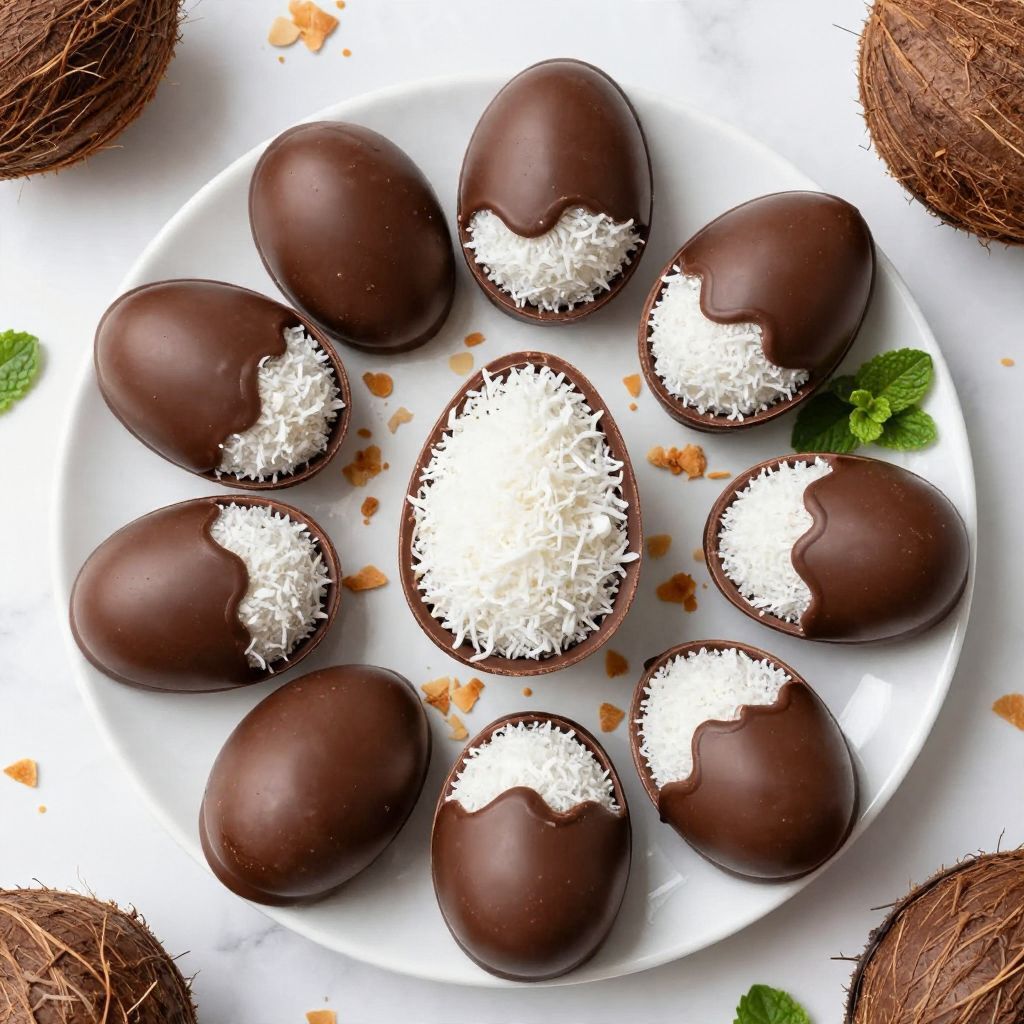
Coconut Easter Eggs
Ingredients
Equipment
Method
- In a mixing bowl, combine the shredded coconut, powdered sugar, softened butter, and vanilla extract.
- Mix everything until well combined.
- Shape a small amount of the mixture into an egg or oval shape.
- Place the shaped eggs on a baking sheet lined with plastic wrap and refrigerate for at least 30 minutes.
- Melt the semi-sweet chocolate chips with coconut oil in a double boiler or microwave-safe bowl.
- Dip each coconut egg into the melted chocolate using a fork.
- Return the dipped eggs to the baking sheet and let the chocolate set at room temperature.
- Refrigerate for 15 minutes if needed to speed up the setting process.