
The smell of caramel rolls baking in your oven is a sure way to bring everyone into the kitchen with hope in their eyes. Caramel rolls are pillowy soft, impossibly gooey, and taste like you spent hours in the kitchen when really you have control the whole time.
These rolls combine tender yeast dough with a buttery brown sugar filling and sticky caramel topping that pools into every crevice. They’re perfect for weekend breakfasts, holiday mornings, or whenever you want to impress people without breaking a sweat.
What makes this recipe special is the balance between ease and indulgence. You don’t need special equipment or obscure ingredients, just patience for one rise and confidence that your oven will deliver magic.
Why You’ll Love This Recipe
These rolls hit every mark for comfort food done right. They’re soft, sweet, and the caramel topping is absolutely addictive.
- Soft, pillowy dough that melts in your mouth
- Brown sugar and cinnamon filling that’s perfectly spiced
- Gooey caramel topping that sticks to every roll
- Make-ahead friendly for busy mornings
- Impressive enough for company, simple enough for weeknights
My Experience Making This Recipe
I first made these rolls on a snowy morning when I had nowhere to be and time to kill. The kitchen filled with warmth and yeast smell, and by the time they came out of the oven, my kids were literally pressing their noses against the oven door.
The dough came together easily without needing a mixer. I let it rise while I made coffee, then rolled it out, filled it, and let the rolls proof one final time before baking.
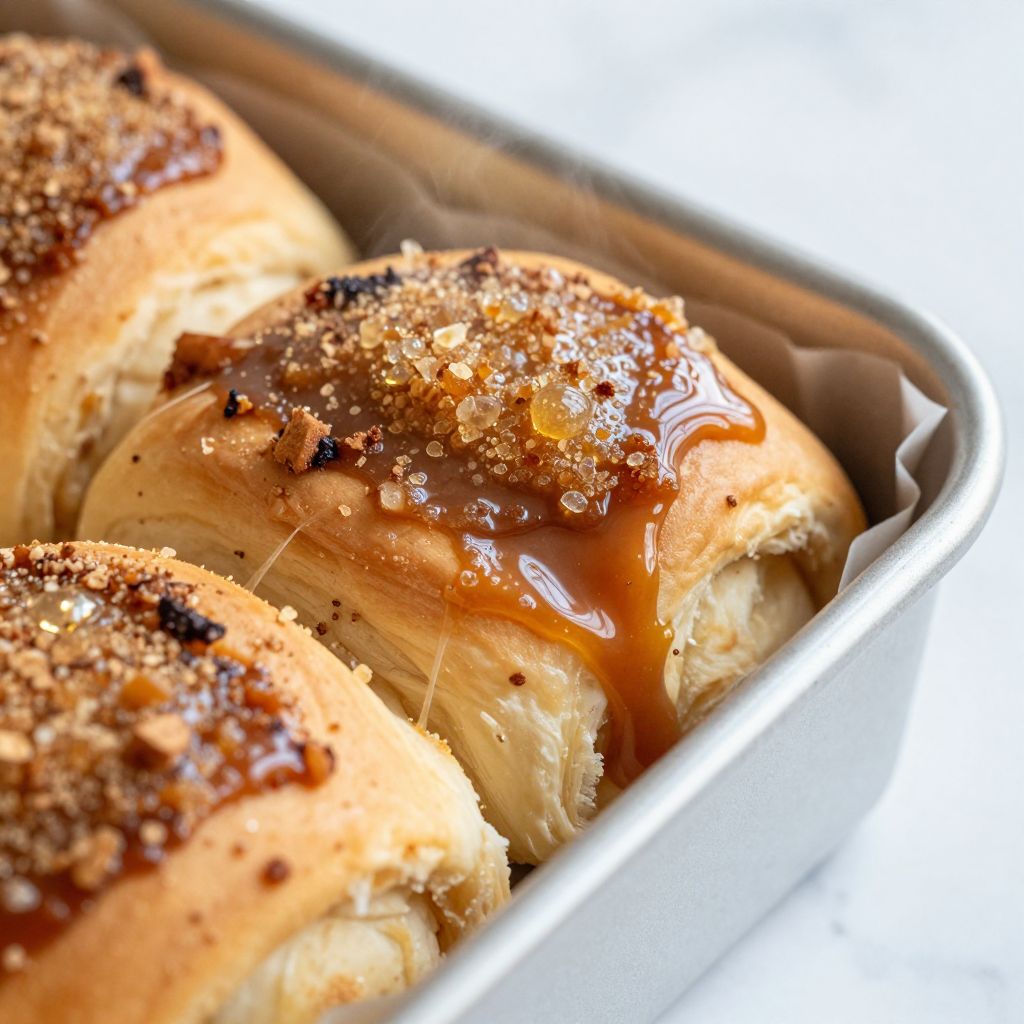
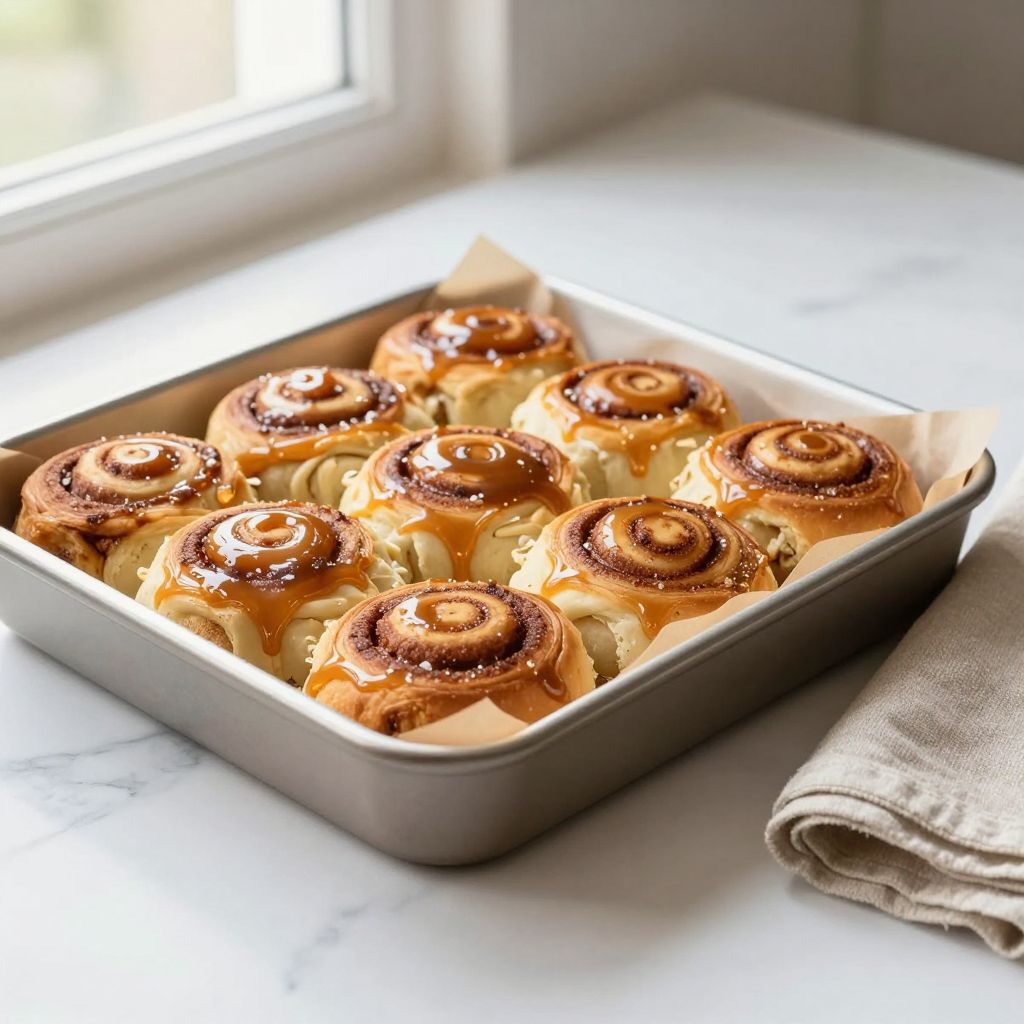
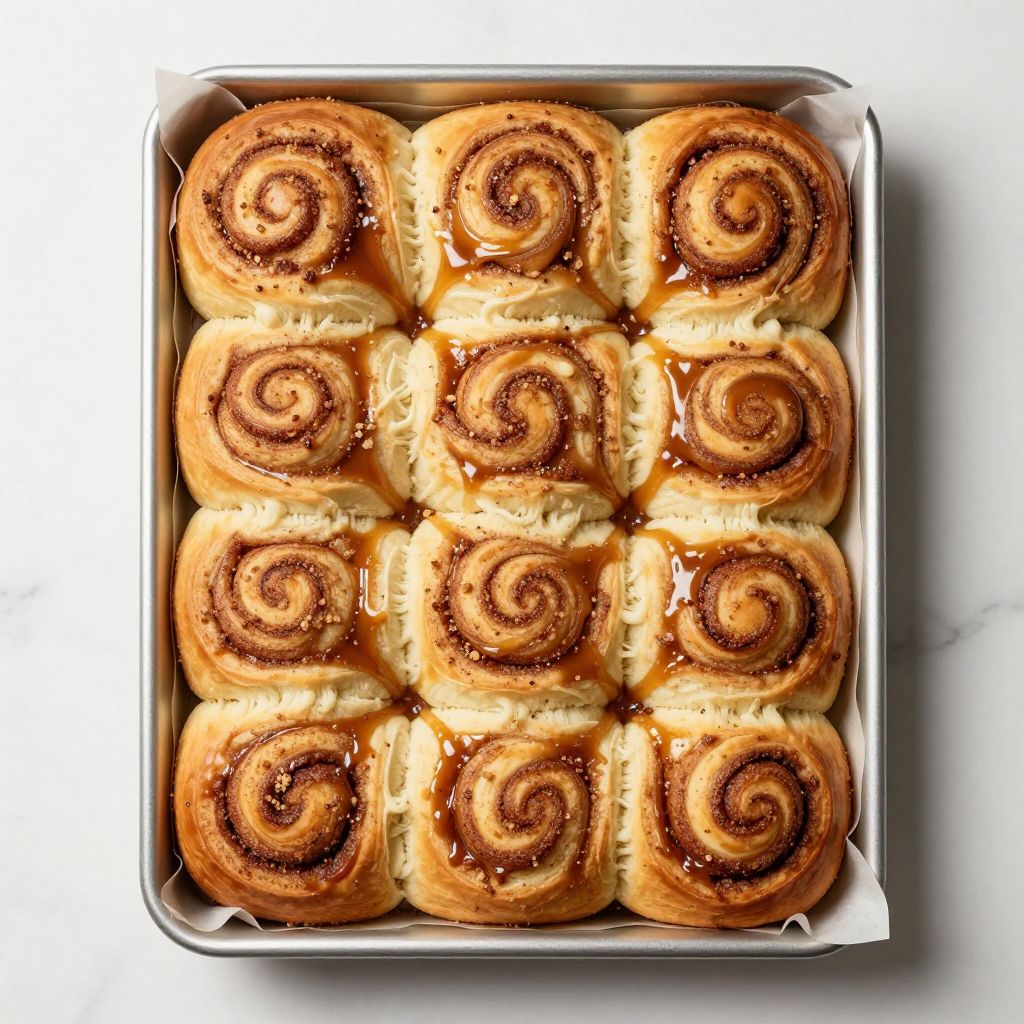
When I pulled them out, the caramel had bubbled up around the edges and created this gorgeous, glossy coating. One bite and I understood why people crave these things, and why the recipe has become my go-to for weekend breakfasts and holiday brunches.
Recipe Overview
- Recipe Name: Caramel Rolls
- Servings: 12 rolls
- Prep Time: 20 minutes
- Rise Time: 1 hour 30 minutes
- Cook Time: 25 minutes
- Total Time: 2 hours 15 minutes
- Course: Breakfast or Dessert
- Cuisine: American
- Calories per Serving: 340
Equipment You Will Need
- 9×13 inch baking dish
- Large mixing bowl
- Kitchen scale or measuring cups and spoons
- Rolling pin
- Bench scraper or sharp knife
- Stand mixer with dough hook (optional but helpful)
- Instant read thermometer
- Shallow saucepan for caramel
- Wooden spoon
Ingredients for Caramel Rolls
For the Dough
- 1 cup whole milk, warmed to 110 degrees F
- 2 1/4 teaspoons active dry yeast (one packet)
- 1/2 cup granulated sugar
- 1/4 cup unsalted butter, softened
- 1 teaspoon salt
- 1 large egg
- 3 1/2 cups all-purpose flour
For the Filling
- 1/2 cup light brown sugar
- 2 1/2 teaspoons ground cinnamon
- 3 tablespoons unsalted butter, softened
For the Caramel Topping
- 1/2 cup unsalted butter
- 1 cup light brown sugar
- 1/4 cup heavy cream
- 1 teaspoon vanilla extract
- 1/4 teaspoon salt
Ingredient Notes and Substitutions
- Whole milk: Activates yeast and creates tender crumb. You can swap 2% milk, but whole milk gives richer flavor and softer texture.
- Active dry yeast: Essential for rise and lift. Instant yeast works identically; use the same amount.
- All-purpose flour: Provides structure without being too dense. Bread flour makes chewier rolls; cake flour makes them fragile.
- Light brown sugar: Adds molasses depth to filling. Dark brown sugar works but tastes slightly stronger and more molasses-forward.
- Ground cinnamon: Warming spice that defines the flavor. You cannot easily swap this without losing the signature taste.
- Heavy cream: Smooths the caramel and prevents crystallization. Half-and-half works but caramel may be slightly less creamy.
How to Make Caramel Rolls
Step 1: Combine Milk and Yeast
Pour warm milk into a large bowl and sprinkle yeast over the surface. Let it sit for about 2 minutes until the yeast becomes foamy, which signals it is alive and ready to work.
This step activates the yeast and ensures your dough will rise properly. If the milk is too hot, it kills the yeast; too cold, and nothing happens.
Step 2: Add Sugar, Butter, Salt, and Egg
Stir the sugar, softened butter, salt, and egg into the yeast mixture until everything is combined. The mixture should look like thick soup at this point.
Softened butter incorporates smoothly without lumps, which makes for even texture throughout the dough. Room temperature ingredients mix together more easily than cold ones.
Step 3: Add Flour and Mix the Dough
Add flour one cup at a time, stirring with a wooden spoon or the dough hook of a stand mixer until the dough comes together. The dough should be soft and slightly sticky, not dry or stiff.
Mixing develops gluten strands that give the rolls their signature chew and structure. Stop adding flour once the dough pulls away from the bowl sides and looks shaggy.
Step 4: Knead the Dough
If mixing by hand, knead the dough on a lightly floured surface for about 10 minutes until smooth and elastic. With a stand mixer, run the dough hook for 6 to 8 minutes on medium speed.
Kneading stretches gluten strands and creates a silky dough that rises evenly. You’ll feel the dough go from sticky to smooth and springy as you work.
Step 5: First Rise
Oil a clean bowl lightly and place the dough inside, turning it over so the top is oiled. Cover with plastic wrap and let it rise at room temperature for about 1 hour, or until doubled in size.
The warm, moist environment under plastic wrap speeds rising without drying out the dough. You can also let this rise overnight in the refrigerator, which develops deeper flavor.
Step 6: Prepare the Filling and Roll Out the Dough
Mix the brown sugar and cinnamon together in a small bowl. Punch down the risen dough and turn it onto a lightly floured surface, then roll it into a 16×12 inch rectangle.
Rolling to a consistent thickness ensures even baking and uniform roll size. A bench scraper or offset spatula helps you lift and move the dough without tearing.
Step 7: Fill and Roll the Dough
Spread the softened butter over the rolled dough, leaving a 1/2 inch border on all sides. Sprinkle the brown sugar and cinnamon mixture evenly over the butter.
The butter acts as glue for the filling and keeps it from falling out. Starting your roll from the long edge, tightly roll the dough into a log, pressing gently as you go.
Step 8: Cut and Arrange Rolls
Using a sharp knife or bench scraper, cut the log into 12 equal pieces, about 1 1/3 inches wide each. Arrange the rolls cut-side up in a parchment-lined 9×13 inch baking dish.
Cutting while the dough is still cool prevents squishing the rolls. Arranging them cut-side up exposes the filling to the heat, which helps caramelization.
Step 9: Make the Caramel Topping
In a saucepan over medium heat, melt the butter with the brown sugar, stirring constantly until the sugar dissolves and the mixture is smooth. Remove from heat, add the cream, vanilla, and salt, then stir gently to combine.
Adding cream after removing from heat prevents the caramel from splattering. The caramel will thicken slightly as it cools, so pour it while still warm.
Step 10: Add Caramel and Second Rise
Pour the warm caramel evenly over the rolls in the baking dish. Cover the dish loosely with plastic wrap and let the rolls rise for 30 to 45 minutes, until they’re puffy and touching each other.
The second rise makes the rolls light and airy. Covering prevents a skin from forming while allowing the dough to expand.
Step 11: Bake
Preheat your oven to 350 degrees F. Bake the rolls uncovered for 22 to 25 minutes, until they’re golden brown on top and the caramel bubbles slightly around the edges.
Lower heat than typical for bread prevents over-browning the caramel while the interior cooks through. The rolls are done when an instant read thermometer inserted into the center reads 190 degrees F.
Step 12: Cool Briefly and Serve
Let the rolls cool in the pan for 5 minutes. This cooling time allows the caramel to set slightly so it holds the rolls together, but they’re still warm enough to pull apart easily.
Trying to serve them straight from the oven results in caramel that’s too soft to hold shape. Waiting too long makes the caramel firm up and harder to spread.
Pro Tip: Make the caramel topping just before the second rise finishes so it’s warm and flows smoothly into every crevice when you pour it over the rolls.
Tips for the Best Caramel Rolls
- Warm milk activates yeast, but test the temperature with your wrist like you would a baby’s bath water. Too hot kills yeast; too cold does nothing.
- Don’t skip the kneading step, whether by hand or machine. Proper gluten development is what makes these rolls tender and pillowy instead of dense.
- Use softened butter for the filling, not melted. Softened butter spreads evenly without soaking into the dough.
- Cut rolls with a sharp knife dipped in warm water and wiped clean between cuts. This gives clean edges and prevents the dough from sticking.
- Watch the oven temperature carefully. Too hot and the bottoms burn before the caramel sets; too cool and they bake unevenly.
- The caramel will look liquid when they come out but will set as they cool. Resist the urge to overbake thinking they look undercooked.
Common Mistakes to Avoid
- Using cold milk: Cold milk won’t activate yeast, and your dough won’t rise. Always warm milk to 110 degrees F, which feels warm but not hot on your wrist.
- Skipping the first rise: Rushing past the first rise means tight, dense rolls instead of fluffy ones. The dough needs time to develop flavor and structure.
- Rolling the dough too thin or too thick: Thin dough makes scrawny rolls that bake too fast; thick dough means undercooked centers. Aim for about 1/4 inch thickness.
- Overfilling the rolls: Too much filling leaks out during baking and prevents the rolls from rising evenly. A thin, even layer is better than a thick one.
- Baking at too high a temperature: High heat scorches the caramel and bottoms before the insides cook. Stick to 350 degrees F for even baking.
Serving Suggestions
Caramel rolls are wonderful on their own, but pairing them with coffee, tea, or milk makes a complete breakfast. A fresh fruit salad or yogurt adds brightness and balances the richness of the caramel.
- Hot black coffee or espresso to cut through the sweetness
- Herbal tea like chamomile for a lighter pairing
- Fresh berries or sliced citrus on the side
- Whipped cream dolloped on top while warm
- Scrambled eggs and bacon for a full breakfast spread
Variations to Try
- Pecan Caramel Rolls: Toast 1 cup of chopped pecans and sprinkle them on top of the caramel before arranging the rolls in the pan. The nuts add crunch and buttery depth.
- Apple Pie Caramel Rolls: Add 1/2 teaspoon of nutmeg to the cinnamon sugar filling, then layer thin sliced apples between the dough and filling. This creates a fall-inspired twist.
- Maple Caramel Rolls: Replace 1/4 cup of the brown sugar in the caramel with pure maple syrup for a more complex, earthy sweetness.
- Cream Cheese Frosting Rolls: Spread softened cream cheese mixed with powdered sugar on the warm rolls instead of caramel for a tangier flavor.
- Mini Caramel Rolls: Cut the log into 18 to 20 pieces instead of 12 for smaller rolls that bake faster and are perfect for meal prep.
Dietary Adaptations
- Gluten-Free: Replace all-purpose flour with a gluten-free 1-to-1 baking flour blend and add 1/4 teaspoon of xanthan gum if the blend doesn’t contain it. The rolls will be slightly denser but still delicious.
- Dairy-Free: Use unsweetened oat milk warmed to 110 degrees F, and replace butter with vegan butter in equal amounts. The flavor will be slightly less rich, but the texture remains tender.
- Vegan: Use plant-based milk and vegan butter, and replace the egg with a flax egg (1 tablespoon ground flaxseed mixed with 3 tablespoons water, set for 5 minutes). The rolls will be slightly less tender but still enjoyable.
- Lower-Sugar: Replace some of the brown sugar with coconut sugar or reduce the caramel topping by one-third. The rolls will be less sweet but still flavorful.
Storage and Reheating
Refrigerator
Store cooled caramel rolls in an airtight container for up to 5 days. The rolls stay moist and the caramel remains soft.
- Layer rolls with parchment paper to prevent sticking
- Keep the container sealed to prevent drying
- Rolls taste best consumed within 3 days
Freezer
Freeze unbaked rolls in the baking dish covered tightly with plastic wrap and aluminum foil for up to 3 months. You can also freeze baked rolls in an airtight container for up to 2 months.
- Thaw unbaked rolls in the refrigerator overnight, then let them rise and bake as normal
- Add 5 to 10 extra minutes to baking time if baking from frozen
- Thaw baked rolls at room temperature for 2 to 3 hours before reheating
Reheating
Reheat rolls in a 300 degree F oven for 8 to 10 minutes, wrapped loosely in aluminum foil to prevent over-browning. You can also microwave a single roll for 20 to 30 seconds on 50% power to warm it without hardening.
- Oven reheating keeps the rolls moist and caramel soft
- Microwave is faster but can make rolls slightly rubbery
- Never reheat in a toaster oven at high heat, which scorches the caramel
Nutrition Information
| Nutrient | Amount |
|---|---|
| Calories | 340 |
| Total Fat | 14g |
| Saturated Fat | 9g |
| Carbohydrates | 48g |
| Fiber | 0g |
| Sugar | 24g |
| Protein | 5g |
| Sodium | 320mg |
| Cholesterol | 35mg |
Nutrition values are estimates based on standard ingredients and serving sizes. Individual variations will occur depending on specific brands and preparation methods used.
Caramel Rolls
Ingredients
Equipment
Method
- Step 1: Pour warm milk into a large bowl and sprinkle yeast over the surface. Let it sit for about 2 minutes until the yeast becomes foamy.
- Step 2: Stir in sugar, softened butter, salt, and egg until combined.
- Step 3: Add flour one cup at a time, mixing until a soft, slightly sticky dough forms.
- Step 4: Knead by hand for 10 minutes or with a stand mixer for 6 to 8 minutes until dough is smooth and elastic.
- Step 5: Place dough in an oiled bowl, cover with plastic wrap, and let rise at room temperature for 1 hour or until doubled.
- Step 6: Mix brown sugar and cinnamon for the filling. Punch down dough and roll into a 16x12 inch rectangle.
- Step 7: Spread softened butter over dough, sprinkle with cinnamon sugar mixture, then tightly roll into a log.
- Step 8: Cut log into 12 equal rolls and arrange cut-side up in a parchment-lined 9x13 inch baking dish.
- Step 9: In a saucepan over medium heat, melt butter and brown sugar, stirring until smooth. Remove from heat and stir in cream, vanilla, and salt.
- Step 10: Pour warm caramel over rolls, cover loosely, and let rise for 30 to 45 minutes until puffy.
- Step 11: Preheat oven to 350 degrees F and bake rolls uncovered for 22 to 25 minutes until golden brown and caramel is bubbling.
- Step 12: Let rolls cool in the pan for 5 minutes before serving warm.